
Compatibilism Debunked| Free Will and Determinism
“ Man can do what he wills but he cannot will what he wills.” ― Arthur Schopenhauer
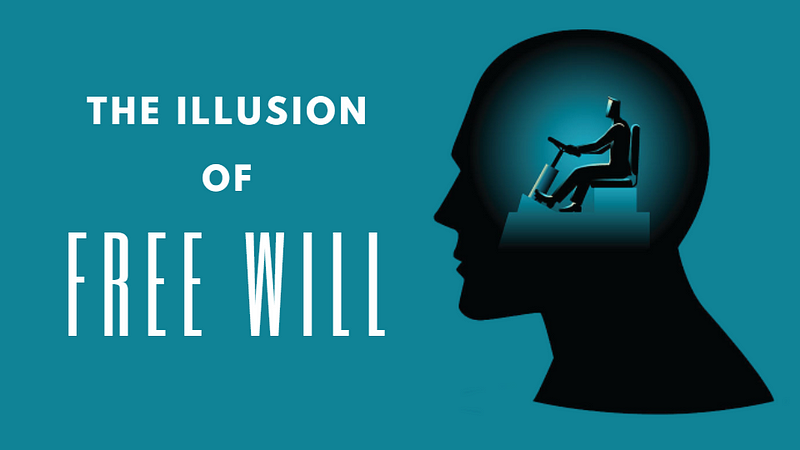
Free will is a difficult, and uncomfortable subject. A philosophy that deeply troubles many people- so much in fact, that they would do just about anything to be able to believe it existed. Part of the problem with free will is that- if it indeed does exist- it has a disturbing implication: determinism. That’s where we have to watch our steps; because the consequences of believing in determinism are far-reaching and far too consequential for us to continue believing in what may simply be an illusion.
What is determinism? It’s the philosophical position that every event, including human thought and action, is causally determined by an unbroken chain of prior occurrences. What does determinism mean for free will? It means that every action we take, even our thoughts are caused by forces outside of our control. Try as we might believe something else, it seems there may be no such thing as free will after all.
One potential way to deal with the notion that our actions are caused by forces beyond our control is through a philosophy known as ‘compatibilism’. It argues that free will can exist in a world in which determinism prevails. It, however, is a tricky business, and one that as far as I can see fails to hold water.
Compatibilists such as Thomas Hobbes, Daniel Dennett, and others argue that our actions are determined by forces beyond our control. But there is one crucial difference between determinism- the theory arguing for absolute causal responsibility for all human action- and determinism- the causal principle driving the compatibilist position: moral responsibility. The compatibilist is simply arguing that we are still morally responsible creatures despite what appears to be a deterministic universe.
The first problem with this response comes from the definition of free will itself. The fact that our actions are determined by forces beyond our control argues that we do not have free will. We don’t make decisions out of the blue, it is more like we recognize an action and then perform it. If we were truly free, we would not be bound by these causal laws. We wouldn’t have to act according to any natural laws at all, let alone those governing the way that our brains function. The problem is- nobody has ever been able to explain where this freedom comes from; a point I will return to later.
The second problem with determinism is a little more tricky. If determinism is true, then all behavior is caused by prior occurrences. If we are free, then our actions are not predetermined by previous events. But then we aren’t truly responsible for the action itself- by definition. Determinists however argue that our actions are indeed predetermined according to past events- but it’s the present state of our brain that influences this causality.
Compatibilists agree that in the present moment, our brain has the potential to act in an undetermined way: the potential to cause an action that is not caused by previous events. But the problem is that this does not make us any more responsible for our actions than we would be if determinism were true. In both cases, we are not truly responsible for our own decisions and actions. Even if compatibilists want to argue that in the present moment, we can make a decision that is freely chosen- it doesn’t matter anyway because we would only be choosing between two or more options that were determined by prior events.
Suppose someone decides to kill somebody. Compatibilists would argue that although the action itself is determined according to prior events, the state of the brain at that moment in time- which can be influenced by momentary preferences and beliefs- is what causes them to kill. It may be true that we are not determined by prior events; however, we still don’t have any control over what actions and feelings our brain produces at that moment in time. This is just as much a case of ‘causal closure’ as determinism is: a state of affairs where everything that happens, including our own thoughts- is caused by outside forces beyond our control.
Theoretically, we could give a compatibilist the choice of being killed by a person whom they don’t know, or being killed by someone they do know. The compatibilist would have to choose the latter because they would have to know if the person had a motive for killing them. If not, their death would be senseless. If we couldn’t give a compatibilist a motive for their own death, then there is no point in asking them what they want and why. In this sense, compatibilism obliterates free will by reducing it to the state of absurdity: there are no actions and choices beyond what has already been determined by prior events.
There is more I could say about free will and determinism; however, I suspect readers may want me to say something about how we can reconcile ourselves with having a sense of free will in spite of having been determined by prior occurrences.
Here it is. If determinism is true, then all our thoughts and actions are caused by forces beyond our control. So what do we make of those feelings of free will? These feelings are a pure illusion, and we must come to accept this reality if we want to continue believing in what else may be a purely illusory experience. What we can do, however, is make peace with this discovery- as hard as it may be. It’s only through facing these facts that we can know for sure how to live our life; only then do we understand who and what we really are: conscious automatons operating under the influence of a deterministic universe.