
Comparing digital retail experience through a behavioral economics lens
Digital stores are growing in number and each store tries different UX techniques to woo their customers. I compared two similar digital retailers — Columbia and North Face to see what theories of the case they employ to help their customers make a choice.
Methodology
I try to search the same thing on both stores to see how the experience compares, and then try to see which behavioral techniques do the stores employ, and what makes Columbia’s experience stand out over North Face.
Columbia
Columbia is an outdoor apparel store. The store’s visuals and microcopy appeal to any aspirational athlete. It seems to focus on new and existing users looking for winter wear.
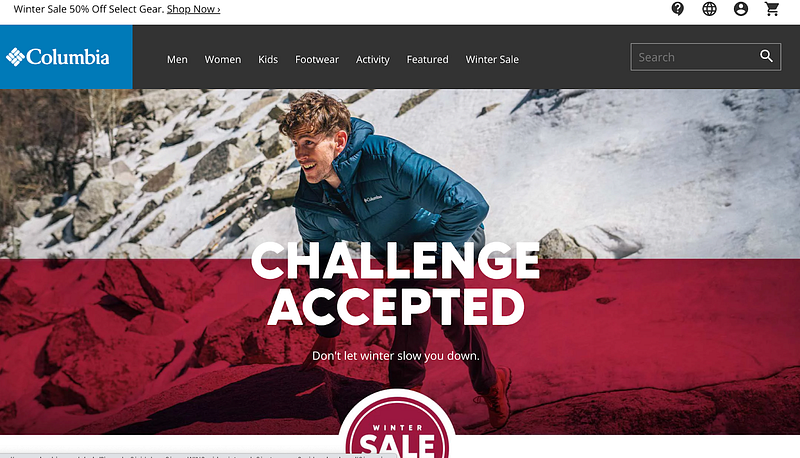
Here are my observations on how the Columbia store employ behavioral methods to help it’s users buy an apparel online:
What does the website do well?
- Priming — The hero section and the landing page, in general, of the Columbia store primes the user about season’s collection and their exclusive technology.
- Cognitive Ease & Structuring Choices — Overall, on the website, detailed navigation menus, filters and sort features, help the user to reduce cognitive load. On the catalog page, it shows numbers and categories upfront, making it easier to understand choices across.
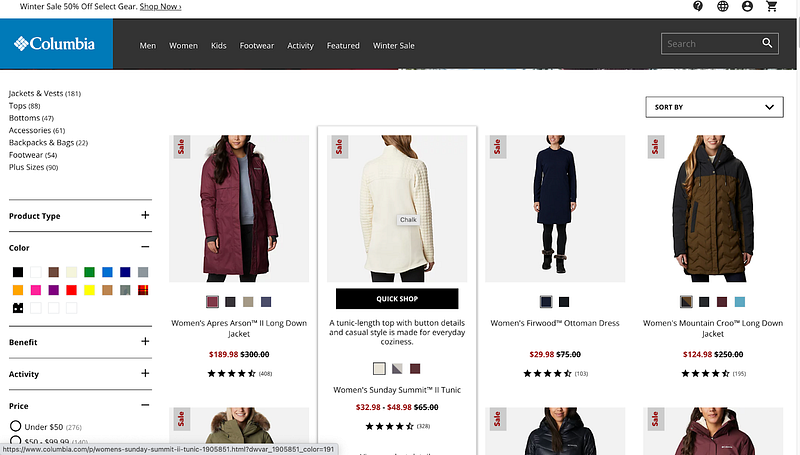
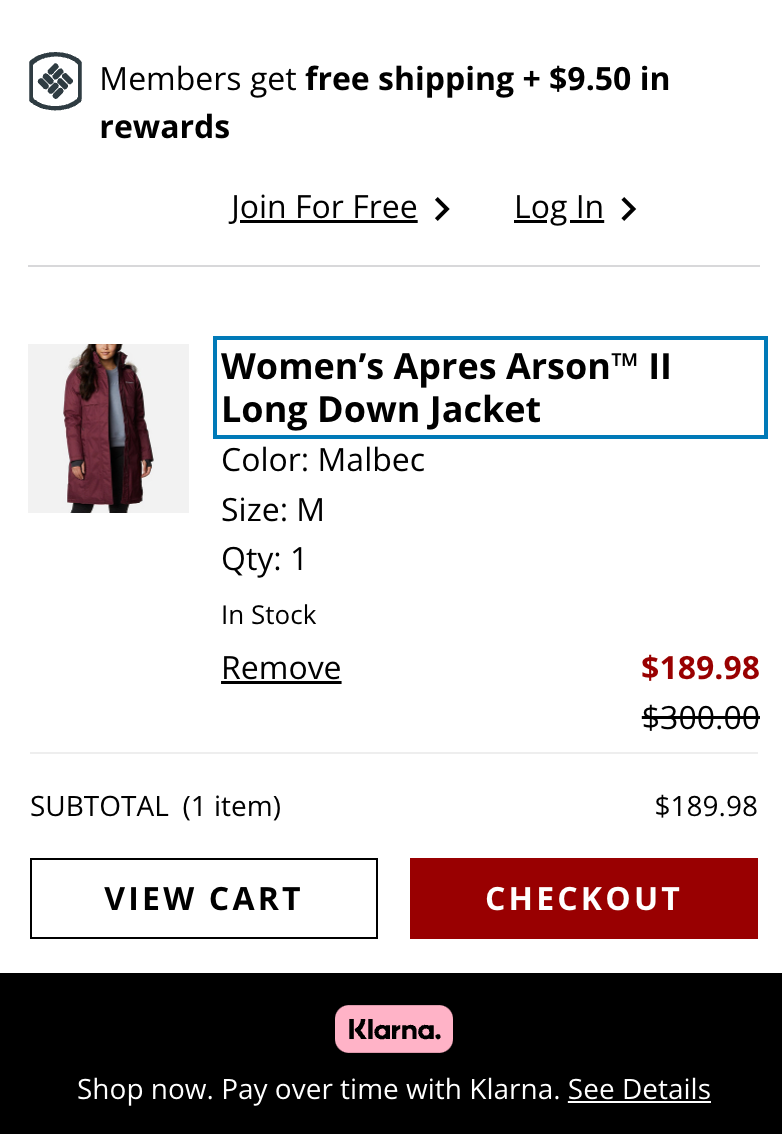
- Incentives — The user is reminded of the 50% sale throughout the website at multiple instances, and the idea that a purchase will earn rewards that can be used later.
- Framing — Microcopy of the website is focussed on the benefits of the products rather than what it’s called.
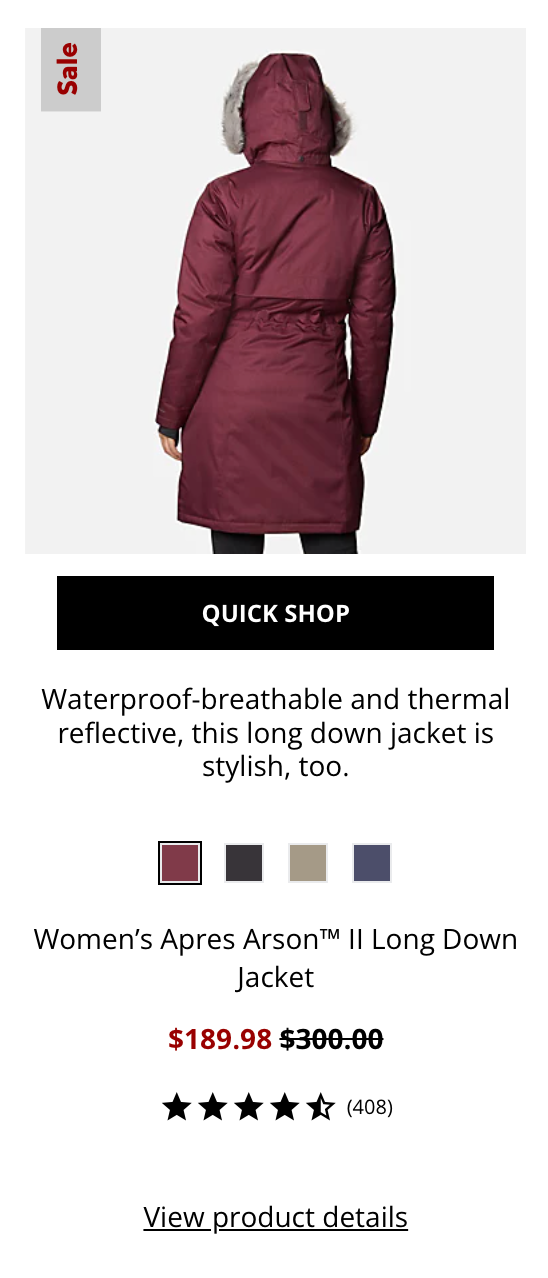
3. Anchoring — User is shown a discounted price to anchor a higher value of the apparel.
4. Multiple options — For each category and apparel has multiple options, sizes, and colors, giving the user excessive choice. Also, colors are randomized to give an illusion of more options.
5. Social Proof — User ratings and reviews accompany each product, in the catalog itself.
6. Loss Aversion — Giving prominent ‘pay later’ option reduces the buyer’s risk to pay upfront.
What does the site not do well?
- Ordering options — The options in the catalog are ordered randomly, though there is an option to sort.
- Cognitive load on product pages — The product pages have a lot of cognitive load.
North Face
North Face is a higher-end brand for outdoor activities, and it seems that the store experience is geared towards more loyal customers than new customers. The store offers only 10% discounts and focuses on hiking as an activity a lot more in its copy & marketing.
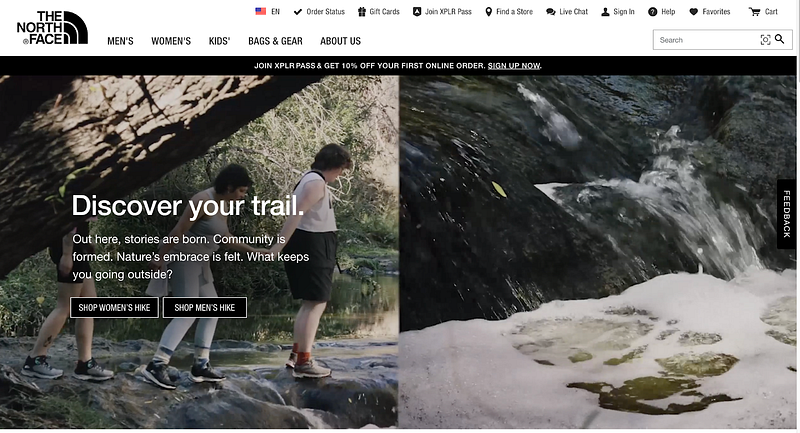
What does the store do well?
- Structuring choices — Navigation menus are well designed for someone to reach desired apparels faster. Cognitive load is reduced further by helping user find similar products for each product, and an option to chat.
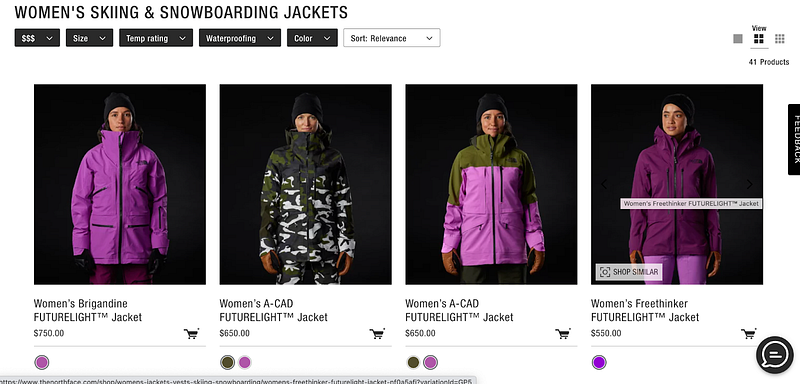
2. Ease in reading product descriptions- The site’s product descriptions are visual (see next page), that makes it easier for users to understand a product.
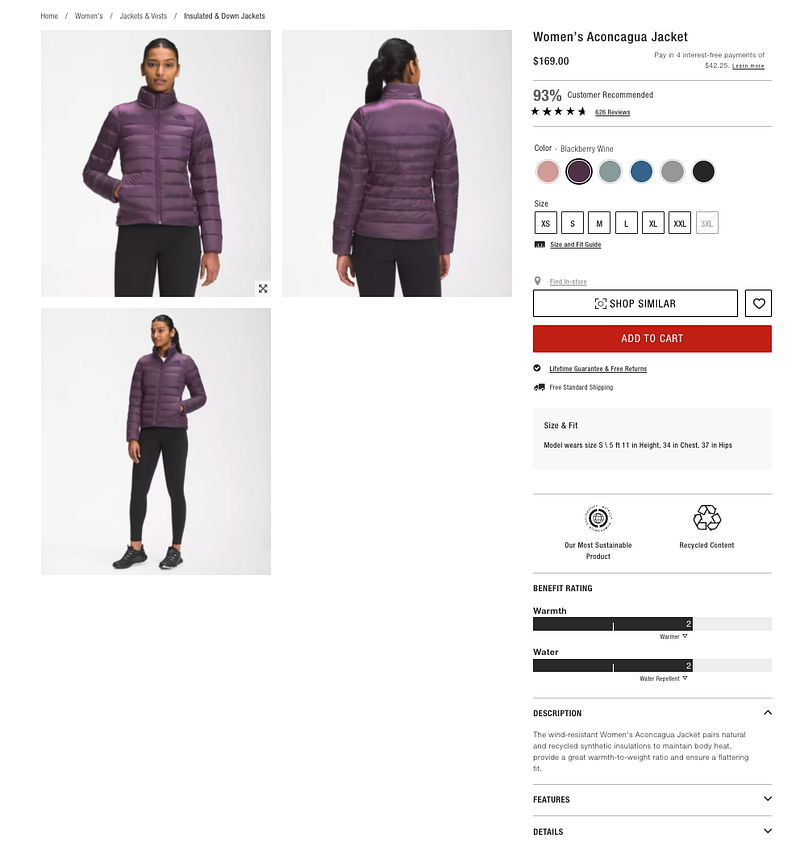
3. Social Proof — Customer reviews are presented clearly on the product page.
4. Loss Aversion — A small option is presented to pay later, easing the user’s wallet instantly and, therefore, helping them make a purchase.
What does the store not do well?
- Cognitive Load on Landing Page- Top icons on the homepage seek too much attention.
- Lack of incentives — There are no heavy discounts, just a loyalty program.
- No Anchoring — There are flat prices, which makes the products appear pricier.
Compare and contrast — Columbia vs North Face
Both websites are geared towards different customer segments. Columbia focuses more on new customers and makes it easier to navigate catalog. North Face focuses on loyal customers, and gives better information for each product Both digital retailers employ a lot of similar techniques like social proof, loss aversion, structuring choices, etc. to help a buyer shop.
However, Columbia provides more choices (or an illusion of the same by providing numbers for each category upfront, randomizing colors), and the “Quick Shop” button makes it faster to checkout. Plus, as I was looking for more winter apparels, Columbia’s priming built trust with me better than North Face. Therefore, Columbia’s store served me better to search for the right apparel through its structuring, incentivized me with discounts and anchoring, and helped me checkout faster, therefore, winning for me.