
Companion Planting in Your Veggie Garden
Some tips for a successful planting
It's the first week of April, and here in zone 7a that means that it is time to start getting serious about the garden plot and decide what plants are going where. It is entirely possible that along your travels you have heard of the term “companion planting”. Though it is a term many of us have heard, and its probable that you have seen posts floating around on Pinterest or Instagram that talk about it, but do you know what it is?
Companion planting is the concept of planting different types of plants together to provide mutual benefit to all plants involved. There are some plants that grow really well together, and help each other to grow. There are also some plants that are detrimental to each other and just shouldn’t really be planted together. We will take a look at these in a future article, for now we will just focus on what grows well together.
( This post may include affiliate links. If you make a purchase I may earn a small commission, at no extra cost to you.)
Companion planting has been around for virtually as long as vegetable gardening has been. I am reminded of the ever popular and traditional Native American growing method called the three sisters. This biodiverse method of planting dates back to around the 1300’s If you have never heard of it, its really quite simple but a prime example of plants providing mutual benefit to each other.
Corn, pole beans and squash are all planted together in the garden. The corn provides support for the beans, which provides the much needed nitrogen for the corn. The super prickly squash plants help to deter pesky critters like rabbits and raccoons that want to eat the beans and corn. The big leaves on the squash also help to create a sort of living mulch which shades the soil, and keeps it cool, but also helps prevent weeds from taking over the garden plot.
What are some other plants that grow really well together in the garden? Let’s explore it! At the time of writing this post, I actually don’t have any photos of my garden (shocking, I know!), but as the season progresses, I will try to remember to add some of them to this post.
While there are many many companion planting options, I have opted to cover what I consider to be the most popular veggies, that can be grown in almost any growing zone. You can always experiment with different plants and see what works for you in your garden plot, and I encourage you to do so! What works for me in my space, with my growing conditions, may not work for you in yours.
Let’s get to it!
Onions — Tomatoes, Carrots, Parsnips, Lettuce, Rosemary, Beets
Peppers — Basil, Tomatoes, Spinach, Onions, Garlic
Tomatoes — Basil, Asparagus, Broccoli, Garlic, Carrots, Celery, Onions
Carrots — Onions, Tomatoes, Rosemary, Lettuce, Chives, Radishes
Beans — Squash, Radishes, Spinach, Beets, Corn, Cucumbers
Lettuce — Chives, Beans, Beets, Onions, Broccoli, Dill, Mint
Squash — Corn, Radishes, Dill, Beans, Peas
Peas — Beans, Radishes, Corn, Cucumbers, Garlic, Cauliflower, Turnips
Cucumbers — Corn, Beans, Radishes, Lettuce, Celery, Cabbage
Corn — Beans, Cucumbers, Pumpkins, Melons
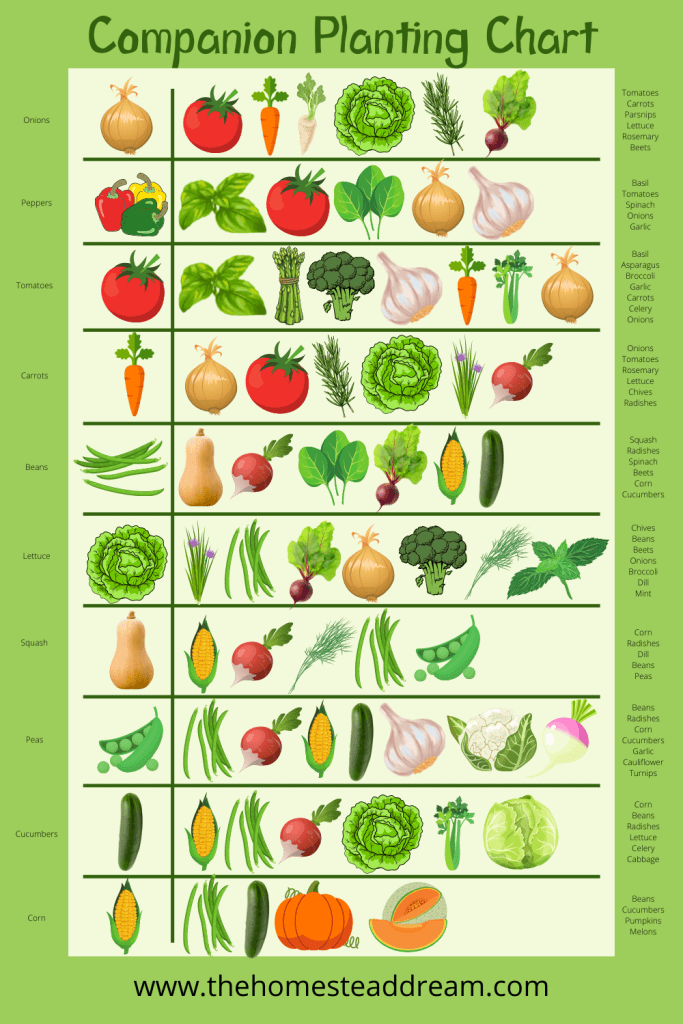
Take advantage of this handy chart by printing it out or saving it to your gardening board on Pinterest so that you always have access to it as a quick reminder of what plants work well together when it comes time to plan your garden each spring. Please remember that you do not have to plant all the things to have a successful garden. If your family doesn’t like it, don’t plant it. The most successful garden is the one that nourishes your family with fresh, healthy food that didn’t spend days on a truck to get to you.
If you are new to gardening, don’t stress about what is or isn’t in your garden. Try growing something new each season. Experiment. Fall in love with the process. Growing your own food and becoming self-sufficient comes with a learning curve. We have been growing for about 8 years now, and every year learn so many more new things. There is no such thing as a “perfect” garden, and I want you to just get out there and try.
Even if you don’t have a very big garden space, you can still experiment in the space that you do have. Raised beds are also a great alternative for you in the event that maybe you rent and are unable to dig a plot, or maybe you live in an apartment and can only grow on a balcony. I use these ones in my garden, and I just love them.
What do you plant together that works really well for you in your garden space? I would love to hear from you in the comments below! If you liked this article, be sure to check out this one!
Originally published at https://thehomesteaddream.com on April 1, 2022.


