
Communism of Wives: Plato’s Unconventional Vision that Led Him to Criticism
An Unconventional Vision of Plato
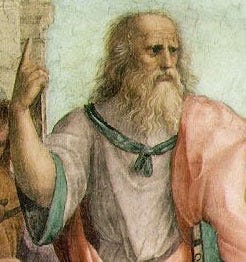
Plato, a Greek philosopher who was the pupil of Socrates and the teacher of Aristotle - and one of the most influential figures in 'western' thought. He founded what is said to be the first university - his Academy- around 385 BC.
He left an enduring intellectual legacy that includes a distinctive notion of communism. While his teachings aimed at fostering harmony and unity through shared interests, his ideas on communal aspects, especially regarding wives and children, have sparked curiosity and criticism.
Communal Living: Wives and Children
Plato envisioned an ideal state with not only communal property but also a unique concept of communal wives and children. This wasn't just about equality; it aimed to prevent discord, jealousy, and regulate population growth.
Interestingly, Plato suggested a fate for inferior or deformed children, emphasizing the pursuit of a "pure" breed of guardians, acknowledging authority and class distinctions.
The Critique of the Traditional Home
Plato challenged the traditional notion of the home, considering it a stumbling block. He advocated pulling down the walls to eliminate narrow family affection and selfish instincts.
Plato condemned private households as places of wasted talents and dwarfed powers, where the pursuit of personal interests hindered the progress of the collective.
He urged dismantling the walls of individual households to promote a common life and eliminate the divisive concept of "mine" and "thine."
Abolishing the Family Structure
Plato didn’t deny guardians a normal sexual life but abolished the traditional family structure. To encourage mating between the best-suited individuals, rulers would arrange periodic festivals for hymeneal purposes. Children born from these unions would become the property of the state.
One Great Family: Guardians of the State
Plato's vision aimed at fostering a sense of kinship among guardians. All children would be regarded as the property of the state, eliminating the exclusivity of parental affection. The state's guardians would become one great family with a shared responsibility for the happiness and welfare of all.
Age and Reproduction
Plato proposed specific ages for men and women to start begetting children. The prime of life, according to him, ranged from about twenty years for women to thirty for men. Participation in public hymeneals outside these age ranges was considered unholy and unrighteous.
The State as a Sole Entity
In Plato’s scheme, communism extended beyond possessions to encompass wives and children. Rulers were to be free from distractions of personal affairs, ensuring undivided loyalty to the state.
Festivals for Noble Unions
To maintain the quality of the population, rulers would arrange periodic festivals for hymeneal purposes. These acts of coition were to be sanctified by impressive and holy ceremonies, emphasizing the noble purpose of the union and eliminating elements of lust and obscenity.
Children as State Property
Children born out of communal unions were declared the property of the state. They would be taken to a nursery at birth and cared for collectively by the nurse and mothers of the state, fostering a sense of shared responsibility.
Aristotle’s Opposition
Aristotle, Plato’s renowned student, stood in stark opposition to his mentor’s vision, particularly concerning the communism of wives. Aristotle’s counterarguments emphasized the potential pitfalls of communal living, citing challenges in resource distribution and the inevitable conflicts arising from differing contributions to society.
Conclusion
In short, Plato’s intricate vision of communism extends beyond possessions to reshape the very fabric of family life, advocating for a harmonious society where the state becomes the sole entity and communal living replaces traditional family structures.
Thank you for reading. Do you agree or disagree with Plato’s notion of communism of wives and children? Share your thoughts in the comments below!