
Commercial Meat Substitutes that Pre-date Tofurky: The Pioneering Work of George Washington Carver

Introduced for public sale in 1995, Tofurky became one of the best-known meat alternatives in the United States. While meat analogues may be thought of as a modern convenience in Western diets, commercially manufactured meat substitutes in the United States have been around for over a century. These meat substitutes were specialized products mainly marketed to and purchased by vegetarians, and they were primarily nut-based. What is even less known is the connection between these products and American scientist and inventor George Washington Carver.
He was an artist, musician, and prodigy of botanical and agricultural sciences, and an inventive chemist, creating formulations as wide ranging as artificial silk to wood stains. Carver would also play a role in popularizing early forms of commercial meat alternatives to the American public, shaping vegetarian and vegan culinary history. Carver’s connection with the further development of meat substitutes in the United States is rarely given notice, in spite of his known connection to peanuts.
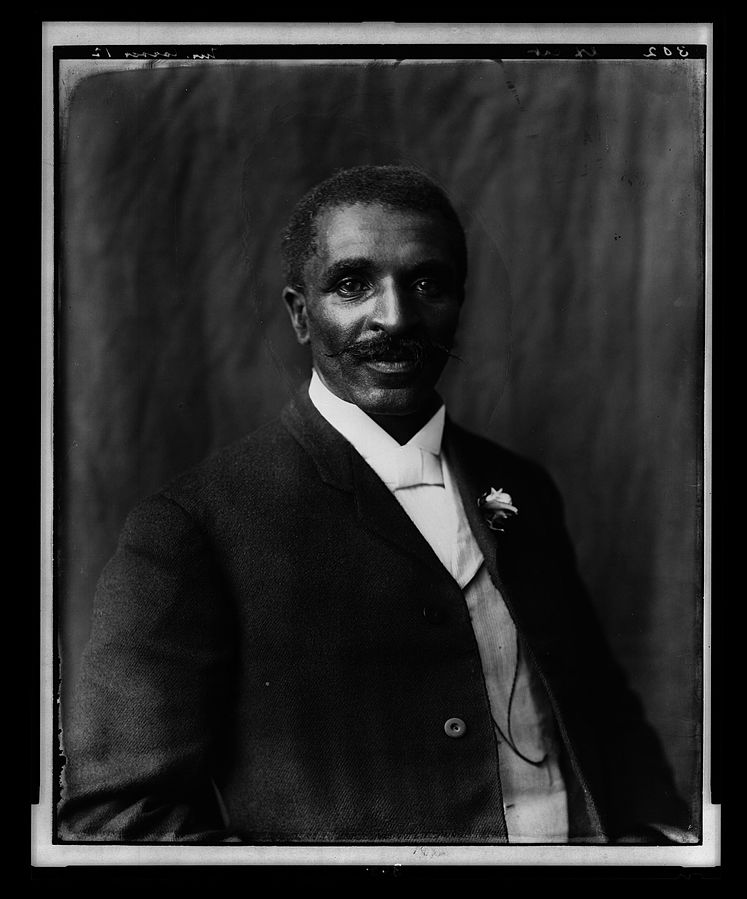

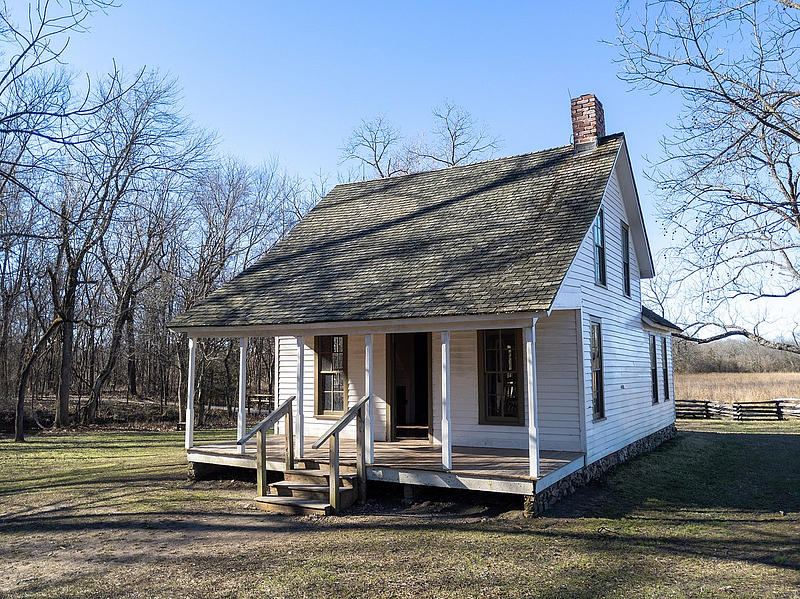
Born in Diamond Grove, Missouri between 1864 or 1865 to an enslaved mother, George Washington Carver never knew his biological parents. During his infancy in the tumultuous final years of the American Civil War, he and his mother were abducted by bushwhackers and his mother was never found. He lived with his mother’s former owner, Moses Carver and his wife Susan, who taught him how to read and encouraged his interest in plants.

At age 13, he left the home of Moses Carver, going to Kansas, where there were more educational opportunities for African Americans. In Kansas, he supported himself by working a variety of jobs, moving several times during his teen years while continuing his education. In Olathe, Kansas he met former slaves Lucy and Ben Seymour, assisted Lucy with her laundry business, worked in a local barbershop, and attended school. He moved with the Seymours in 1880 to Minneapolis, Kansas, where he completed his high school education.
In 1885, He applied and was accepted to Highland Presbyterian College, but was denied entry when the college president Duncan Brown discovered that he was black. This setback caused a temporary change of course for Carver, who found work with another family in Western Kansas. By 1886, he had relocated to Ness County Kansas were he built his own sod house. Carver began homesteading, cultivating 17 acres of land with a variety of food crops as well as building a conservatory that held a geological collection and 500 plant specimens. After enduring several years of drought on his new homestead, he sold it, and used the funds to further his education once more.
In 1890, he studied art and piano at Simpson College in Indianola, Iowa. One of his paintings, The Yucca received an honorable mention at the Chicago World’s Fair in 1893. Etta Budd, his art teacher at the college saw his talent for painting flowers and plants, and encouraged him to study botany at Iowa State Agricultural College. He transferred to the college, earning his Bachelor of Science degree in 1894, and then his Master of Science in bacterial botany and agriculture in 1896. He had also accepted a faculty position from the college. In the spring of 1896, Booker T. Washington wrote to Carver, requesting that he teach agriculture to the students at the Tuskegee Institute in Alabama.
Tuskegee Institute seeks to provide education–a means for survival to those who attend. Our students are poor, often starving. They travel miles of torn roads, across years of poverty. We teach them to read and write, but words cannot fill stomachs. They need to learn how to plant and harvest crops…
I cannot offer you money, position or fame. The first two you have. The last, from the place you now occupy, you will no doubt achieve.
These things I now ask you to give up. I offer you in their place — work — hard, hard work — the challenge of bringing people from degradation, poverty and waste to full manhood. (p. 14)
Surprising the staff of the Iowa State College, he accepted Washington’s offer of hard, hard work and relocated to Alabama to accept the teaching position at the Tuskegee Institute.
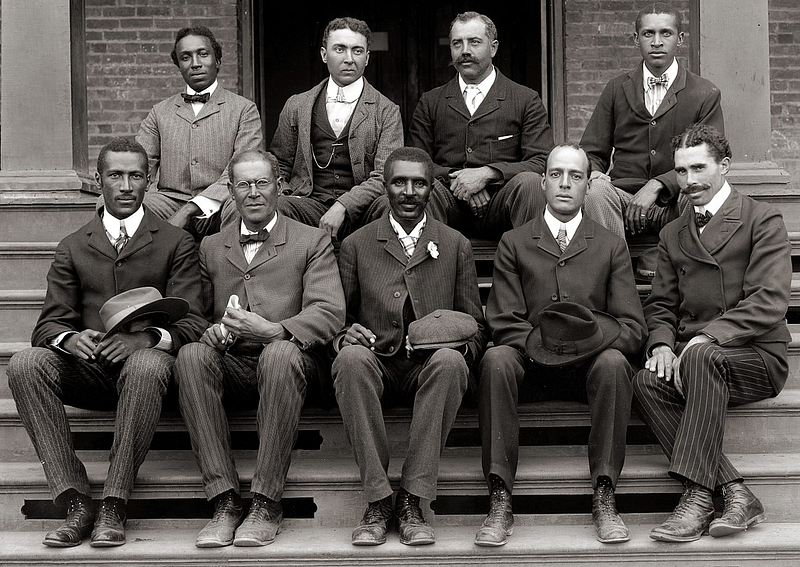
At the Tuskegee Institute, he went on to assemble an agriculture department, and work with local farmers, teaching them about crop rotation, fertilization and how to prevent erosion. He noticed that repeated plantings of cotton depleted the soil, affecting the growth of future crops. The boll weevil was also infesting farmland throughout the south at the same time, decimating cotton crops and the economy.
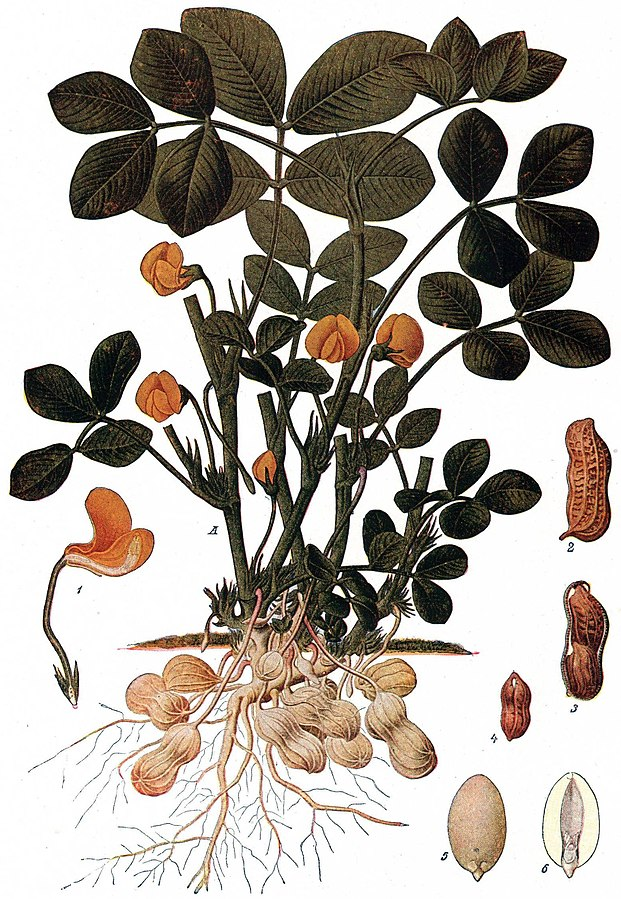
Carver advocated for farmers to move away from cotton production and grow alternative crops that would replenish the fields, such as peanuts, sweet potatoes, soybeans and pecans. Farmers began to plant these alternative crops, but it created a surplus of peanuts, which were primarily used as livestock feed at this time. To make use of this surplus crop, Carver would go on to invent over 300 uses for the peanut, but did not invent peanut butter, contrary to popular myth. The earliest form of peanut butter was originally patented by Marcellus Gilmore Edson in 1884, long before Carver’s work with the underground legumes.
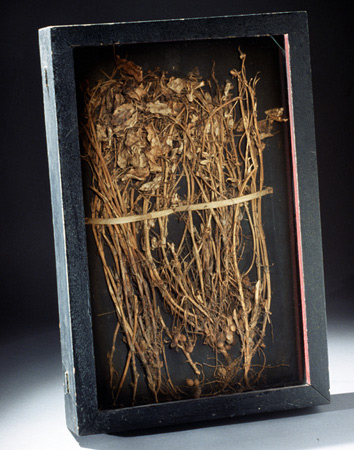

One notable use that would shape vegetarian and vegan culinary history in the early 20th century was Carver’s popularization of the peanut as a meat substitute. Mock meat would not become more mainstream with the general public until World War I. The American public was required to limit their consumption of meat as part of the war effort. This dietary change also began efforts to find alternatives, and the start of the well-known association between Carver and peanuts.
In 1916, he published a peanut-centric recipe book that demonstrated different ways of preparing peanuts as food. One example of peanuts as a meat substitute can be found on page 10.
№7, PUREE OF PEANUTS NUMBER TWO (EXTRA FINE) Take 1 pint of peanuts; roast until the shells rub off easily (do not brown) ; grind very fine ; add a saltspoon of salt, 1 teaspoon of sugar ; pour on boiling water, and stir until thick as cream. Set in double boiler and boil from 8 to 10 hours ; set away and allow to get thoroughly cold; turn out. Can be eaten hot or cold. When sliced, rolled in breadcrumbs or cracker dust and fried a chicken brown, it makes an excellent substitute for meat. A generous layer between slices of bread makes an excellent sandwich. (p. 10)
Food guides for the war effort concurred with Carver, encouraging the public to use peanuts as a meat substitute. Carver’s meat alternative recipes inspired a number of imitators, like this peanut flour and pea loaf recipe published in a circular distributed by the University of Wisconsin.
PEANUT FLOUR AND PEA LOAF 1 ½ cups peanut-flour mush. 1 ½ cups of peas. 1 ½ cups cooked rice or hominy. 1 teaspoon chopped onion. ¼ teaspoon paprika. Bake 30 to 40 minutes. Serve hot with tomato sauce. (p. 4)
Carver also corresponded with staff at the Nashville Agricultural Normal College’s food department, in Madison Tennessee. The college was a 7th Day Adventist and vegetarian institution of higher learning, and had developed a canned meat alternative based on peanuts. This product was served in the college’s cafeteria, and would later be available to the general public under the brand name Nutfoda.
Mainstream American newspapers during the period of WWI encouraged the public to try these vegetarian canned meats to help families adjust to food rationing. The Morning Leader proclaims “Meatless Steaks? Certainly! Here’s How to Make Them” in their advocacy for nut-based meat alternatives.
One interesting substitute which should be better known is a vegetarian meat. It is sold in cans, and its contents are largely ground nuts and soy, but both in flavor and texture it closely resembles finely chopped meat. A pound of this mixture costs no more than one pound of chuck or flank, but it will go as far as three pounds of meat. It contains no waste of bone or gristle or fat, for the entire pound is edible, and fried like Hamburg steak, or it may be roasted or baked in a loaf tin. (p. 9)
Carver continued to advocate for plant-derived meat alternatives again in 1921 during a presentation in front of the U.S. House of Representatives Ways and Means Committee. “He spoke of how soft cheeses and mock meats could be made with peanut curds. ‘We are going to use less and less meat just as soon as science touches these various vegetable products, and teaches us how to use them,’ he predicted.” (p. 33)
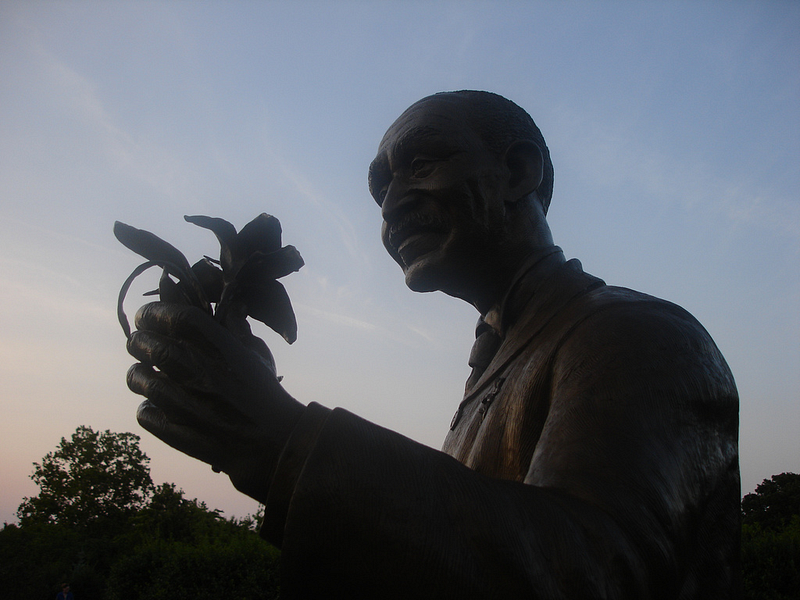

George Washington Carver left behind an incredible legacy of civil rights, education, and innovation across many fields. Ahead of his time in numerous ways, he should also be remembered for his contributions to the development of meat substitutes. His agricultural and culinary knowledge made peanuts, and other legumes such as soybeans and cowpeas more accessible to the American public by encouraging their cultivation and use as food products. Without the pioneering efforts of inventors like George Washington Carver, the environmental and animal welfare benefits of meat alternatives could have been lost to history.
Further Reading:
Bolden, Tonya George Washington Carver
Edwards, Linda McMurry George Washington Carver, Scientist and Symbol
Federer, William J. George Washington Carver: His Life & Faith in His Own Words
Holt, Rackham George Washington Carver: An American Biography
Scrabec, Quentin R. The Green Vision of Henry Ford and George Washington Carver
Vella, Christina George Washington Carver: A Life
Zafar, Rafia Recipes for Respect: African American Meals and Meaning
Thank you for reading!
For more vegan, vegetarian, and botanical histories, follow Plant Based Past on Medium.
You can sign up for email alerts to receive the next story when it becomes available, just by clicking the envelope icon.
Next Week: 5 Vegan Soups From the Past to Warm You Up This Winter