
Come What May: Visiting a Columbarium
Mourning people I’ve never known
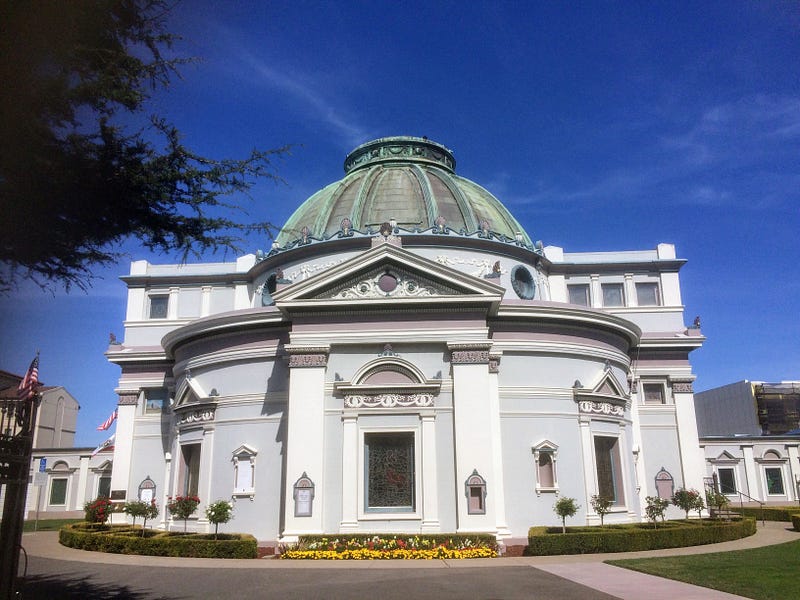
I look down at my phone for directions again. Maybe Loraine Court is the next block over. This street seems far too suited for conventional upper-middle-class families to have a Victorian shrine to the dead tacked on to the end of its cul de sac.
But there it is, the San Francisco Columbarium, its words engraved next to its imposing gate. It looks like a scene you’d have in a dreamscape, with its classical architecture, manicured garden, careful symmetry, and despite its idealized appearance, an eerie quietness.
Maybe it’s actually some haunted building mired in the past, only appearing to a few unsuspecting victims.
Despite the thought, I don’t hesitate to walk in, and at once, drawn to the collection of red and yellow flowers lining the front of the columbarium. They wouldn’t be noteworthy elsewhere but have a certain vitality in this setting.
Unsure of which buildings are open to the public, I enter the first building I see with an open door, the Hall of Olympians.
It takes me an embarrassingly long time to connect the dots from the hall’s name to each room being christened after a Greek god or goddess. I later wonder about the details — who was placed where — what made someone choose to be an Aphrodite or a Dionysus.
In each room are glass cases roughly ranging in size from middle school gym lockers to cat kennels, covering almost every part of the walls. They contain one’s ashes and a few treasured possessions or other objects to remember the deceased person by, reminding me a little bit of Día de Los Muertos altars.
But at least those feel a little livelier, with vibrant marigolds and delicious foods welcoming the loved one home again.
The area is mostly empty, but a few others plod through the web of hallways. An older man speaks quietly in the adjoining room, and at first, I assume that he’s mourning over a loved one who has passed. But it soon becomes obvious that it isn’t the case. He doesn’t say anything coherent enough to decipher his words, but they are directed at no one in particular, it seems. The man mutters nothings and occasionally chuckles, which seems deafening in the tranquility of the space.
Most of the niches remind me of a display in a grandparent’s living room. A nice vase, a picture of loved ones, a pin of historical significance. But usually pretty sparsely decorated.
Not for those who died young, however. The 1983–2014’s of the space still seem to be overflowing with life, as though desperately trying to compensate for the thirty, forty years that were stolen from them, packed with faded elementary school pictures and notes from a lover, and high school diplomas and favorite CD’s.
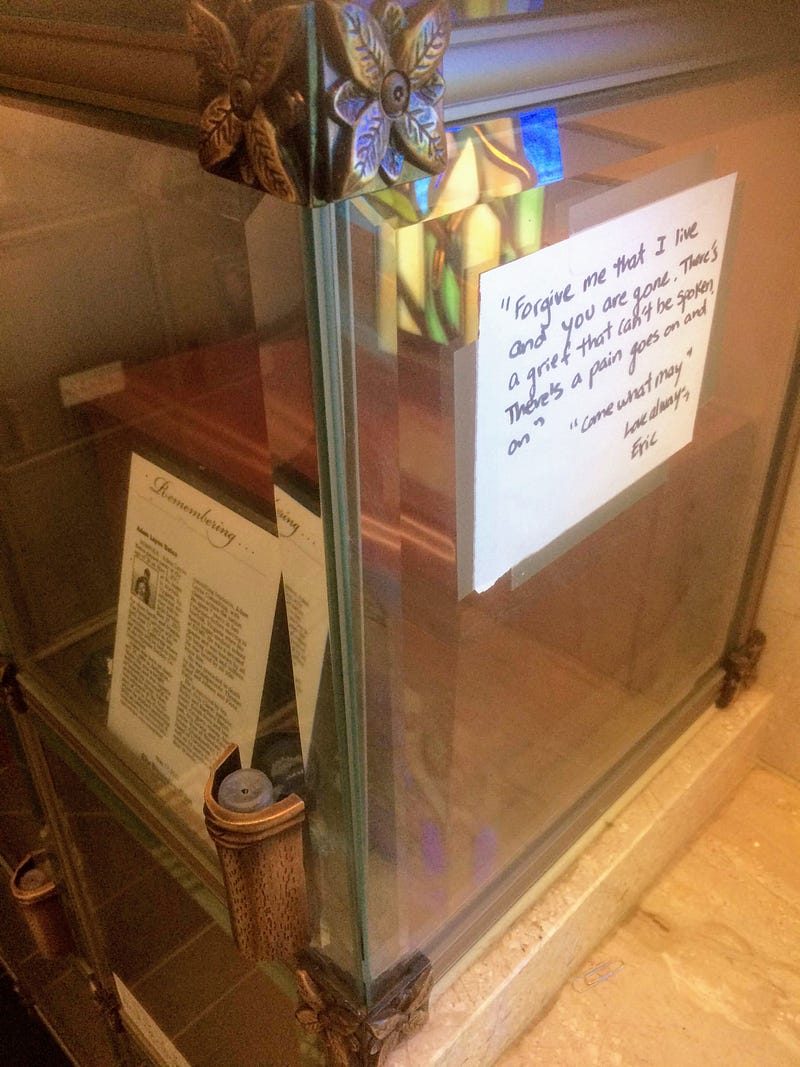
“Forgive me that I live and you are gone. There’s a grief that can’t be spoken. There’s a pain goes on and on.”
“Come what may.”
Love always, Eric
I stare at the note for a while, addressed to a man who died at the age of twenty-eight. I wonder why the words sound familiar, and it dawns on me as the Les Mis tune begins to play in my head, the words playing over and over as I go through the other niches.
The majority of the objects exhibited seem pretty standard. There is one, however, that makes me pause. A training guidebook for basic Web services shelved alongside a photo of the woman with presumably her husband, a jar of seashells, and a ring.
I wonder what made that dry instruction book worth keeping forever.
I move on to the main columbarium, which has more of a church-like feeling. This comes as no surprise, as memorial services are given here. Three packs of tissues sitting on the podium.
Once I’ve circled around the room, I notice a strange alcove. It contains a very dated checkerboard sink, a rack filled with little bronze-colored containers that, partly given the setting, make me think of cheaply-made urns. Next to it is a door that I suspect is the bathroom. I guess it’s probably locked, but I give it a useless tug anyway.
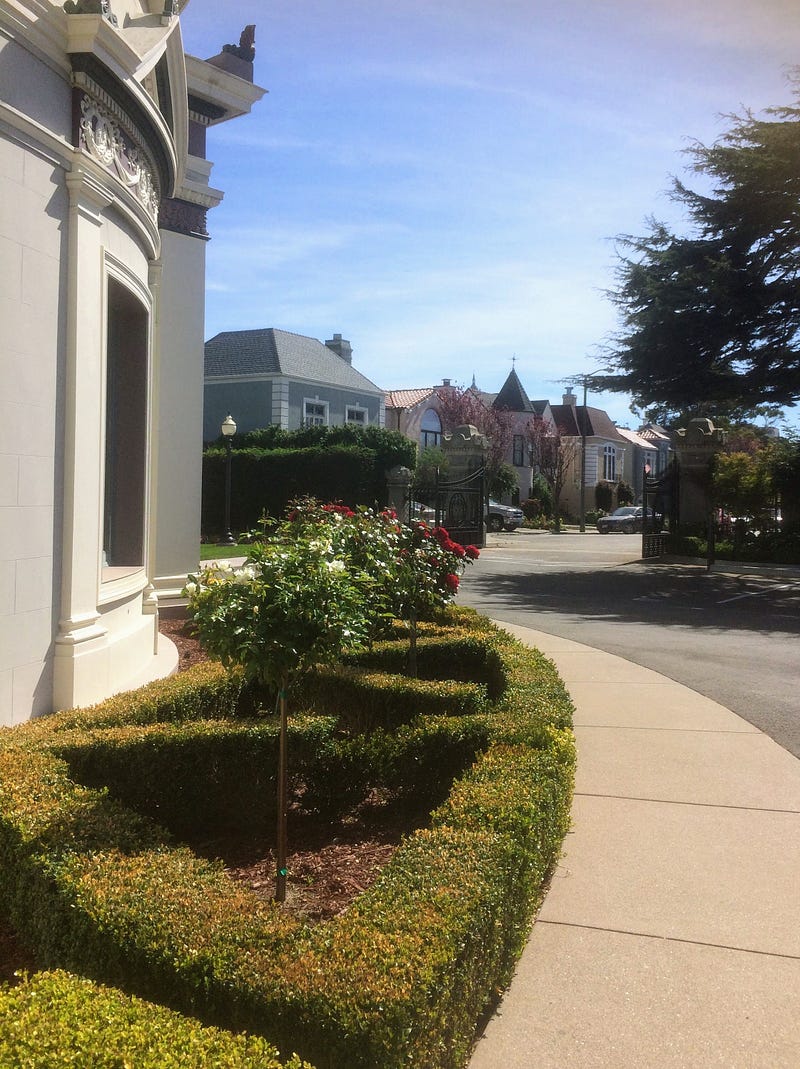
Having exhausted my exploration options, I exit the hall, squinting at the sunlight. I start walking toward the gate and notice my surprise at the street that greets me. Somehow, it’s the houses that feel strange to me now.
Author’s Note In my introductory course to creative nonfiction writing, my professor instructed us to go somewhere unfamiliar and write about our experience. One of his suggestions was the nearby columbarium, a building that houses niches of urns. I immediately latched on to the idea and wrote the above write-up in response.
Thank you for reading.