
MOTHERHOOD | FAMILY | CHILDHOOD
Come Look in The Toilet, My Daughter Said
I wasn’t prepared for what I’d see
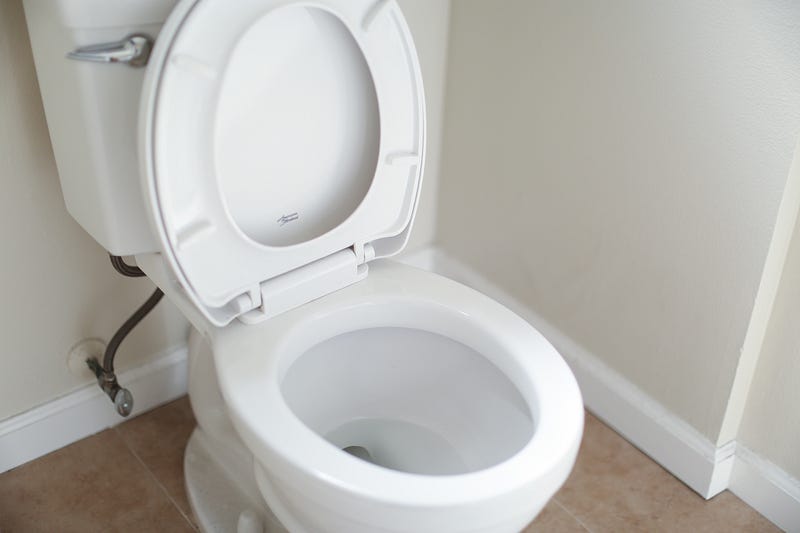
It was 1992 when my 7- year-old daughter rushed out of the bathroom, and said, “There’s something moving around in my poop.”
I thought she was mistaken. Surely nothing was in her poop, much less moving around.
“Come see,” she said.
“You didn’t flush it,” I asked.
“No. I want you to see.”
“Okay,” I said, in my best motherly voice, still expecting nothing out of the ordinary.
She was my third child. I’d already seen lots of poop. I had an 9- and 10-year-old.
She led me to the washroom. I looked down into the toilet bowl and stood frozen. Her well-formed turds had short, thin white lines moved around on them. Something appeared alive and it terrified me.
But of course, I couldn’t go running off screaming in terror. What the hell’s in my child’s shit?
In a calm a voice I said, “Oh, that’s nothing to worry about.” And I flushed the toilet.
Calmly I sent my daughter off to play and went to the phone and called to make a doctor’s appointment.
I had no internet to look for answers. I was unsure what was in my daughter’s stool, and I feared it was bad.
I had never read about this in any of my childcare books. But what I saw resembled what I’d seen in our cat’s poop when we had to treat them for worms. But did people get worms? I thought it was folklore. A thing of the past.
Our cats got tapeworms. Easily spotted by finding small white segments, like grains of rice on their rear end or in their feces. Then it was off to the vet for pills to get rid of the worms.
My 32-year-old mind tried to figure it out.
The cats got worms from killing and eating mice. My daughter wasn’t feral. She didn’t run wild at night biting the necks off rodents, so how would she get worms?
Every member of our family soon heard about the mysterious crawling creatures on the youngest one’s poop. All of us curious and concerned if it was contagious.
The next day I took my daughter to the doctor.
“Pinworms,” the doctor said. The word worms jumped out at me and I wanted to curse out loud. Like, what the holy f**k?
I’d heard of tapeworms but never pinworms. Had I lived in a bubble until now?
I had a barrage of questions for the doctor. “What do we do about it? How do we get rid of them? Is it serious?”
He wrote the name of a product to purchase at the pharmacy. Instructed me to wash all bedding in hot water and treat every family member in our household.
My worst nightmare— extra laundry! But I’d do what needed to be done.
That night before bed, we all gathered in the kitchen and swallowed the worm-killing pills.
I’d heard stories from other parents who’d dealt with head lice. Somehow my family had always escaped lice. But my pinworm-infested child would grow up and have a daughter — a daughter who got lice. Lice were as creepy, if not creepier, than pinworms.
No one wants to have things crawling around inside or outside their body. At least things we can see. Microscopic is another matter.
Demodex is a genus of microscopic mites that live in human hair follicles. The tiny creatures are arachnids, cousins of spiders and ticks.
We all have a small number of mites living in the folds and along the edges of our eyelids. They stay hidden in the hair follicles during the day and emerge at night to eat, lay eggs and excrete waste.
Experts estimate that around 1.5 million of them live on the average human body.
So what are pinworms?
A pinworm (“threadworm”) is a small, thin, white roundworm (nematode) called Enterobius vermicularis that sometimes lives in the colon and rectum of humans. Pinworms are about the length of a staple.
Dealing with pinworms became really interesting.
A test after treatment, to make sure our daughter no longer still had pinworms was to stick a piece of tape over her butt-hole when she went to bed.
Female pinworms crawl out of the anus and lay their eggs during the night. If she still had worms they’d stick to the tape and she’d need further treatment.
We could also shine a flashlight on her anal area. But that seemed even more intrusive.
The last thing I wanted to see was more of these tiny, white, threadlike worms.
Pinworm eggs become infectious within a couple of hours and can survive for about 2 weeks outside the host.
Pinworms are most common in school-age children, ages 5 to 10. Adults rarely get them and if they do, it’s from an infected child.
Turns out pinworms are not harmful to humans. They just cause itching. If left untreated others can be infected. Intense itching and scratching can cause secondary bacterial infections.
It also turns out pinworms are the most common type of intestinal worm infection.
The microscopic eggs can spread easily spread from child to child. Contaminated food and drink can carry the microscopic eggs to your mouth. Or your fingers. They may also spread through contaminated clothing, bedding. Pinworms eggs can also cling to toys and toilet seats and other surfaces for weeks.
Just one more reason for proper hand washing!
Eggs hatch in the intestines and mature into adult worms within a few weeks.
If you or your child has pinworms, wash the anal area in the morning to remove eggs laid throughout the night. It is also better to take a shower than a bath.
Change underwear daily. Change bedding daily.
Trim your child’s fingernails so there’s less space for eggs to collect. Suggest that your child avoid biting his or her nails.
My daughter was a nervous child who chewed on the ends of her long hair, and maybe what led to her getting pinworms.
It was also a good incentive for my daughter to get a shorter hairstyle.
No parents I know have ever shared that their child had pinworms.
So, anyone else experience this?
Please share.
Barbara Carter Artist and writer with a focus on healing from childhood trauma, alcohol addiction, and living her best authentic life.