
“Come in and know me better, man!”
From Charles Dickens’ A Christmas Carol; An introduction to Medium writer Kevin Miller

This introduction turned into an epic history lesson (IOW, I’m old). Begun to help Medium readers get to know me, it became a reflection for getting to better know myself, and I decided that was a worthwhile journey to take. I have done a Cliff Notes version for those who prefer brevity. Most of this tale was accompanied by the Ghost of Christmas Past, but the Ghosts of Christmas Present and Yet to Come provided important insights. For those up to the full adventure, enjoy the trip, and I’ll see you on Christmas morning.
Katherine is finishing her lunch in the “break room” (kitchen) before returning to her “office” (the “sitting” room).
Matthew restocked the TP in the office Men’s Room (the “boys’ bathroom”) before returning to his “office” (the dining room table) for a weekly game of virtual Dungeons and Dragons.
Samuel is toiling away in his “office” (basement “spare” bedroom) either working on an app he’s developing or (more likely) playing some TF2 or GTA (if you have to ask, you probably don’t want to know).
And I am in my “office” (former basement toy room) writing a self-introduction for those of you on Medium who might want to get to know me (at your own risk, I might add).


Who could have imagined 57 years of life and 45 years of paid employment would lead to working in a basement office with no view (save two Ansel Adams prints and whatever is on my monitor) and with my family as my co-workers? 2020 is a strange year. So, what better than to reflect back on those 57 years and share the journey with you?
And, though this introduction is supposed to be about me, justice can’t be done without understanding from whence I came. I must therefore tell you about my family and others who significantly influenced my life. I also happened to be the world’s worst self-promoter, so the longer I can keep the spotlight on others, the better.
My earliest memory as a toddler was walking with my sister to get ice cream from the little stand near our house in Monona, WI. I’m not even sure it’s a real memory, but I’ve had it so long it is now very real to me. Everything else about our first family home is lost, and I know we moved to our only other home, also in Monona, before I started kindergarten.
From that home, I can draw on countless memories, and it seems my childhood was a common one for ’60s and ’70s America, if one is to accept the version of those decades seen in popular movies, books, and television.
My dad, John, completed his Army service before I was born and my mom, Phyllis, attended a few college classes before stopping her education to start a family. My sister and only sibling, Roxanne. was born just over a year before me.

Our neighborhood was filled with similar age boys and girls in an era of “free-range kids” (just called “kids” back then). Our first school was essentially in the backyard and there was a lot of space for playing football, baseball, smear, kick-the-can, Hunter-Hunter, and countless other games.
Many of the dads coached Pee-Wee football, little league baseball, and/or hockey and were on softball teams together. There were regular parties at various people’s homes with plenty of food and adult beverages. I was witness to some rather curious behavior among those adults as I was growing up, much of it fueled by alcohol.
Though he first worked in manufacturing after leaving the Army, most of my dad’s career was as a bus driver and custodian for our local school district with a side job working for a local moving company. Both of those were more than jobs for my dad. They were a part of who he was and he poured his heart and soul into them. He managed to touch anyone with whom he spent time.
Dad was also a barbershopper — the singing kind; not the hair-cutting kind. There was always singing in our home. Dad had a song for every occasion and every car trip was an opportunity for him to lead us in goofy family songs. We attended more conventions of the Society for the Preservation and Encouragement of Barbershop Quartet Singing in America (SPEBSQSA, now the Barbershop Harmony Society) than I can possibly recall in cities throughout the Midwest.
Nearly until the end of his life at age 80, Dad participated in some way in barbershopping. On his last day, laying in hospice at the VA hospital, he held on just long enough to hear a quartet serenade him with one final harmonious song. It was sad, but also beautiful. Today, the Madison Capitol Chordsmen Chorus annually presents The Johnny Miller Chapter Spirit Award named in Dad’s honor.
While Dad was ultra-social and involved in countless activities, Mom was the steady rock in our family. She also worked, early on as a secretary for an architect and later as an administrative assistant in the University of Wisconsin School of Business. Yet she was always there for Roxanne and me and allowed each of us to become our own person. She mentored and guided us without ever unduly influencing our choices (or she did it so masterfully, I never noticed).
Literally, the only time I remember her forcing something on me was taking a typing class in high school when it was the last class I wanted to take. Then, when I got a C the first quarter, she hounded me to work harder. That class has, of course, been more valuable to me than nearly every other class I’ve taken including in college and grad school. A smart woman, my mom.
On the rare occasions Dad would get worked up about something, Mom would offer a calm and calming response. Once, Dad found out several of my friends had been smoking (we were probably around 13 at the time). He forbid me from being friends with them. Mom calmed him down and suggested we could all remain friends as long as I was not intending to smoke; he relented.
Now 81, Mom has an apartment and continues to work part time at the Monona Public Library. She still drives, though recognizes her limitations and keeps it to short trips only in daylight.
Interestingly, my first job was at the same library Mom will surely have her last job. I was a voracious reader, and with the library two blocks from my house, I was there a lot. When I was 11 or 12, the library manager, Mr. Stokely I believe, would pay me to help with odd jobs around the library. He then hired me to put the flag up and take it down every day, which I did throughout middle school.
My first “real” job was working as a bus boy and dishwasher (and occasionally short-order cook) at a Rennebohm’s Restaurant on the Capital Square in Madison. The drugstore/restaurants were affectionately known as Rennies and are iconic for anyone who lived in Madison from the ’30s to the ‘80s.
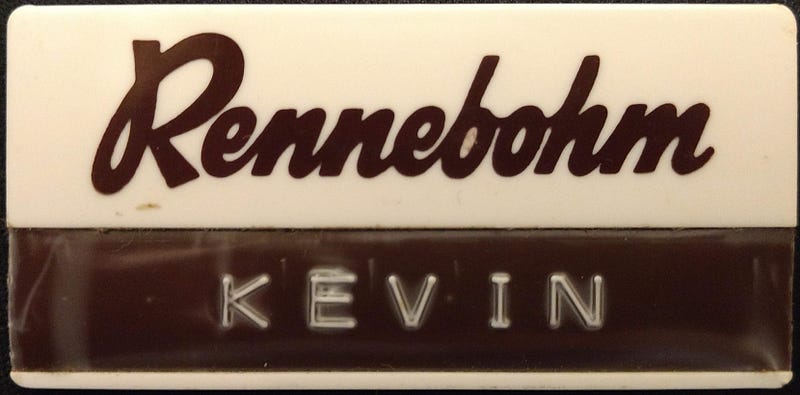
Despite being 40 years ago, I can picture everything about Rennebohm’s and all our antics on the weekends when the managers on duty were fellow high school students. And I can still taste the giant blueberry muffins, heated in the microwave and smothered in butter.
The Rennies job gave way to a high school co-op job working as an air compressor technician. My boss was the epitome of a Navy vet who had to always appear tough but had a huge heart. I’ll never forget the day he told me, “You certainly didn’t deserve it, but I put you in for a raise.” That was Gerry.
The office manager was Gerry’s daughter, Beth. She was so like Gerry, which led to regular fireworks in the office. That is when I realized maybe family members shouldn’t work together. Dennis was the head technician and person I worked with most closely. He was a phenomenal person and often frustrated with how Gerry treated us, which I totally got, but I could also see through Gerry’s tough exterior.
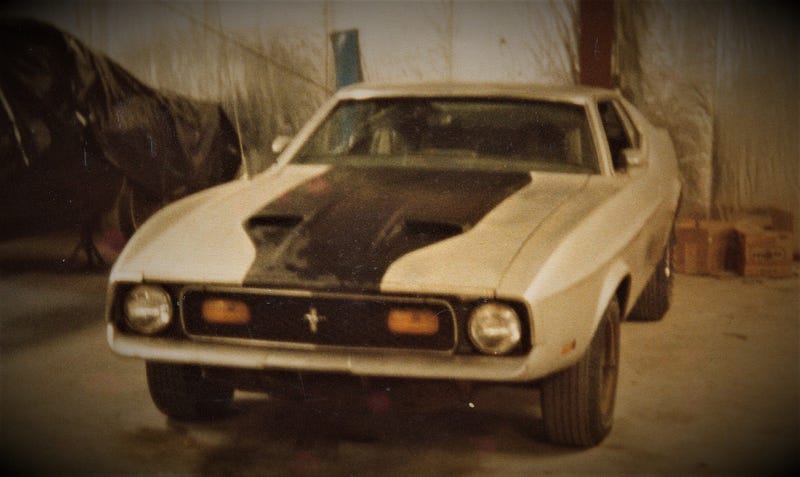
I was a gear-head in high school and the technician job was as good as I could have wanted short of working in an auto shop. Even better, as soon as I started, I learned Dennis had a ’71 Mustang Mach 1 he was selling for $600. My parents were out of town, so I borrowed the money from my sister and bought the car before they returned. They were not happy but let me keep the car.
I was not a fan of formal education (what kid is?), but I learned early how to “play” school. Because Dad worked in the school district and was active in youth sports, he was very well known. That meant most of the teachers knew him and, therefore, me. I was able to get good grades without too much effort (or time spent on homework, which drove Roxanne crazy). Between good grades and teacher familiarity, adults trusted me; consequently, they mostly left me to my own devices.
In high school, I used the familiarity and my ability to play school to make life easy. I managed some sports teams and did a lot of work for the athletic director. I got involved with the AV club and theater (I was a nerd before being a nerd was cool). As a result, I had countless reasons to miss classes pretty much anytime I wanted, and I would often get friends out of class to join me. Eat your heart out, Ferris Bueller. And really, there were few classes worth attending anyway.
By the time I was a senior, I had no interest in college, despite being on honor roll. Upon graduation, my co-op employer offered me a full-time job, and I jumped at the chance. Within six months, the macro-economics of the early ’80s recession hit my personal micro-economics, and I was laid off.
I quickly found a job as the assistant manager of a video arcade in a mall. How cool was that? It was actually a pretty mundane job with little for intellectual challenge and the pay wasn’t great, but within a few months I was offered my own store to manage.
So, at age 19, I was living in a flat in Green Bay and managing a Gold Mine; that was the name of the arcade and far from what the arcade was doing financially. I hired workers, ran the payroll, participated in the mall business board, and wondered what they were thinking when they built that mall. It was, of course, the beginning of a decade’s long decline for shopping malls (and arcades). Which is to say, the arcade never lived up to its name.
For all the responsibilities of being manager, the pay was lousy. Even after getting a roommate (one of my employees, also 19), I was living paycheck-to-paycheck. Still, it was a great learning adventure. Upon reflection now, I gave little thought then to my decisions, including taking the assistant manager job and accepting my own store with the subsequent move to a new city. There was no plan nor consideration of what this would entail. And I wouldn’t change it for the world.
About 16 months after starting the manager job, my former employer called asking if I’d like my old technician job. Absolutely! I was not challenged at the arcade and was tired of my tenuous financial situation. So, I returned to my parents’ basement (sounds so sad) and the familiar surroundings of my youth.
With free room and board, a better paying job, and back among my gear-head friends, I started to really indulge in car building, racing, and showing. Which is to say, I still hadn’t learned to think about, plan, or prepare for the future.
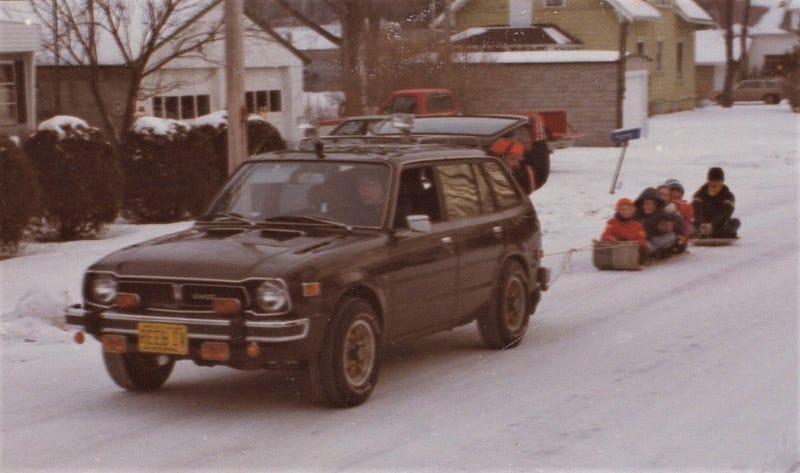
As much as I had liked the Mustang — I even rebuilt the engine during my senior year of high school — I parted it out before moving to Green Bay because the body was pretty rusted away. I replaced the Mustang buying my parents’ Honda Civic from them and that became my creative platform.
Already in the ’80s there were a lot of go-fast parts available for Hondas, and I took advantage of that. Three years in a row we took that Civic to Car Craft Magazine Street Machine Nationals. I honed my mechanical skills, loved cruising on weekends, and enjoyed helping others with their cars.

The technician job could probably have become a career, but it was not the way I wanted to spend my working life. I was finally ready to start college. To choose a college, I considered my career options. I had been coaching youth hockey since right after high school and really enjoyed that. I also liked helping others learn about cars and engines and how to work on them.
I decided becoming a high school auto shop teacher would be the perfect job. There happened to be a corresponding program at the University of Wisconsin-Stout where my best friend was now attending (sort of a coincidence). I applied, was accepted, and on my 22nd birthday became a college student.
Though not exactly old, I had a very different perspective from most of the freshman. Having experienced the world of work, I decided to take full advantage of the academic as well as other opportunities available in college. I took my required courses as well as others that just interested me. I added an English minor to my Technology Education major. And I jumped into numerous activities.
I was part of my dorm council and elected dorm rep on the student government. I joined forensics and the auto club and got involved with organizations and activities for my major (Stout required freshman to declare their major when enrolling). I got my first writing job as a columnist for the school paper. At one point, I ran for student government president but lost. Instead, I became Vice President for Academic Affairs. I was part of numerous other organizations and took advantage of as many things as I could while excelling academically.

When I first arrived at college, I was planning to work my way through using my air compressor technician skills. I had business cards printed and started contacting local businesses, but a few weeks into the first semester my car — which was also my service vehicle — broke down. I had to move onto campus and the business was over. That meant I had to find another way to pay for my education.
I got a job working front desk in my dorm and looked for off-campus work, but the pickings were slim. So, I walked into the local National Guard armory as a recruiter’s dream. I was desperate for money and didn’t have options. In January 1986, I was sworn into the United States Army. The pay and college benefits were meager compared to what recruits get today, but college was also a lot cheaper.
While I joined the National Guard for college money rather than patriotism, there were other reasons I didn’t fit into the local unit’s culture. In the ’80s, the military was still being reshaped after Vietnam and figuring out how to be an effective all-volunteer force. Consider that the Army fully cooperated with the making of the movie Stripes hoping to change its image and help with recruiting. When Bill Murray, Harold Ramis, and John Candy are literally your poster boys, you should be worried.
In many respects, my first Guard unit meshed well with Stripes. It seemed most in the unit were related to one another, and the primary purpose of weekend drills and annual training was alcohol consumption. I wasn’t interested in drinking and was an outsider. I fully expected to get my college money, do my requisite six years plus two years inactive reserve, and then get out. My how things changed.
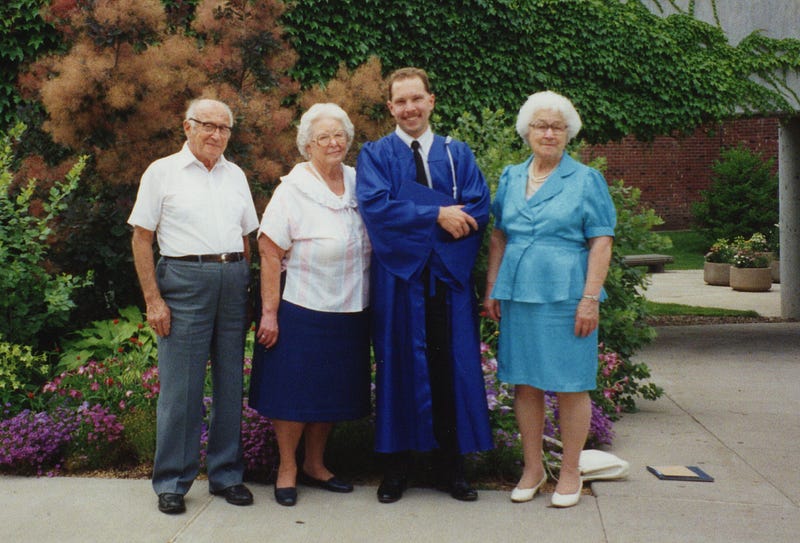
I needed five years to finish my degree because I took so many extra classes and was really enjoying college. I completed my final couple classes during the summer and graduated in August 1990. I planned to get a job, finish my Guard time, and move on with life, but life had other plans. In August 1990, Saddam Hussein decided to invade Kuwait.
The invasion itself had no direct impact on me, but there were ripple effects. As the first significant conflict since Vietnam and first large-scale military mobilization since World War II, the National Guard and Army Reserve were suddenly relevant. They were expected to be needed for actual deployments.
With the military showing up on the news nightly, the public was also waking up to the presence of military elements in their communities. I remember stopping for gas after drill one night. I was in uniform and two young boys were looking at me with a bit of awe and wonder I had not seen before. A clear cultural shift was occurring.
Soon thereafter, National Guard leadership restricted alcohol use during drills and annual trainings. Units and Soldiers realized they could be mobilized for combat. And I had a surreptitious encounter with some officers who suggested I attend Officer Candidate School. So, that’s exactly what I did.
I joined the Army during the Cold War and now the Soviet Union was crumbling. The role of the United States in the world was evolving. That meant the U.S. military must also evolve. I felt I could help with that process as I began to embrace my service not as simply a means to an end — paying for college — but as a way to give back to my country.
I chose to extend my enlistment and pursue becoming an officer in hope of having a greater impact. The pursuit of becoming an officer would be a story in itself. Regardless, in 1995 I was commissioned a Second Lieutenant in the Wisconsin Army National Guard.
Concurrently, I was starting my professional career as an educator. I did become an auto shop teacher, though the name had changed to automotive technology. I was starting the exact job I had planned for and was completely disappointed. Okay, maybe not completely, but the reality of just how bad formal education was for actual learning came rushing back to me. All my students chose to be in my classes and we shared a common interest, yet it was clear little collective learning occurred relative to the time spent in class.
Thus began a 30 year journey trying to figure out how schools could facilitate effective learning for all students. I went from the classroom to being the Technology Education Consultant for the Wisconsin Department of Public Instruction (DPI). I thought maybe that would provide the opportunity I was seeking to bring about real change.
My team did implement several exceptional programs benefiting tens of thousands of children. I helped scores of schools improve their program offerings. And I was involved with organizations and networks pushing truly innovative education ideas. Yet any improvements in student achievement were incremental at best. No one was noticeably moving the needle.
I left the consultant position to enter school administration. I thought as a school district superintendent I could implement more significant changes directly impacting all the students in a community. I worked my way up as an associate principal, principal, and director of career and technical education.
What I learned is that administrators have very limited ability to make significant changes. Again, I was part of numerous initiatives with positive impacts including opening two charter schools in a high-poverty urban district. But nearly every positive change revealed other challenges needing to be addressed. It was the education version of Whack-a-Mole.
I started to realize the school model being used is the problem. We cannot bring about significant improvement in learning for all students until we reinvent education. Stripe’s star Bill Murray’s other iconic character, greenskeeper Carl Spackler in Caddyshack, literally blew up a golf course trying to rid it of one pesky gopher. I started to realize we would need to “blow up” our education model to address all of the pesky challenges that have hindered learning for decades.
Throughout this journey of discovery, another journey was continuing. I was striving to impact the U.S. Army in positive ways. I held a number of positions, the most influential of which was serving as an Officer Candidate School TAC Officer (Train, Advise, and Counsel).
We used a variety of methods to develop candidates into leaders. I always believed our most effective tool was setting a good example, so that’s what I tried to do. In the years since, I have heard from numerous soldiers I mentored that I was a positive influence. Many have gone on to become senior officers including some holding the rank of colonel.
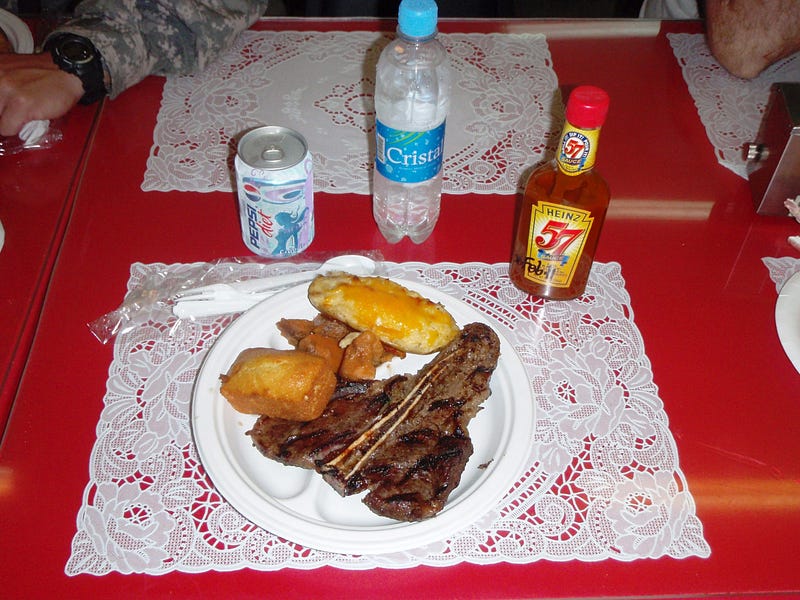
In 2008, I deployed to Afghanistan and commanded a Police Mentor Team. Our job was to help the Afghan National Police transition from a para-military force to more of a community policing model. That was a tall order. I don’t know that we made much difference through formal training, but I believe we did impact our counterparts through the relationships we built and the dialogues we had with them. At the very least, I hope we planted seeds of what their country could become.

Throughout most of the journey described above, I was not alone. From early adolescence I felt I needed a girlfriend to feel whole. I have no real idea why; it isn’t as if something was missing. It seems I needed someone else to validate my worth (besides my family, who certainly did that in many ways). Consequently, when I wasn’t in a relationship, I was constantly seeking one.
Consequently, I was more focused on the relationship than the other person in the relationship. It was too easy to jump into things and create a vision of a future without the depth of connection, of love, that might be possible. Of course, I didn’t understand that at the time; and I did love my partners, but I didn’t realize what it truly meant to be in love.
By age 30, I was finally content with myself. I didn’t need others’ validation and was perfectly happy being single. That’s when I met Katherine. We both took American Sign Language classes for personal interest. The night we met, the friend she normally sat with was gone, so we sat together and started talking.
I don’t remember an immediate spark, but Katherine agreed to accompany me to an event the following week by a group of deaf performers. We had a good time and next class we again sat together. The following week we skipped class altogether to get something to eat and soon I had an entire new understanding of love — and the difference between loving someone and being in love with someone.
Two months later, I proposed and she said, “Yes.” This year we celebrate 25 years of marriage, and I am as in love with Katherine as I was then, and maybe more. I like to tell people we’re still in our honeymoon phase, though she might disagree.
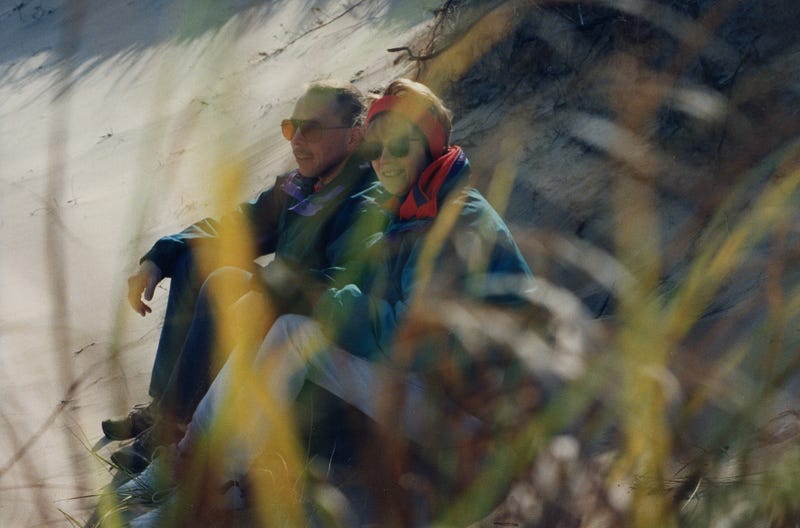
I was away from home for a year for my deployment to Afghanistan. That meant leaving behind Katherine along with Samuel who was eight and Mathew who was five. I thought Samuel, being older, could better understand why I was gone; so, I expected my absence to be harder on Matthew. I was both right and wrong. Samuel could understand better so also better knew the risk. What he couldn’t understand was why I had to do this when no one else’s dad had to.
That was an incredibly difficult year for all of them, but especially Samuel and Katherine. We were so fortunate the staff at Sam’s school went above and beyond any expectations we could have had. Sam’s third grade teacher was laid back and simply rolled with anything that happened. The principal and social worker would literally come to our house some mornings to coax Sam into going to school.
Service members know our families sacrifice the most for our decision to serve. They did not choose for us to be in the military nor do they have any control over when we must be gone. Yet they must bear the burden. I pray my service has made a difference for our country so my family’s sacrifice has not been in vain.
In 2011, I took one more shot trying to push for real education reform through the Wisconsin DPI. I returned in a slightly different role and tried to influence the leadership up to the State Superintendent. Everyone was attentive and often stated agreement with the ideas I shared, but it was like trying to use a kayak paddle to steer the Titanic.
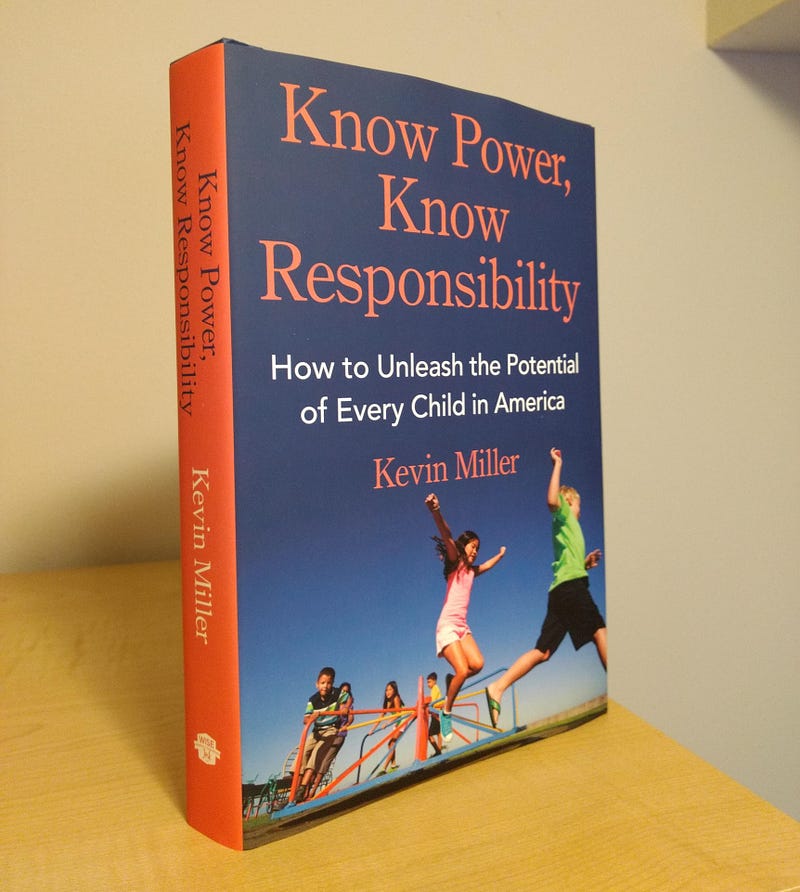
In 2017, I left DPI intent on driving the reinvention of education in America. In 2019, I published my book Know Power, Know Responsibility: How to Unleash the Potential of Every Child in America. And I have been striving since to start making little waves that will lead to bigger waves and eventually a tsunami of real change.
I know my biggest challenge is an inability to focus on one overarching purpose. The experiences I’ve had and the skills I’ve developed apply to education reform but also broader societal reform. I continue to serve in the military where I now train and mentor field grade officers (majors and above). I also participate in numerous education networks dedicated to school innovation.
I started writing for Medium this year as a means of getting my ideas out to a broader audience. Even here, I am writing on a variety of topics rather than staying focused. I do love to write, but all my current writing is aimed at my goal of making the world a better place.
I am extremely grateful to Dr Mehmet Yildiz for accepting me into ILLUMINATION and ILLUMINATION-Curated and for the support and encouragement of the ILLUMINATION editors and other writers. This is a wonderful and supportive community, and I am so fortunate to be a part of it.
A FEW MORE TIDBITS
This intro is clearly much too long already, yet there is so much more to this journey. Here are a few other tidbits about me that didn’t fit above but were milestones along the way. And since I’m writing this for my own reflection, I give myself permission to drive on.
My parents had a broad social circle. Yet, because of where we lived, there wasn’t much diversity among these friends. Mom and Dad did, however, have very close friends who were Black and who visited occasionally. I believe they were friends before my parents moved to Madison, and I don’t think I gave their race any thought at the time. I’ve thought about it a lot in 2020.
They had a son my age and, when our families got together, he and I would play. In my memory, they were just another family and he was just another kid to play with. The idea of being “color blind” toward other people is controversial, but that’s how I remember it with them. It was about who they were and not what they looked like; their character, not their color.
My grandparents, aunts, uncles, and cousins were a big part of my life growing up. None lived nearby so we saw them just infrequently enough each visit was special. What stands out more than anything else is love and joy. All my extended family memories are like a collection of Norman Rockwell prints. Even as the families gathered for the grandparents’ funerals, there was far more laughter than tears.
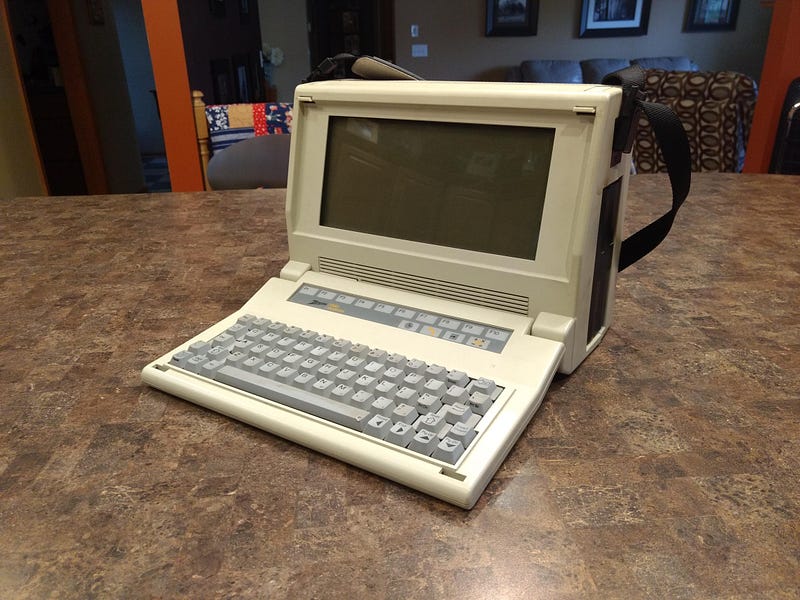
I held a variety of jobs besides those noted above. I delivered pizzas for several years to supplement my technician pay. During college, I bought a portable computer made by Zenith (remember, this was the mid-eighties); with that and my “typing” skills (thanks, Mom!) I made money word processing papers for people. I also worked as an announcer and tech for a mostly automated radio station in my college town.
I unsuccessfully ran for school board in Madison, WI and, seeking to make a bigger impact on the world, in 1998 I ran for Wisconsin State Assembly. I have always been independent politically, but I ran as the Republican candidate in an overwhelmingly Democratic district. It wasn’t even close (I lost epically), but it was a great learning experience and a very positive race. I got along well with my opponent who was a fellow service member; we’ve crossed paths several times since and always had great conversations.
I enjoyed neighborhood sports but not organized youth sports, except for hockey. I tried Little League baseball and Pee Wee football, but hockey was the only sport I stuck with from age seven to 15. I enjoyed playing and was a goalie in the later years but didn’t have the drive to get really good. Fortunately, I had a chance to try coaching hockey right after high school.
A good friend and fellow hockey goaltender was asked to coach a nearby Mite AA team (high level seven and eight year-olds). He asked me to join him and I accepted. That was my first exposure to politics in sports. We were naïve; there were try-outs to get on the team and we selected players based on the skills they showed (rather than whose parents were big sponsors or well-connected). And most of the parents were more than a little arrogant. I coached many teams after that and always made sure they were B and C level.
I am exceptionally well-aware how fortunate I have been in my life. I did not come from a family of material wealth, but we had an abundance of love. That our world is in such turmoil today is distressing, but there remains an abundance of love and hope. It isn’t always evident, but it’s there. We simply must nurture it and help it to grow and overwhelm the hatred and sadness. I hope my writing helps.
Now, if you’ll excuse me, I have to find someone to go buy the fatted goose so we can all enjoy a joyous holiday meal. God bless us everyone!
Kevin Miller is a Boomer who joined the Army during the Cold War and continues to serve. He has spent 30-plus years working in K-12 education as a teacher, administrator, and consultant and is now on a mission to reinvent our school model. His book Know Power, Know Responsibility provides the imperatives for a complete redesign of schools and the way to get there. See his website knowresponsibility.com to learn more.


