
OPINION/NON-FICTION
Combating Racism in Puerto Rico From a Different Perspective
Because it’s time to revisit our majestic roots.
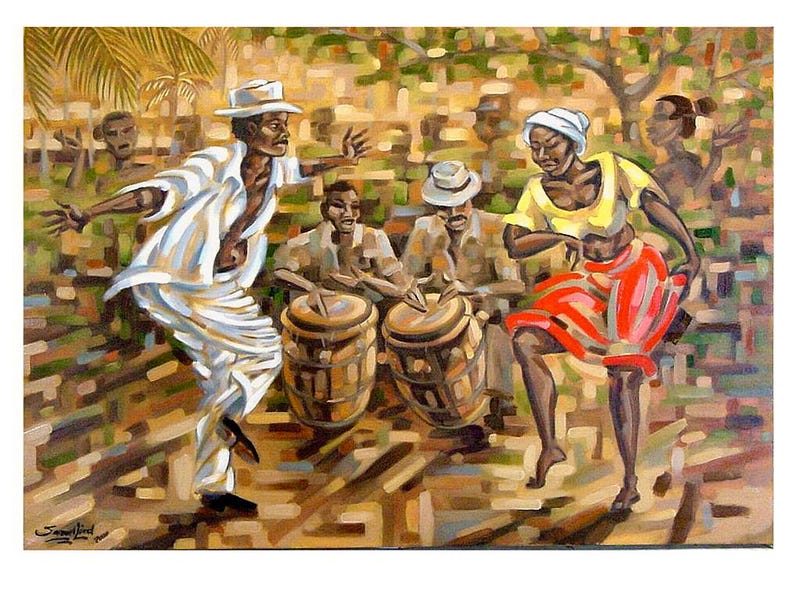
To deny that racism exists in Borikén is a slap in the face to my ancestors and yours. We are long overdue for the conversation — both here on the archipelago as well as in the diáspora. ~ Author at Lola’s Lines
Just this past November we saw the case of the young soccer star, Jan Carlos Mateo Delgado who was verbally attacked with racist remarks from a fan at a match with the University of Puerto Rico (Mayagüez). The game was neither suspended nor was said fan removed from the stadium.
We have the controversial situation in Santurce’s Museum of Art of Puerto Rico where they substituted the name of the Cecilia Orta Allende Gallery Hall to that of the only daughter of an affluent couple — donors of the renowned museum. Known as La Pintora del Pueblo (The Painter of a People), Cecilia Orta Allende, an Afro-Puerto Rican woman was not only an outstanding plastic artist but also an educator and advocate of our youth, founder of the Academy of Plastic Arts of the Future Painters of Puerto Rico.
Next up, we consider the racial harassment crisis of Chanelly Cortés Rodríguez, her husband, Luis Ramírez Walker, and their daughters in Canóvanas. For over three years, the Cortés Ramírez family has been fighting an uphill battle against the mega-hostile actions of their neighbor, the octogenarian Carmen García Gutiérrez who has black dolls and drawings hanging from her balcony and who plays her radio at full volume (day and night). All of this with the obvious aim to humiliate and dehumanize the Cortés Ramírez family. This past August, Luis Espinet García (the octogenarian’s son) was found not guilty of threatening Chanelly Cortés Rodríguez with a firearm.
Turning once again to sports, we revisit the disparaging remarks about Tokyo 2020 Olympic gold medalist Jasmine Camacho-Quinn, who competes for Puerto Rico. Born and raised in the United States, she is the daughter of a black Puerto Rican woman (María Milagros Camacho) and an African-American man (James Quinn). Shortly after Camacho-Quinn won her medal in the 1 hurdles in August 2021, there were those who hit social media mocking the stellar athlete for not speaking Spanish, not knowing the lyrics of La Borinqueña. They questioned her Puerto Rican-ness. It makes me wonder: if she were of a much fairer complexion, would those remarks have been made?
In the March 2021 WAPA documentary Sombras de una Verdad (Shadows of a Truth), we get a peek at Puerto Rico’s racism problem through various interviews. We meet 14-year young student Félix Escalera Lozada known [at the time] as Chiqui Reportero (the Little Reporter), for his interest in that vocation. In the documentary, he speaks with seasoned (Black Puerto Rican) journalist Julio Rivera-Saniel about the racist remarks of several schoolmates and the inaction of some of his teachers. Both Félix and his mother (who is beside him during the interview) say he experienced this at 8-9 years old! It’s important to note that there were two teachers who Felix says did support him during those extremely difficult times: Missy Pineda and Missy Garcia, his English and Science teachers.
These are just a few examples of the racism that exists in our country, reminding us that the question is not ‘are we a racist country?’ nor is it ‘is there racism in Puerto Rico?’ Rather, the conversation must focus on the actions we are taking to confront and eliminate this disease. Another significant aspect of the issue we need to be aware of is that as a colonized nation, prejudice and discrimination against visibly Black persons becomes even more complex. I’m talking about a double violation of human rights — racism on the one hand and colonization on the other.
Where do we start to dissect the subject that for so many is so difficult? Let’s start with where they say was the beginning of our history as a nation. With our Indigenous population being forced into labor and thereby, subsequently reducing in Puerto Rico, the Spanish crown authorized the kidnapping and enslavement of our ancestors from West Africa. It is here where we begin.
But that’s where the problem lies. To say that everything begins in the 1500s is like saying that those African people — our ancestors — did not have their own history. It is like saying that since they were forced to reach the shores of Borikén, their cultures, societies, traditions, languages, religions, in short, all those things that make up their collective identity ceased to exist. As well as being absurd, it is known that this was not so. To speak of our African heritage only in terms of the point of subjugation [with Spanish colonization] is to erase the essence of an entire race.
What would happen if in Puerto Rico the narrative of our African heritage started from another perspective? Let’s take a look from a very different window — one that speaks of the greatness and majesty of Mama Africa.
It is widely known that there were several empires on the continent. For example, the Benin Empire (circa 1180 CE — 1897 CE) was considered one of the oldest and most developed states in West Africa with famous artisans making ivory masterpieces. Looking towards the Songhai Empire (circa 1000 CE — 1591 CE), we find the prominent city of Timbuktu, one of the most important learning centers in the region. Academics and skilled workers came from all over the continent to study and work there (source).
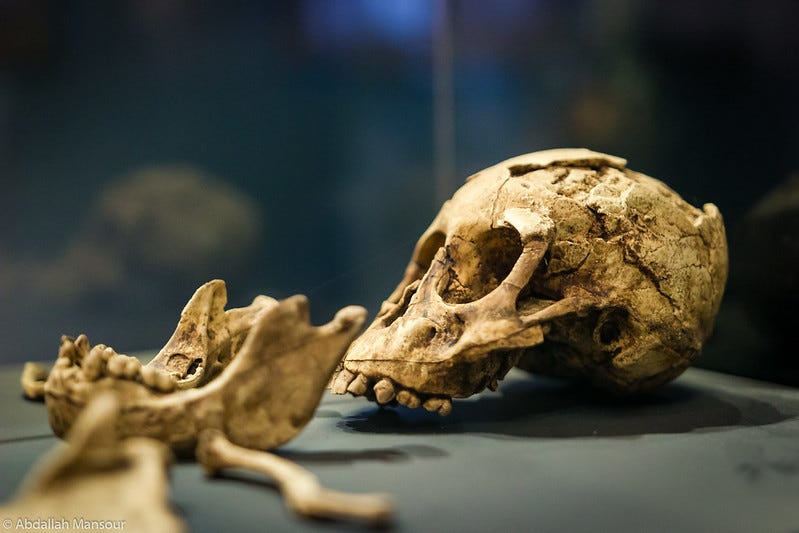
Let’s talk about the fact that Africa is known as the cradle of humanity because it is where archaeologists discovered fossils of the first hominid hunters, homosapien skulls and the first stone tools. We are talking about ‘totally modern skulls’ dating back at least 233,000 years, found in the Omo Valley in Ethiopia. “Lucy”, the 3.2 million year old Australopithecus afarensis, was also unearthed in Ethiopia. The first stone tools, dated to 3.3 million years discovered in Kenya.’ A skull is also known to have been ‘recovered from a mine in a neighbourhood west of the Atlas mountains of Morocco in the early 1960s.’ (source).
Then there’s the tradition of oral storytelling that was part of the folklore and beliefs of some African communities. For example, storytelling has been a ritual for the people of Ghana in the evening after a hard day’s work (source). We know that through music the tradition of oral histories is also maintained. We see this in our folk music — the two genres of la bomba, as well as in la plena. The West African influence on our Puerto Rican culture is evident.
So following that same thinking, looking through the lens of greatness [of the Black race], we focus on the countless prominent Black Puerto Rican figures, people who contributed an extraordinary amount to the development of what we are today as a nation and a vibrant culture. We remember those like Celestina Cordero Molina (b. April 6, 1787), known as La Madre de la Educación Pública en Puerto Rico (The Mother of Public Education in Puerto Rico), and her parents Doña Rita Molina and Don Lucas Cordero, free and educated people. We continue with Arturo Alfonso Schomburg (b. 24 January 1874), a historian, writer, activist and prominent figure in everything outside documenting the African heritage.
Let’s talk about others like María Civico (b. 1860), an exemplary community leader and citizen known for her skills in sewing and also look for Ruth Fernández Cortada (b. 23 May 1919), known as El Alma de Puerto Rico Hecha Canción (The Soul of Puerto Rico In Song), who performed at the New York City Metropolitan Opera House, and who was also elected to the Senate of Puerto Rico.
We must remember Adolfina Villanueva Osorio (b. 1944), a local community leader and activist who fought until her last breath for her family’s right to not be displaced.
Then there’s our distinguished leader, Don Pedro Albizu Campos, Puerto Rican lawyer, illustrious speaker, politician (truly for the people), Harvard graduate, and great defender of our country’s independence. Known as The Master (with two ‘dates of birth’ — 12 September 1891 and 29 June 1893), Don Pedro remains one of the most prominent figures in our collective conscience.
These are just a few examples to use to switch the narrative around racism in our country. As the actor and entrepreneur, Modesto Lacén said in the WAPA documentary, “Let’s be brave and have this conversation once and for all. The time is now. Enough about speaking of Blackness only from our folk [music/dance] traditions. Yes, many of us are artists [musicians/singers/actors], but we’re also intellectuals, psychologists, engineers, lawyers, entrepreneurs, leaders in any field. Let’s talk about my family, which is also yours.”
There’s certainly much more to discuss on the subject of racism in Puerto Rico. To simply say we’re a mix of three races isn’t the solution. It’s all of our responsibility to talk openly and honestly on the topic. It’s especially important that people like me — those who are not visibly Black but know we have African heritage on our grandparents’ side — speak up. Even those Puerto Ricans who insist on not having any African ancestry, they too need to lift their voices against racism on the archipelago (and anywhere in the world, for that matter).
It’s important that the much fairer-skinned and white sectors of our people use their/our voices and actions in the fight because everyone knows the world continues to favor whiteness. Racism will disappear from Borikén and from our cultura when we stop being afraid to talk about it, and when we take proactive action to fight it wherever we find it. We owe it to our beautiful afropuertorriqueñe/afropuertorriqueña sisters and brothers and to the future generations of our country.
The original story was published (en español) at El Adoquín Times on November 26, 2023.
Follow the pub to receive updates!