
Color
Color Theory is a complex study related to the properties of light and human perception.
Color theories are concepts and techniques artists use to create color, allowing artists to understand how colors interact with each other to produce a desired effect.
Color theory is a complex topic, but it is an important tool for artists and other professionals. It involves understanding perception, light, culture, mood, and more. Despite being complex, color theory is an interesting and important topic. By understanding it, artists can produce more stunning and evocative works.
Light
The study of light is essential to understanding color theory. Light consists of energy that travels in waves. The length of the waves determines the color of the light.
For example, violet light has shorter waves than red light, and this matters because it affects how people see things. As a colorist, or a designer, you need to understand how light behaves and the color it produces.
If you’re working in Adobe Photoshop, let’s say, you need to be aware of the different ways you can control light, changing the light’s color, intensity, and how it falls on objects.
Cultural Influences
One of the most fascinating aspects of color theory is how it varies from culture to culture. Colors often have different meanings in different parts of the world.
For example, in the United States, the color pink is often associated with femininity, but in some countries, like Japan, pink is considered to be a masculine color.
This means that when you’re working on a project that will be shown in different parts of the world, you need to take cultural influences into account. You might want to avoid using certain colors because they could be misinterpreted.

Perception
The way humans perceive color is also important to color theory. Our eyes can see different colors because they contain cone cells that respond to different wavelengths of light. There are three types of cone cells and each type responds to a different range of wavelengths. This is why we see a range of colors and not just black and white.
The Colorist: Johannes Itten
One of the great colorists of all time might be considered Johannes Itten. He was a Swiss painter and sculptor, as well as an art teacher at the Bauhaus school. He was known for his use of color and his book, The Art of Color: The Subjective Experience and Objective Rationale of Color (1973), is still a classic on the subject.
Itten wrote, “Color is the most spiritual of the elements, the most ethereal, and the most alive.” He understood the power of color and how it can be used to evoke emotions and create a desired effect.
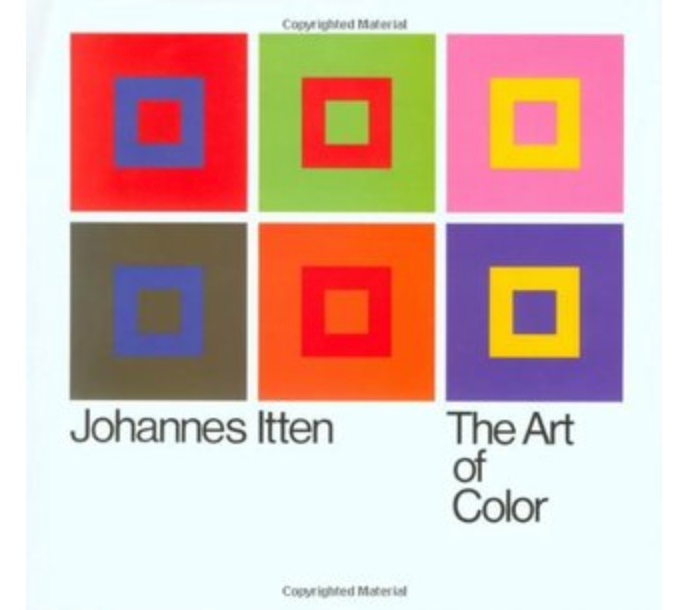
His two different approaches to understanding the art of color included the additive and subtractive color models. The additive model is based on the three primary colors: red, blue, and yellow. These colors can be mixed together to create other colors.
The subtractive model is based on the three secondary colors: purple, green, and orange. These colors are created by mixing the primary colors together.
Itten’s approach to color theory is still used today. By understanding the principles of color theory, artists can create works that are both beautiful and effective.
Industry and Examples
A graphic designer might choose a certain color for a logo to create a desired effect. For example, a company might want to use green to communicate that they are environmentally friendly.
In manufacturing, color theory is used to choose the right colors for products. A company might choose different colors for their products to differentiate them from their competitors.
In engineering, color theory is used to create warning signs that are easy to see and understand. By using different colors, engineers can create a system where different colors mean different things. This is why traffic lights are red, yellow, and green.
Color theory is a complex subject, but by understanding the basics, artists and designers can create works that are both beautiful and effective. By understanding how light behaves, how humans perceive color, and the different color models, artists can create works that evoke the desired emotion or communicate a message.
Over the next several posts, I’ll cover specific color theories like analogous color, color symbolism, harmony, scheme, purity, harmony, and combinations.
Checkout My Lists
Decision Theory (8)
Ideation (21)
Design Thinking (7)
Design Theory (23)
If you’ve enjoyed my writing, please consider supporting me, while also accessing unlimited Medium articles, by following the link to subscribe as a member for $5 a month or $50 per year. Thank you!


