avatarDark Energy Articles

Free AI web copilot to create summaries, insights and extended knowledge, download it at here

3275

Abstract

</div> </div> </figure></iframe></div></div></figure><h1 id="f9d3">The galleon has been lying at the bottom of the sea for over 300 years.</h1><p id="ecc1">The San José warship was a three-masted galleon of the Spanish fleet equipped with 64 cannons. It was launched in 1697 and set sail for service a year later. In 1708, it was sunk during a naval battle between England and Spain off the coast of Cartagena de Indias in Colombia. Out of a crew of approximately 600, only a few sailors survived.</p><p id="74eb">The ship carried gold, silver, precious jewels, a collection of royal ceramics, and Chinese porcelain, among other items. Today, this treasure is worth around $17 billion. Authorities have stated that the galleon remains “untouched by humans” but is well-guarded by marine creatures that have made the wreck their home.</p><p id="db77">The official statement also mentioned that two other shipwrecks were located in the vicinity of the San José. The second galleon, dating back to the colonial era of Central America, and a schooner, likely from the 19th century.</p> <figure id="878a"> <div> <div> <img class="ratio" src="http://placehold.it/16x9"> <iframe class="" src="https://cdn.embedly.com/widgets/media.html?type=text%2Fhtml&amp;key=a19fcc184b9711e1b4764040d3dc5c07&amp;schema=twitter&amp;url=https%3A//twitter.com/AFP/status/1761947251558248693%3Fs%3D20&amp;image=" allowfullscreen="" frameborder="0" height="281" width="500"> </div> </div> </figure></iframe></div></div></figure><h1 id="a491">The San José wreck was first located in 2015.</h1><p id="e730">For three centuries, finding the San José remained a dream for treasure hunters worldwide. It was only in 2015 that the wreck of the ship was discovered during a joint British-Colombian underwater exploration mission. Since then, no one had dared to bring it to the surface until now.</p><p id="4f7a">Colombia was a Spanish colony when the Spanish galleon sailed the Caribbean waters. Scientists point out that the treasures on board were entirely sourced from South American countries, especially present-day Peru and Bolivia.</p><h1 id="a117">The treasure is within reach, but its extraction is more complicated than it seems.</h1><p id="b7e2">The Spaniards planned to transport the loot to Europe, to the court of King Philip V. They didn’t make it. In 1708, during a clash with the English fleet “Expedition,” a cannonball struck the San José right where the gunpowder stores were located below deck. The ship exploded and sank instantly. Today, it is known to lie at a depth of approximately 600 meters off the coast of Cartagena de Indias.</p><p id="427b">San José has been a bone of contention between Spain, Colombia, and Bolivia. Madrid argues that according to law and international conventions, they have the right to everything on board. Their argument is that at the time of sinking, the ship belonged to the Spanish.</p><p id="42e3">The indigenous people of Bolivia, however, believe that the treasure belongs to them. Spanish invaders forced their ancestors into hard labor in mines to extract silver, which ended up on the galleon’s deck. Now, it seems Colomb # Options ia is winning the race for the wreck.</p> <figure id="9eaf"> <div> <div> <img class="ratio" src="http://placehold.it/16x9"> <iframe class="" src="https://cdn.embedly.com/widgets/media.html?type=text%2Fhtml&amp;key=a19fcc184b9711e1b4764040d3dc5c07&amp;schema=twitter&amp;url=https%3A//twitter.com/LanceMigliaccio/status/1761995037359915305%3Fs%3D20&amp;image=" allowfullscreen="" frameborder="0" height="281" width="500"> </div> </div> </figure></iframe></div></div></figure><h1 id="a449">What happened to the San José galleon?</h1><p id="e93e">Experts estimate that approximately 200 tons of gold, silver, emeralds, and other valuables lie at the bottom. Colombian government representatives stated that the entire treasure is to be housed in the collections of the National Museum.</p><p id="5605">In late May 1708, the Spanish fleet was sailing from Panama to Europe to transport a massive treasure to King Philip V’s court. It consisted of three warships and 14 merchant vessels. Due to the approaching hurricane season, the sailors decided to take refuge in the Colombian city of Cartagena de Indias.</p><p id="6fbe">It was an incredibly tumultuous period, as the so-called War of the Spanish Succession was ongoing. It lasted from 1701 to 1714 and involved, among others, Great Britain, Spain, the Netherlands, and France.</p><p id="171a">On their way to the Colombian port, the Spanish fleet was attacked by the British. The battle near the peninsula, south of Cartagena, ended in an undisputed victory for Great Britain.</p><div id="0c9e" class="link-block"> <a href="https://readmedium.com/rediscovered-captain-james-cooks-lost-trove-of-200-remarkable-specimens-d4028757733e"> <div> <div> <h2>Rediscovered: Captain James Cook’s Lost Trove of 200 Remarkable Specimens</h2> <div><h3>It was believed that the magnificent collection of unique seashells acquired by Captain James Cook was lost forever…</h3></div> <div><p>medium.com</p></div> </div> <div> <div style="background-image: url(https://miro.readmedium.com/v2/resize:fit:320/1*9Y84iVp9ISICmuutasuKnw.jpeg)"></div> </div> </div> </a> </div><h1 id="664f">Attention all readers!</h1><p id="bb38"><b><i>As content creators on Medium.com, we face minimal compensation for our hard work. If you find value in my articles, please consider supporting me on my “<a href="https://www.buymeacoffee.com/oconnel">Buy Me a Coffee</a>” page. Your small contributions can make a big difference in fueling my passion for creating quality content. Thank you for your support!</i></b></p><figure id="1057"><img src="https://cdn-images-1.readmedium.com/v2/resize:fit:800/0*Pm9TOr-5svmNuuXB.png"><figcaption><a href="https://www.buymeacoffee.com/oconnel">https://www.buymeacoffee.com/oconnel</a></figcaption></figure><figure id="71ef"><img src="https://cdn-images-1.readmedium.com/v2/resize:fit:800/0*KJc52P2X8j4VSRWK.png"><figcaption><a href="https://www.buymeacoffee.com/oconnel">https://www.buymeacoffee.com/oconnel</a></figcaption></figure></article></body>

Colombians Uncover Centuries-Old Spanish Galleon, Salvaging Sunken Riches

Finally, Colombia has begun to recover the treasure from the Spanish ship that sank in 1708. The valuables are worth approximately $17 billion today.
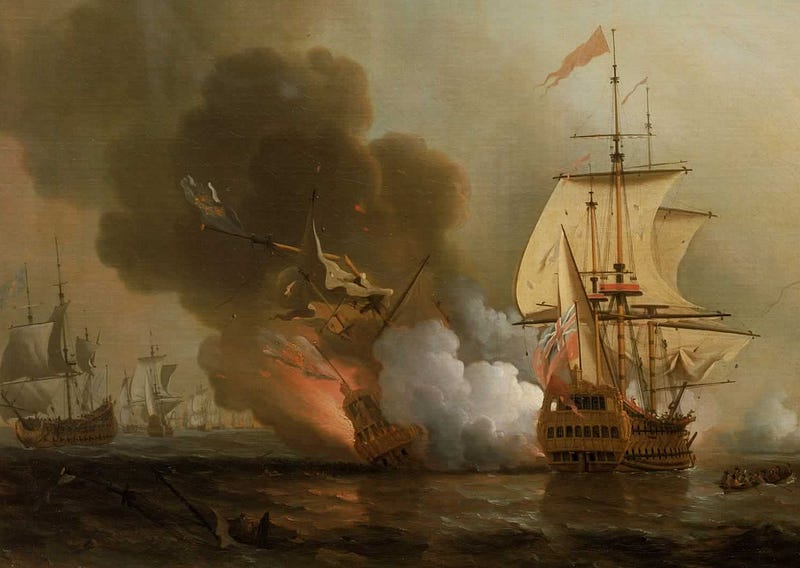
[Photo: San José — Samuel Scott, CC BY-SA 3.0, via Wikimedia Commons]

The Colombian government is pursuing an ambitious plan to retrieve the San José galleon. It claims that the precious items on the sunken ship are “national assets.” In 2018, the United Nations Educational, Scientific and Cultural Organization recommended that Colombia refrain from taking unilateral actions regarding the salvage of the wreck.

Recovery of the San José Wreck

Nevertheless, Colombians are undeterred. Work on recovering artifacts is set to commence in April. Researchers emphasize their interest in the wreck primarily as a historical object rather than for its treasures. The plan is to extract the entire ship by 2026. The artifacts will undergo thorough examination and then be displayed in a new museum dedicated to the San José.

Experts estimate that the mission could cost Colombia up to $70 million. This poses a significant challenge due to the depth at which the wreck lies. It is also unclear who will ultimately claim the precious treasure.

In 2022, Colombians released images to the public depicting the wreck of the San José war galleon. Among them were gold coins, ancient Chinese porcelain, and ship cannons.

The task of recovering the treasure has been entrusted to the Colombian Navy in collaboration with the Ministry of Culture. An official statement acknowledged that four observational missions had already been conducted using remotely operated underwater vehicles.

The galleon has been lying at the bottom of the sea for over 300 years.

The San José warship was a three-masted galleon of the Spanish fleet equipped with 64 cannons. It was launched in 1697 and set sail for service a year later. In 1708, it was sunk during a naval battle between England and Spain off the coast of Cartagena de Indias in Colombia. Out of a crew of approximately 600, only a few sailors survived.

The ship carried gold, silver, precious jewels, a collection of royal ceramics, and Chinese porcelain, among other items. Today, this treasure is worth around $17 billion. Authorities have stated that the galleon remains “untouched by humans” but is well-guarded by marine creatures that have made the wreck their home.

The official statement also mentioned that two other shipwrecks were located in the vicinity of the San José. The second galleon, dating back to the colonial era of Central America, and a schooner, likely from the 19th century.

The San José wreck was first located in 2015.

For three centuries, finding the San José remained a dream for treasure hunters worldwide. It was only in 2015 that the wreck of the ship was discovered during a joint British-Colombian underwater exploration mission. Since then, no one had dared to bring it to the surface until now.

Colombia was a Spanish colony when the Spanish galleon sailed the Caribbean waters. Scientists point out that the treasures on board were entirely sourced from South American countries, especially present-day Peru and Bolivia.

The treasure is within reach, but its extraction is more complicated than it seems.

The Spaniards planned to transport the loot to Europe, to the court of King Philip V. They didn’t make it. In 1708, during a clash with the English fleet “Expedition,” a cannonball struck the San José right where the gunpowder stores were located below deck. The ship exploded and sank instantly. Today, it is known to lie at a depth of approximately 600 meters off the coast of Cartagena de Indias.

San José has been a bone of contention between Spain, Colombia, and Bolivia. Madrid argues that according to law and international conventions, they have the right to everything on board. Their argument is that at the time of sinking, the ship belonged to the Spanish.

The indigenous people of Bolivia, however, believe that the treasure belongs to them. Spanish invaders forced their ancestors into hard labor in mines to extract silver, which ended up on the galleon’s deck. Now, it seems Colombia is winning the race for the wreck.

What happened to the San José galleon?

Experts estimate that approximately 200 tons of gold, silver, emeralds, and other valuables lie at the bottom. Colombian government representatives stated that the entire treasure is to be housed in the collections of the National Museum.

In late May 1708, the Spanish fleet was sailing from Panama to Europe to transport a massive treasure to King Philip V’s court. It consisted of three warships and 14 merchant vessels. Due to the approaching hurricane season, the sailors decided to take refuge in the Colombian city of Cartagena de Indias.

It was an incredibly tumultuous period, as the so-called War of the Spanish Succession was ongoing. It lasted from 1701 to 1714 and involved, among others, Great Britain, Spain, the Netherlands, and France.

On their way to the Colombian port, the Spanish fleet was attacked by the British. The battle near the peninsula, south of Cartagena, ended in an undisputed victory for Great Britain.

Attention all readers!

As content creators on Medium.com, we face minimal compensation for our hard work. If you find value in my articles, please consider supporting me on my “Buy Me a Coffee” page. Your small contributions can make a big difference in fueling my passion for creating quality content. Thank you for your support!

https://www.buymeacoffee.com/oconnel
History
Science
Money
Treasures
Culture
Recommended from ReadMedium