avatarIlana Milkes

Free AI web copilot to create summaries, insights and extended knowledge, download it at here

2127

Abstract

eadmedium.com/v2/resize:fit:800/1*7HygHsBL3htHvs--ZfReSw.png"><figcaption>Feedback Loops</figcaption></figure><p id="abe0">For further exploration, watch this 1970’s MIT lecture by Meadows:</p> <figure id="bf43"> <div> <div> <img class="ratio" src="http://placehold.it/16x9"> <iframe class="" src="https://cdn.embedly.com/widgets/media.html?src=https%3A%2F%2Fwww.youtube.com%2Fembed%2Ff9g4-5-GKBc%3Ffeature%3Doembed&amp;display_name=YouTube&amp;url=https%3A%2F%2Fwww.youtube.com%2Fwatch%3Fv%3Df9g4-5-GKBc&amp;image=https%3A%2F%2Fi.ytimg.com%2Fvi%2Ff9g4-5-GKBc%2Fhqdefault.jpg&amp;key=a19fcc184b9711e1b4764040d3dc5c07&amp;type=text%2Fhtml&amp;schema=youtube" allowfullscreen="" frameborder="0" height="480" width="640"> </div> </div> </figure></iframe></div></div></figure><p id="c431"><b>Stubborn Optimism on Climate</b></p><p id="0807">Although we are seeing <a href="https://www.bbc.com/mundo/noticias-america-latina-51377234">the destruction of our ecosystems</a> in real-time, countries like Costa Rica have shown that transformation is possible. Costa Rica not only has a very educated population, but the country has become a tourism powerhouse that has been able to preserve its environment and biodiversity — without compromising economic development. Christiana Figueres brings us a clear message of why, more than ever, we need to focus on implementing solutions that guarantee sustainability for us and the future generations that will inherit the planet.</p> <figure id="2389"> <div> <div> <img class="ratio" src="http://placehold.it/16x9"> <iframe class="" src="https://cdn.embedly.com/widgets/media.html?src=https%3A%2F%2Fwww.youtube.com%2Fembed%2FKVVW5eGiETI%3Ffeature%3Doembed&amp;display_name=YouTube&amp;url=https%3A%2F%2Fwww.youtube.com%2Fwatch%3Fv%3DKVVW5eGiETI&amp;image=https%3A%2F%2Fi.ytimg.com%2Fvi%2FKVVW5eGiETI%2Fhqdefault.jpg&amp;key=a19fcc184b9711e1b4764040d3dc5c07&amp;type=text%2Fhtml&amp;schema=youtube" allowfullscreen="" framebo

Options

rder="0" height="480" width="854"> </div> </div> </figure></iframe></div></div></figure><p id="43da"><b>World Tech / Born Bio: Bio-based textiles + other inventions</b></p><p id="f7fd">Over the past 18 months, we have been focusing on creating vegetable leather made out of Colombian mushrooms, iOT educational kits that harness the power of renewable energies and reef restoration efforts that enable people to adopt corals in the Colombian Caribbean. <b>More on this in the next posts.</b></p> <figure id="a29e"> <div> <div> <img class="ratio" src="http://placehold.it/16x9"> <iframe class="" src="https://cdn.embedly.com/widgets/media.html?src=https%3A%2F%2Fwww.youtube.com%2Fembed%2FKbwBJs6gpIo%3Ffeature%3Doembed&amp;display_name=YouTube&amp;url=https%3A%2F%2Fwww.youtube.com%2Fwatch%3Fv%3DKbwBJs6gpIo&amp;image=https%3A%2F%2Fi.ytimg.com%2Fvi%2FKbwBJs6gpIo%2Fhqdefault.jpg&amp;key=a19fcc184b9711e1b4764040d3dc5c07&amp;type=text%2Fhtml&amp;schema=youtube" allowfullscreen="" frameborder="0" height="480" width="854"> </div> </div> </figure></iframe></div></div></figure><blockquote id="3889"><p>Due to the circumstance that it possesses coasts on both the Caribbean Sea and the Pacific Ocean, each of them exhibiting distinct geological, oceanographic, and climatic features, Colombia is perhaps the country with the highest marine biological diversity in South America and one of the most biodiverse in the world. <a href="https://scielo.conicyt.cl/scielo.php?script=sci_arttext&amp;pid=S0717-65382003000200011">Source</a></p></blockquote><p id="327f">By design and by default, Colombia has the potential to become the hub for biotechnological innovation in the next decade — while having the responsibility to protect and preserve the cradle of the Amazon and the home of the most diverse living systems on Planet Earth.</p><figure id="f9c6"><img src="https://cdn-images-1.readmedium.com/v2/resize:fit:800/1*0BW1LzjJfkMaH0x4W_SfOw.png"><figcaption></figcaption></figure></article></body>

Colombia, a biotech powerhouse

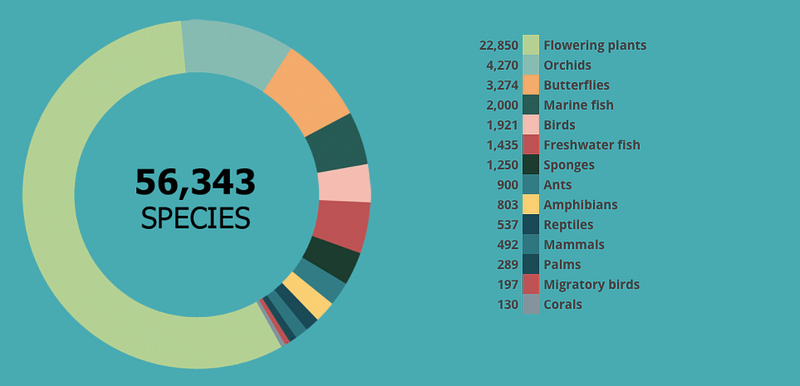
Colombia, per square kilometer, is the most biodiverse country in the world. There are more bird, amphibian, butterfly, and frog species here than anywhere else in the world (WWF), not to mention how it is possible to travel from desert to alpine tundra within a few days, passing through jungles, along rivers and over seas.
For decades, we have been known for world class pharmaceutical chemistry driven by the demand from the “most developed economies” in the planet. This unregulated industry has brought incredible wealth to the distribution networks that own the demand, but in parallel, a violence of equal magnitude in the country.

The case for Climate Tech

A rising trend is growing amidst entrepreneurship ecosystems around the world: Climate Tech. It’s trendy, it’s sexy, it’s the new cool to be part of the ones who are caring about the environment and building companies to solve the sustainability crisis we got ourselves into (“we” = keeping in mind that the most polluting countries are in North America, Europe and Asia). Whether entrepreneurs are doing it for the uphill potential to transform the world — or due to self-preservation (aka selfish motives), one of the biggest industries in the next years will be Climate Tech. There is a boom of funds, accelerator programs and startups catching up with massive environmental destruction that may have no return if we fail to modify human behavior at a large scale.

Systems Designs Modeling: overshoot and collapse

One of the greatest pioneering systems designer — Donella Meadows — predicted the “overshoot and collapse” of our living ecosystem by 2030 decades ago. In recent years, organizations like the UN, have confirmed this potential tragedy if we fail to modify our living habits.
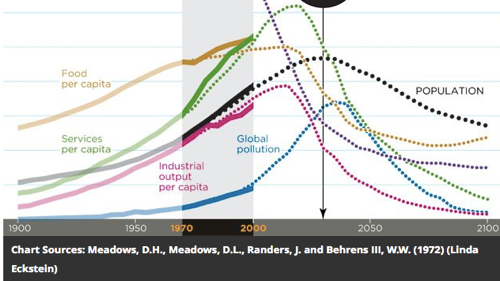
Feedback Loops

For further exploration, watch this 1970’s MIT lecture by Meadows:

Stubborn Optimism on Climate

Although we are seeing the destruction of our ecosystems in real-time, countries like Costa Rica have shown that transformation is possible. Costa Rica not only has a very educated population, but the country has become a tourism powerhouse that has been able to preserve its environment and biodiversity — without compromising economic development. Christiana Figueres brings us a clear message of why, more than ever, we need to focus on implementing solutions that guarantee sustainability for us and the future generations that will inherit the planet.

World Tech / Born Bio: Bio-based textiles + other inventions

Over the past 18 months, we have been focusing on creating vegetable leather made out of Colombian mushrooms, iOT educational kits that harness the power of renewable energies and reef restoration efforts that enable people to adopt corals in the Colombian Caribbean. More on this in the next posts.

Due to the circumstance that it possesses coasts on both the Caribbean Sea and the Pacific Ocean, each of them exhibiting distinct geological, oceanographic, and climatic features, Colombia is perhaps the country with the highest marine biological diversity in South America and one of the most biodiverse in the world. Source

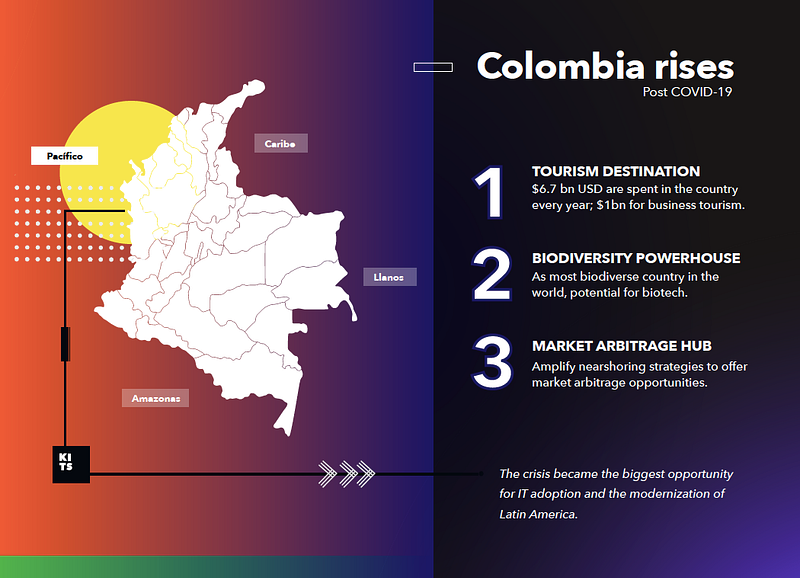
By design and by default, Colombia has the potential to become the hub for biotechnological innovation in the next decade — while having the responsibility to protect and preserve the cradle of the Amazon and the home of the most diverse living systems on Planet Earth.
Recommended from ReadMedium