
Collective Consciousness
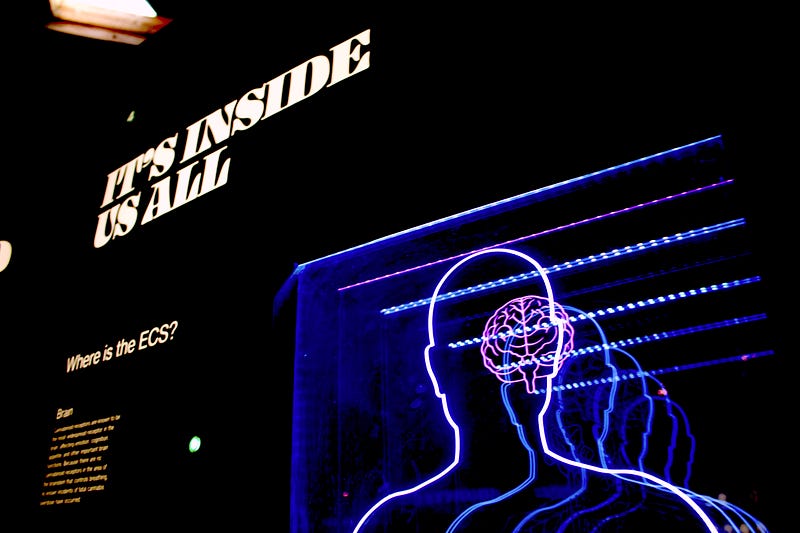
If you’re familiar with the concept of collective consciousness, you understand that you are already (at least subconsciously) aware of this information, right?
I want to begin with the story that got me into this rabbit hole;
A group of scientists were researching macaque monkeys that live on islands in Japan. They left sweet potatoes on the ground for the monkeys, and one of them rinsed a potato in the lake before eating it.
The monkey apparently discovered that it tasted better that way, and other monkeys on the island started doing the same thing.
What I found really fascinating is that the scientists observed monkeys on another island start to rinse their potatoes as well. These groups of monkeys were separated by water and were not connected by anything but their species’ collective consciousness.
There are many examples of collective intelligence in other species as well. All kinds of different birds, bats, butterflies, whales, turtles, etc. migrate based solely on instinct. Their ancestors passed down knowledge about migratory patterns without verbal communication or maps; they just know where and when to go.
Sea turtles consistently go the same beaches and islands to lay their eggs. When the eggs hatch, the baby turtles instinctively go straight to the water. This species specifically seems to have a collective knowledge that allows them to survive.
Most recently, orca whales all around the world seem to be becoming more aggressive toward boats and people in general. Could this be related to climate change and a different migration pattern due to lack of food? Are they becoming more aware of (and/or annoyed by) humans? Are the orcas in captivity somehow communicating their hatred of us? Regardless of motivation, they are definitely changing their behavior.
This brings me to my theory:
If collective consciousness is as recognizable as it is in nature, it must play a significant role in human consciousness as well; we are all connected.
Sigmund Freud has a brilliant analogy about the human mind as an iceberg. The conscious mind is represented by the part of the iceberg that is visible from the surface, while the subconscious is hidden below the surface.

Interplay between the conscious and subconscious makes up everyone’s individuality. Our personalities are more influenced by the 90-95% of our brain activity that we are not even consciously aware of.
We are also majorly influenced by ego, which some would argue is at the center of consciousness.
Ego is the story one tells themself about themself in order to maintain continuity in their perceived identity. It is less about authenticity and more about societal acceptation, and can cause our personas to become disjointed from our true identities.
This is why I believe it’s important to be aware of your own ego in order to expand your consciousness.
We have to recognize habitual thought patterns in order to change them, and this introspective allows a deeper knowledge of self to develop. (I will get into shadow work another time.)
While our conscious mind focuses on critical thinking and analysis, short term memory, and planning, our subconscious is recording everything. It is always active, especially while we’re dreaming.
A significant portion of who we are, what we’re capable of, and why we do things the way we do persists in a realm we don’t actively understand or have access to.
“In addition to our immediate consciousness, there exists a second psychic system of a collective, universal, and impersonal nature which is identical in all individuals.” — Carl Jung
Carl Jung’s most well-known concept is the collective unconscious. He believed the human psyche extended beyond our personal consciousness to a realm of archetypes, shared ideas, and universal patterns. He considered the integration of all conscious and unconscious elements of our psyche the only way to achieve self realization.
(Keep in mind he died in 1961 and his theories were far ahead of his time)
If this realm exists, it brings up more questions than answers.
Where does knowledge really come from?
Are our basic instincts passed down from our ancestors?
Are all of our subconscious minds connected?
Do we learn by accessing information that we essentially already have?
Are we in control of our own consciousness? Or being manipulated by forces we don’t understand?
In my opinion, it is critical to acknowledge that we don’t fully understand how our minds work.
We have (limited) access to realms beyond what can be explained by the physical science of our brains.
Each individual has their own journey with the spiritual and metaphysical aspects of life, and the more I learn, the more questions I have.
This is an overwhelming concept, and I understand why many people avoid it entirely.
Embracing the unknown is undoubtedly challenging, but I believe that being aware of our own potential could change the way we see the world and each other.
We are more connected than ever. Keep your mind open :)
Thank you for reading!
You know what buttons to push if you enjoyed it ;)
Part 2:


