avatarHope Rising

Summary

The author reflects on the complexities of growing up in an interracial family, grappling with cultural identity, societal prejudices, and the generational impact of trauma and healing.

Abstract

The article titled "Collateral Damage" delves into the personal narrative of someone from a mixed-race background, exploring the nuanced challenges faced by interracial families. The author acknowledges the burden of cultural expectations and the reality of racism, highlighting the internal conflict that arises from knowing one's history and the external perceptions that come with it. The piece touches on the loss of cultural identity, the ignorance encountered, and the struggle to be recognized as American while not white. It emphasizes the importance of solidarity and understanding that healing and growth are individual processes, not bound by time or comparison. The author comes to terms with the imperfections of their father, recognizing that love and accountability can coexist despite the pain caused by unhealed wounds. The narrative concludes with the realization that healing is a collective endeavor, often painful, and requires careful consideration of our words and actions.

Opinions

  • The author believes that the interracial family experience involves a unique set of challenges, including societal judgment and cultural loss.
  • There is an opinion that the concept of being American is unfairly associated with being white, which excludes and marginalizes people of color.
  • The piece suggests that understanding and solidarity are crucial, even among diverse experiences of oppression and trauma.
  • The author expresses that it is unfair to expect everyone's healing process to follow the same timeline or to manifest in the same way.
  • There is a recognition that leaders are not infallible and should not be idolized, as everyone has their own struggles and imperfections.
  • The author feels that love from a parent with unhealed trauma can be complex and different from the idealized version of love.
  • Accountability is important, but the author also shows empathy towards their father, acknowledging that he is doing his best despite his flaws.
  • The narrative conveys that healing is not a solitary journey and that broken individuals often find solace in each other.
  • The author advises caution with words, understanding that they can either harm or heal in the process of personal and collective growth.

Collateral Damage

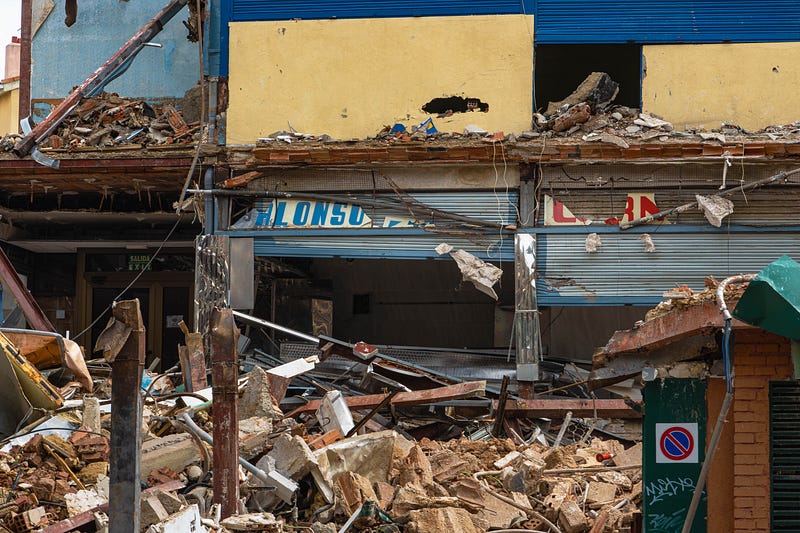
Photo by Jose Antonio Gallego Vázquez on Unsplash

Mixed origins…like olive oil and orange juice, but I am what my father is.

Still,

Still.

There are certain things that are hard to reconcile because I know my history.

Sometimes, I have some things to say that make people angry, but I am the product of an interracial family.

And it’s not the fact that people looked at us funny (they did)

Or the fact that some families didn’t let us play with their kids

It’s the collateral damage for me

The death of culture

The willful absence of understanding that my father carried a burden that my mom would never have to shoulder.

The ignorance because we are not the same.

The perpetual feeling of never being American because to feel American is to be white.

Oppression is not a competition and

We don’t have to be the same to be in solidarity with one another.

I don’t know what it’s like to be my father. And that’s okay.

The years have chipped away at the image of him that used to live in my mind, because even though there’s no excuse, I read between the lines, now.

I feel…old.

We don’t get to assign a timeframe to other people’s healing.

It’s not okay to assume that trauma affects everybody the same way.

No one has to be worthy of idolatry to be a leader and

No one is worthy of idolatry.

I can see clearly now, and I know that love looks different when it’s shining on me from an unhealed heart.

Accountability matters and still, I understand that he’s doing the best he can. Even though my parents are shape-shifters. Even though I’m still mad.

I’m old enough to know it hurts to hold broken glass.

Still.

Still.

Two decades of life on tumble dry have made it exceedingly difficult for me to do anything but hold onto those who are broken: it’s always been broken people who have held onto me.

I see the pain.

I see the weight.

Healing cannot occur in isolation and healing…hurts.

We should be careful with our words.

Indian
Mixed Race
Christianity
Trauma
Identity
Recommended from ReadMedium