
Coding and Playing Video Games Will Be Part of the Educational Revolution
Video games in English class? What? But, they can be incredibly valuable to whomever you are teaching.

First, I’m talking about text-based video games, games in which reading is involved and choices need to be made. But, not only do students play the games, they also create them. I use the website textadventures.co.uk with the students. It’s a free open source website that helps users with coding to create text-based video games. But, oh, there is so much more that can be done.
The Inspiration Behind Using Video Games to Teach
To skip the inspiration part, scroll down to the Choice and Classroom Teaching section.
Before graduating college, “choice” was not something I thought of much. I would think deeply about many topics, but the importance of choice never gained prominence in my subconscious where it could stir around.
That changed after watching the movie The Matrix, the original. I remember a scene in which Neo said, “Choice. The problem is choice.” I wasn’t sure what it meant, but I don’t think my lack of understanding was significant. It was important that I was thinking, not just accepting what was presented to me.
I wondered about choice. How much did it really affect my life? What if I made one different choice in my life? Would my life be different or would it be virtually the same?
Many years later, another quote sparked further thought. This time the quote came from the television show Westworld and was in the form of a question asked by the character The Man in Black, played by Ed Harris. The character, who has spent a great deal of time in a world in which artificial intelligence is indistinguishable from human intelligence said, “What is a person but a collection of choices?” Again, I didn’t fully understand exactly what was going on. It is a deeply philosophical show. The point is that the scene made me think at a deeper level regarding choices, a level which allowed me to grow as a person.
I wondered what made me, me. I realized there was much validity to the quote. Slowly, I’ve gone away from believing that we are a physical body. But, are we a soul? A collective spirit? A hologram being played by some other soul in a giant video game? Or a collection of choices?
Now, the Man in Black’s quote gave me something else to think about, “Do the choices we make in life not only define us, but also create the very fabric of who we are?” Suffice to say, I was a philosophical mess (But, that’s actually a good thing).
Choice and Classroom Teaching
For the past two or three years, I’ve been attempting to get my students to think at deeper levels in a similar fashion as I did, by getting them to think about choice, to be challenged by choices and to create choices. My attempt came in the form of text-based video games. Intuitively, I felt learning by playing and creating these types of games was something young people needed. Modern education seemed too forced. Students always seemed to learn from a narrow set of topics and learn these topics in a rigid, limited manner, with no real idea of how gained knowledge was supposed to be used. Students need to think about the choices present in their lives.
So, as Steve Jobs would say, I connected the dots.
Eventually, I came to the idea (with some inspiration from a school librarian) that it would be exciting to have students create games in which characters, who came from the literature we had been reading, made choices in order to move along in the game. To be fair, it was the librarian who promoted the idea of having students create text-based video games. He thought it would be interesting if they were based on Edgar Allan Poe short stories. A few months after the discussion with the librarian, the idea to create similar games based on the literature we read in class came to the forefront of my thinking.
In two plus years of students creating these games, what has been produced? What happened? To the casual observer, it might not seem like much, maybe just a cute production created by clever kids. But, to me, it was so much more. When students put their heart into their games, it was as if they had created a new universe, one in which I was stepping into once playing.
So, here are descriptions of three effects students created in their games that made me think, “Wow!” In another article I will describe three ideas that I believe will get teachers excited about creating text-based video games in their own class.
The “Wow!” Ideas
1) Making players truly consider options
I tell my students that I love when they make me think. A well-made game does that. Therefore, impressive idea number one goes to all of those students who really made me consider two different options or three or four before deciding what path I would take.
Research illustrates that playing video games improves one’s decision-making capabilities. A research team which published a paper in the journal Policy Insights in the Behavioral and Brain Sciences found that playing interactive video games designed to reduce cognitive bias succeeded in creating better decision-makers. Dr. Irene Scopelliti, one of the members of the research team, said, “the interactive games we tested can extend their effects to different contexts because they affect the decision-maker rather than a specific decision.” Basically, what you learn from the games can be used in a variety of situations.
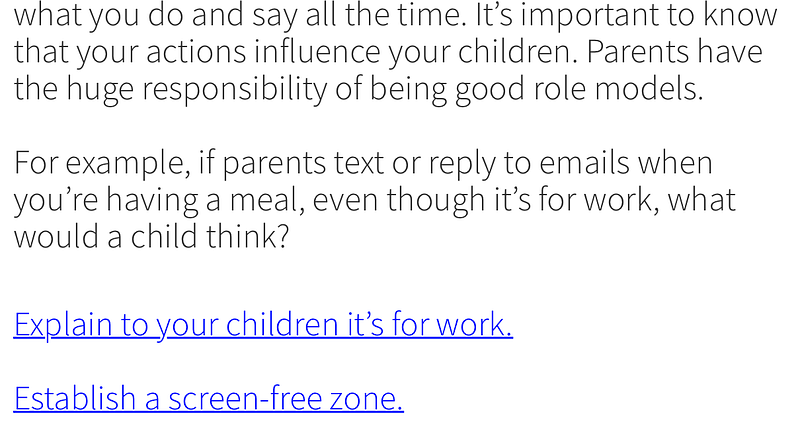
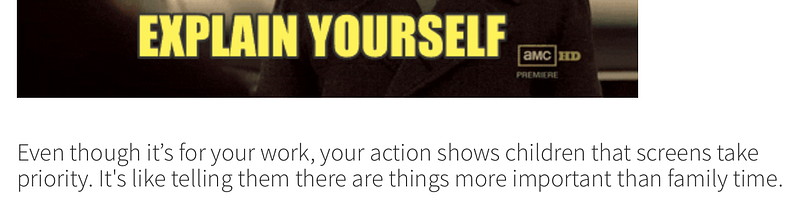
Below is a choice in a game created by a student. The game was about addiction to smart phones. You can see that both choices contain negatives and positives, creating a challenge.
Research on how interactive video games improve decision making ability
2) Forcing players to use research to make better choices
I wanted students, when creating these games, to also search, not just create. The minds of young people are like Dropbox or Google Drive. You fill the data storage unit with intellectual capital. At the beginning, it feels as though there isn’t too much there. You keep filling the repository. It doesn’t seem so empty anymore. However, you then realize you only filled up five percent of your storage after years of saving.
Students’ minds need intellectual capital for students to be able to interact with the world responsibly. They need to look at research and articles and consider the ideas embedded in these writings. They need to start to fill the folders in the repository.
For this reason, I was impressed when a student created a game in which players were forced to read at least some of the research on a topic before they could move down a path in the game (Of course, they could just randomly select options, but just like when people do this in real life, it leads to boredom and lack of comprehension).
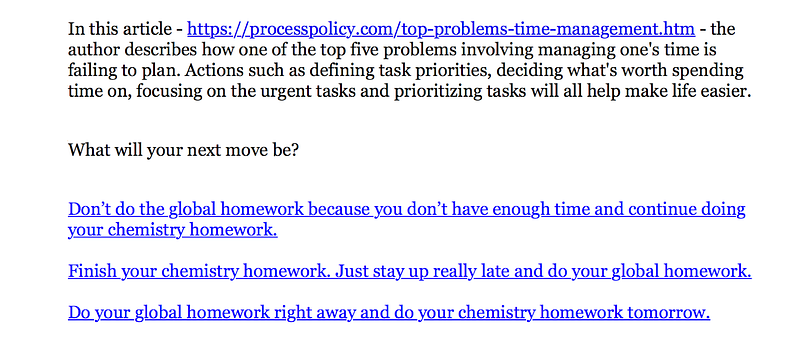
Above is one of the choices in the game. You don’t see it in the text, but there’s two days for the player to do the virtual global homework while the virtual chemistry homework is due the next day. Players are forced to consider how to finish tasks in an allotted time and what experts say about time management.
To create such a challenge for the player, the student creator needed to take many things into consideration. There needs to be differentiation between the virtual homework assignments for the choice to be challenging, research needs to be done to provide players with a scenario in which they must look at complications inherent in the situation, and there needs to be actual emotion involved in the decision so that the players become invested in the decision they are about to make.
There is a great deal of research to support students’ development of questions as a learning tool. In a Teaching Excellence in Adult Literacy article, the authors reference studies that note the importance of students developing questions rather than the teacher asking questions throughout the learning period.
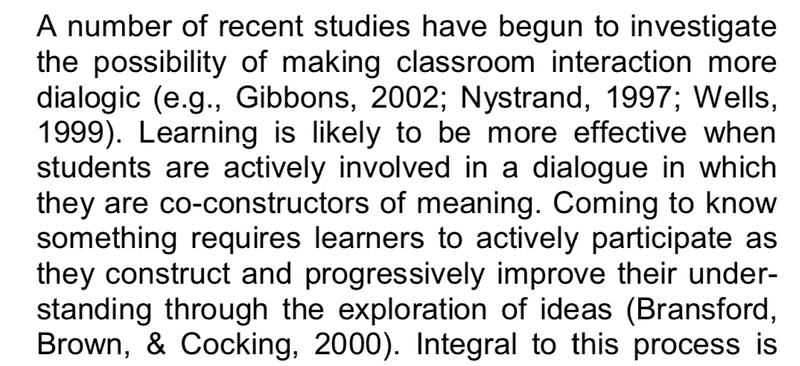
Therefore, creating and playing these games give students the chance to “improve their understanding through the exploration of ideas.”
3) Creating a game in which players relive the same day an infinite number of times
We are all familiar with movies such as Groundhog Day, Edge of Tomorrow and Happy Death Day (Yeah, I’ve watched it. So what? It was good.) in which the main characters die only to be brought back to the beginning of the day in which they had died. It’s a plot device allowing main characters to go back into the past and learn from mistakes.
But what if it were made into a game?
Then, the players could actively learn from these mistakes, by playing the game, or even by creating it.
Well, a student thought of this idea and followed through. The game revolves around a student who has difficulties focusing. However, players, playing as the student, get a second chance to remedy the student’s problems in the game as they relive the previous day’s events.



After playing the game, I was ecstatic. The game showed real thought, thought that will be needed in today’s world. And, isn’t that what education should be all about?
Choice, the final frontier … well, maybe not in education. But, if choice plays a prominent role in learning, all facets of society will benefit. Teaching in the school environment will become much more interesting. Students will be enabled to let their mind explore infinite possibilities when creating, no matter what the subject is. And, whether you’re a teacher, a manager, a parent, a mentor or just a friend, when teaching others, don’t we want creation as the end result, rather than retention?
Coming Next…
In the second part of this topic, I will illustrate innovative possibilities on how to use text-based video games in the classroom, including, maybe for the first time ever, an article with a coded video game inside!
Actually, here is a link to that article
As always, if you want to know more on the topic or if you want another article on something not explained in detail, let me know. I love talking about this stuff. You can get in touch with me on Medium or email me at [email protected]


