
Codebreakers: How a Young Woman Helped Defeat Nazi Terror
A Wren at Bletchley Park
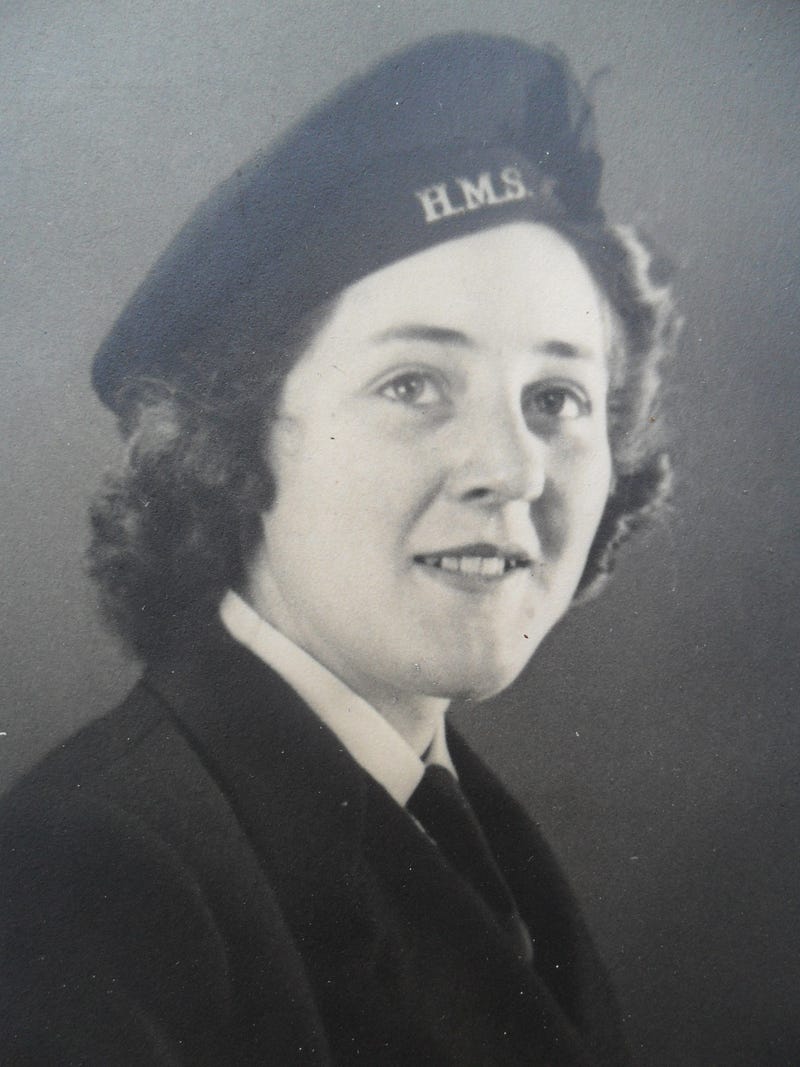
When I started my freelance writing career in 2011, I worked for a British military history magazine. My mother-in-law’s friend, Nancy Hookham, had worked with the Bletchley Park Codebreakers during the Second World War and was keen to share her story.
I went to her house, and as I listened to Nancy relay her experiences, the intense secretiveness of the operation became clear. Not even the staff knew what each other was doing. I was absorbed in her story.
Nancy gathered her papers, badges, and certificates while discussing her years as a Royal Navy Wren. She explained:
“I didn’t want to be a steward or a writer, I wanted excitement! That’s when they offered me ‘special duties’ — a mysterious top-secret role that no one could explain. That just made it even more appealing!”
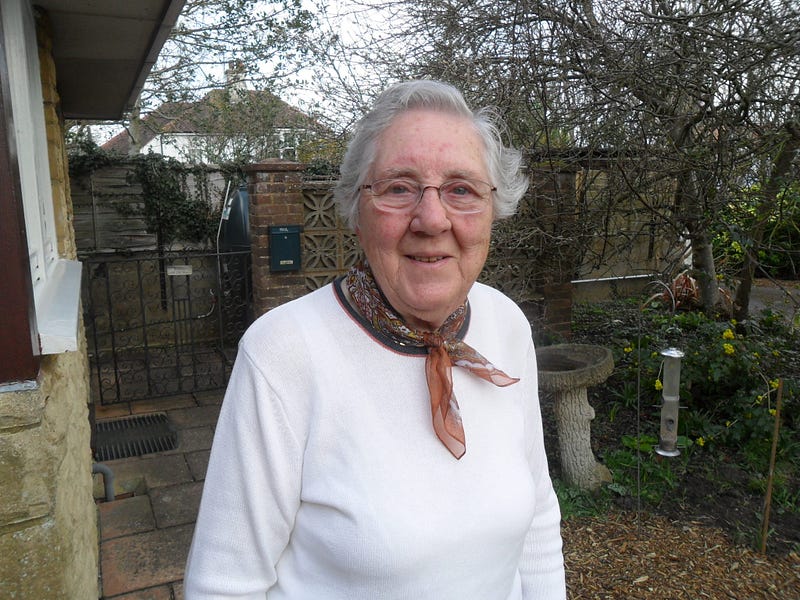
She was grinning from ear to ear as she told me about the excitement of embarking on a top-secret mission during wartime.
“I joined the Navy Wrens in 1943 and was posted to Bletchley Park, which we called ‘BP.’ I had to sign the Official Secrets Act before they could reveal what I’d be doing. Then they said, “You’ll be deciphering German messages.”
Nancy embarked on a couple of weeks’ training, learning the Baudot code the Germans used to encode their messages. The training was so top-secret that they couldn’t tell colleagues what they were doing.
Bletchley Park
Today, Bletchley Park is a museum open to the public. I’ve been there many times and found its history fascinating. At its heart, there’s a mansion, with 1940s offices recreated, exhibitions about life at Bletchley Park, and the ballroom, where the staff could unwind and attend events in the evenings.
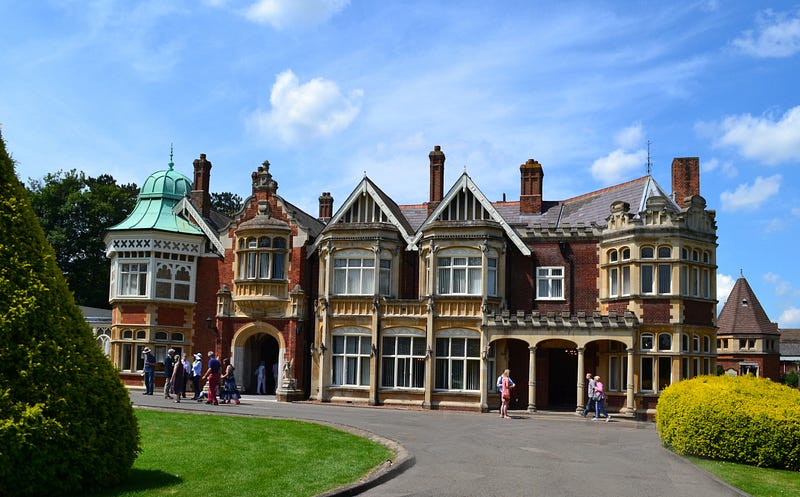
The Manor is surrounded by huts and other buildings used in the war effort. Some of them were cold and draughty to work in. I walked around the huts and got a sense of how chilly and intense it must have been. The visitor experience is immersive and takes you through key events during the war.
There’s an exhibition about the Lorenz machine, which encrypted the messages Nancy was decoding. The Germans used a Lorenz machine to encode the most important top-secret messages between the Nazi headquarters and their commanders. So, technicians at Bletchley Park created a replica, which enabled them to break the codes.
“There was a degree of trial and error involved in making it work perfectly!”Nancy remembered.
Decoding the messages
The Lorenz machine operated together with a teleprinter, and the wheel patterns and settings were changed every day so the codes were never the same from one day to the next.
Nancy described her responsibilities:
“My job involved entering figures and doing mathematical work with the aid of a comptometer (a calculating machine).
If we identified high numbers it meant they were significant, and we would alert the cryptographer who worked further on deciphering the code. We never saw the end result and never knew what the messages were — but sometimes a special breakthrough would be shared with us and it made our contribution feel worthwhile. We felt appreciated.”
Cracked German messages were relayed to the Prime Minister and others who needed to know.
The Lorenz machine was designed to be more secure and unbreakable than Enigma, and it was used for transmitting even higher-grade secrets.
“The information these messages contained was of huge interest as it shed light on the enemy’s intentions and plans,” said Nancy. “It was very useful, even with the long delays we experienced in breaking it.”
Colossus — the world’s first computer
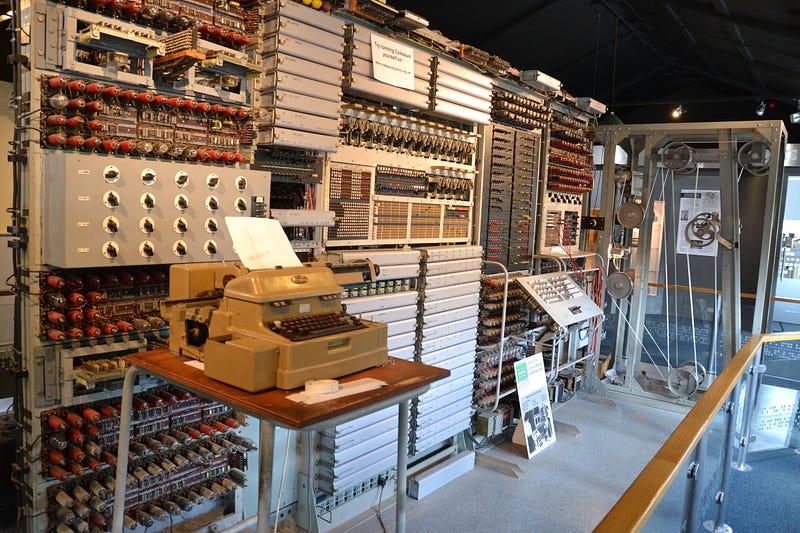
Nancy’s section was also home to Colossus. This huge codebreaking machine is currently on display in the National Museum of Computing at Bletchley Park. Some consider it to be the world’s first computer.
When I visited, they demonstrated the machine in action, and it was pretty remarkable to see it working with all the wheels spinning and parts moving.
The first Colossus was built in 1943 by Post Office engineers to crack a Nazi code. It was referred to as a ‘Heath Robinson’ because it was created quickly with whatever Post Office parts were available.
Nancy shared her experience with the Colossus:
“The messages we deciphered using the Colossus reassured Allied commanders that Hitler had swallowed a deception plan put in place months before D-Day, to make him believe the Allies would invade across the Pas de Calais.
It meant the Germans were unprepared for an attack on the beaches of Normandy.”
Information gathered with the aid of Colossus is thought to have shortened the war by as much as two years.
The Germans didn’t crack Britain’s own coded messaging system, but the Nazis did read a lot of their Naval signals. That’s why the Merchant Navy was badly hit by torpedoes from the German U-boats while moving supplies from the USA to the UK.
Woburn Abbey
The Wrens didn’t live on-site at Bletchley Park. Nancy lived with other Wrens at Woburn Abbey, eight miles away, and they were transported between Bletchley Park and their living quarters by bus.
“The shifts were long and we were often on night duty,” recalls Nancy. “It took half an hour to get to Bletchley and the bus would wait for those who had just completed their shifts to take them back.”
Bletchley Park was a hive of activity in the evenings, with clubs, societies, and dances. Because Nancy didn’t live nearby, she couldn’t attend many activities. However, she did enjoy some dances at Woburn Village Hall and a local US air base.
Fourteen Wrens occupied bunk beds in the Abbey, and they enjoyed exploring the vast grounds outside.
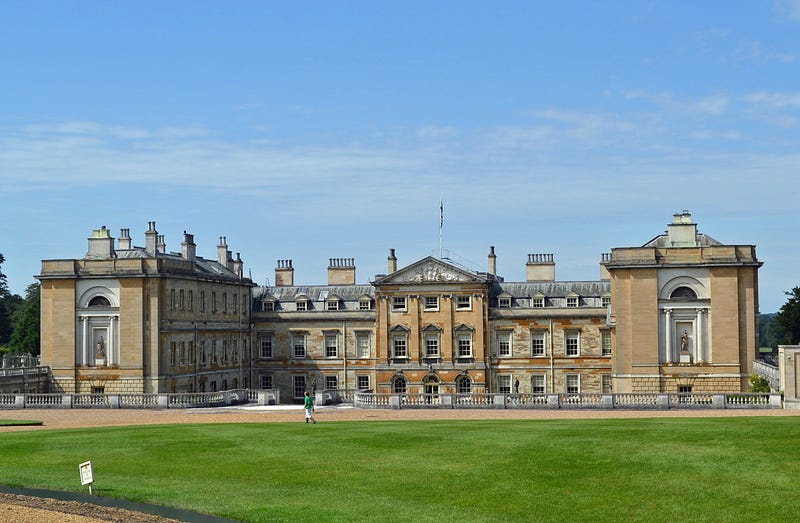
Nancy remembered a time when she took their liberties too far.
“On a few occasions, we went nude sunbathing on the roof! This ended abruptly when we were hauled before the First Officer, who said we were not allowed to sunbathe on the roof—apparently, we were distracting the pilots!”
After the war
When the war in Europe ended, so did the encrypted communications. Many codebreaking departments were disbanded and people were moved into different roles.
Some of the Wrens went abroad to work in the Japanese war, but Nancy’s mother, who had already lost a son in the fighting, asked her not to go. Instead, Nancy worked for the Royal Navy’s postal service ‘Fleet Mail’ in London, and then in Portsmouth.
“I left the Wrens in August 1946 and returned to my previous job in the wages office at the local brewery. I was married in November 1947, the same month as the Queen. Then on the Queen’s 50th anniversary, my husband and I were invited to a garden party at Buckingham Palace! We toured New Zealand in a motorhome to celebrate the occasion.
“Looking back on my time at Bletchley Park, I feel a sense of pride and excitement. Although the work was repetitive, I found it quite fulfilling, knowing that I was playing a small but important part in winning the war.
“In recent years, it has been incredibly interesting to read about what actually went on there, because we knew so little at the time.”
Nancy took me on a whistle-stop tour of her life as a young woman exploring opportunities to serve her country and defeat Nazi Germany. She shared the inside experience of working at Britain’s famous codebreaking facility, and even passed on a few humorous tales about the ghosts along Woburn Abbey’s corridors!
Even 70 years on, she was bright-eyed and excited by her experiences, and I feel privileged to have been able to interview her and share her story.
Today, Bletchley Park is one of the UK’s top wartime tourist attractions, welcoming 250,000 visitors annually.
© Susie Kearley 2024. All Rights Reserved.
References:
- Bletchley Park About Us
- Colossus — National Museum of Computing, Bletchley Park
- Imperial War Museum — What You Need To Know About The Battle Of The Atlantic
- Encyclopaedia Britannica — German submarine warfare
- Stanford University — Lorenz machine
- Nancy’s notes, interview, and the experience of having visited Bletchley Park myself
More from me…


