
Cocooned
A New Life Forming
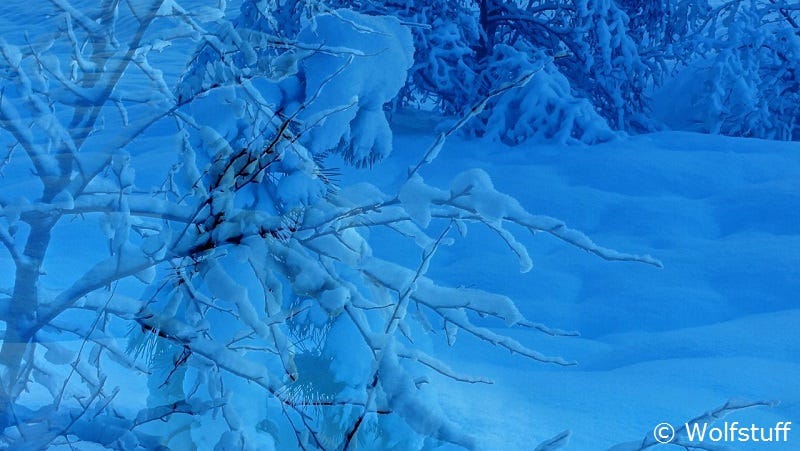
Cocooned by dry warm inside air Beyond the panes wet snow is falling
The room I now find myself in has a large bay window hanging three stories above the street. The room and its window are in a yellow-bricked three-story apartment building on Main Street with shops on the first floor with their large, lit display windows, and apartments on the second and third floors. I’ve sat down at the clean and empty desk and I look out and down at the snow falling. Snow in the air. Large flakes. They turn to sleet on the ground. Darkness has already arrived. It is winter after all and this is Sweden. Store fronts and car headlights reflect in the watery sidewalk and street. This room, this window, this snow, this city, this desk constitute the last in my long line of beginnings, the current one. The one I’m in. I am tasting this new, fresh now. This starting over. This rewind, press play. The new life ahead.
This freshly minted beginning.
For I have just arrived. As I entered the room, I placed my duffle bag and my briefcase on the made bed. It is very well-made this bed, hospital-well. It speaks well-made volumes about the land lady. After a few moments of looking around for I don’t know what, I moved my briefcase — the one I just bought with my next to last money, from the bed to the clean and empty desk by the bay window. I opened the case and took out my expensive fountain pen — the one I bought with my very last money, the truer to write (or so I told myself at the time). I pulled out and sat down on the heavy wooden chair with its hard seat and harder still back (uncomfortable is the word) and I placed my elbows on the clean (shiningly clean) desk surface, closed my eyes and looked for the momentous part of the moment, looked hard and long to capture the essence of this moment, to fill myself and overflow with this moment, to fully possess and be possessed by this moment, this brand new very important new-beginning moment.
My life has just undergone another sea change, the last in a string of them, but sea nonetheless. I have left Stockholm behind. Yes, I’m running away, but that’s not the point I’m making here.
Besides, as always, I run away with the noblest of intentions.
And as a result, here I am, sea changed. I sit in this moment on this hard, yes truly uncomfortable chair. The air in this dark, sterile room is very dry with the central heating set to what must be far too high and I realize I will have trouble sleeping in this room. I like cold rooms for sleep. Here, I will suffocate dryly. I really should have noticed this before I decided to rent this room, but be that as it may.
For here I am, in this sea of change, filled with this momentous new beginning, and what feeling I cannot find in the moment itself I (and I’m so very good at this), what cannot be found I will manufacture with my feeling pump, now set to momentous new moment. I pump hard and I urge myself to feel this moment, to really feel it, so big, so powerful, so irrevocable, so utterly sea-change.
And here it comes: I think I can feel the moment rising to fill me. Here, where I sit on the hard chair by the desk, pen in hand, yes, I feel it come on. I open the briefcase, find and retrieve paper. I place a shallow stack (four, perhaps five sheets at most) of paper on the hard, shining desk top, just paper and a hand holding a pen, both poised to capture and eternalize this very moment.
I bring my pen to touch the paper. It is very smooth, this paper, hardly any resistance at all to this also smooth golden tip of a pen. Still, the pen leaves a blue trace on the paper as the first word forms and I as I feel others form behind it. My words, eager to escape. I smell the paper, I smell the ink, I smell my words. In this very moment. We, my pen and I, write something poetic.
I hear the cars outside and below, muffled by the falling snow.
I hear other city sounds. This city is new to me. These sounds are new to me. The air in this room is new to me and seems drier by the minute. I feel the air make its way in trough my nostrils. Rather, I feel my nostrils, dry and contracted, barely letting it through. I make an effort to forget them, air and nostrils both.
Listen.
I cast about for meaning again, in these new sounds, in this new air, in this new smell, and now I find that I hold myself to mean everything, that all meaning is me — yes, very poetic: pen and paper agree.
And so I trace ever-new words on this paper in front of me. I spend this ink to prove my poethood. I draw and draw these urging words and know that I am poet. I am poet, therefore I am. I write words on paper, I see them leave my pen, it is I doing this, therefore I am, I am poet.
There is a whole family living somewhere in this apartment, but I don’t hear anyone else. Just the dry air squeezing itself in through my nostrils and the muffled sounds of new and foreign city outside. It must be a pretty big apartment for me not to hear anyone else stir or move about or flush a toilet or something. The room is clinically clean. Sterile. It is impersonal. It is mine, though, and I have just left Stockholm for this — acting on one of my many, many un-reflected-upon, un-thought-through impulses.
I impulse, therefore I am.
I write some more words. These are important words, poet words. Ink words carved out of dry air, wrestled down onto dry paper.
Then I leave for a movie.
I slept twice (unrestfully) in that room and visited it perhaps five times. Seems it’s always snowing when I’m in that room, as if I’m only there one prolonged once, looking out through this bay window one prolonged once and wondering what will happen next.
A day later I meet Marie and everything takes a new turn. A sea-er sea-change. I spend all my time with her now, then move in with her and tell my landlady I no longer need the room. This is the second and last time I meet this woman. Nice enough, she is, if a little surprised. I settle with her, take my bag and head out the door. My briefcase is already at Marie’s.
Which is where I met Baudelaire. Literally yes, literally no. They were his eyes, red globes in darkness, suspended first above me, descending then upon my eyes in a perfect fit. They glowed as they slowly fell through the still, dark air like pools, like lenses, like portals upon his world, and when they touched, his eyes and mine, and became the same eyes, yes, I knew that I knew.
He has stayed with me, has Baudelaire. As a symbol, if nothing else. As an excuse, if nothing else. For what are these little strings of words I jot down on scraps and sheets and in little books so black and conspicuous in my hand as I let inspiration have its way with me.
They’re not poems, they’re not. They’re not prose, they’re not. They’re, what did he call them? prose poems. And if he got away with that, so, I am sure, will I. And that is why I decided to go to France, become a poet. May have to learn French, though.
Tried to do that. Did not succeed.
But he’s still with me, Baudelaire and his eyes. It happened, this mystical experience, this union of eyes, and no one can take that away from me, although they could and did for Hemingway. Stole his memories.
Sitting there though, in that dry, warm, sterile room looking out that bay window at the snowy winter’s night, did I reflect at all on why I would want to know Pi to the 200th decimal?
No, I did not. Then it was all about the moment. I was that moment, only that moment.
I’ve seen truth since, of course. I wanted to impress, that’s all. Pi to the 200th decimal to impress my father or some girl. To impress my mother or some girl. To harvest approval. And in those days, approval was my only currency. I needed to hear back from others how alive I was. How deep I was. How Baudelaire I was. How poet I was.
There was no me there without this approval, for I was only such me as others would grant. Very empty. Very in need. Very needing that pump I carried around. My feeling-pump.
And sitting there, looking out into the falling snow, lit from below by head lights and store fronts, arriving out of a black above first into a faint glow (more like a mood than a presence), then into a lit amorphous thing, then into flakes, thousands of them, large ones, into snow, falling, falling, did I reflect upon stealing?
My father called me tjuv. That word is Swedish for thief. Tjuv. Not a pretty word, not a pretty thing. Though well-deserved. Very. For all my life I had been a thief. A petty thief.
Life as a petty child thief is a long string of related, familiar emotions.
First, there’s the thrill of opportunity.
Then, there’s the rush of theft.
Then, there’s the pleasure of candy bought with the loot. Almost pre-sex sex-like.
Followed soon by the fear of discovery, a fear as palpable as certainty.
Followed by the emotionless denial of knowing anything about the missing money. Nothing, no sir. And had my eyes turned any bluer, any larger or any more innocent they would have had to nail me to a cross.
Followed by the apathy of the inevitable confession. The humiliation of capture.
Followed (sometimes) by the pain of the hard hand on buttocks.
Followed by the propitiatory apology: I will never, ever do it again. No, no, no, never.
Followed by the relief that this was now all over. Clean again. Nothing to hide. Nothing to feel guilty about. Breathing, in the company of free beings.
Until, of course, the new thrill of opportunity.
All arranged in tidy sequences of a more or less constant ache which knew for a fact that it was me they discussed downstairs. Which knew I caused them pain.
Then one day, I was fourteen years old, I up and changed. Just stopped stealing. Tjuv no more. Go figure.
No. Nothing like that. Looking out the bay window and then down upon ink and paper and expensive fountain pen in hand there was only the moment. Everywhere in deepening snow, in cars starting and stopping, and the hour getting on, there was me and my moment.
Then I went to the pictures.
And sitting there, striving for the far reaches of every corner of the moment, did I think at all in this direction, of today, the then future? Was this now, this moment, even conceivable then? I think not.
Rimbaud was dead at thirty-seven. Baudelaire at forty-six. Age is not a thing to ponder for this boy by the bay window. There is only that very moment, those words onto that paper, that dry air which I knew I would have trouble sleeping in.
Now, more than half a life lived later, I’m still sitting at a desk of sorts. Not a pen in hand but a little keyboard. I touch type and do it well — my words hit the screen as I think them. So far from dark, snowy, Swedish February night.
Nonetheless me.
I live in a cabin. I have lived on a boat. I have lived marriage — make that marriages. I have lived business. I have lived corporate America. I have lived music. I have lived books. I have lived New York. I have lived Los Angeles. It is now for me to extract myself from all this lived and share it.
I shall grow gaunt and gray, mysterious and sinewy, distant and present, looking out bay windows at falling snow. I shall share, shall become the sharing that is its own reward. And I shall escape, finally, this prison, this string of bay windows.
And looking out I see I can live no other way. I will work my body into song, laugh in the face of God, and deliver the earth.
© Wolfstuff
P.S. If you like what you’ve read here and would like to contribute to the creative motion, as it were, you can do so via PayPal: here.


