
Travel Writing Prompt
Climbing Mount Fuji
Your guide to bullet-climbing Japan’s tallest mountain
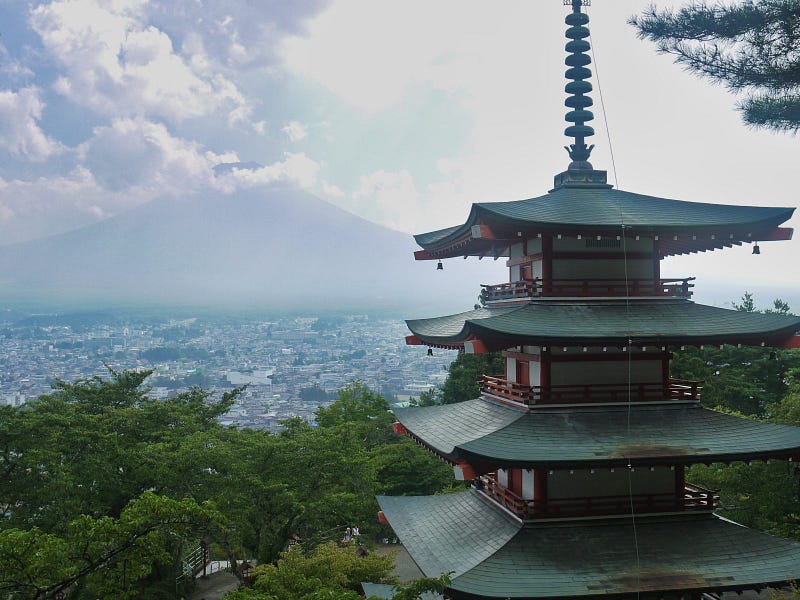
It’s 9:30 p.m. on an August evening, and I’m on a bus heading up to Mt. Fuji’s 5th station. I had just managed to catch the last bus of the day, and I’m here about to attempt something not recommended — a solo nighttime bullet climb. A bullet climb means climbing the entire route at once, without any stops to rest in one of the mountain huts.
The bus drops us off and the other climbers quickly disperse. I pay the small 1000 yen ($9 USD) climbing fee, and then find myself completely on my own. It’s pitch black outside, other than my headlamp and the stars.
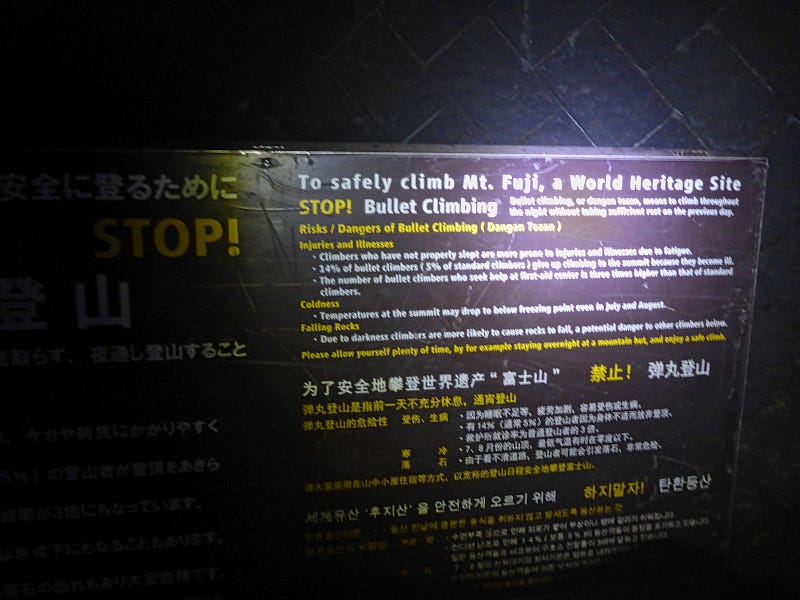
At the beginning of Mount Fuji’s Yoshida trail, I’m greeted by a large sign warning me against doing exactly what I’m about to do. Apparently the risk of injury is three times higher.
Of course, I had done my research before and know the risks. I ignore the sign and press on.
I’m lucky to have great conditions for the climb. Weather can often be difficult, resulting in a short climbing season of July-August. But tonight everything is absolutely perfect. It’s just me and a clear sky full of stars. Far off in the distance, flashes of lightning are visible as a storm brews over faraway peaks.
At first I’m alone, but I soon encounter other climbers, and the higher up I go the more crowded it gets. I’m on Mt. Fuji’s Yoshida trail, which is the busiest one out of four possible choices. That means it has the most amenities, such as food, washrooms, and first-aid centers, but also big crowds.
As I reach the 6th station, one of the 10 stations located on the mountain, I purchase a wooden climbing stick. At many points on the mountain, you can pay a small fee to have a stamp burned into the stick, which makes a great souvenir.
The higher-up stations become smaller, but still have food and drinks for sale. I pass by mountain huts where many climbers spend the night, getting some rest before the final push to the summit. This is recommended to avoid altitude sickness. At this height, the concentration of oxygen in the air is much lower than at the bottom, and doing the climb over more time helps climbers acclimatize. But like most bullet-climbers, I’m on a budget and want to avoid paying more than I have to. I pass by the huts and press on.
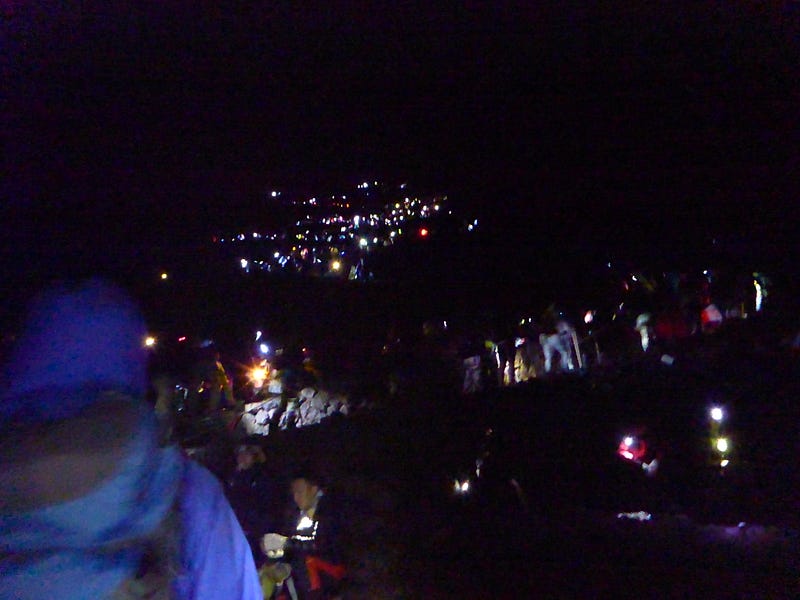
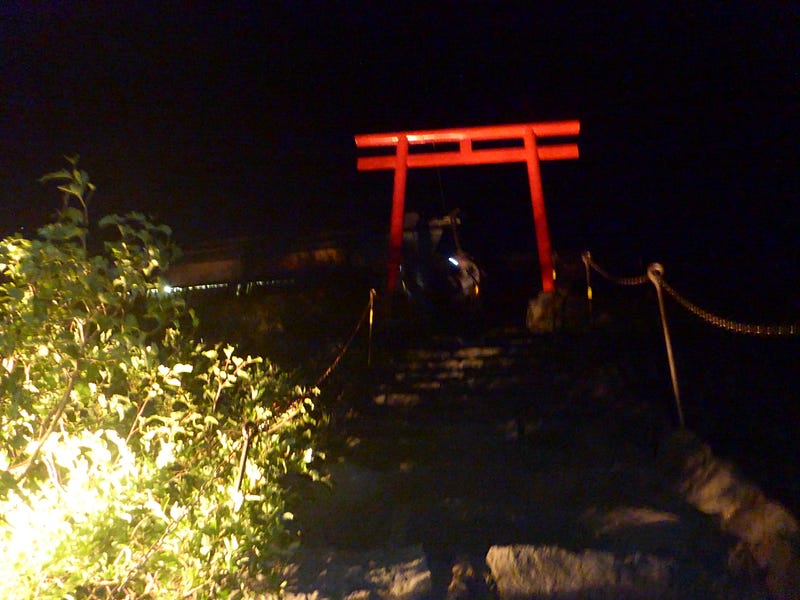
Past the 8th station, it becomes very crowded, as climbers from the huts all make their push to the summit. Mt. Fuji is a very popular climb for both international tourists and locals. For many, it’s more than just a climb — it’s also a spiritual experience. Mt Fuji, known as Fujisan, is considered a sacred site in the Shinto religion.
It’s now 2:45 a.m., and I’m glad I climbed quickly, giving me enough time before sunrise. I’m stuck in the traffic jam for an hour, the line of people slowly inching forward. Behind me, the line continues as far as I can see, and I know the latecomers will not make it before sunrise.
It gets much colder, but the two sweaters and light windbreaker I packed are enough to keep me warm. The Japanese take the mountain very seriously, with some wearing full climbing equipment including helmets. Mt. Fuji is still an active volcano, and there is always a chance of eruption. International travelers usually bring much less equipment however, and thankfully on this August night my ultra-light gear is enough.
Eventually, I make it! Unlike the poor people at the bottom of the line, I make it up before sunrise. At 3:52 a.m., I reach the summit, at the height of 3,776 meters (12,388 feet). And soon after, I’m rewarded by one of the most spectacular sunrises I’ve ever seen.
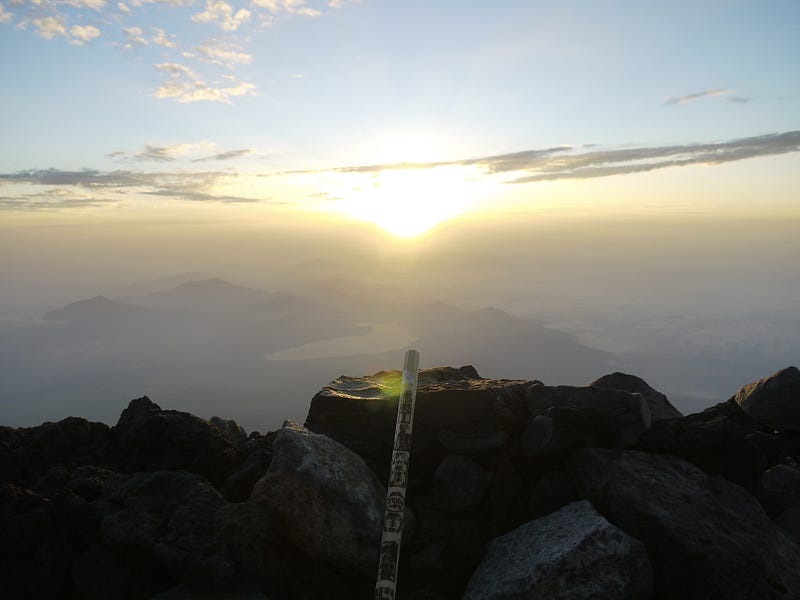
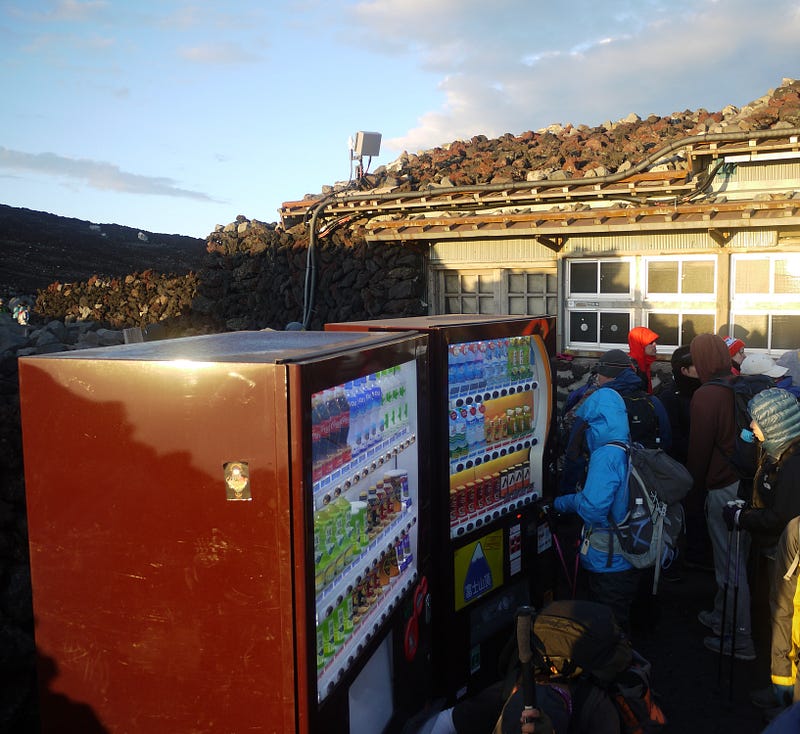
After, I stop to get a drink from a vending machine. Japan is famous for having vending machines everywhere, and the summit of its tallest mountain is no exception.
Then I go exploring, hiking the around the volcano’s crater. The views are incredible. I feel like I’m on an airplane, high above the clouds.
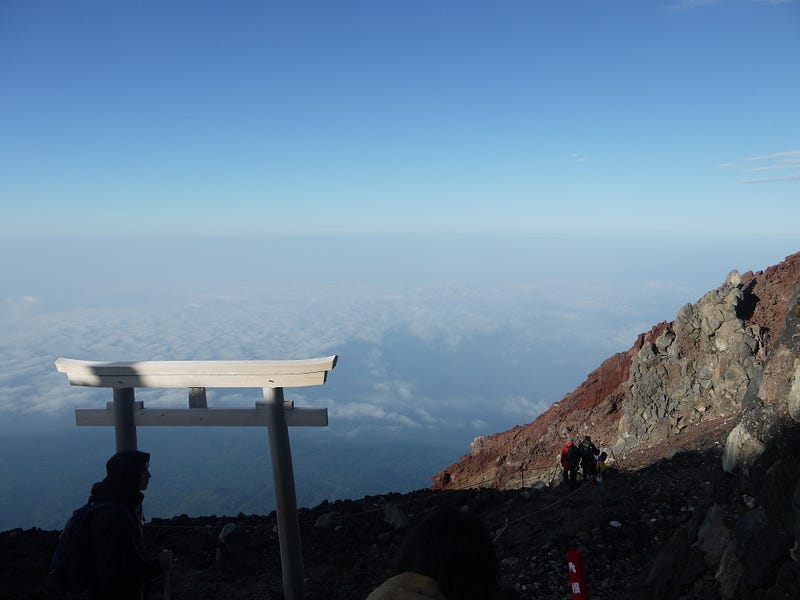
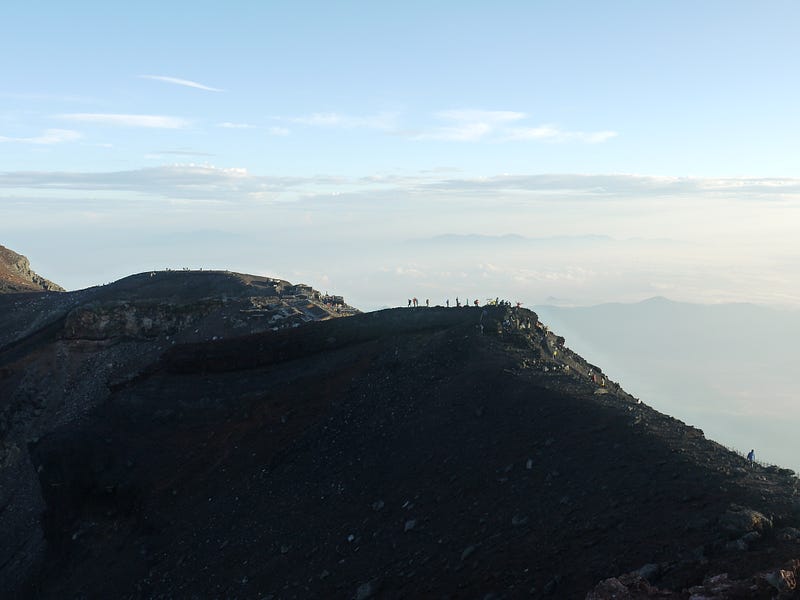
The views are so beautiful I’m in no hurry to leave, but after spending a good few hours on the summit I know it’s time to go.
Like many mountains, it turns out getting up was the easy part. For the Yoshida trail, the descent trail is different from the ascent trail. Going up, the path was steeper and rockier. Going down, it’s less steep but it’s also longer, and instead of solid ground it’s made out of dirt and sand. Every step I take, my foot sinks in and a cloud of volcanic dust is sent up towards my face.
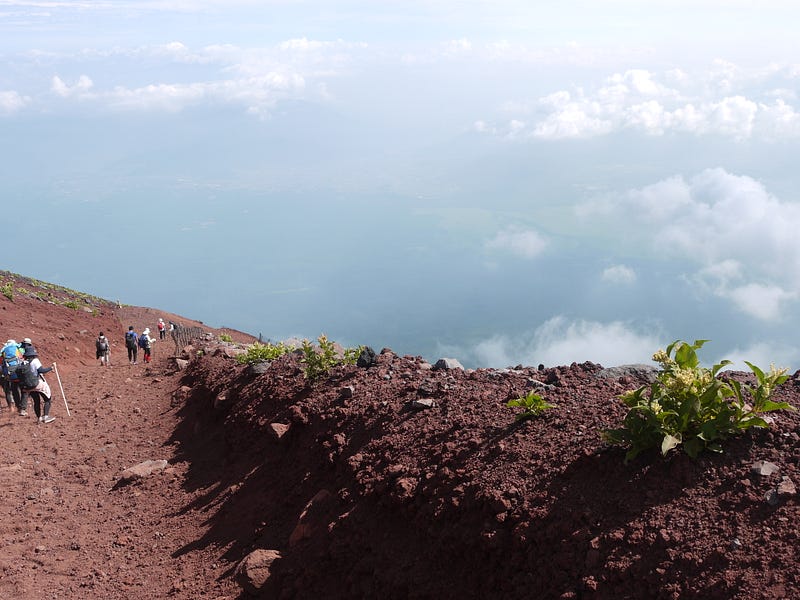
This is one occasion where I wish I had a mask. To make things even worse, unlike the cool nighttime climb, now the sun is out in full force, burning with its full intensity.
Occasionally, signs show the estimated time to the bottom. Three hours, 50 minutes one says. I keep struggling down for what feels like an eternity. I spot the next sign, sure that the time must be down to three hours. No. Three hours, 45 minutes.
I stop to rest and meet two other climbers who’ve been struggling even more than I have. Exhausted, they can barely go on, sipping water as they lie on the ground. Our shared misery results in an instant friendship, and eventually they find the strength to go on. After a grueling several hours, we finish the climb together.
I’m reminded of a proverb I read:
“A wise man climbs Mount Fuji once, only a fool climbs it twice.”
This saying is certainly true. A few hours later, I’m back at my Tokyo hostel. It’s 10 p.m., exactly 24 hours after my climb began.
And yet I must be the fool, because I absolutely would try one of the other trails and climb again.
#naturalwonders

Sign up for our newsletter to stay informed with up-to-date curations from our editors:👇


