
Climate Winners And Losers — In Two Maps
We didn’t start the fire
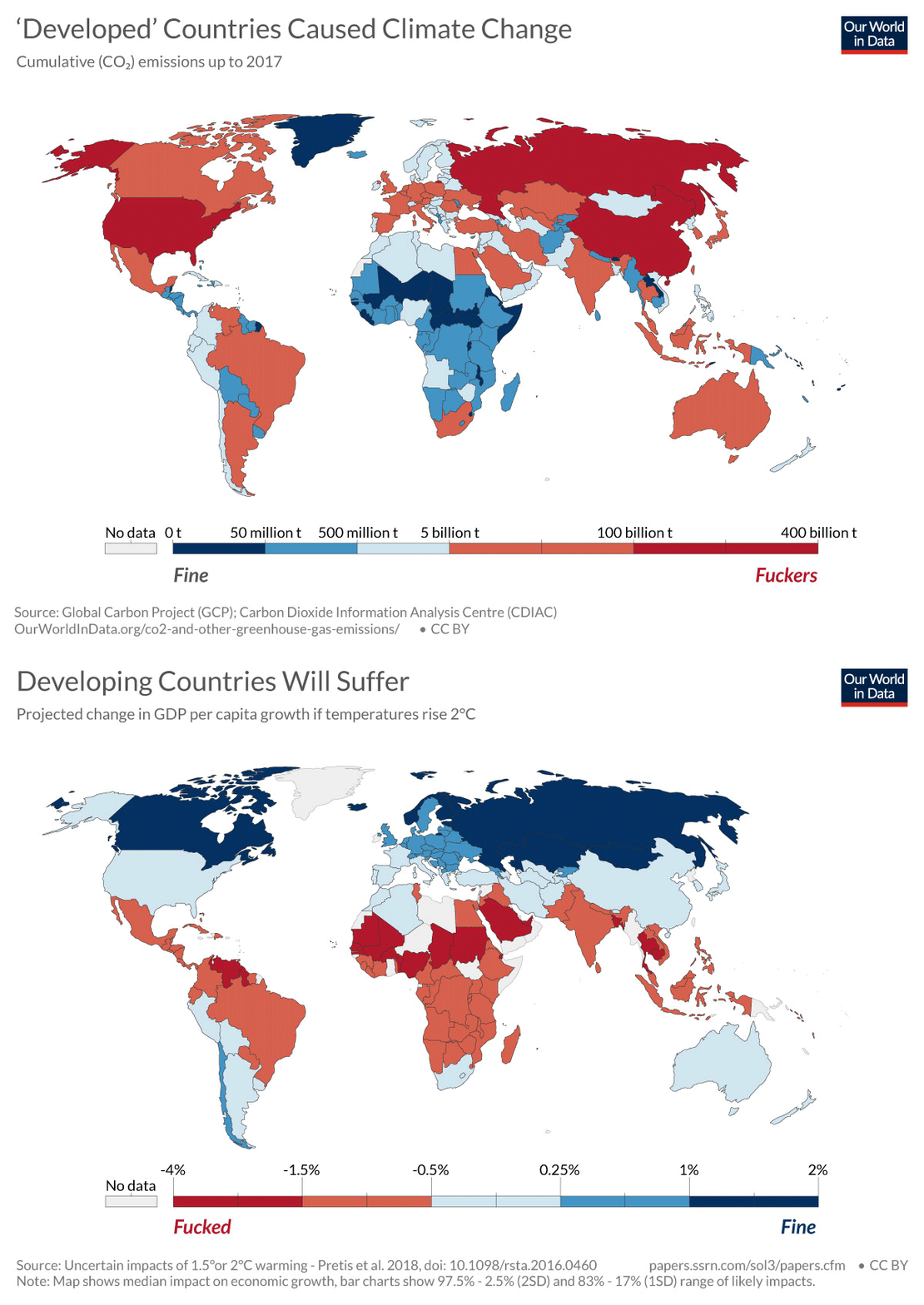
My country leads the world in very little. Marco Polo said we were the world’s finest island for our size, which seems like a backhanded compliment now that I think about it.
We usually lead the world in sex-related Googling, and we export a lot of cinnamon. Oh, and we’re #2 in the list of countries most at risk from climate change. So… there’s that.
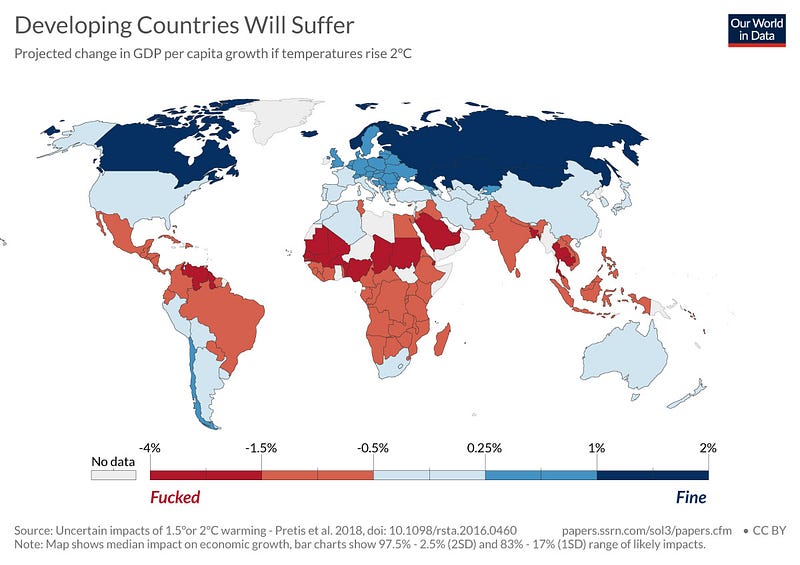
My country is Sri Lanka. If you look at the map above, it’s the flaming island off the tip of a flaming India.
Climate change is already happening here, it is already hotter and we have more and more unpredictable weather. Our neighbors in the Maldives and the further Pacific Islanders are already going under. Our future looks much worse, rising sea levels (big trouble on an island), unreliable harvests, not to mention plain old heat in an area that’s already hot.
However, we didn’t start the fire and we’re not burning it now. As much as we try to develop our economies sustainably, the problem is very much out of our hands. Here’s the second map, showing the people that have caused and continue this crisis.
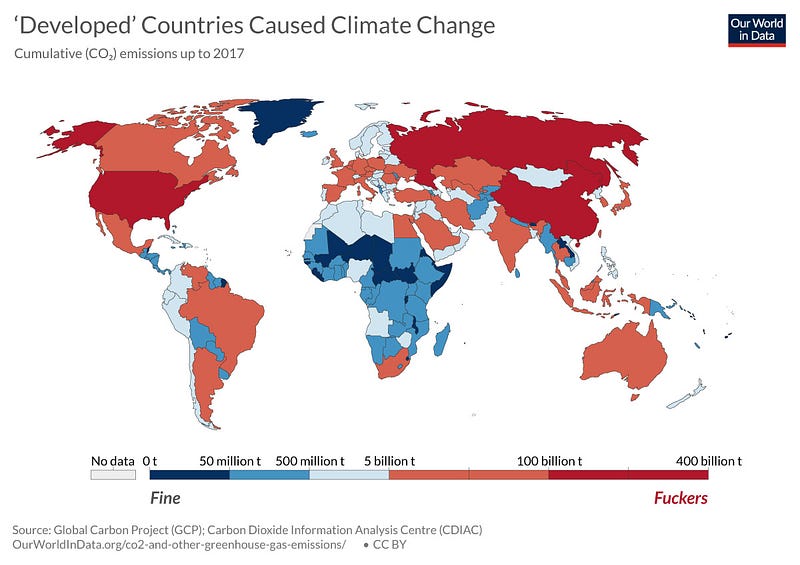
Compare it to the map above. It’s not the same people at all. In economics this is called a ‘negative externality’. Some people get the benefits, other people get the bill. This only measures GDP btw, there’s a more robust map here if you’re interested.
America, Europe, Russia, and China have gotten the benefits of pollution and fossil fuels. Which is perhaps why they are pretending the problem doesn’t exist. Or asking for timid solutions. Because they’re making money off it, and someone else is paying.
It is the brown and black countries of the global south — the ones that are just lifting their heads after centuries of colonialism — that will see their environments, agriculture, lands and ways of life destroyed from afar. Africa, Central and South America, India, Indonesia. At the same time we will have increasingly young populations blocked from moving to safer areas by racist and militarized borders, dying at sea or in the desert. It is as if the rich countries have lit our houses on fire and locked us in.
It is frankly infuriating. It’s not that people in the western world are so dumb that they don’t understand climate change, or that they can’t see temperatures rising. We’re plenty dumb over here as well. It’s just that, as Upton Sinclair said, “It is difficult to get a man to understand something, when his salary depends on his not understanding it.”
These countries built their economies by changing the climate, up to a crisis point. And they still keep going. Their salaries depend on them not understanding it.
In the global south, however, our salaries and very existence depend on fighting this crisis. We are just starting to lift our heads after centuries of colonialism. We are just waking up to our own potential. And now this. The environmental debt is coming due and, as with colonialism, we are getting the bill.
First they came and took trillions of resources away from here, and then locked us out of most of the world with borders and visas. Then they literally lit the air on fire to fuel their industrialization, destroying our shared environment. And now we have to wait for them to agree that lighting stuff on fire makes it hot. It honestly feels like old white men want to take the world with them when they die.
Who are the winners and losers of climate change? It’s the same winners and losers as for all of history. The rich win and the poor lose. It’s the same as the winners and losers of the past 500 years, the colonial countries plus China which has decided to come out of hiding. And India’s trying to squeak some growth out while they can, though their south is in big trouble.
In the end of course, we all lose, because we all live on Earth. It’s just that some of us lose more. Like me. I lose more. My children lose. This sucks.
Further Reading If You Don’t Already Feel Like Topping Yourself
CO₂ and other Greenhouse Gas Emissions — Our World In Data South Asia’s Hotspots — World Bank


