
Climate Change Is One of the Greatest Challenges of Our Time
So Why Isn’t the U.S. Acting Quicker?
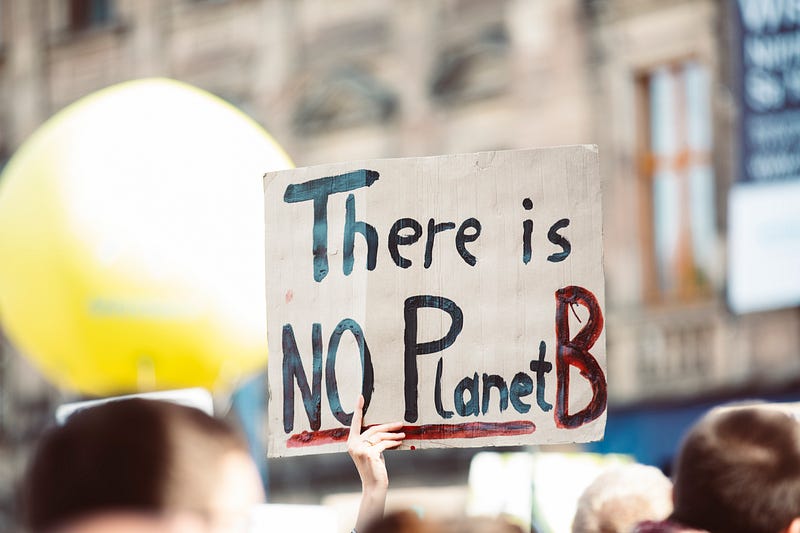
Politics and disinformation campaigns have delayed progress for decades.
“The price of dishonesty is self-destruction” — Rita Mae Brown
Quick — what year did major oil producers first begin to realize the negative effects of pumping carbon dioxide into the atmosphere?
Was it in 2006, when Al Gore’s film The Inconvenient Truth created the first real mainstream buzz about climate change?
Or was it 1988, when NASA researcher Jesse Hansen testified before the US Senate about the dangers of global warming, earning him a spot on the front page of the New York Times and dozens of television appearances (including a recent appearance on 60 Minutes)?
No, it was more than 40 years ago.
In 1977, Exxon scientist James F. Black submitted his findings to top-level employees within the company.
Black told them that the burning of fossil fuels was emitting high levels of CO2 into the atmosphere, which in turn in would warm the planet. While there was some uncertainty about what effect that would have on the environment, Black believed that some regions would “have their agricultural output reduced or destroyed.”
Exxon initially took Black’s reports seriously, developing research teams to look into the potential issue and exploring ways to make consumption of petroleum more efficient. Exxon Research allocated $1 million to a project that aimed to determine how quickly the oceans were absorbing CO2.
Exxon wanted to be the company that led the way on climate science.
“There were no divisions, no agendas,” said Martin Hoffert, a scientist consultant for Exxon Research and Engineering in the 1980s. “We were coming together as scientists to address issues of vital importance to the world.”
According to the InsideClimate News series Exxon: The Road Not Taken, by 1982 Exxon scientists and outside researchers had created climate models that confirmed global warming could actually be worse than Black had warned five years earlier. They found that a doubling of the carbon dioxide blanket in the atmosphere would produce global warming of somewhere between 1.5 and 4.5 degrees Celsius.
“There is unanimous agreement in the scientific community that a temperature increase of this magnitude would bring about significant changes in the earth’s climate,” wrote Exxon’s Roger Cohen in 1982, “including rainfall distribution and alterations in the biosphere.”
But after Hansen’s Congressional testimony in 1988 brought the issues of climate change into the public sphere, Exxon made a dramatic shift in their stance on the dangers of CO2.
They began financing misinformation campaigns, including helping found the Global Climate Coalition (GCC), an organization comprised of major companies that aimed to slow government efforts to curb fossil fuel emissions. Exxon used coalitions like the GCC and the American Petroleum Institute (comprised of nearly 600 companies in the oil and gas industry), along with lobbying, think-tanks and political contributions to sow seeds of doubt about the science.
For decades, Exxon pushed the idea of there being uncertainty that burning fossil fuels has a negative impact on the environment, ignoring their own scientific research.
Their tactics were eerily similar to Big Tobacco’s deceit about the harmful effects of smoking. In fact, Big Tobacco and Big Oil have shared many of the same lawyers and researchers over the years.
When you think about it, it was only natural for Big Tobacco and Big Oil to work together — one industry poisons our bodies, while the other poisons our planet.
Eventually as more testimonies and research came out, Exxon began to receive public admonishment.
At a Congressional hearing last year, Rep. Jamie Raskin (D-MD), chair of the House Subcommittee on Civil Rights and Civil Liberties, stated,
“The evidence seems overwhelming that for decades, the oil industry understood the lethal threat of climate change but misled the American people.”
Exxon had an opportunity to be the industry leader in the shift toward clean energy. Instead, they focused on their own bottom line, rather than the planet’s bottom line.
While Exxon bares a large brunt of responsibility for ignoring their own research, they weren’t alone in their dishonesty.
Shell published an internal report in 1988 that found that CO2 could double by 2030 and that warming could cause sea levels to rise by five to six meters, concluding that “the changes may be the greatest in recorded history.”
“Yeah, we knew. Everybody knew,” said former Shell CEO Ben van Beurden earlier this year. “And somehow we all ignored it.”
Some 90 fossil fuel companies have been found to account for two-thirds of the observed increases in global surface temperatures.
Not only have the oil companies known about climate change for decades, but the coal industry was aware as early as 1966.
James R. Garvey, at the time president of Bituminous Coal Research Inc., understood the consequences of pumping carbon into the atmosphere, writing, “Such changes in temperature will cause melting of the polar icecaps, which, in turn, would result in the inundation of many coastal cities, including New York and London.”
For decades, Big Oil has realized that fossil fuels won’t be the world’s top energy source forever and has been hell-bent on keeping its perch atop the fuel industry throne.
The planet could be in much better shape today had it not been for greediness and lies by the fossil fuel companies. But now, we face an even greater uphill battle to prevent the Earth from experiencing catastrophic climate conditions.
What Is Being Done About Climate Change?
“The world will not be destroyed by those who do evil, but by those who watch them without doing anything.” — Albert Einstein
Climate change is one of the most unique and important challenges in human history.
But due to the (relatively) slow changing of the climate, the issue often isn’t at the forefront of the average person’s mind. The world acts swiftly when a virus like COVID-19 threatens our livelihoods today, but we’re much worse at addressing threats in the (seemingly) distant future.
Although it might not be an issue that we’re forced to grapple with on a daily basis yet, the threat of climate change is already at our doorstep.
It is likely making weather events more extreme, which has caused internal displacement of an estimated 20 million people per year over the last decade.
Warming has already caused unprecedented melting of the polar ice caps, which are critical for the Earth’s global temperatures and sea levels.
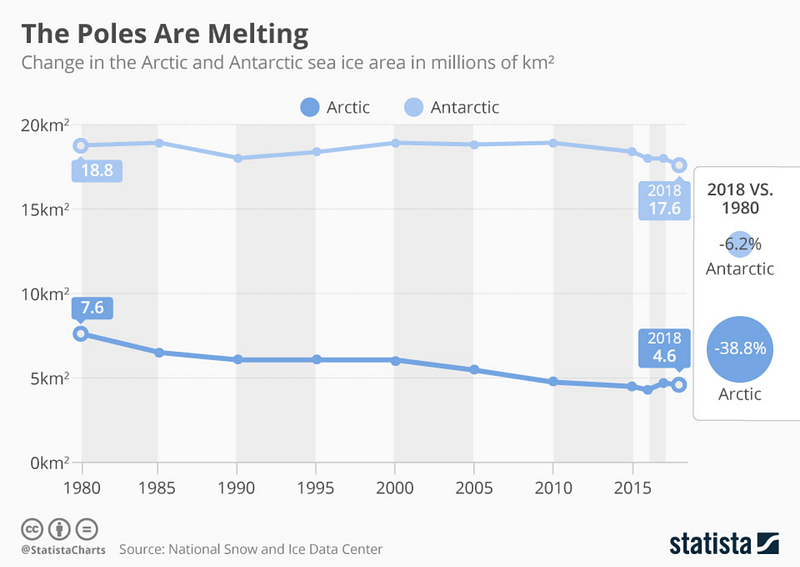
Greenland had 586 billion tons of ice melting in 2019, way up from its yearly average loss of 259 billion tons dating back to 2003. Antarctica has seen a four-fold increase in ice melting since 1979, causing global sea levels to rise by 14 millimeters.
If the rate of rising sea levels isn’t slowed, it will continue to result in erosion (which already causes roughly $500 million in property losses per year), threaten ecosystems and farmlands, and put major cities across the globe underwater.
Along with the threat of rising sea levels, the planet continues to get warmer. 2019 was the second-hottest year on record (just behind 2016), while 2020 could break the record.
Forest fires have ravaged Australia, the western U.S. and other parts of the world, while hurricanes continue to get stronger.
With all the bright red warning signs about the climate, what are we doing to address these increasingly pressing issues?
The planet should have started seriously moving quickly to counteract climate change years ago, but we are still lagging behind.
Non-renewable fuels, which include coal, oil and natural gas, supply about 80 percent of the world’s energy. CO2 emissions are still near all-time highs.
Methane gas emissions, which accounts for about 25 percent of manmade global warming and is 84 times more potent than carbon dioxide in the first two decades after its release, also continues to rise.
Despite the average global temperature having risen 0.7 degrees Celsius from the average temperature between 1960–1990, and getting 1.1 degrees hotter overall since the Industrial Revolution, there are still world leaders who question the legitimacy of the science behind climate change.
That’s not to say the world isn’t doing anything about climate change, however.
Most of the planet recognizes the threat that climate change presents, and is conscious about the need to cut greenhouse emissions.
In Dec. 2015, the Paris Agreement was reached with the goal of cutting emissions and limiting global temperature change to “well below” two degrees Celsius. Although President Trump has pulled the United States out of the Agreement and will officially exit Nov. 4, nearly every other country in the world remains in it.
The Paris Agreement was a noble gesture, but it was mostly symbolic.
The agreement was non-binding and unenforceable, with each individual country pledging to carry out their own distinct plans to fight climate change. And even in the best-case scenario where every country follows through with their plans, the global temperature is still projected to rise 3 degrees Celsius.
Scientists say that to keep the climate from reaching unstable levels, we need to prevent temperatures from increasing by 1.5 degrees from pre-industrial levels. That would take cutting global greenhouse emissions by 7.6 percent every year for the next decade, according to a report from the U.N. Environment Programme (UNEP).
The pandemic has helped curb emissions some this year, with lockdowns, reduced travel and factories shutting down.
But it hasn’t helped as much as one might expect.
CO2 emissions dropped 8.8 percent in the first six months of the year, just barely in line with our target.
While the temporary decrease in emissions itself won’t have a major long-term impact on the climate, some foreign leaders have seized the opportunity to parlay the pandemic into environmental progress.
The president of the European Commission, Urusla von der Leyen, pledged more than $800 billion to a European Green Deal, saying, “We can turn the crisis of this pandemic into an opportunity to rebuild our economies differently.”
Along with governments, major companies have become more green-focused. Amazon, Google, Microsoft and Walmart have enacted plans to curb emissions. Electric vehicles are becoming more prominent, and there are now more than one million charging stations worldwide.
A shift to renewable resources is necessary for greenhouse gas reduction.
Fortunately, it’s becoming a prominent energy source, as last year wind and solar represented 62 percent of all new generating capacity in the U.S.
The amount of primary energy that comes from renewables is up to 11 percent in the US, as solar power has seen an almost 46-fold increase in the last decade, while wind generated 7.29 percent of all electrical energy last year, surpassing hydroelectric power as the largest renewable energy source generated in the U.S.
Meanwhile, COVID-19 has put a hurting on the (already struggling) oil industry, as fewer cars on the road have resulted in falling gas prices and barrel prices at one point dropping below $0.
While some believe the oil and gas sector will still play a major role to play in the U.S. economy for many years to come, employment in the clean energy sector has skyrocketed in recent years. At the start of 2020, the clean energy sector employed about 3.4 million workers in the U.S and outnumbered jobs in the fossil fuel sector 3 to 1.
We are slowly headed in the right direction in the fight to combat climate change. US emissions are dropping, but until the pandemic they were still below the targets of the Paris Accord.
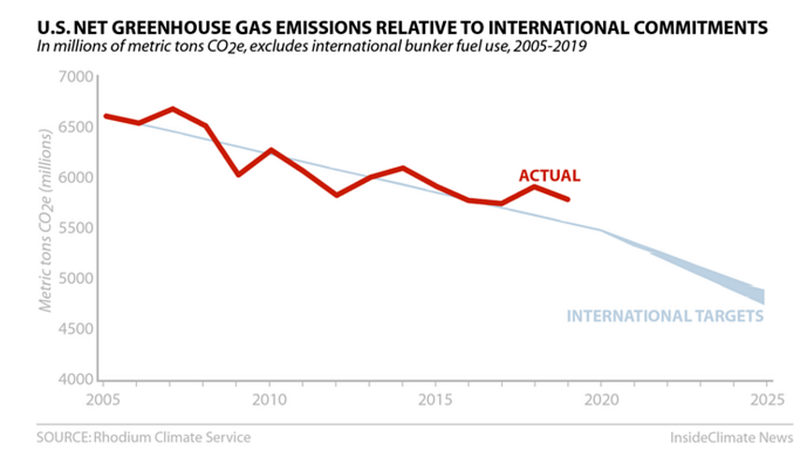
Some of the roadblocks left to hurdle are infrastructural and technological. Many countries will continue to rely on fossil fuels for the foreseeable future, as they lack the resources or technology to shift to renewables.
Costs of energy storage are still high.
There’s also an issue with land usage, as solar farms take 450 times more land than nuclear plants, while wind farms take 700 times more space than natural gas wells — all while producing the same amount of energy.
And there are major causes of climate change that aren’t just caused by the fossil fuel industry. The agriculture industry contributes to climate change by deforestation, as global loss of tropical forests results in 8–10 percent of annual human emissions, with the problem only getting worse.
But most of the roadblocks have nothing to do with technology or science.
Politics is the key factor that is delaying the switch to clean energy, especially in the United States. There are still major corporations and influential people who are fighting against science and are desperately trying to keep fossil fuel as the world’s main energy source.
What can be done to combat those who are impeding the shift to clean energy, and how can we do our part as individuals to help save our planet from grave danger?
Solutions
1. Legislation and Policies
“We are transitioning from a fossil-fuel based economy to a cleaner one. But without policy, we won’t get there fast enough.” — Suzanne Tegen, assistant director of Colorado State University’s Center for the New Energy Economy
Creating laws that help push the planet toward its ultimate goal of net-zero emissions could be crucial to speeding up the process of shifting to clean energy.
One of the potential solutions is taxing carbon and emissions. This would hold businesses and individuals accountable for the costs of emitting greenhouse gases. Similar to taxes on tobacco, there would be financial repercussions for taking part in what is clearly a net negative for society.
Of course, many people will have no choice but to continue to use their carbon-burning automobile and use non-renewable energy at home, which could cause low-income individuals to get hit the hardest by the tax.
However, if proceeds from the carbon tax were given back to taxpayers with monthly stipends, the tax could ultimately be beneficial to those in the lowest income brackets.
While there would be logistics to sort out with a carbon tax — creating the framework, determining the appropriate amount to tax and properly dealing with the regressive aspects of the tax — it could be the necessary step to stop our reliance on fossil fuels and elevate renewable energy.
There’s already evidence of a carbon tax working around the world.
In 2013, Britain imposed a $25 tax per metric ton of CO2. That caused a major shift in energy usage from coal to natural gas, leading to a 93 percent drop in coal-fired electricity and greenhouse gas emissions falling to their lowest level since 1890.
However, Britain is still struggling to account for the true price of carbon consumption.
Other countries in the U.K, as well as Australia, New Zealand, Sweden, Finland and Chile have also implemented carbon taxes.
Several different carbon tax plans have been pitched in the United States, including the Baker-Schultz proposal, which is supported by the Big Oil companies. However, some say the oil companies, which are currently embroiled in litigation cases for their years of misleading the public, are proposing the tax as a way to be protected against lawsuits.
Sweeping reforms like the Green New Deal, spearheaded by Rep. Alexandria Ocasio-Cortez (D-NY) and Sen. Ed Markey (D-Mass.) and co-sponsored by more than 100 in congress, aim to “bring U.S. greenhouse gas emissions down to net-zero and meet 100% of power demand in the country through clean, renewable and zero-emission energy sources by 2030.”
While ambitious, its potential cost of $93 trillion renders it politically unviable.
Instead of federal policies, another solution is local governments setting their own emission goals.
Even though President Trump pulled the U.S. out of the Paris Agreement, nothing is stopping state and local governments from setting their own targets.
Fifteen states already have binding plans for reducing greenhouse emissions, while more than 350 mayors have adopted the Paris Agreement climate goals for the cities.
It’s entirely possible that legislation to curb oil production isn’t even necessary.
The oil industry has been hammered in 2020, with barrel prices down about 33 percent since the beginning of the year and US drilling hitting 122-year lows.
As technology has improved, solar and wind power are now the cheapest forms of power in two-thirds of the world.
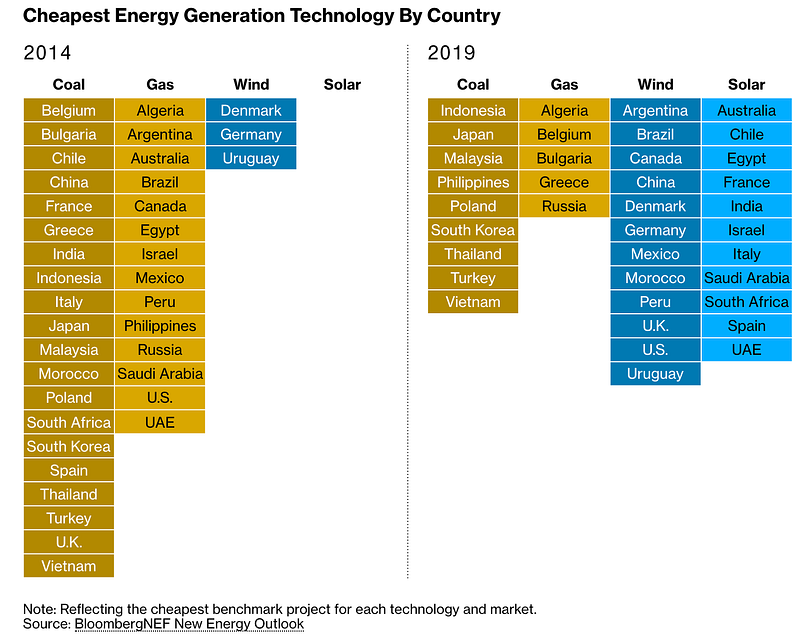
The shift to renewables seems inevitable, but legislation can help speed up the process.
Another way governments can improve climate conditions is by improving public transportation and making streets more accessible for bikers and walkers.
Transportation accounts for the most greenhouse gas emissions in the U.S, and they have barely been reduced this millennium. There needs to be action to address automobile pollution; we can’t just expect electric vehicles to come save the day right away.
And while President Trump and the U.S. have committed to help curb deforestation by joining the World Economic Forum’s One Trillion Trees initiative, more restrictions can prevent companies from unnecessary destroying of forests.
There’s certainly a case to be made against overregulation by the government.
But when the well-being of the planet is on the line, it’s necessary for governments to step in and enact policy that shifts us in the right direction.
2. Vote For Science-Oriented Leaders
When a scientist says something, his colleagues must ask themselves only whether it is true. When a politician says something, his colleagues must first of all ask, ‘Why does he say it?’—Leo Szilard
For the good of the planet, our elected officials need to focus on facts, not ideologies.
Climate change has become a partisan issue for a reason that takes some digging to understand.
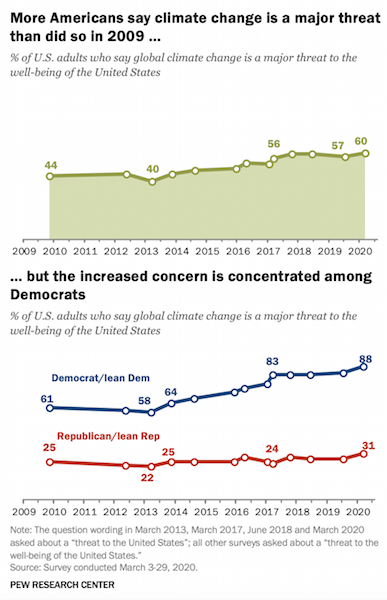
While more Americans recognize climate change as a “major threat” than ever before, the difference in beliefs between Democrats and Republicans is staggering.
In the last decade, Democrats’ belief that climate change is a major threat increased by 27 percent, while the Republicans only went up six percent.
Why are Republicans so much less likely to believe in the severity of global warming?
There’s not one encompassing answer. Some have theorized that since Republicans are more inclined to be skeptical of authorities, they are more distrusting about the science. It could be that since climate change has become a major issue for the progressive left, the right just opposes it out of hand.
But perhaps the biggest factor that causes conservatives to deny or question the science is the politicians who are guiding their thinking.
On complex issues like global warming, citizens often look to their political leaders for guidance, or a default answer to give when the subject arises.
Republican politicians are much more likely than Democrats to question the science behind climate change.
It isn’t difficult to understand why this is the case.
Republicans in Congress receive $18,626,685 in contributions from oil and gas donors, compared to $4,929,550 received by Democrats.
Donald Trump’s donations from the oil and gas sector to his campaign and super PACs total over $13,000,000. Democratic nominee Joe Biden has received less than $2 million from oil and gas contributors.
As long as conservative politicians keep questioning the science, some of their constituents will continue to parrot them.
That’s why it’s important to vote for candidates who are science and environment-oriented thinkers. Those who continue to deny the effects of climate change and the fact that humanity is contributing to warming will only continue to slow down progress.
That’s not to saying voting for Democratic politicians will cause an instant shift in the fight against climate change.
A recent report by InsideClimate News suggests a Biden administration, despite having a $2 trillion plan to deal with climate change, might not have as much of an effect on the oil and gas industry as one might think.
However, there’s something to be said for casting a vote for someone who acknowledges the dangers of climate change, rather than someone who denies them.
There are many important issues to consider in the upcoming elections, whether it’s at the federal, state or local level. But when deciding who to vote for, one of the main factors should be where the candidate stands on climate change and green energy.
We can’t rely on politicians to save the world for us, and oftentimes we overestimate the impact they can (and will) have.
But continuing to elect leaders who won’t fight climate change will only continue to hurt us.
3. Increased Pressure From Shareholders and Consumers
“Politics might be pretty confused and babbling at the moment. But money talks.” — Anne Simpson, director of global governance at CalPERS
Without resistance, major polluting companies have little incentive to change their ways.
But when investors start speaking out and demanding changes, the companies are forced to listen.
While investors don’t have much by way of formal power over companies, they can be still be incredibly influential. Investors have the power to force management to take specific actions by threatening to dump their stocks, which could tank the share prices and cause executives to lose a lot of money.
Significant progress has already been made by putting pressure on corporations.
Activists groups like ShareAction have been able to gain access and wield influence in companies, sometimes with just a small investment. For instance, in the UK it takes a group of just 100 shareholders with an average of £100 per share to submit shareholder resolutions (proposals to be voted on at a company’s annual general meeting).
It isn’t as easy for shareholders to make an impact in the US, where resolutions are only advisory rather than legally binding and requires the support of 50 percent of investors. But when powerful, high net worth investors get together, they can cause major changes.
In 2018, Climate Action 100+ (CA100+), a group of global investors with more than $41 trillion in combined assets, pressured Shell into either committing to short-term emissions-reduction goals or losing their support. Shell eventually committed to reducing emissions by as much as three percent by 2021.
Shareholders pushing corporations to make changes to help the environment is becoming commonplace.
Chevron was pressed to disclose how its lobbying aligns with the climate goals set out in the Paris Agreement. Major transportation companies like Delta, United Airlines and General Motors have received proposals from investors to address lobbying resolutions.
While activists have been effective in getting major corporations to commit to curbing emissions in the future, they are having a tougher time getting them to agree to immediate changes.
“We’re seeing an increasing number of big polluters commit to net zero by 2050 but failing to underpin those commitments with short- or medium-term emissions reduction targets,” said Jeanne Martin, a campaign manager with ShareAction. “The next step for investors is to ensure that commitments are backed up by credible transition plans.”
Some say that when companies do agree with activist groups to set climate goals, they are usually only doing it as a PR move.
Earlier this year, Climate Action 100+ and the petroleum refining company Total issued a joint statement in which Total committed to achieving net-zero emissions by 2050 or earlier. Other activist groups didn’t think the move was enough, as Total was accused of agreeing to the emissions cut to avoid a more ambitious shareholder resolution.
“Total’s response to a climate targets resolution is classic: announcing a climate ambition with CA100+, and calling the resolution ‘unnecessary’,” said Mark van Baal of Follow This, a Dutch activist group. “Big Oil executives seize every opportunity to cite joint statements with CA100+ as a fig leaf to disguise inaction on emissions.”
Activist shareholder organizations must continue to pressure polluting companies, but individual investors can make an impact, too.
Consumers have the power to persuade companies to make fundamental changes.
By choosing not to put your money into companies that pollute, you are casting a vote for what direction you want the planet to go in.
Of course, most people still rely on the oil companies to fill up their cars, but there are plenty of polluting companies outside of the energy industry.
As the premier plastic users in the world, powerhouses Coca-Cola and PepsiCo are massive contributors to greenhouse gas emissions. Coca-Cola revealed in 2019 that they used three million tons of plastic that year (the equivalent of 15,000 blue whales) while Pepsi had 2.2 trillion tons.
Coca-Cola was named the most polluted brand in the world in 2018 and 2019.
Packaging companies make up 42 percent of primary plastic production, adding to environmental pollution as global plastic production steadily rises.
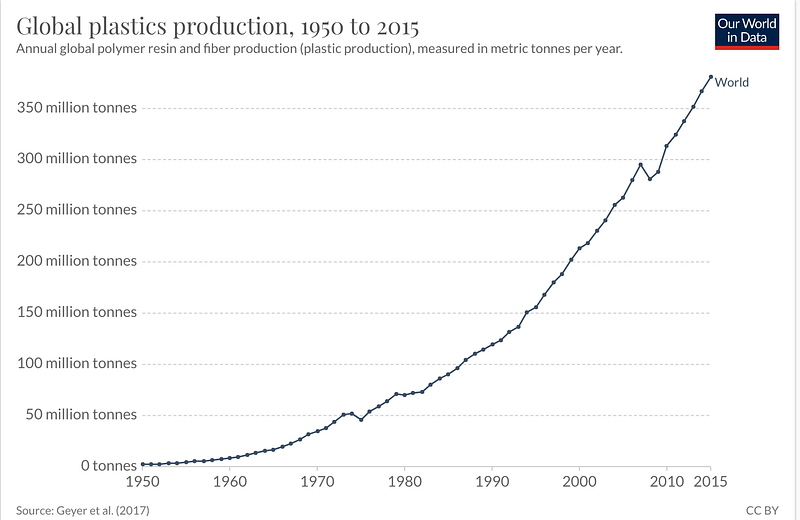
While the United States is extremely effective in minimizing plastic waste, other countries have poor management. In China, 74 percent of plastic waste was inadequately managed as of 2010, according to Our World in Data, while countries in South Asia and Sub-Saharan Africa’s numbers are as high as 80 to 90 percent.
A sample of six developing countries found that the biggest plastic-using companies (Coke, Pepsi, Nestlé and Unilever) create more than half a trillion tons of pollution each year, and the burning of their plastic products causes 4.6 million tons of CO2 to be emitted.
For years, these global brands have been failing to ensure that the disposal of their products isn’t causing harm to the environment.
Despite pledges to reduce plastics and switch to refillable and reusable packing, Coca-Cola and Pepsi haven’t been cutting their pollution enough, according to a report by the non-governmental organization Tearfund. Nestlé and Unilever, on the other hand, scored highest in the report for its commitments.
While activist groups will continue to hold polluting companies accountable, individuals can send a strong message by not buying their shares or products.
4. Do Our Part As Individuals
“You cannot get through a single day without having an impact on the world around you. What you do makes a difference, and you have to decide what kind of difference you want to make.” — Jane Goodall
Along with making an impact through our purchasing decisions, there are many more choices we can make to help the environment and reduce our carbon footprint.
It starts with simply talking about climate change.
For many, conversations about global warming don’t go much deeper than flippant jokes on scorching hot days.
But having serious discussions with family and friends about climate change can raise awareness and lead to small yet meaningful actions, like increasing recycling or switching from bottled water to refillable bottles.
It’s also important to think about how much energy you are consuming on a daily basis.
It starts at home.
Cooling and heating make up 47 percent of energy use in a house. Turning off the heat or AC on days with pleasant weather will not only help the environment; it will also save you money.
According to the EPA, nearly 63% of electricity in the U.S. comes from burning fossil fuels, namely coal and natural gas.
But switching to renewable energy sources is becoming increasingly easier.
Nearly half of the country now have the ability to choose their own power provider.
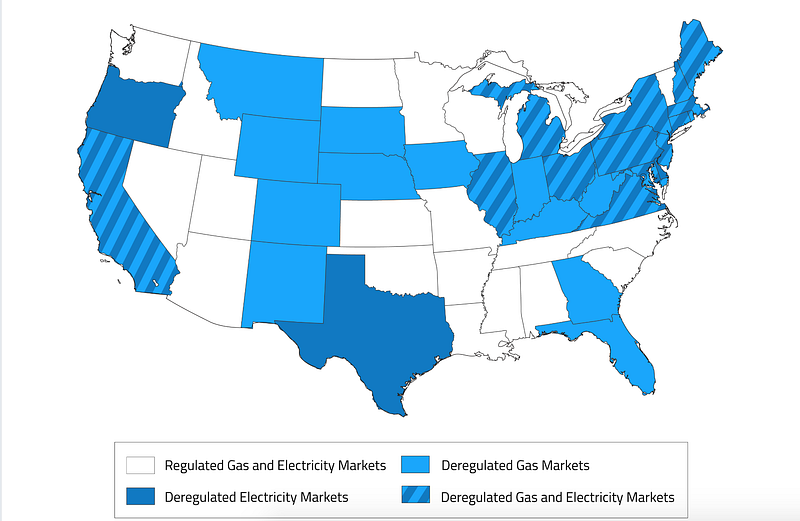
Utility companies often have green options that consumers are either unaware of or don’t take advantage of, so it’s important to check and see if your provider has one.
While the cost of green energy adds just about $10 to monthly bills, people who have the option have been switching infrequently.
“It’s a dispiriting number,” said Jeff Swenerton, communications director for the Center for Resource Solutions. “It’s something like, on average, [two] percent of consumers who have access to a green power program through their utilities actually sign up.”
If green energy isn’t an option where you live, contacting local and state representatives could help create changes.
You can also take the do-it-yourself route and install your own energy system.
Switching to solar, wind, hydroelectric or geothermal systems can pay dividends not just for the environment, but for your wallet.
These systems are appreciating assets, meaning they make money for you as time goes on, and can pay for themselves in 10–15 years (or sooner).
Not only does having a renewable energy system add value to your home, but the excess energy attained from the system can be sold back to the power companies.
Renewable energy certificates (RECs) — essentially the property rights of green energy — can also be sold for additional revenue.
If making the jump to green power isn’t feasible for you right now, there are other things you can do to be more environmentally friendly at home, such as being more efficient with energy and water usage and switching to more efficient light bulbs.
Outside of the home, taking public transportation or riding a bike, using reusable bags at the grocery store, and limiting technology usage can cut down your carbon footprint.
No one person can single-handedly make a significant dent in the issue of climate change.
But when individuals change their habits and start acting for the good of the environment, it results in progress for all of society.
Conclusion
Although it may not feel like we as individuals have much control over climate change, there is plenty we can do to make an impact.
Pushing for green policies, voting for science-oriented leaders, choosing to not support polluting companies and changing our energy consumption habits are just some of the actions we can take to help improve the Earth.
Time is beginning to run out to reach our goal of reducing emissions by 40 percent by 2030, and reaching net-zero emissions by 2050.
Although the potential consequences of climate change are frightening, there are reasons to be optimistic about the future.
The oil industry is faltering.
Exxon, Shell and BP share prices are all at lows not seen in more than a decade. Five states are suing Big Oil companies, which stand to lose millions in court. If that weren’t enough, the industry will be dealt a critical blow in the near future by losing a projected $100 billion in divestments.
Renewable energy is on the rise and technology is improving at a rapid rate.
In a world and market that values efficiency, it seems inevitable that green energy will win out sooner or later. The question is how long fossil fuels will continue to stay in the picture and delay the transition to renewables.
Climate change is still a winnable battle, but we have to act now.
For decades, we have ignored the repercussions of pumping greenhouse gases into the atmosphere.
Humans have put their own self-interests before the well-being of the planet, and in turn the Earth is beginning to retaliate against us.
If we don’t make the necessary changes now, we will deserve whatever happens to us.
The world is in our hands.