‘Climate Change’ Is A Lie
How and why labeling our crisis as “change” has cost us time.
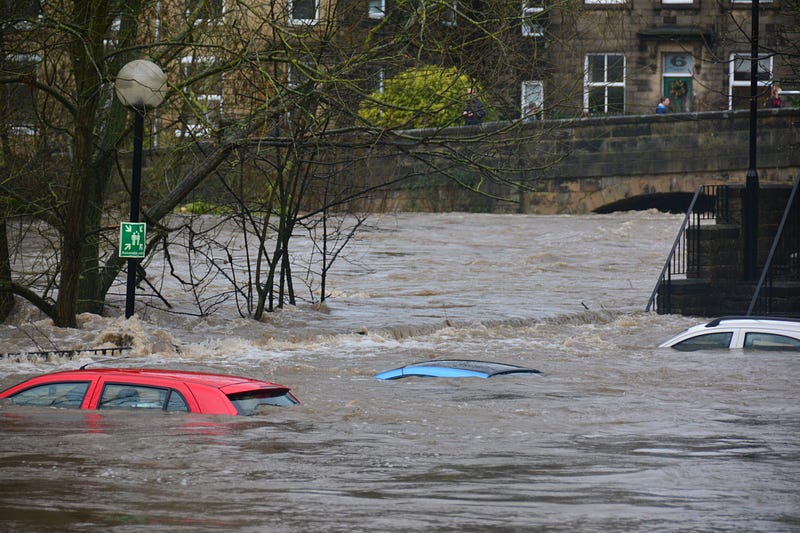
Change is inevitable, this was not
Climate change, by that name, is a lie.
The now obvious global threat, through the first half of the twentieth century, was most often referred to as “The greenhouse effect.”
Although Svante Arrhenius discovered the phenomena in 1896, he variously called it “climate fluctuations, climate warming, greenhouse warming,” and even “dangerous warming.”
By the time he was completing his body of work, Arrhenius had come to believe that the additional carbon dioxide in the atmosphere could very well be positive. Additional warming by adding the emissions could possibly avert the next ice age and mellow out the frozen north.
Let’s not forget that Arrhenius lived in Sweden, and the multi-factorial details of slight changes making enormous challenges, feedback loops, and more, were little known. One would think that given the modest amount of warming by greenhouse gases prior to the 20th century might make a long, Scandinavian winter, and a more productive green summer, a welcome benefit.
Time has shown that hoping for a milder climate is not the change we got.
Power of influence
When Arrhenius won the Nobel prize in 1903, it was not for his all-important discovery of the carbon warming effect. Carbon dioxide? Who knew, why care?
His awarded Nobel was for chemistry, and cross-over sciences of physics, which was more novel, studied, and widely influential in their own time.
Nevertheless, carbon rise in the mid-century of the 1960’s and 1970’s alarmed many observers. Pollution wasn’t very welcome, dependency on fossil fuels for national security wasn’t welcome, and a whole host of voices arose decrying obvious greenhouse warming. Population size and consumption had grown considerably.
It was about this time that fossil fuel giants, and their political allies, first began to realize they had better shape public opinion in their favor. They launched a disinformation campaign and spent billions on it.
James Hansen testified to congress about Climate in 1988, and as the Bush years unrolled, so did new terminology which suggested, the phrase “climate change” should be used to “emphasize the scientific uncertainty” of the new research.
This was notably the position of the Republicans at the time, who overwhelmingly were polled to discover that belief in “climate change” was much higher than “climate warming, or global warming,” and a whole lot less threatening, especially to lobbyists.
“We lost decades of opportunity,” reported geophysicist Michael Mann. The last three decades, have indeed been crucial in stepping up to the challenges we see now.
It was advisor Frank Luntz who notoriously warned that the new label should stick because on the topic of environmental concerns, and the prospect of global heating, the Bush administration was “most vulnerable in their stance.”
The publication Grist declared that Luntz is a “founding father of climate denial.”
A change in perspective
Added heat in our atmosphere is driving dangerous currents, and therefore storms in the ocean, prompting new weather events most of us have never heard of in our lives until quite recently.
The nasty heat — that is killing thousands, flooding with melt waters, laying tinder for fires with drought, heatwaves, and drying up aquifers and farm lands — is indeed, “a change.” But that is not the first word to come to mind when it is your dead livestock, your floating house, your burned- out neighborhood, or your lost health, livelihood, or loved ones.
Coming to terms
What’s up with the weather?
New terms we must add, and quick, to our vocabulary are thundersnow, polar vortex, ice storms (in Texas!) bomb cyclone, flash drought, atmospheric river floods, and lethal heatwave.
These terms are better not just for headlines, but for conveying the danger we all should be ever increasingly aware of as we must prepare for them to get much worse.
If you are anything like me, when you hear a low-pressure system is sending weather to the Pacific Northwest in October 2021, you may not prepare as well. But, if you are told a bomb cyclone is on its way, I think we pay more attention.
Of course, climate crisis is more than just weather, it’s invasive species, ocean acidification, extinction, refugee migration, an inadequate agriculture system, and so much more.
Further, let’s not call it doom-saying, or alarmist, to speak candidly. When there really is a firestorm, or flood, at your door, it’s common sense to collaborate, cooperate, innovate, and mitigate in every possible way.
And, we are only true patriots if we demand leadership, not cater to partisan special interests.
For countering the apathy, the indifference, and the intentional downplaying of past labels like the innocuous and nondescript “climate change,” we need a change.


