Climate Change and Law
Book Review
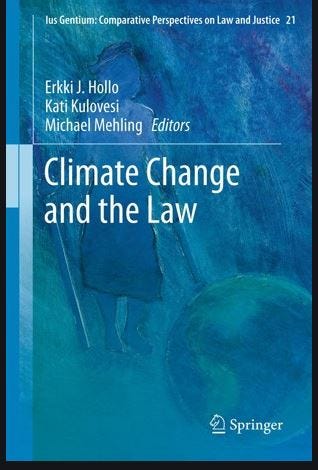
Book Title: Climate Change and the Law
Editors: Ekki Hollo, Kati Kulovesi and Michael Mehling
Publisher: Spinger
Year: 2013

This edited book under review was published seven years back. That time, in 2013, it was one among several edited research handbooks that truly facilitated scholastic discussion on climate change and legal jurisprudence.
This book, Climate Change and the Law, serves as a well written introduction as well as a good reference to the concept Climate Change. It is also the earliest one among the tidal of waves of climate change related monographs that dares to discuss various challenging issues relating to climate change and legal studies.
This book under review sets out to explore the issues as to the regulatory activities about climate change in legal parlance. The contents and arguments of this edited book under review reiterate that regime of Climate Change has veered into a specialized area of international law and legal theory research.
In this sterling and highly readable book, it becomes clear why the concept ‘climate change’ is a terrific crisis. This crisis that transcends the sovereign boundaries and poses as a universal problem, still is hard to define and most often creates obstacles in drafting any sustainable solutions.
In this book, authors provide snappy commentaries on international climate change law; comparative climate law; and climate change as emerging disciplines in the legal studies.

This book’s collection of 19 chapters try to cover the complicated nexus between climate change and law. The discussions of these 19 chapters can be divided into three distinct segments: Climate Change Law as an Emerging discipline; International Climate Change Law; and Comparative Climate Change Law.
Climate Change as Emerging Legal Discipline
Within the time span of three decades (after Rio 1992), the concept climate change has embedded in the research domain of legal studies.
In both the domain of national and international legal studies, the governance issues of climate change have met new avenues of regulatory philosophies; active involvement of non-state actors and ‘out of the box’ logics far away from traditional jurisprudence; and its nexus and potential interaction with other disciplines.
The contents of the book woven together with academic resources to systematically answer unfolding questions, such as: (a) is it premature to assume the emergence of a new area of law, ‘Climate Change Law’? (b) if its existence can indeed be affirmed, what common principles, objective and other shared categories define it?
To pursue these questions, the book under review critically examines the existing international legal framework; undertakes the comparative examination of domestic legislation relating to climate change.
It analyzes the multilevel governance, migration of legal norms and relevance of the non-state actors for climate change issues.
Regrading legal issues pertaining to climate change, the book draws a normative vision of a justice-based framework for global climate governance and argues for a normative version of legal framework for international governance of climate change.
Adaptation and Mitigation in International Climate Law
The 1992 United Nations Framework Convention on Climate Change regards both mitigation and adaptation as equally vital. However, the book under review points out that since after the 1992 Rio declaration, adaptation received much less attention than mitigation.
To investigate the causes behind such pitfalls, the book opines:
“Perhaps the lack of attention is one of the reasons why adaptation measures are still in their infancy. It appears to be much more difficult to devise and implement adaptation policies than it is to devise and implement mitigation policies. Partly this is due to the fear that attention afforded to adaptation measures will make it more difficult to get mitigation measures adopted and implemented. Partly, the problem with adaptation is that you cannot always take one-size fits all measures.” (p. 258).
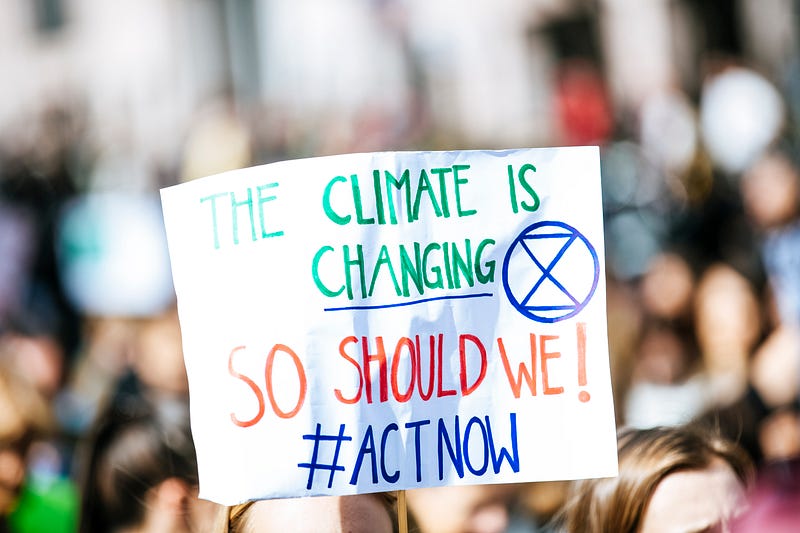
There is no doubt that climate mitigation and adaptation are needed to be developed and implemented seamlessly. The book under review aptly points out that the climate change is impacting both the policies of sovereign state mechanism as well as non-state actors. Hence, it contends that climate change adaptations require a thorough revisiting of national and international law to adjust the imminent transformation of society and nature.
A salient feature of the book under review is the presence of a comprehensive index chapter, which actually extends its usefulness as a reference book on climate change for all. This book is an ideal handbook manual for policymakers and legal practitioners.