
Keep Your House Clean During COVID-19
A guide on keeping your house a (relatively) virus-free zone
“Not because there is evidence that it will transmit via a phone, but because there is no evidence that it won’t,” — Dr. Hayhurst on phone cleaning after exposure to individuals with COVID-19
In paraphrase, this might be translated to: just because we don’t have evidence COVID-19 doesn’t do something, doesn’t mean it can’t.
Everything that bothers me about COVID-19 summed up in one sentence.
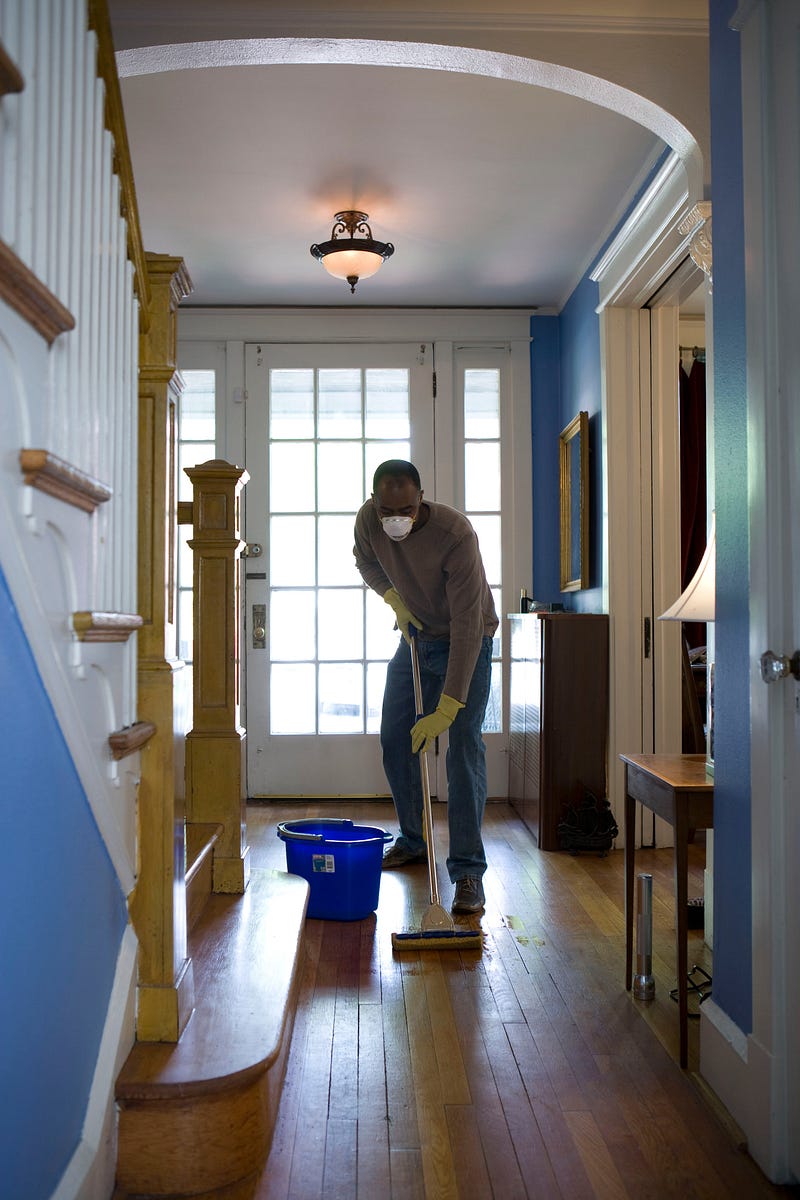
I’m a marketer by trade, but a microbiologist by training. With this pandemic, my education has returned to haunt me with a roaring vengeance: I’m remembering every lab of clinical microbiology and all the lectures from my epidemiology professor. (I’m also kicking myself for not taking virology, because I know more about bacterial bugs than viral ones.)
To a microbiologist, the lack of data is the scariest thing about this pandemic. Flu? It’s been around for decades. We’ve had plenty of time to study it. Sure, it mutates, but we’re usually wise to its tricks by now. We can test for it in ten minutes.
But COVID-19? We’re scrambling to catch up and running studies on the fly.
We don’t know exactly how infective it is (the current values are estimates based on limited sample sizes and studies). We don’t know for sure what the presentation of symptoms looks like. (We originally thought it only presented with lower respiratory tract symptoms. Now 10 to 15% of cases are also presenting with upper respiratory tract symptoms like stuffy noses and sore throats.) We’re not even quite sure how long this thing can live on certain surfaces (see the typically cited two to three days on non-porous surfaces like stainless steel and plastic vs the RNA traces found in the Diamond Princess 17 days after*)
So what’s a scientist to do?
Assume it can and take precautions like it can. Then be glad when it’s conclusively proven it can’t.
Protecting Yourself by Protecting Your Home
With millions under shelter-in-place and tens of millions more working and studying remotely, our homes have become our shelters from the disease.
But there’s a certain amount of anxiety, wondering: “Could the virus be in my house? Am I bringing it inside every time I walk in the door?”
Unfortunately, especially for essential personnel like healthcare workers and grocery store staff who are still working outside their homes, the answer is yes, it theoretically could be. Is it necessarily enough to make you or anyone in your house sick? Probably not.
But taking reasonable precautions like it could can at least give you some peace of mind in the long run. The last thing any of us needs during this difficult time is extra anxiety. Consider this a way to cross something off your worry list.
So, let’s talk about how to keep your house a (mostly) decontaminated zone:
Table of Contents
  Sanitizing Yourself
     Lower Exposure Risk Individuals
     High Exposure Risk Individuals
Grocery Shopping without Contaminating Yourself or Your Place
Schedule Considerations
Shopping at the Store
Once Your Groceries Are Home Dealing with Packages and Deliveries Resources
Individuals at Greater Risk of Severe Disease with COVID-19
Approved COVID-19 Disinfectants
Definitions: Sterilized vs. Sanitized vs. Disinfected
FootnotesDISCLAIMER: I have a bachelor of science in microbiology and am the daughter of a med-ped (internal medicine and pediatrics) physician with extensive experience across multiple types of clinical settings, so I have a certain level of comfort in this realm.
But I am not a microbiology research scientist, an epidemiologist or a medical professional myself. Those people are true experts. These guidelines are not CDC or WHO recommendations (though I’ve tried to link whenever official recommendations are echoed). They’re merely from my experience developed from learning how not to infect myself while working in a lab, hours of discussion with my dad about similar subjects and a good dose of coming from an extended family who leans strongly towards the germaphobic side of the neatness scale.
Furthermore, these guidelines are merely suggestions. They are not absolute necessities, nor are they guaranteed to eliminate your exposure if followed. In fact, they may be overkill or not stringent enough, depending on the health of the area you’re living in. I’ve simply tried to outline systems that will maximize exposure reduction while minimally interfering with your day-to-day life.
The whole point of this process is to prevent as much potential virus exposure to the inside of your home. This basically means that anything that has gone outside in public around people (not just out in the yard or out for a run in a deserted area — some scientists think fresh air may actually help reduce exposure due to UV and ventilation) needs to be handled appropriately.
Sanitizing Yourself
The most infective thing coming in from the outside is, well, us. Consider all the things we bring into a house with us: bags, cups, phones, sunglasses and glasses and even our clothes. Not to mention we could be carriers of the virus ourselves without knowing it.
While there’s not much we can do to prevent in-house spread if we’re already infected, we can do something about the items we’re bringing in. Especially since these items are closest to the thing capable of actually catching the infection (again, ourselves).
Let’s start with the routine for someone of low exposure risk. Healthcare workers, janitorial staff, delivery persons, grocery store staff and other essential personnel should skip to the high exposure risk routine.
FOR LOWER RISK INDIVIDUALS:
If you are not in a high exposure risk scenario, your disinfection routine won’t need to be quite as rigorous as someone with high exposure risk. This is for cases such as someone who is working from home, but might have just returned from the grocery store. Here’s what to do:
- Before entering your home, plan to touch the external door knobs with an elbow or a recently hand-sanitized hand. If you have a keypad lock, use a knuckle to type in the code.
- If you can, remove your shoes before walking inside.
- Once inside, place your bags as close to the door as possible. It’s best if they’re on a hard surface that can be disinfected. Better yet, if you have a large Rubbermaid or other plastic container, place them in one of those and close the lid. You can disinfect the outside later.
- If you haven’t already, remove your shoes before you walk through the entry way of the house. Keep them close to the door.
- Place any travel cups, water bottles, lunchboxes etc. in the same spot, again, close to the door and on a hard surface. We’ll be coming back to clean them later.
- Avoid removing keys, sunglasses/glasses or cellphone if they’re in a bag. If they’re not, place them on the hard surface near your cups and lunchboxes.
- Go grab a clean set of clothes and move to the bathroom closest to where you grabbed the clothes. This can be a powder room as a bath or shower is optional.
- Isolate your worn clothes to a hard surface. This is all about reducing your potential spread within the house. Wash your hands after removing the clothes, then put on your clean clothes.
- Place your worn clothes in a hard plastic hamper or hamper with a removable, washable liner. If you have a laundry room that can be closed off, you can isolate a pile on the floor of the laundry room. Simply make sure pets can’t access the room. Nothing indicates pets can get or carry the disease, but yet again, just because it doesn’t, doesn’t mean it can’t. Remember the clothes in the worn pile are “potentially infected” and any clothes that might be reworn (i.e. if you’re only wearing them around the house) should be kept away from this pile. Wash your hands after handling the worn clothes.
- With an approved disinfectant cleaner (see resource section), wipe down all the surfaces (i.e. doorknobs and light switches) that you’ve touched, including your external door knob.
- Now, return to the cups, sunglasses/glasses and cellphone or other devices you removed when you first walked into the house. Using a disinfecting cleaner, wipe down all the non-tech items, covering all sides and their bottoms, and the hard surface they were sitting on. If your bags are in a hard plastic box, wipe the box down at this time as well.
- For cellphones, iPads and or other touch devices: The problem with wiping down your phone/touchscreen device is cleaners can eat away at the coating that makes the phone touch sensitive. So, first, consider using 70% rubbing alcohol. There are some reports Lysol wipes are tolerated okay, but alcohol has generally been approved. Put the cleaner on a pad and wipe down the back of your phone (avoiding the cameras). Wipe down the sides and THEN move to the front once some of the cleaner has evaporated and the front of the phone won’t be soaked. If you have a screen protector on your phone, the front probably shouldn’t be an issue. The same goes if you have a holster — wipe it down too. Still go wash your hands after cleaning the devices. Repeat this process every time you return from being in public, including from exercise. Cleaning the device every 2–3 days while you’re at home is also good hygiene to prevent normal bacterial spread.
- Everything should be clean that is sitting out in your environment. When you remove something from one of your bags (i.e. a laptop), make sure to wipe it down with alcohol or a disinfectant cleaner.
- Repeat the process each time you return from being in public.
If you’re lower risk, a general full house clean once a week should be enough, even if you live with others in the house (provided they’re not exposed to high exposure risk environments). You can certainly spot clean high traffic spaces (like the kitchen and bathrooms) more often if you wish, but multiple cleanings a week aren’t a necessity as they are for high exposure risk individuals.
FOR HIGH EXPOSURE RISK INDIVIDUALS
Such as healthcare workers, essential services staff like grocery store workers or anyone with knowledge of being directly exposed to someone with the virus or someone close to someone with the virus.
Higher exposure risk individuals have a few extra steps they’ll need to take to help reduce potential spread. Some of these steps are exact repeats of the low risk scenario (specifically steps 1–6 and steps 15–18), but I’ve copied them here for anyone who decided to skip directly to this section. Repeated steps are italicized, while high exposure risk specific steps are in normal text.
- Before entering your home, plan to touch the external door knobs with an elbow or a recently hand-sanitized hand. If you have a keypad lock, use a knuckle to type in the code.
- If you can, remove your shoes before walking inside.
- Once inside, place your bags as close to the door as possible. It’s best if they’re on a hard surface that can be disinfected. Better yet, if you have a large Rubbermaid or other hard plastic lidded container, place them in one of those and close the lid. You can disinfect the outside later.
- If you haven’t already, remove your shoes before you walk through the entry way of the house. Keep them close to the door.
- Place any travel cups, lunchboxes etc. in the same spot, preferably close to the door and on a hard surface. We’ll be coming back to clean them later.
- Avoid removing keys, sunglasses/glasses or your cellphone if they’re in a bag. If they’re not, place them on the hard surface near your cups and other items.
- Head to the bathroom with a shower or tub closest to the door, taking the absolute shortest route through the house. The goal here is to keep virus from potentially shedding off your clothes and into the house as much as possible. Let anyone else in the house know you’re taking over this bathroom and they need to stay out until after you’ve cleaned it. Try to open doors with your elbow.
- In the bathroom, isolate your presumably dirty clothes on a hard floor. Keep other items away from them. Wash your hands after handling the clothes, then shower or bathe as usual.
- Once you’re out of the shower, you should no longer be a potential infection vector. The surfaces you’ve touched, however, still can be. Try not to touch surfaces you touched coming in (i.e. doorknobs) if you can while you’re dressing.
- Pick up your worn clothes, being careful only to touch them with your hands. If you do not have a washer and dryer, put the clothes in a hard plastic hamper or a hamper with a liner that can be removed and washed itself. Deem this an “potentially infected” clothes pile — do not mix clothes you might wear around the house and wear multiple times before washing in this pile.
- Otherwise, immediately take your clothes to your washing machine. Place them in the washer drum and touch nothing else. Do not shut the drum.
- Wash your hands throughly. Return to the laundry, shut the laundry drum and run your clothes through the hottest, longest cycle they can stand with bleach if you’re dealing with all white clothes or fabric sanitizer if you have it available. Go wash your hands again.
- Grab Clorox wipes, Lysol — some form of heavy disinfectant (see resource section for approved list). Working in reverse order, wipe down the surfaces you’ve touched. This means going to the laundry room, wiping down the washing machine drum handle and the controls. Wipe down every light switch you’ve touched and doorknob you’ve touched on both sides. Even if you’ve only touched one side of the doorknob, this will save you from any actions you might have done on autopilot and will clean the knobs from everyone else who has touched it throughout the day. In general, be more concerned about high touch surfaces like doorknobs, light switches or lamp switches rather than low direct touch surfaces like floors.
- Repeat the light switch and doorknob cleaning for each room you’ve been in or through in the house, including your external doorknob (and the keypad if you have one). You’ve likely spent the most time in the bathroom and touched the most surfaces, so spend extra time here cleaning faucet handles and toilet handles. Also ensure you’ve wiped down the area your clothes were sitting on as it’s the highest possible exposure. If you want to disinfect your shower or tub, spraying it with a bathroom cleaner and leaving it to sit shouldn’t hurt.
- Now, return to the travel cups, sunglasses/glasses and cellphone or other devices you removed when you first walked into the house. Using a disinfecting cleaner, wipe down all the non-tech items, covering all sides and their bottoms, and the hard surface they were sitting on. If your bags are in a hard plastic box, wipe the box down at this time as well.
- For cellphones, iPads and other touch devices: The problem with wiping down your phone/touchscreen device is cleaners can eat away at the coating that makes the phone touch sensitive. So, first, consider using 70% rubbing alcohol. There are some reports Lysol wipes are tolerated okay, but alcohol has generally been approved. Put the cleaner on a pad and wipe down the back of your phone (avoiding the cameras). Wipe down the sides and then move to the front once some of the cleaner has evaporated and the front of the phone won’t be soaked. If you have a screen protector on your phone, the front probably shouldn’t be an issue. The same goes if you have a holster — wipe it down too. Still go wash your hands after cleaning the devices.
- Everything should be clean that is out in your environment. If you go to retrieve something from a bag, try not to touch the exterior of the bag. When you remove something from a bag (i.e. a laptop), make sure to wipe the item down with alcohol or a disinfectant cleaner if possible. When you remove your bags, wipe down the box or surface they were sitting on with a disinfectant cleaner not likely to cause fabric damage.
- Repeat the entire process each time you’ve returned from a high risk area.
If you are a consistently high risk exposure (i.e. you’re a healthcare worker) and you live by yourself, a general full house cleaning (covering vacuuming, cleaning floors, dusting etc.) once a week should be enough as you’re the only potential vector coming into the house. However, if you live with other people, aim for a clean twice a week. This is less directed at making everything spotless and more directed at cleaning surfaces like your floors, kitchen sinks etc. that could still be holding on to viruses.
Try to remind everyone in the household to wipe down doorknobs, light switches, remotes and computer keyboards with disinfectant cleaner every two to three days. In high infection risk households, everyone should clean their cellphones daily or every two days, simply because there’s a higher risk of viruses being on surfaces that could be transferred to the person’s hands and face. A good rule of thumb: the more people in a house and the more often each of those people is leaving the house, the more often you should be cleaning.
Grocery Shopping Without Infecting Yourself or Your Place
Unfortunately, everything is a potential infection vector at this point, including our groceries. While the food itself is not so much of a risk, the grocery bags and packaging the food comes in can be. Here’s how to handle it:
Schedule Considerations:
- If you are a high exposure risk individual who works outside of a grocery store, please don’t go grocery shopping in-store directly after work unless there is absolutely no way around it. You could easily be spreading the infection to other shoppers because your overall exposure risk is much higher. If you live with someone else who’s not in a high risk area for work, ask them to make store trips instead. If you live alone, try to have groceries delivered or go on an off day instead. This is less about protecting yourself and more about protecting everyone else.
- If you live in the house with someone who is at risk of experiencing severe disease (see resource section for definitions), it’s best to limit your public exposure as much as possible to limit their exposure risk. Have groceries delivered or try to go to the store as soon as it opens.
- If you don’t match either of the above, your store schedule isn’t limited as far as when you can go. But, for your health and that of anyone in your household, limit the number of trips you make in a week and the number of places you visit.
- Parents: If you have younger children and can have someone else watch them during your grocery trips, please do so. Only take them with you if you absolutely must, for their health and that of everyone else in the store. A number of children under 15 seem to have the virus without showing symptoms. Teens shouldn’t cause a higher health risk than any adult would (they’re not all over the place touching things like young kids), but again, it’s exposure for them. They should follow the same guidelines you do when in the store, so have them read this section before coming on a trip with you.
In the Store:
- Don’t bring your reusable bags with you. As much as I hate to say it as someone who was getting back into the habit of using reusable bags, this is not the time to bring them. If you must, realize you have to wash the bags every time you return from the store. There is no “just stowing” them away. After all, if anyone in your household disturbs them, they could wind up spreading the virus in your house (even if that risk is minimal after leaving them undisturbed for a number of days).
- If available at the store, use a disinfectant wipe to wipe down the handle of the cart or basket before you touch it. Then wipe down the interior of the cart or basket as well. If you don’t have disinfectant wipes, most stores have employees disinfecting cart handles. Realize the interior of the cart may not be disinfected.
- Stay six feet away from other shoppers whenever possible. Avoid walking down crowded aisles. If your cart is impeding your movement, especially on busy aisles, park it on an aisle that’s not busy then gather your items from the other aisles.
- If your younger kids are with you, tell them to stay close and not to touch anything. The less running around and touching they’re doing, the less they’re exposing other people in the store to potential risk.
- Try to handle as few items as possible when choosing your groceries. This is both because the more items you touch, the higher your exposure risk, and because you’re increasing the risk for other shoppers by touching more items.
- In any form of line, stay six feet away from the person in front of you and maintain the same distance from the person behind you. In most supermarkets, this shouldn’t be an issue, but it may be harder in smaller stores. If the person behind you insists on crowding you in spite of having enough room to spread out, use your cart to maintain space.
- When checking out, try to use one hand to answer kiosk questions. approve amounts or type in your PIN. Use hand sanitizer immediately after touching the device.
- If you’ve driven to the store, use hand sanitizer again before touching the wheel of your car.
Once Your Groceries Are Home:
- Whether you shopped for them or had them delivered, your grocery bags should be considered potential infection vectors. Take your bags into the kitchen, place them on a hard countertop.
- Wash your hands. As much as you can, remove your groceries from the bags without letting the contents touch the outside of the bags. Do not begin putting up your groceries. Instead, place your items on another part of your kitchen counter, away from the bags. Immediately throw all the bags away as they’re potential infection points. Wash your hands again.
- Using some form of disinfectant cleaner (see approved cleaners in resources section), wipe down as many of your grocery items as you can and the surfaces they were sitting on. They’re not proven infection points, but if it makes you feel better, it’s better to do it for peace of mind than actual protection.
- Clean the surfaces your grocery bags were sitting on with the disinfectant cleaner. Wash your hands yet again.
- Put up all of your groceries as you usually would. Then, use a disinfecting cleaner to wipe down the handles of cabinets, your fridge handles and bin/tray handles within the fridge. Another peace of mind rather than actual protective measure.
- Carry out the disinfecting procedure for a low-risk person immediately.
The same care should be taken with any prescriptions, medications or items bought outside a grocery store until the virus exposure risk lightens.
Handling Packages and Deliveries
Our current available data concludes that the virus can live for up to 24 hours on cardboard packaging. Shipping should mean that any viruses that came into contact during the packaging period should be killed off by the time it comes to your door. But, there’s potential your delivery person could have the virus without currently showing symptoms. So the virus could theoretically be on the outside of a package.
For items that aren’t temperature sensitive and not immediately needed: If you can leave the items on the porch for 24–48 hours, do so. If the packages are in the sun, the combination of UV, heat and outdoor ventilation should ensure the outside of the package isn’t contaminated. The extra time should also put the contents at much lower risk of causing viral exposure.
But, if the item is temperature sensitive or you need it immediately, follow this procedure:
- Do not bring the packages in the house. Open them outside. If you can’t open items on your front porch, place the unopened packages in a garbage bag and carry them to your backyard or balcony and open them there. Ensure you clean all doorhandles you touch after taking the packages out.
- If you live in a probable hot-zone (most large metropolitan areas down to certain medium-sized cities with higher case rates than other cities in your state or region) or if you live in a household with anyone with severe risk of disease, try to use gloves and/or a mask while opening packages. The mask or gloves is not a guarantee of eliminating your risk, just a way to reduce exposure. If you’re especially concerned your delivery person could have been directly exposed to the virus and the outside packaging is plastic wrap rather than cardboard, you could potentially spray cleaner on the outside of the package and let it sit five to ten minutes (whatever is recommended on your cleaner for disinfecting) before opening.
- Open the package. Remove all the packaging from the item you can. If you can return indoors to wash your hands and come back outside to retrieve the item itself without touching a door with your hands, do so. Otherwise, take the item inside and wash your hands. Disinfect the item with cleaner if you wish.
- Grab a garbage bag and return to the boxes you left outside. Put them all in the garbage bag and throw it out as soon as possible. If you’re waiting to fill a garbage bag before tossing it, leave it on the porch — do not bring it into the house. Wash your hands again after handling the boxes.
- Disinfect any doorknobs or handles you’ve touched in the process of moving the boxes.
In the end, my best advice to everyone is: be cautious but don’t panic. If taking a few extra, minimally invasive steps ensures your mental well-being, do it. But don’t let taking precautions wind up taking over your life.
With luck, we will see this pandemic begin to slow in coming weeks. I firmly believe that developments like rapid testing and home kits will be an immense help in slowing the spread until we can reach our ultimate goal: developing a vaccine.
In the meantime, stay at home as much as you can, stay cautious, and stay hopeful.
RESOURCE APPENDIX:
People At Risk Of Experiencing Severe Illness From COVID-19
Certain individuals are at risk of experiencing severe symptoms if infected with COVID-19. Anyone who…
- Is immunocompromised or on a prescription drug or treatment that suppresses immunity (such as rheumatoid arthritis drugs or steroids) (CDC guideline)
- Is diabetic (CDC guideline)
- Has a severe heart condition (CDC guideline)
- Has a lung condition, including asthma (CDC guideline)
- Has undergone or is currently undergoing cancer treatment (CDC guideline)
- Has had surgery or severe illness in the last 3–6 months (Not a CDC guideline and more of a caution as someone’s immune system could still be potentially suppressed while recovering. The more intense the illness or surgery, the longer out you want to consider them at risk)
- Smokes or vapes (not a CDC risk factor, but definitely being considered riskier by most medical professionals)
- Over the age of 60 (Yes, the CDC guideline says 65. The mortality rates say 60)
- Has a BMI over 40, especially with other underlying conditions like diabetes, hypertension etc. (CDC guideline)
- Is pregnant (Not technically a risk factor according to the CDC, simply an abundance of caution due to increased susceptibility to other viruses)
…is at higher risk of experiencing severe disease.
Anyone living in the house with a severe disease risk individual should take extra precautions and consider following high exposure risk procedures simply to protect the at-risk individual as much as possible.
Approved COVID-19 Disinfectants
The EPA has released a list of disinfectants approved to kill COVID-19. Find the full list here.
Remember, these disinfectants are based only on using the product according to the label. Make sure you read your chosen product’s instructions throughly, even if you’ve used it for years and you think you know how it works.
Definitions: Sanitized, Disinfected and Sterilized
Sterilization refers to the destruction of ALL microbes on a surface, including fungi and spores. In most research settings, it usually requires autoclave conditions, which raises the temperature of an enclosed environment to a minimum of 121°C (249°F) for 15 minutes or more. (There are other methods such as ethylene oxide or liquid chemical sterilants, but they might not be quite as common.) Assuming you’re not a research scientist yourself or live with a mad scientist with an in-house lab, you’re not going to sterilize anything at home.
Don’t worry — you don’t need to. Because you can sanitize and disinfect. Sanitization lowers the number of germs on a surface to a generally safe level (99.9% after 5 minutes on non-food contact surfaces) while disinfection kills the majority of microbes on a surface (99.9999% on food contact and non-food contact surfaces after 10 minutes). Simply realize that true disinfection takes longer and requires a product approved as a disinfectant rather than a sanitizer.
Footnotes
- To me, the Diamond Princess is somewhat of an outlier case and doesn’t represent reality for most occupied spaces. First, you had an incredible number of infected people packed into a very small amount of square footage. More people shedding virus in a small area = a higher environmental viral load. Second, if the entire ship has sat empty without any kind of internal air movement from an AC or heating, it’s essentially a non-ventilated space with little to no exposure to UV rays from the sun on most parts of the ship, especially the internal ones people were housed in. With very little to disturb them, the virions could probably survive for longer than they could in say, someone’s house. Plus, just because there were traces of RNA doesn’t mean the virus was still viable to infect someone. I’d like to see more studies done on survivability outside the host in general before we nail down a number of days it can survive.