avatarDr Emmanuel Ogamdi

Free AI web copilot to create summaries, insights and extended knowledge, download it at here

5706

Abstract

f her research papers. Harvard University banned her from its campuses, placed her on administrative leave without pay, and began the process of stripping her of her tenure. She sued Harvard for $25 million, and the case is still playing out in court. You can find all the juicy details here if you are itching for the whole story.</p><p id="4bb5">You can’t mention Francesca Gino without mentioning Dan Ariely. Dan Ariely is a Professor of psychology at Duke University. He was a co-author of the 2012 study for which Prof. Gino was accused of faking the data. The title of <a href="https://www.pnas.org/doi/10.1073/pnas.1209746109">the paper</a> — which has since been retracted –is <i>Signing at the beginning makes ethics salient and decreases dishonest self-reports in comparison to signing at the end</i>. Like Francesca, Ariely was able to attract lucrative speaking and consultancy gigs as a result of his work in academia, but when governments and private organizations tried to apply the lessons from Dan and Francesca’s 2012 study, <a href="https://www.squarepeginsight.com/post/the-dark-side-of-behavioural-science-stardom-unpacking-the-ariely-gino-controversy">it just didn’t work</a>.</p><p id="355b">These are just the superstar names, and that is why these cases are so popular. However, thousands of academic research get retracted every year because of fraud.</p><p id="6d52">In 2023 alone, more than <a href="https://www.nature.com/articles/d41586-023-03974-8">10,000 academic papers</a> were retracted by publishing journals, setting a record. The record has left academia reeling; in 2022, barely <a href="https://retractionwatch.com/2022/12/27/nearing-5000-retractions-a-review-of-2022/">5000 research papers</a> were retracted.</p><p id="2310">Impact Factor and a host of other citation metrics are the lifeblood of academia — a researcher’s career lives and dies on these. There is a lot of pressure on academicians to churn out more and more research papers. To get tenure, get promoted, or even attract research funding, the researcher needs to have a lot of research papers under their belt. It is not difficult to see how this pressure becomes a problem; it increases the incentives for academic fraud which jeopardizes academic integrity.</p><div id="033a" class="link-block"> <a href="https://aninjusticemag.com/the-rise-and-rise-of-the-english-language-7dee0d246098"> <div> <div> <h2>The Rise and Rise of the English Language</h2> <div><h3>English is the world’s most spoken language. For non-native speakers, this creates a lot of challenges. Is it time to…</h3></div> <div><p>aninjusticemag.com</p></div> </div> <div> <div style="background-image: url(https://miro.readmedium.com/v2/resize:fit:320/1*f0Phz4Ur42DRFaRiuCw8YQ.png)"></div> </div> </div> </a> </div><p id="308b">When an academic produces research, many other academics build their work on/around this research, hypothesizing and carrying out experiments based on the results of the original research. If fraudulent data was used in the original research, then the results are fake, and every other research built on it would have been built on a lie. By this mechanism, fraud in academia leads to so much waste.</p><p id="9ce5">Academic integrity and waste, aside, fakery in academia can kill people in the real world. There is no better example to prove this than the case of Joachim Boldt.</p><p id="00ca">Joachim Boldt, who holds <a href="https://retractionwatch.com/2023/07/12/the-new-retraction-record-holder-is-a-german-anesthesiologist-with-184/">the world record</a> for the most scientific papers retracted — 186 papers — is a German anesthesiologist who was regarded as one of the world’s foremost experts on <a href="https://www.bmj.com/bmj/section-pdf/187846?path=/bmj/346/7900/Feature.full.pdf">intravenous fluid management</a>. His studies were widely cited and informed some anesthesiology practices. Unfortunately, the treatments promoted in his fraudulent research were found to increase the risk of <a href="https://jamanetwork.com/journals/jama/fullarticle/1653505">acute kidney failure and death</a>.</p><p id="141a">Part of the problem is that is that academic journals, universities, and researchers themselves don’t have strong enough incentives to expose fraudulent practices. The universities don’t want all the negative media and extra scrutiny they get when a bad actor is exposed, so they aren’t eager to fish out these fraudulent researchers. Allegations about former Stanford University president Marc Tessier-Lavigne first came to light <a href="https://www.nytimes.com/2023/07/30/opinion/stanford-president-student-journalist.html">on PubPeer in 2015</a>. It wasn’t until 2022 that Stanford <a href="https://stanforddaily.com/2022/11/30/stanford-opens-investigation-of-president-tessier-lavigne-following-daily-article-on-allegations-of-scientific-misconduct/">opened an investigation</a> into these allegations. He resigned as president in 2023.</p><p id="df91">Scientists accused of fraud go the extra mile to defend themselves. Like Francesca Gino who <a href="https://www.chronicle.com/article/scholar-accused-of-research-fraud-sues-harvard-and-data-sleuths-alleging-a-smear-campaign">sued Harvard University</a> along with the investigative team that exposed her fraud, for what she calls a ‘smear campaign’. Exposing a fraudulent researcher can also put the whistleblower’s life in danger. In 2006, Mia Muhammad Mohiuddin who was then an associate professor applied for promotion at his university — at

Options

Rajshahi University. Prof. Syed Taher Ahmed who was in charge of examining his application, discovered plagiarism and piracy in 10 out of the 11 research papers submitted by Muhammad. To cover up the fraud and prevent Prof. Syed Taher Ahmed from exposing him — which would kill any chances of promotion and end his career — Muhammad hired hitmen to <a href="https://www.thedailystar.net/opinion/views/blowin-the-wind/news/the-snowball-effect-academic-crimes-3381266">kill the Professor</a>.</p><div id="5011"><pre>Make <span class="hljs-number">2024</span> the year you focus on your mental health. You deserve <span class="hljs-selector-tag">to</span> be happy and healthy. <span class="hljs-selector-tag">I</span> am <span class="hljs-selector-tag">a</span> medical doctor and clinical psychologist, and <span class="hljs-selector-tag">I</span> can teach you how <span class="hljs-selector-tag">to</span> improve your mental health. Subscribe <span class="hljs-selector-tag">to</span> my free newsletter here.</pre></div><p id="e227">Even when fraud has been exposed, journals take forever to retract the fraudulent work.</p><p id="4205">The accusations of fraud against Joachim Boldt first came to light <a href="https://www.bmj.com/bmj/section-pdf/187846?path=/bmj/346/7900/Feature.full.pdf">in 2009</a>. As of 2023, the fraudulent papers were <a href="https://retractionwatch.com/2023/07/12/the-new-retraction-record-holder-is-a-german-anesthesiologist-with-184/">still being retracted</a> — more than a decade after the scale of his fraud had been known. Yoshitaka Fujii is an anesthesiologist who in 2012 was found to have used fraudulent data in at least 219 of his research papers. In total, 183 of his papers have been <a href="https://retractionwatch.com/2013/01/15/retraction-record-broken-again-university-report-should-up-fujii-total-to-183/">flagged for retraction</a>. To date, only <a href="https://retractionwatch.com/2023/07/12/the-new-retraction-record-holder-is-a-german-anesthesiologist-with-184/">172 of those papers</a> have been retracted.</p><p id="8913">That journals drag their feet to retract research papers even after irrefutable evidence of fraud could not be unconnected to their business models. Yes, allegations of fraud bring bad publicity to the journal — and nobody wants that, but investigating and correcting academic fraud can be financially costly. When a top journal temporarily paused publishing new papers so that it could investigate and correct an exposed incidence of systematic academic fraud, <a href="https://retractionwatch.com/2023/03/09/wiley-paused-hindawi-special-issues-amid-quality-problems-lost-9-million-in-revenue/">it lost $9 million</a> in revenue.</p><p id="17f3">It is unfortunate that amidst this whole fraud-in-academia saga, the sky still looks gloomy, and shows no sign of clearing up. A lot of research work is dependent on external funding. In 2022, only 20% of researchers who applied for funding from the US National Institutes of Health <a href="https://nexus.od.nih.gov/all/2023/03/01/fy-2022-by-the-numbers-extramural-grant-investments-in-research/#:~:text=NIH%20issued%20grants%20to%202%2C707,throughout%20the%20U.S.%20and%20internationally.&amp;text=The%20success%20rate%20for%20new,to%2020.7%25%20in%20FY%202022.">were successful</a>. As long as these rates remain abysmally low, researchers will always have an incentive to cut corners in their search for scientific glory. As long as impact factor and other citation metrics remain the yardstick for judging success in academia, as long as these metrics determine a researcher's chances of obtaining funding and career advancement, then researchers will always have the temptation to cheat. The shape fraud takes might change, and researchers might become more sophisticated at covering their tracks, but fraud is here to stay.</p><p id="6d59"><b>Make 2024 the year you focus on your mental health. You deserve to be happy and healthy. I am a medical doctor and clinical psychologist, and I can teach you how to improve your mental health. <a href="https://purplemessenger.substack.com/">Subscribe</a> to my free newsletter <a href="https://purplemessenger.substack.com/">here</a>.</b></p><p id="a8fc">You can also read my other stories on Medium. Here are some stories that other readers liked</p><div id="2e4b" class="link-block"> <a href="https://readmedium.com/why-everyone-deserves-free-money-from-the-government-53252788e2e0"> <div> <div> <h2>Why Everyone Deserves Free Money From the Government</h2> <div><h3>To win the war against poverty we must take a new approach to social welfare and international aid</h3></div> <div><p>medium.com</p></div> </div> <div> <div style="background-image: url(https://miro.readmedium.com/v2/resize:fit:320/0*xx5c5Q2nQXKTYAFv)"></div> </div> </div> </a> </div><div id="d12c" class="link-block"> <a href="https://aninjusticemag.com/a-disorganized-probably-half-sexist-open-letter-to-women-4e5aec3cc163"> <div> <div> <h2>A Disorganized, Probably Half-Sexist Open Letter to Women</h2> <div><h3>A piece about how women unknowingly undermine the fight for gender justice and equality</h3></div> <div><p>aninjusticemag.com</p></div> </div> <div> <div style="background-image: url(https://miro.readmedium.com/v2/resize:fit:320/0*C1IZHekfENTHeNXm)"></div> </div> </div> </a> </div></article></body>

Claudine Gay and the Phenomenon of Fraud in Academia

Why academia has been plagued with a lot of fraud cases in recent years and what can be done about it
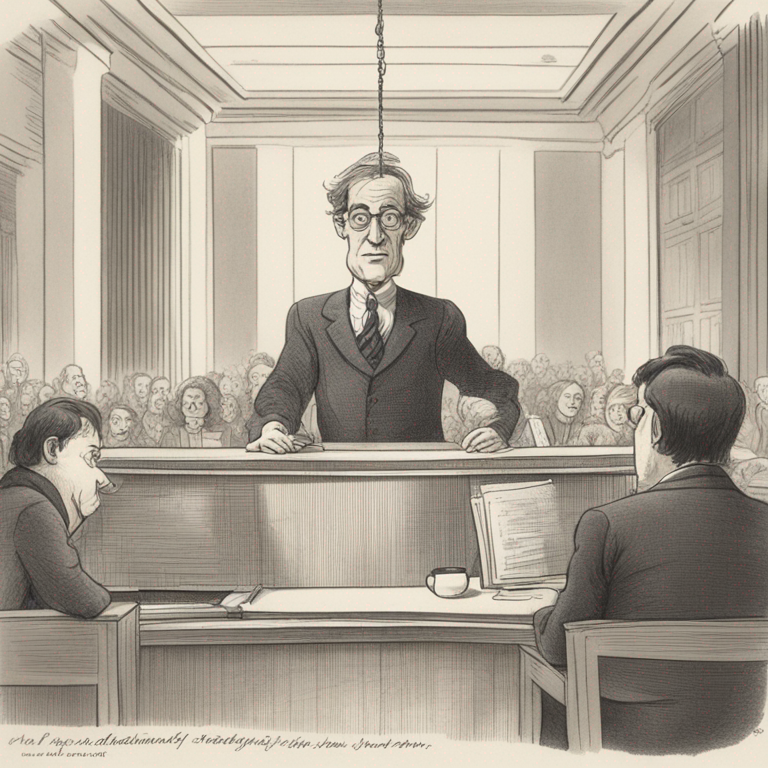
What are the allegations against me? Image generated by the author on Canva AI

If you were just a rational agent acting in the most self-interested way possible, as a researcher in academia, I think you would cheat…” — -Simine Vazire

July 2023. Claudine Gay becomes the first Black president of Harvard University. She is only the second woman to be named Harvard’s president.

Just in case you aren’t familiar with the Claudine Gay drama that made the news recently, here is a very quick recap.

On December 5th, 2023, the presidents of Harvard University — Claudine Gay, MIT — Sally Kornbluth, and the University of Pennsylvania — Liz Magill appeared before Congress in a hearing on antisemitism on US campuses. This hearing came on the heels of surging tensions following the October 7 Hamas attacks on Israel and the resulting Israeli response.

There is no better way to put this; they messed up their hearing. The presidents refused to give a direct answer when questioned on whether they would condemn antisemitism and calls for the genocide of Jewish people, and how they would punish it.

As soon as the hearings were finished, the backlash started. It was swift as it was heated. All the presidents came under intense scrutiny. By December 11th, accusations of plagiarism by the esteemed Harvard professor surfaced. Christopher Rufo drew first blood on the accusations. He published a post on Substack where he detailed instances of plagiarism in Claudine Gay’s 1997 doctoral thesis. By January 1, Claudine Gay had been accused of almost 50 instances of plagiarism of varying degrees and types.

January 2nd, 2024. Claudine Gay resigns as the president of Harvard University.

Just as she made history when she became the first Black president of Harvard, she also made history when she left. Her tenure is the shortest in Harvard’s 38-year history — it lasted 6 months and 2 days.

As the president of a prestigious institution, there was a lot of noise surrounding Claudine Gay’s plagiarism accusations. But Gay isn’t the only university president to face these embarrassing accusations, neither is she the only one to resign. In 2021, Bob Caslen resigned as the president of the University of South Carolina after he was caught plagiarizing parts of his commencement speech. In 2018, Gregory Vincent resigned as the president of Hobart and William Smith Colleges after he was accused of plagiarizing some parts of his dissertation. Marc Tessier-Lavigne had to resign as the president of Stanford University after the university commissioned investigations that revealed research misconduct in his work.

Plagiarism is a serious offence that is frowned upon in academia. When you plagiarize, you take a person’s idea and pass it off as your own. You can do this by lifting passages from the person’s work without properly accrediting them as your source. This could be an innocent mistake, or it could be a real attempt to steal the person’s work and receive praise as being the originator of the beautiful ideas in their work. Whatever the case, ignorance is not an excuse when it comes to plagiarism, and neither is sloppiness. Academia is seen as this kingdom of the pursuit of pure and untarnished knowledge, and it imposes high standards on itself, for obvious reasons.

If you think plagiarism is bad enough, consider this next one; fraudulently manufacturing or altering data to be used in academic research so that the data would produce more agreeable results. Yes, people have done that.

Just a few years ago, Francesca Gino was a superstar Harvard professor in the field of Behavioral Psychology. She had written bestselling books and published dozens of research articles that put her in the spotlight. Everybody finds behavioural science interesting. Her superstar status in this field made her the hotcake for big organizations that were seeking to influence employee and customer behaviour. By her own account, she has consulted for Google, Walmart, Disney, and Walmart, along with dozens of other speaking engagements.

Prof. Gino’s stars literally came crashing down in July 2023 after a Harvard internal investigation found that she “knowingly or recklessly committed research misconduct”. She was accused of using fake data for several of her research papers. Harvard University banned her from its campuses, placed her on administrative leave without pay, and began the process of stripping her of her tenure. She sued Harvard for $25 million, and the case is still playing out in court. You can find all the juicy details here if you are itching for the whole story.

You can’t mention Francesca Gino without mentioning Dan Ariely. Dan Ariely is a Professor of psychology at Duke University. He was a co-author of the 2012 study for which Prof. Gino was accused of faking the data. The title of the paper — which has since been retracted –is Signing at the beginning makes ethics salient and decreases dishonest self-reports in comparison to signing at the end. Like Francesca, Ariely was able to attract lucrative speaking and consultancy gigs as a result of his work in academia, but when governments and private organizations tried to apply the lessons from Dan and Francesca’s 2012 study, it just didn’t work.

These are just the superstar names, and that is why these cases are so popular. However, thousands of academic research get retracted every year because of fraud.

In 2023 alone, more than 10,000 academic papers were retracted by publishing journals, setting a record. The record has left academia reeling; in 2022, barely 5000 research papers were retracted.

Impact Factor and a host of other citation metrics are the lifeblood of academia — a researcher’s career lives and dies on these. There is a lot of pressure on academicians to churn out more and more research papers. To get tenure, get promoted, or even attract research funding, the researcher needs to have a lot of research papers under their belt. It is not difficult to see how this pressure becomes a problem; it increases the incentives for academic fraud which jeopardizes academic integrity.

When an academic produces research, many other academics build their work on/around this research, hypothesizing and carrying out experiments based on the results of the original research. If fraudulent data was used in the original research, then the results are fake, and every other research built on it would have been built on a lie. By this mechanism, fraud in academia leads to so much waste.

Academic integrity and waste, aside, fakery in academia can kill people in the real world. There is no better example to prove this than the case of Joachim Boldt.

Joachim Boldt, who holds the world record for the most scientific papers retracted — 186 papers — is a German anesthesiologist who was regarded as one of the world’s foremost experts on intravenous fluid management. His studies were widely cited and informed some anesthesiology practices. Unfortunately, the treatments promoted in his fraudulent research were found to increase the risk of acute kidney failure and death.

Part of the problem is that is that academic journals, universities, and researchers themselves don’t have strong enough incentives to expose fraudulent practices. The universities don’t want all the negative media and extra scrutiny they get when a bad actor is exposed, so they aren’t eager to fish out these fraudulent researchers. Allegations about former Stanford University president Marc Tessier-Lavigne first came to light on PubPeer in 2015. It wasn’t until 2022 that Stanford opened an investigation into these allegations. He resigned as president in 2023.

Scientists accused of fraud go the extra mile to defend themselves. Like Francesca Gino who sued Harvard University along with the investigative team that exposed her fraud, for what she calls a ‘smear campaign’. Exposing a fraudulent researcher can also put the whistleblower’s life in danger. In 2006, Mia Muhammad Mohiuddin who was then an associate professor applied for promotion at his university — at Rajshahi University. Prof. Syed Taher Ahmed who was in charge of examining his application, discovered plagiarism and piracy in 10 out of the 11 research papers submitted by Muhammad. To cover up the fraud and prevent Prof. Syed Taher Ahmed from exposing him — which would kill any chances of promotion and end his career — Muhammad hired hitmen to kill the Professor.

Make 2024 the year you focus on your mental health. You deserve to be happy and healthy. I am a medical doctor and clinical psychologist, and I can teach you how to improve your mental health. Subscribe to my free newsletter here.

Even when fraud has been exposed, journals take forever to retract the fraudulent work.

The accusations of fraud against Joachim Boldt first came to light in 2009. As of 2023, the fraudulent papers were still being retracted — more than a decade after the scale of his fraud had been known. Yoshitaka Fujii is an anesthesiologist who in 2012 was found to have used fraudulent data in at least 219 of his research papers. In total, 183 of his papers have been flagged for retraction. To date, only 172 of those papers have been retracted.

That journals drag their feet to retract research papers even after irrefutable evidence of fraud could not be unconnected to their business models. Yes, allegations of fraud bring bad publicity to the journal — and nobody wants that, but investigating and correcting academic fraud can be financially costly. When a top journal temporarily paused publishing new papers so that it could investigate and correct an exposed incidence of systematic academic fraud, it lost $9 million in revenue.

It is unfortunate that amidst this whole fraud-in-academia saga, the sky still looks gloomy, and shows no sign of clearing up. A lot of research work is dependent on external funding. In 2022, only 20% of researchers who applied for funding from the US National Institutes of Health were successful. As long as these rates remain abysmally low, researchers will always have an incentive to cut corners in their search for scientific glory. As long as impact factor and other citation metrics remain the yardstick for judging success in academia, as long as these metrics determine a researcher's chances of obtaining funding and career advancement, then researchers will always have the temptation to cheat. The shape fraud takes might change, and researchers might become more sophisticated at covering their tracks, but fraud is here to stay.

Make 2024 the year you focus on your mental health. You deserve to be happy and healthy. I am a medical doctor and clinical psychologist, and I can teach you how to improve your mental health. Subscribe to my free newsletter here.

You can also read my other stories on Medium. Here are some stories that other readers liked

Education
Psychology
Fraud
Science
Writing
Recommended from ReadMedium