
Cinque Terre: The Canvas of Italy
Exploring the Chromatic Villages of the Italian Riviera
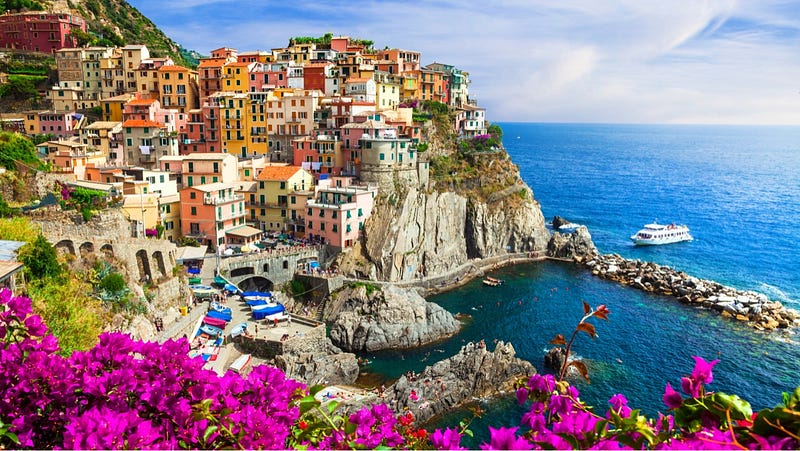
Nestled along the rugged coast of the Italian Riviera, Cinque Terre is a symphony of color and texture, a masterpiece painted with the palette of an artist deeply in love with life.
The five villages of Cinque Terre — Monterosso al Mare, Vernazza, Corniglia, Manarola, and Riomaggiore — each offer a unique hue to this coastal canvas, their vibrant facades etched against the dramatic cliffs and the serene Mediterranean Sea.
Monterosso al Mare
Monterosso al Mare, the largest of the Cinque Terre quintet, greets its visitors with an open embrace. As I stepped off the train, the village immediately distinguished itself with its expanse of sandy shore, a rarity along a coast known for its steep cliffs and rocky outcrops. The beachfront, dotted with striped umbrellas and loungers, offered a promenade where the sun and sea seemed to enter into a tranquil dialogue.
The old part of Monterosso, hidden behind the newer beachfront area, is a treasure trove of history. Here, narrow lanes wind between ancient buildings, some of which date back to the medieval era. The air is thick with the scent of lemon and salt, a testament to the village’s agricultural and maritime heritage. The lemons of Monterosso are famed for their size and flavor, playing a starring role in the local limoncello, a liqueur that captures the essence of this sun-drenched land in each sip.
The village is also home to historical gems like the Church of San Giovanni Battista, with its striking striped façade of white and black stone, reminiscent of the grandeur of old Genoese churches. Its gothic interior, cool and subdued, offers a quiet respite from the Mediterranean sun. Nearby, the Capuchin monks’ monastery looms from a hilltop, housing works of art and providing a vantage point that affords breathtaking views of the coastline.
The Monterosso Giant, a colossal statue of Neptune carved into the cliffside, stands as a guardian of the village’s maritime soul. Although weathered by storms and the passage of time, it remains an imposing figure, with arms outstretched as if to claim dominion over the sea and all its treasures.
Even the culinary offerings of Monterosso tell a story of the village’s connection with the sea and soil. The local anchovies, caught and preserved in a tradition honed over centuries, are a delicacy that encapsulates the robust flavors of the region. The village’s eateries, ranging from quaint trattorias to seafront dining spots, serve plates that are both a visual and gastronomic celebration of local produce.
Walking along the paths that lead away from the village center, one finds themselves amidst terraced vineyards that cling precariously to the hillsides. These vines produce the grapes for Cinque Terre’s celebrated white wines, which seem to hold within them the very sunlight of the region, bottled and fermented to perfection.
Monterosso al Mare, with its golden beach, historical richness, and culinary delights, stands as the gateway to the Cinque Terre experience. It’s a place where one can indulge in the leisure of a seaside holiday while being enveloped by the cultural and historical ambiance that is the soul of this Italian coastal haven. Here, the past and present merge seamlessly, creating an atmosphere where every moment is savored, and every vista tells a story.
Vernazza
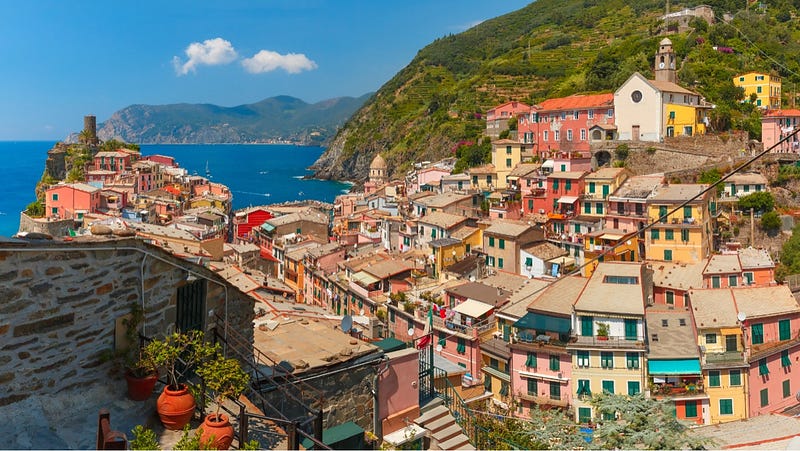
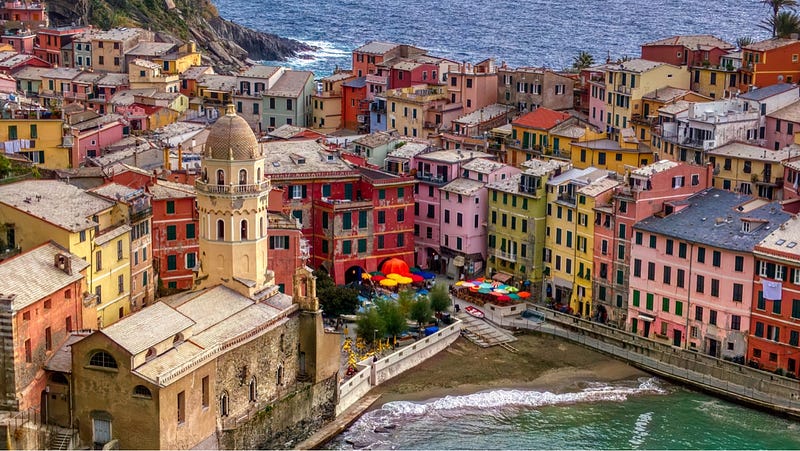
Vernazza is the jewel of Cinque Terre, a harmonious blend of nature and human ingenuity. Its harbor, a natural amphitheater to the Mediterranean’s performances, welcomes visitors with its calm waters, encircled by the arms of the rugged coastline.
Arriving at Vernazza by the sea offers the most dramatic introduction. The view from the water provides a full appreciation of the amphitheater-like setting, with layers of colorful houses, each with its own story, cascading down to the harbor. The terracotta roofs create a warm contrast with the cool blues of the sea, as if the village itself is a sunset eternally in bloom.
The marina, a bustling hub, is where Vernazza’s heart beats. Here, fishermen untangle their nets with the expertise of many generations, their faces weathered and bronzed from the sun, embodying the spirit of the village. Their boats, painted in the hues of Cinque Terre, rest after their morning labors, bobbing gently in the water, as vibrant as the village itself.
Walking along the pier, the sense of resilience is palpable. Vernazza’s recovery from the flood of 2011 is a testament to the community’s strength. Buildings have been lovingly restored, their facades repainted in the original spectrum of colors. The stone streets, polished by the passage of countless feet, shine under the sun, leading visitors through a labyrinth of delight.
The main street, Via Roma, is lined with artisanal shops and eateries that beckon with the aromas of the Ligurian kitchen. The local fare is a tribute to the region’s bounty: anchovies glistening with olive oil, trofie pasta twirled with fresh pesto, and lemon trees that punctuate the air with citrus notes. The cafes and gelaterias, with their open doors, invite passersby to indulge in the sweet pleasures of Italian life.
The Church of Santa Margherita d’Antiochia, a structure that appears to emerge from the sea itself, stands as a beacon of Vernazza’s enduring faith and culture. Its bell tower, a sentinel watching over the village, punctuates the skyline, while its interior, with modest adornments, offers a tranquil respite from the vibrancy outside.
Above the village, the Doria Castle remains a silent witness to Vernazza’s past. Climbing to this ancient fortress affords a vista that captures the village’s full splendor: the geometric beauty of the vineyards, the undulating hills, and the rugged cliffs, all converging at this point of human habitation. The castle’s crumbled walls and battlements, now softened by the encroaching greenery, speak of a history marked by invasions and defense, of a people shaped by their environment and their encounters with the wider world.
As evening approaches, the village transforms. The golden hour bathes Vernazza in a soft light, the shadows grow longer, and the harbor lights begin to twinkle, mirroring the stars above. The chatter of locals and travelers alike fills the air, a melodic language that needs no translation to be understood as the expression of contentment.
Corniglia
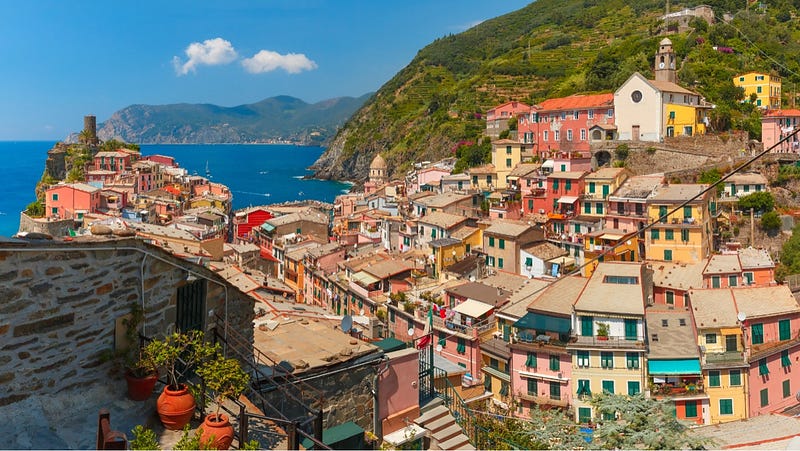
Corniglia, the central jewel among the five villages of Cinque Terre, stands proudly atop a promontory, commanding views that are the earned reward for those who ascend the Lardarina staircase, a winding journey of 377 steps from the train station below. Unlike its sister villages, Corniglia is not bordered by the immediate embrace of the sea, but elevated above it, offering a secluded retreat that surveys the landscape with a sentinel’s vigilance. The climb, a steady rhythm of ascent, sets the pace for the contemplative serenity that defines the village.
The heart of Corniglia beats in its small piazza, where locals gather to engage in the casual yet intimate banter that is the soundtrack of daily life here. The village’s architecture is a patchwork of Genoese style, with narrow lanes unfolding into unexpected courtyards and the occasional glimpse of a verdant garden or a vine-wrapped terrace.
These secret gardens are the lifeblood of Corniglia, their soils yielding the grapes for the Sciacchetrà, the prized local dessert wine, and lemons that infuse the air with a citrus zing. Here, the connection to the land is palpable, with every vine, stone, and drop of sunlight seeming to hold significance in the grand tapestry of local tradition.
As the day wanes, Corniglia’s elevation offers a unique vantage point from which to observe the shifting hues of the sky and sea. The sunset bathes the village in a warm light, casting shadows that dance quietly across the walls of the pastel buildings. The tranquil atmosphere is an open invitation to disconnect from the urgency of modern life and engage with a more measured, introspective pace.
Manarola
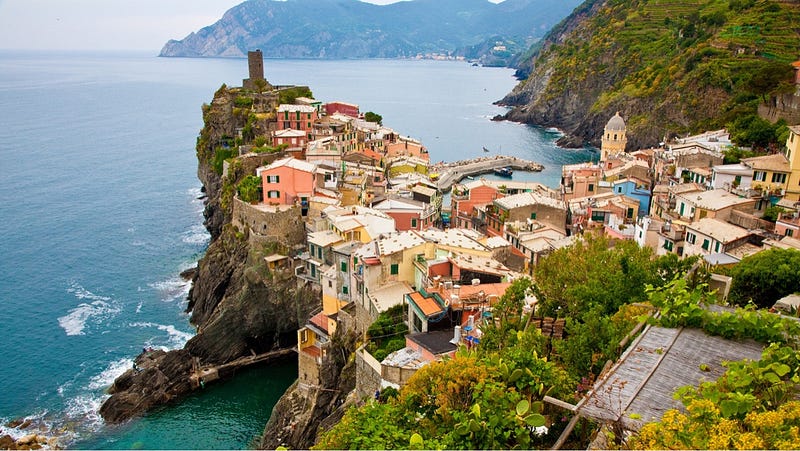
Manarola, often the image that comes to mind when one dreams of Cinque Terre, presents itself like a living postcard. It’s a village where the rhythm of the waves sets the tempo for daily life. The pastel-colored houses, a patchwork of pinks, yellows, and greens, seem to be nature’s continuation of the rugged cliffs they sit upon, each structure a defiant bloom on this precipitous landscape.
The heart of Manarola pulses strongest at dusk when the sun kisses the Mediterranean, casting a golden hue over the village. It’s during these quiet hours that the true essence of this place unfolds. Fishermen return with their catch, the fruits of the Ligurian Sea, which will soon find their way into the kitchens of the local trattorias. Here, the air is rich with the tang of saltwater and the aromatic zest of lemon groves.
The famed Via dell’Amore starts here, a path carved out of the coastline, offering a romantic journey that connects Manarola to its neighboring village, Riomaggiore. This pathway, despite its name, is not just for lovers but serves as a testament to the interconnectedness of the Cinque Terre villages, each reliant on the other, much like the families that call this place home.
In Manarola, the act of wine-making is not just a culinary endeavor but a cultural artifact. The local vintners, with their intimate knowledge passed down through generations, cultivate grapes on the steep terraces that ascend from the village. The Sciacchetrà, a sweet wine that is as much a part of Manarola as the sea itself, offers a sip of this rich heritage. The steepness of the vineyards means that these wines are not just produced but are coaxed from the earth through laborious love.
Riomaggiore
Riomaggiore, the easternmost village, was a vertical town where the houses seemed to rise from the waves themselves. As I explored its narrow alleys, I felt enveloped in the village’s intimate embrace, the closeness of the community palpable in the shared courtyards and the snippets of conversation drifting from open windows.
Throughout my journey, the omnipresent sea was a constant companion, its shades of blue reflecting the sky and contrasting with the earthy tones of the architecture. The terraced hillsides, adorned with the green of olive groves and the silver of anchovy nets drying in the sun, told stories of a life inextricably linked with the land and the sea.
In Cinque Terre, life moved at a different pace. There was a sense of timelessness, as if the modern world had graciously stepped back to allow these villages to continue their age-old dance with nature. The simplicity of life here was not a lack of complexity but a choice, a deliberate embrace of the essential over the superfluous.
The food of Cinque Terre was as much a feast for the senses as the views. The local cuisine, rooted in the gifts of the sea and the harvest of the terraced gardens, was a testament to the sustainable relationship between the villagers and their environment. Each dish, whether it was the seafood cone from a street vendor or the pesto drizzled over al dente pasta, was a celebration of local flavor and tradition.
As the sun set on the final day of my visit, casting a golden glow over the villages, I took a moment to reflect on the experience. Cinque Terre was not just a destination; it was a living, breathing canvas that invited you to step into its frame. It offered not only a visual feast but a reminder of the enduring beauty that can be created when humanity works in harmony with nature.
The villages of Cinque Terre, with their enduring charm and resilience, stood not just as a beautiful escape but as a legacy of the Italian spirit — vibrant, enduring, and utterly captivating. In these timeless enclaves of culture and community, the true art of living was on full display, a craft as meticulous and beautiful as the scenes that surrounded me.
As I departed, the colors of Cinque Terre lingered in my mind, a mosaic of experiences that would continue to inspire and delight long after my return to the everyday. These villages, etched against the cliffs, were not mere stops on a traveler’s itinerary but waypoints on a path to understanding the depth and richness of life on the Mediterranean coast.