
Cilice
Da Vinci, Tom Hanks, and the Spelling Bee walk into a bar
Today’s New York Times Spelling Bee letters:
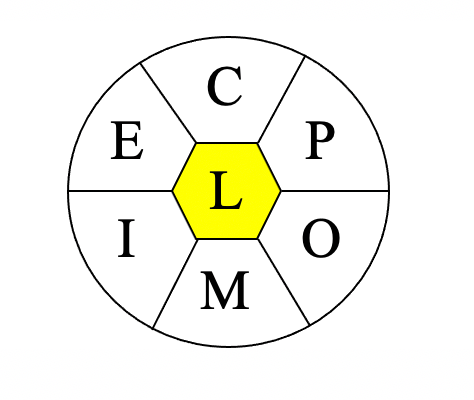
C, E, I, M, O, P, and center L (all words must include L)
Merriam-Webster says…

Silly little dictionary! Don’t you know that cilice can’t possibly be a word if the New York Times says it ain’t?
For further fascinating facts, check out the Spelling Bee Master.
What’s your favorite dord* from today’s puzzle?
My Two Cents
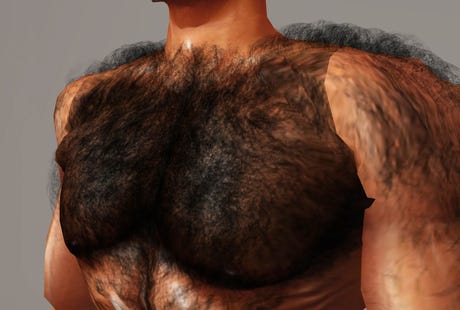
The definitions of cilice given by the dictionary are not very helpful, I must admit. I mean, isn’t a haircloth just a cloth made of hair…right? And if you know nothing about hair shirts, you might think the second definition refers to something like this:
So, just for kicks — and because the link was staring me in the face — I clicked on haircloth.
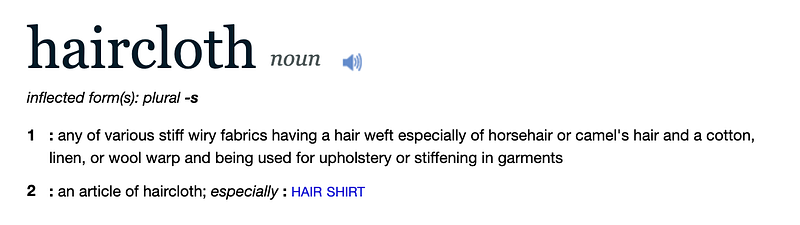
I guess the haircloth is a cloth made of hair. And it’s also a hair shirt. Hmmm. Let’s click on that link, see where it takes us!
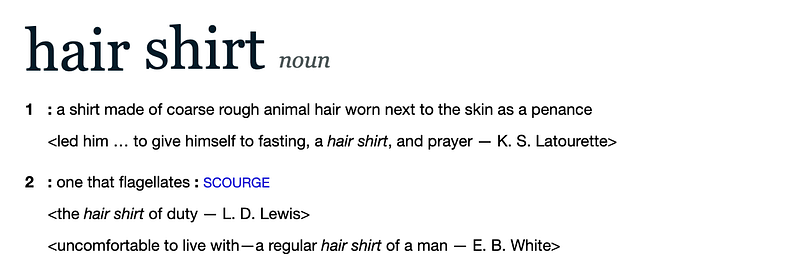
The plot thickens. Now we’re talking about penance and flagellation. And there’s one more link to click…
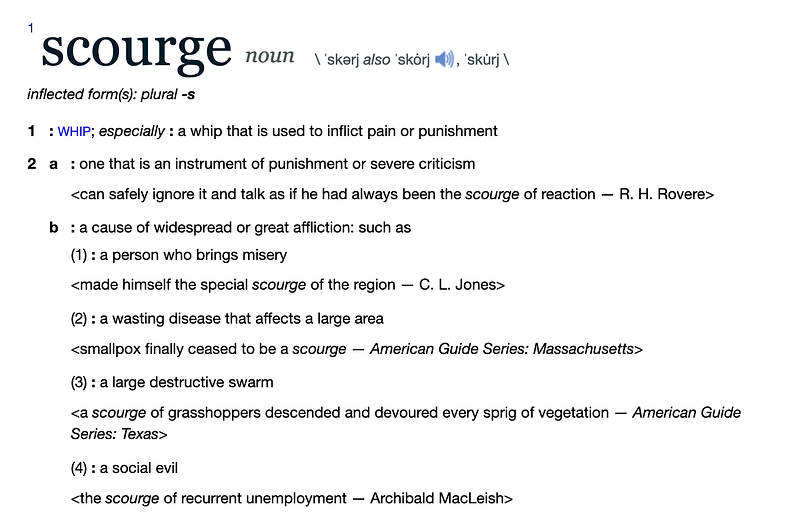
Were you as surprised as I was that the first definition of scourge is whip? And don’t worry, I won’t click on the link for “whip”.
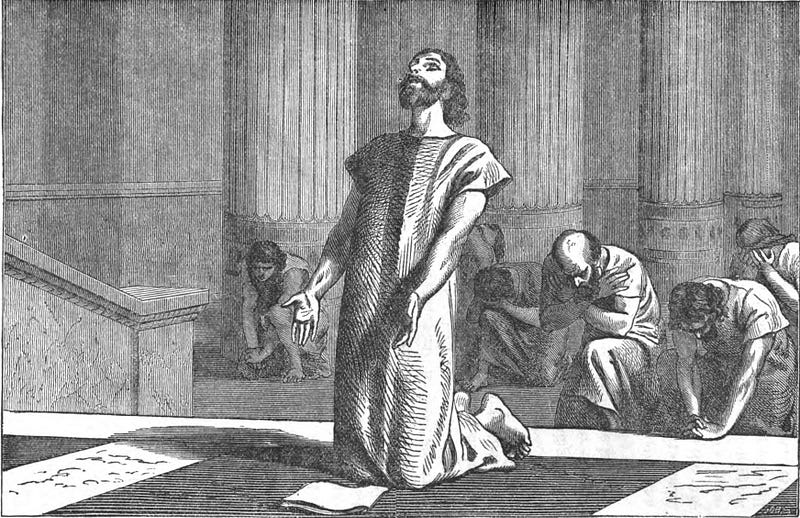
Now let’s circle back to cilice. Originally this was a garment like the one described circuitously by Merriam-Webster. In biblical times it was referred to as a sackcloth, which is what Hezekiah is wearing in the illustration at the top of this article.
Ciciles were made of coarse material or animal hair and worn directly on the skin as a way to cause a certain degree of affliction to the user. And this affliction is viewed as a way to repent. Haircloths have been and still are used by people of various Christian faiths, including Catholics, Anglicans, Lutherans, and Methodists. It is often worn during Lent, especially on Ash Wednesday, and Good Friday.
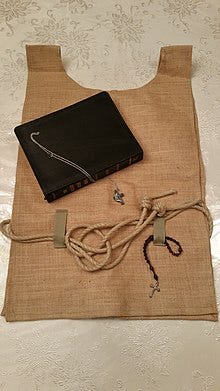
The word cilice comes from the French, itself from the Latin cilicium, from Cilicia, a Roman province in south-east Asia Minor where goats-hair coverings were made. The first biblical reference came via the Vulgate translation of Psalm 35:13: “Ego autem, cum mihi molesti essent, induebar cilicio.” (But as for me, when they were sick, my clothing was sackcloth”.) Despite this being Old Testament literature, Jews do not use cilices for penance, as self-harm is generally frowned upon in Judaism.
Eventually, through several translations, cilicio became known as hair shirt or haircloth. In pop culture, one of the better-known cilices is not worn on the torso, however, but strapped around the thigh.
Leo’s cipher
No, not DiCaprio. The second-most famous Leonardo. The Ninja Turtle, you ask? No, sorry. Okay, then, the third-most famous Leonardo. And the book that talks about his Code. And even though the novel is almost twenty years old (yikes!) and the movie is from 2006, many people might still remember either or both. Or the sequels.
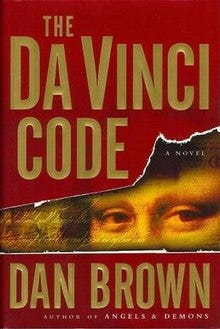
Brown’s book was a phenomenon, selling over 80 million copies worldwide, while the movie made more than three-quarters of a billion dollars. IMDB summarizes the plot thus:
“A murder inside the Louvre, and clues in Da Vinci paintings, lead to the discovery of a religious mystery protected by a secret society for two thousand years, which could shake the foundations of Christianity.”
I won’t give up any spoilers or delve too much into the story, just in case you happen to be one of the five people who hasn’t seen the film yet. But I will mention the character of Silas, an albino numerary in the Opus Dei faith, who wears this cilice:
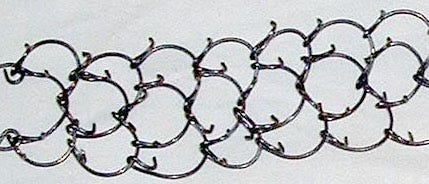
Yeah, that’s exactly what you think it is. A spiked metal belt. In both the book and the movie, Silas (played by Paul Bettany in the movie) tightens it around his thigh until it bleeds. And that makes Bettany go from this…
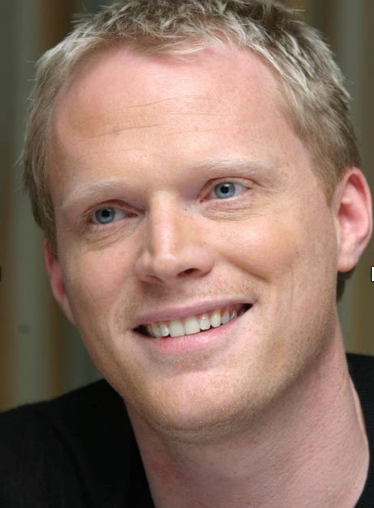
…to this:

Yes, aside from the extreme pain, there was also a strong wind that toppled his face over.
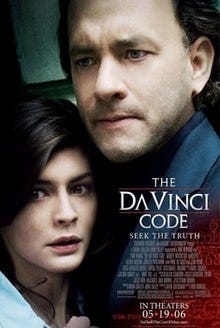
Dan Brown’s depiction of Silas and other elements of the Opus Dei was highly controversial. As was the entire plot and its supposed historical background, the symbology analysis of paintings, and the pairing of Tom Hanks with Amelie. I mean, her face went from this…
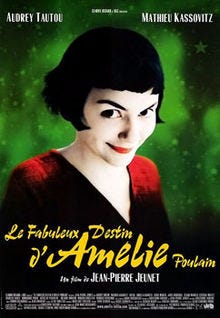
…to this:
Work of God
The Opus Dei (formally known as the Prelature of the Holy Cross and Opus Dei) did not have a lot of clout when it came to protesting director Ron Howard’s version of the book. And that probably has to do with the fact that this faith had barely 100,000 members worldwide.
Founded by Catholic priest Josemaría Escrivá de Balaguer in 1928 in Madrid, Spain, Opus Dei’s basic tenet is that every person is called to holiness and that ordinary life is a path to sanctity. (I assume that person has to be Catholic.) In fact, Opus Dei literally means “work of God” in Latin.
Members are divided into supernumeraries — married men and women with careers — and numeraries (like Silas), celibate members who “give themselves in full availability for the official undertakings of the Prelature”. Then there are the associates, who are like part-time numeraries in that they don’t participate in all Prelature business.
Now, my one direct experience with an Opus Dei member was a very positive one. He happened to be one of my teachers in medical school, and he was a kind, soft-spoken gentleman who cared deeply about his patients. I distinctly remember that during morning rounds he would talk to each and every patient and inquire about their health. His bedside manner was an example to be followed.
Still, Opus Dei is regarded as a very mysterious organization even within the Catholic Faith. And while they may not ask their albino members to chase cryptologists while their thighs are bleeding from an extremely tight metal chain — whew, what a sentence! — some of their faithful do use the cilice.
Like Sarah Cassidy, who was profiled for this very interesting article that sheds some light about the Opus Dei.
I highly recommend reading it, and with that recommendation I will end today’s column. But not before closing with my usual rant:
Why was the word cilice rejected in today’s Spelling Bee? Who knows. Maybe the editors of the game did not want to incur the wrath of the Opus Dei, so they declared that cilice was a dord.*
You can check out my previous entry on another dord* here:
*What the heck is a dord, you ask? Here’s the answer: