
Churchill Goes Down
A Dark Day…
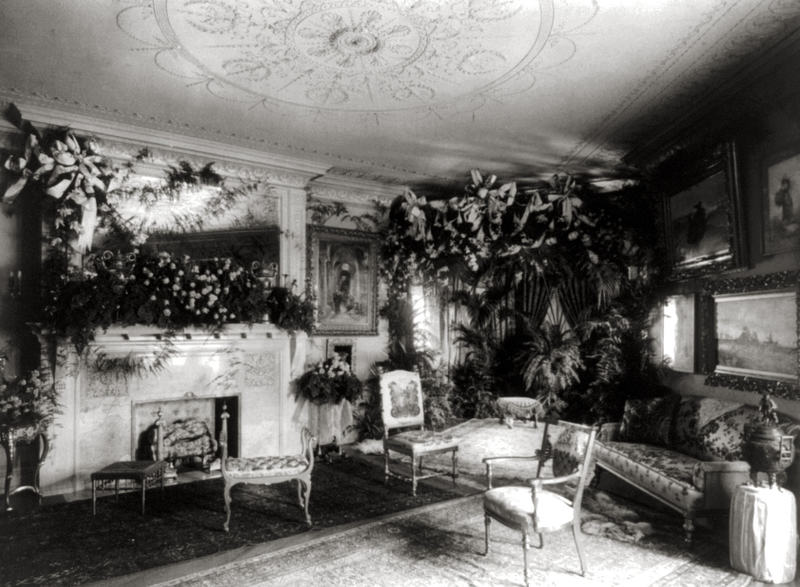
Everyone called her Churchill. Except the help. They called her Miss Churchill.
Churchill’s given name was Arabella Phoebe Anastasia Gregor-Simons and try as she might, Churchill’s mother Sissy, was never able to get Arabella to stick.
Why was she called Churchill?
Well, there it was on the mantelpiece of both apartments, a silver-framed photograph of tiny Arabella Phoebe Anastasia tucked into a fur throw, brow furrowed and furious mouth set. The very image of old Winston himself at the end of his life. Pop-Pop started it and, to poor Sissy’s dismay, it stuck. Sissy, being a pragmatic sort who had come out ahead in so many of the family battles, tried to go along with things. But it did stick in her craw, as her old father would have said if he were around to say it.
When Sissy Mitchell met Paul Howard Gregor-Simons IV in her senior year at a mixer with the men’s college, she had ideas. Paul Howard, in his turn, only had ideas which involved pretty girls and fast cars. Sissy was extremely pretty and she loved going fast. His family had been content to let him have his fun until it came time for graduation. It caused no end of consternation and hysteria when he and Sissy came back from an unannounced trip out west wearing matching gold wedding bands.
Then she began producing children. Sons. Three fine, healthy, sturdy sons and, finally, Churchill.
Until she was eight, Churchill was pretty much on her own. Her older brothers monopolized whatever energy and attention there was in the Gregor-Simons’ elegantly shabby floor-through apartment in the building next to the one where Grandmother Marie and Pop-Pop lived. But then, the last of the boys went off to boarding school, leaving her to fend off all that familiness by herself. Prior to that, Churchill had the run of both buildings with one of two housekeepers (more on that later), two cooks, and two around the clock shifts of doormen to keep her company. Suddenly, Sissy wanted her daughter where she could see her which was a terrible strain on both of them.
Churchill disliked mirrors which was a problem over at Grandmother Marie’s where that once legendary beauty could still look into any one of the dozens of strategically placed mirrors and see only the creamy complexion and wide-set hazel eyes of the past. Pop-Pop served as a kind of a mirror himself, also still seeing the great beauty who had seduced him away from the speakeasies and jazz clubs.
This, however, was not a family which spoke of its past and Churchill had become adept at ferreting out information and drawing conclusions. She also had all three shifts of doormen, the housekeeper at home and nearly all the help wrapped around her pudgy pinkie.
Hortense, Grandmother Marie’s housekeeper remained the only holdout. Hortense was nobody’s fool and knew an upstart when she smelled one and that Sissy Mitchell might have won over the rest of them with those boys of hers, but Hortense was having none of it. As each of the boys trooped through her kitchen, growing bigger, eating more and caring less, Hortense kept her opinions to herself. Not that Miss Marie didn’t know exactly how offended her dear old Hortense was, but one had to remember one’s place and both Hortense and Marie were in tacit agreement about this fact of life.
So Churchill avoided mirrors, did well enough in school and didn’t think much about her classmates who dimly registered on the periphery of her attention as being not terribly interesting. She thought that she would have liked her mother if she’d just talk with Churchill and not at her. Sissy could ably hold up her end of nearly any conversation but neither of Churchill’s parents, however, were what you’d call accessible. Her father’s love of fast cars and pretty girls vanished with the birth of the first of his boys and, just like that, he settled comfortably into the seat that had been waiting for him since Pop-Pop had convened his first board of directors.
No one in the family seemed particularly concerned about how wild the boys were. Boys just being boys. And, after all, nothing they ever got up to couldn’t be quietly taken care of by the family attorneys and money.
Churchill didn’t think she liked those boys much. In their turn, the boys barely noticed that they had a little sister. This was to everyone’s benefit in Sissy’s opinion.
With life so thoroughly well ordered, it took some time before anyone noticed anything amiss with Churchill. Churchill herself would be hard pressed to explain her actions. Hortense, interestingly enough, was the first to pick up that something was not quite right with the brat. However, you will remember that Hortense, above all other attributes, knew her place and so kept her counsel. Let the upstart and that empty-headed Paul Howard figure it out. The Ingersons were coming over for dinner tonight and Hortense had more important things on her mind.
At first, it was small potatoes. Hiding the best napkin rings over at Grandmother Marie’s and then slyly moving Hortense’s racy paperback to the armchair in the big library. This all seemed innocent enough, as Churchill faded into the wallpaper and enjoyed watching Pop-Pop blow his top at the adventures of a randy governess on the arm of his favorite chair.
This was quite new in Churchill’s solitary existence. While her brothers had been a fun bunch with scrapes and pranks galore, Churchill simply watched. Paul Howard and Sissy had become experts at checking as they opened doors and sending this one or that one off with the driver to the ER for broken this or sprained that. What her brothers deemed fun, only looked like chaos to Churchill. Solemnly, she watched the pandemonium from the sidelines. If she had been a pretty child, one to express confusion and alarm, Sissy would have noticed and taken action.
But Churchill was a brick.
She drew no attention to herself. In fact, Churchill sometimes wondered if she had perfected the ability to be invisible. But then Hortense would come into a room and, sweeping her spotlight glare around, would seize on Churchill’s set and somber face. Since invisibility was not an option, Churchill decided on this other course of action.
When Hortense began to put the pieces together, Churchill was thrilled and a little nervous. The other adults could be counted on to disregard or not even see anything that didn’t fit with their notions of how things should be. Hortense was a different matter and Churchill began a quiet surveillance of the straight-backed housekeeper. Churchill was fully aware that Hortense knew something was going on. Even so, Churchill developed a strategy, adjusting it and honing it. The game became so engrossing that a chance eavesdropping one night just after Christmas took Churchill completely by surprise.
She had a place, a useful little spot in a corner near the door of Father’s home office where she often could be found reading. That is she could have been found if anyone had been looking for her, and even then, they would have had to look twice.
“Really, darling, she should have gone two years ago.” Sissy’s was the voice of reason.
“Why? Why do we have to send her away to school? The boys, yes, yes of course, the boys must get that experience. But Ch- Arabella is doing splendidly at The Clayton School, top of her class. She’ll have her pick of the best universities.”
“Think about it, my dearest. Do you really want her to feel that she is inferior to her brothers? That she isn’t up to the rigors of boarding school? And, further, is it our place to deprive her of this golden opportunity to begin to develop her own persona, her own life with her own friends, independent of us and the family?” Sissy realized her mistake and shut her mouth.
“Ah.” Paul could almost be heard to settle comfortably into his next salvo, lighting his pipe and tempering his condescension. “The family. My family. My parents, you mean.”
Now he had her. There was a time when this would have sent Sissy from the room in a fit and, again, Paul would win. Churchill had heard it a thousand times.
Early in the marriage, Sissy had caved into Paul’s desire to meet his in-laws, but after three disastrous visits, he gave up. It wasn’t so much the insistence that they stay in the cramped, little bedroom under the eaves of the house on Proctor Road, down by the abandoned glue factory or how Sissy’s little sister, Madge, would get drunk and belligerent, or even how their father barely spoke three words to anyone. What drove Paul around the bend was the condescension that was Sissy’s response to all of this. Like many of his class, Paul felt that the “authenticity” of people like his new in-laws was somehow noble and should be appreciated. When Sissy would chuck the jar of bargain brand salad dressing into the sink and ask why no one had bothered getting mayonnaise or instruct Madge to clear up the magazines off the sofa, Paul would burn with embarrassment for his new wife.
Away from her family of origin, Sissy made a fine wife and was an even more spectacular mother. To the boys. Churchill confused Sissy and so Sissy did what she had always done when confused. She went shopping. True, she had tried to take her reluctant daughter along on these excursions in the beginning but before she was seven, Churchill made it clear that she had no interest in shopping as recreation.
Churchill did not kid herself. Paul may have thought he had won again but Churchill knew her mother better than that. It was time to adjust her strategy.
Hortense was suspicious when that creature began helping around the house, offering to polish the brass and fold the kitchen linens. Not that she didn’t accept the help. It gave her the opportunity to keep a closer eye on the child because she was obviously up to something. Churchill played it carefully, not being too helpful, but watching for an in. She knew Hortense loved bodice-rippers, chocolate covered cherries, watching the History channel and soccer, collecting magazine clippings about the Royal Family, and anything to do with Victoriana. Churchill also knew a few of the things Hortense loathed and made equal note of those, just in case.
For instance, Hortense could not stand Hollywood anything, macaroni and cheese, game shows, the Internet, summertime, gossip, or the stock market.
Hortense would be the last person in the nation to admit that she was lonely; that was for the weak-willed and pathetic. But little by little, she was growing accustomed to the quiet presence of the determined little girl. They sat side by side in the cramped pantry off the kitchen, polishing the silver tea set and watching Hitler devour Poland. Churchill even volunteered to do little errands around the house and Hortense slowly came to rely on the child.
Churchill was running out of time. She knew letters had been exchanged and that Sissy had been buying new school clothes. She also knew that simply appealing to Hortense’s emotions was a waste of time. Thus, she engineered it so that it was Hortense who just happened to overhear Paul and Sissy making plans. It was actually kind of easy. All she had to do was forget that she had left the latest issue of Us magazine with the feature story about the new British heir in the library and then tell Hortense at just the right time. As Hortense approached the closed library door, she heard voices and stopped.
After that, all Churchill could do was wait. Hortense, for her part, was confused by her distress. She couldn’t actually care that the child was being sent away to boarding school. All these children were sent away. It was expected. In fact, she had often wondered why her employer hadn’t been more assertive with their son on this matter. Each of the boys had been shipped off when they were seven years old. Churchill should have gone at least a year ago.
Sitting in the car next to Sissy, with her bags and trunks and boxes all piled into the cavernous trunk, Churchill went back over her campaign to see where it had failed.
The next one wouldn’t. Count on it.
© Remington Write 2019. All Rights Reserved.


