
Chop Wood; Carry Water
Why work is fundamental
The Dream
In my early twenties I became intrigued by the ‘FIRE’ movement, which stands for Financial Independence, Retire Early.
In a nutshell, this movement advocates for working hard in the early years, accumulating a lot of money through saving, investing and compounding, and then eventually off the proceeds.
At the time, I was working as a doctor in Australia and the FIRE strategy seemed like an effective way to exit the rat race. I had seen how many of my friends were getting burned out and really wanted to leave work, but couldn’t because they needed the money. Some of them, on the other hand, had completed their training and were now making a very good salary, yet were suffering from a mixture of ‘sunk-cost fallacy’ and golden handcuffs syndrome, meaning they felt that, Hey, I spent all this time and did all these exams and night shifts to make all this money, I can’t throw it all away now, even if I’m not happy.
Not all of them, of course, were unhappy. As a doctor, you have good job security, but you also run the risk of medicolegal issues, high-stress situations, and toxic work environments. But, it wasn’t simply that I wanted to run away from work, there were also things I wanted to run towards, things which didn’t seem compatible with full-time employment. What if I wanted to turn up in Italy and start learning Italian (see below)? What if I wanted to hang out in Buenos Aires to become an expert tango dancer, or what if I wanted to run my own business, write a book, a blog, or go and live with the eskimos?
Optionality was calling out to me. I had not yet learned that you can have too much of it and, febrile at the thought of limitless independence, I began, from the hipster suburbs of Melbourne, to formulate an exit strategy,
In truth, I wasn’t in a rush to leave. I loved my life there. Australia has the best coffee in the world, spellbinding bushlands, and they sure know how to pay a salary, but I knew a day would come when I might want a change, or I would want to hang up the stethoscope. Europe was also calling out to me, and the DNA of my ancestors, baked somewhere into the marrow of my bones, urged me to return to that various and lovely continent.
My brain, addled by the Melbourne sun, heard the call, but I knew I had to get my finances in order before I could go anywhere, as the diktat of the FIRE movement required that I establish a financial foundation first.
The Accumulation Phase
The FIRE movement calls this the ‘accumulation phase’ during which you spend the early years aggressively filling up your bank account. Then, with the wonder of time and compound interest, this lump sum begins to generate significantly more money, eventually facilitating early retirement.
The ‘number’ you need to retire is calculated as your annual expenses times 25. So if you want to live off of €40k per year, you need €1,000,000. It turns out that accumulating large amounts of money like this isn’t easy, and requires sacrifices, as became clear later on.
I began to save aggressively. I was careful with my money and I worked hard, trying to save as much as was reasonable while still doing all the dumb and fun things twenty-somethings do. When my contract at the emergency department expired, I started working as a ‘locum’ doctor, flying to remote parts of Australia and working on wards and emergency departments in what the Aussies call ‘the woop-woop’ or the outback.
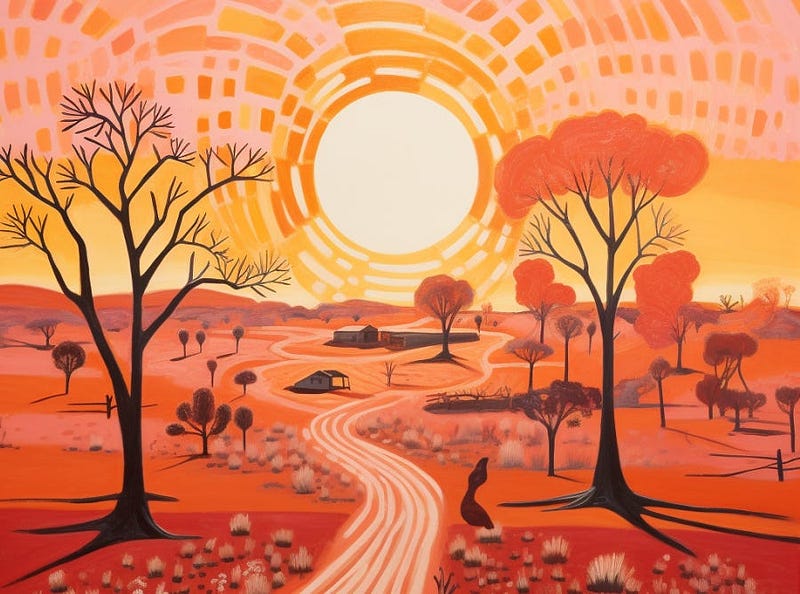
It was exciting, and it paid very well. The nature of the work was episodic, so I would fly somewhere for a week, come home, chill for a week, then go away again for another week, or maybe longer. There were aspects which seemed somewhat glamorous at the time, like getting free flights and accommodation and free rental cars, but it was also quite tiring. As a young man full of piss and vinegar, I was, however, well-able for it. I probably wouldn’t be able to do it now, and I understand why they were always short on doctors — not many people, especially people who have settled down and have a family, want to take irregular trips across vast expanses, even if the money is good.
During my weeks off, I started to dabble in the passions which I had long-since neglected. I took out the pen and started scribbling. Very probably, I imagined I would be an excellent writer straight away. At school, I was the one the teacher always praised but, when the words which came out this time, they were numb and decrepit on the page, constrained and bereft of emotional valence…what happened? Had I gotten too old already?
I kept going, working and saving and reading and writing. But, being young and seeing a long road in front of me, I began to think that I deserved a little more fun along the way and, if I was really shooting for early retirement, it occurred to me that I should try it out first, and start living the live I had envisaged, even if only as a taster, a mini-retirement for a couple of months.
The problem was that I had not really thought all that much about what my life should look like, apart from vague hand-waving about independence and picking up on some passion projects. I knew that I would probably end up moving back to Europe, and since I had spent time fantasising about a stint in France or Italy, learning the language and and drinking wine and masquerading as a bohemian intellectual, it seemed like as good a time as any to go, while I still could.
The decision was made. I quit my job, which was easy as it was just a series of rolling short-term offers, and I packed my bags for home, saying goodbye to Melbourne by having a final coffee in my favourite cafe on a crisp and sunny winter’s day.
The Sabbatical
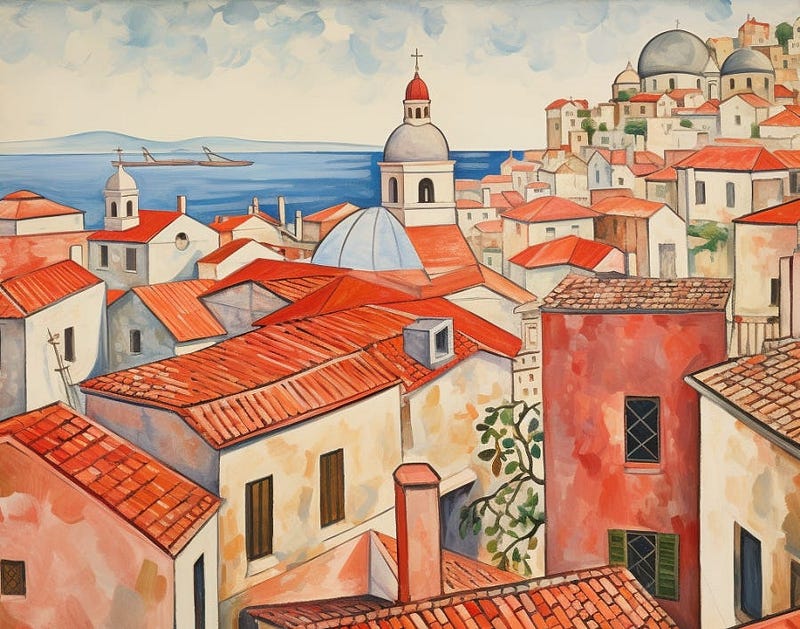
Picture the scene: a vista of red-tiled roofs baking under a midsummer sun, a network of meandering cobbled alleyways and, watching it all from above, a pale Irishman basking on his little terrazza, surrounded by cactus plants.
A text message comes in — it is the landlady: ‘Ricordati di annaffiare le piante.’
Oh yes — water the plants, my only responsibility apart from doing my Italian homework. I amble over to the hose and fill the little can before pottering around the terrace, observed only by the suspicious older lady from her next door balcony.
I had made it to Italy, and the sabbatical was proceeding smoothly. Far from the world of stethoscopes and the glaring lights of hospitals, I had settled into a new rhythm.
Every weekday I wandered down the road to the little Italian school in an incredibly grand old palazzo down by the piazza, and I came back home and cooked and wandered and read and socialised. I was starting to pick up the language, too.
I was also writing at a glass table which stood beside the only fan in the apartment. The material was immature and overwrought and I knew it was no good at all. Periodically, my gaze turned out through the window where I could look at the old walls of the city, partially camouflaged by Lombardy poplars, and I could hear the pleasant sounds of melodic Italian ringing through the streets.
Not all, however, was sunshines and roses. After a few months, two headwinds came to bear upon me. One was the weather. Winter had rushed in abruptly, almost overnight after a brutal spell of heat in September and, although I didn’t really the cold, it began to feel no longer like a holiday.
A bigger issue was that things didn’t feel quite right. Was this the life I wanted, all leisure? I had a great time, but my life felt a little lacking in something, which I later came to think of as a sense of meaning. My day-to-day existence was also quite alien, and I was missing my friends and family, and even just good old familiar sights and sounds.
Was it really true though, that all this leisure time could be a bad thing? From the easy chair on my glorious terrace, I pushed the feeling down, not fully believing it. How could too much free time be a bad thing — surely you couldn’t get sick of lounging around on beaches or strolling through picturesque walkable cities? That’s what millionaires do, right?
But I had to admit that it felt that this was too much of a good thing. I later learned that this is backed up by some studies which may or may not be claptrap. Looking back, I think that was part of the problem, all play and no work made me a dull boy, and even the writing and language learning weren’t really enough to fill that gap, at least not in isolation.
In hindsight, it wasn’t just the lack of meaning that ailed me at the time, but also an absence of community, of integration, of routine, and probably lots of other things, too. I was still having a great time and met lots of great people, but it was also true that I was meandering around like a lost soul, trying to figure things out and unwittingly gathering data about what I wanted in life.
Eventually, when the chill of winter really kicked in, and the novelty of being a grown man lounging around all day for months at a time wore off, I knew it was time to go.
Back to the Grind
Unfortunately, I wasn’t quite sure where to go. It was October, and I didn’t feel like facing an Irish winter, so I packed myself off to Australia again. In some respects, it felt like a step backwards, but I also knew it was important for me to get back working again, and to keep inching towards my ‘number’ for freedom, which I had not started to question yet.
Returning to work was an odd experience. I had to stitch a very jagged wound on another doctor’s eyelid at a rural hospital — not an easy task after several months without seeing a suture, while being scrutinised by his wife who was also a doctor, but I picked up my skills again pretty quickly, while still gaining an appreciation that you can really ‘use it or lose it’ with both knowledge-based and practical work.
I ditched the locum jobs and began working in training posts which allow me to finish specialty training. This involved taking a big pay cut but I was happy with the process as it was all part of the plan to finish my exams and then possibly move home afterwards, with some more money in the bank. A pattern was beginning to emerge when I was always looking forward to something which I thought would change my life — first it was the sabbatical, then the move home, later it would be going remote, or buying a house. In some respect, these things all did change my life, but only as incremental developments as part of a much larger tapestry, a tapestry which keeps getting woven until the day we die, it seems.
Then, something happened which nobody alive today will forget: the pandemic. Since I was still involved in a training scheme and knew I couldn’t finish for another year or so, I initially wasn’t too worried about being able to get home in time…then, of course, the restrictions lasted much longer than planned and the examinations run by the medical colleges began to get delayed. Other doctors were panicking that their whole training scheme would be delayed, causing us all to put our lives on hold. Luckily, since I had opted to do my first exams at the first opportunity, my exit exams, although delayed, were still scheduled for before the end of my training period and, since I passed them, I finished on time, and was ready to move home.
Before I made the final move, I had to wait around for a couple of months to let the paperwork come through, and to wait for the Aussie summer to end and the Irish summer to begin. I was still working and, with my new qualification, I started to make good money just before I left for Ireland. To this day, I lament those very pay packets a little bit. The money was coming easily, I liked my job, and I didn’t need to get on a plane every couple of weeks to earn it. But money, like many other things in life, is only a small part of the picture, especially when you are 10,000 miles from home during a once in a millennium pandemic, and I was starting to realise that there were important parts of me that could not be tended to or assuaged by a bank balance.
On the Cusp of Retirement
When I got home, I was in a good financial situation, and the stock market was incredibly strong. These were the good old days of the pandemic boom. I got a steady job for three days a week which paid somewhat modestly compared to my Aussie days. My thinking at the time was that, since things were good, I just needed a moderate salary to show the bank I had a stable income, and then I could buy a house with my savings.
What I had not anticipated was how much of an unfathomable hellscape the housing situation in Ireland had become. Nonetheless, I thought that if I bought a place, I could rent a room in the house which would cover my mortgage, and just work a little bit.
Vivid imagery began to float teasingly through my mind’s eye — with essentially no mortgage payment, I would have free rent while gaining equity. All that would then need to be covered then would be my modest living expenses, a situation some of the FIRE enthusiasts call ‘Barista FI’ or ‘Coast FI’, when you have not reached your number but you can sort of work-part time and take it easy as compounding and a modest income will soon put you into retirement.
I began to wonder — in this case would I sort of be almost retired? Not from a total net worth perspective, but from the perspective of having good cash flow and a good quality of life. I thus began to gain an appreciation for the fact that I could start living life on my terms, even before reaching my financial goals. This revelation, obvious in hindsight, was quite an important one.
Then, as often happens when things seem too rosy, reality bit me, hard.
The three horsemen of financial difficulty (blacks swans, greed, and interest rates) arrived like three bats out of hell, and trampled all over my newly-minted aspirations.
The Struggle
Every time I saw I house I wanted to buy, it seemed just out of reach. The only way forward was to grind again, to work more and more days in a job which was becoming less and less fulfilling. And the more I worked, the more angry I got, and the higher house pries went.
A sticky wicket — this wasn’t the life I wanted. Even if I saved lots of money, the bank required more and more documentation, changing their mind and saying I needed to work for longer, as I had come back to Ireland recently and didn’t have years of tax returns. I was already paying a small fortune in rent, and couldn’t find another way out.
Then, due to further geopolitical events, the stock market began to go down the tubes, and my net worth got an unruly scalping, as I was invested to the gills in equities. Thus began a period of inflation, high interest rates, and further tumbling of stock values.
This is where I made errors. Volatility in markets is normal, and I had weathered many’s an economic storm over the years, without so much as blinking looking at my portfolio, and so I thought I was immune to rash decisions. This time, however, it felt different. Why? It got emotional.
The numbers on the screen no longer reflected the random vicissitudes of the stock market which, with time, would iron themselves out. Now, every time I looked at the numbers, I saw a deposit for a house which could get me out of my rental difficulties, and make my life a hell of a lot easier. And this number, my deposit, was shrinking like it was going out of fashion.
Then, I did all the wrong things. I chased losses, I bought and sold and chopped and changed, I broke every rule in the passive investing rule book, and all I got was more losses.
Hmm. The glorious return home was not quite playing out as I had hoped. My hopes of buying a house, which had become a bit of a fixation, had all but vanished.
I took stock of the situation. I wasn’t getting anywhere, except becoming more and more fixated on my finances, which wasn’t helping, and every day I felt more and more sorry for myself. Luckily, the job which I had taken was due to finish soon and, although not renewing my contract would mean that I would again have to renege on my mortgage prospects, I couldn’t care less at this stage.
It was time to pack my bags again. The contract ended and I got ready to take off again for Europe. This time, however, I decided to be a little more responsible. Due to the changing nature of medical care in the pandemic, I was able to get some remote medical work. I agreed to do a couple of hours of video consultations a day which allowed me to offset the high costs of travelling, which was great especially since the old finances were in a bad way.
Rebirth, Work & Meaning
Yet again, I was on the road. I hit Poland, Sweden, Spain, the south of France…all while working from my laptop, something which I wouldn’t have even dreamed of being possible as a spotty, hungover medical student.
Hmm. Could this be the way forward? Granted, remote work has its downsides too, but at that time, and even now, the advantages definitely favoured my lifestyle.
I had a great time eating fuet in Barcelona, Kalles caviar in Sweden, pirogi in Poland and confit de canard on the Côte d’Azur, but I came home again for the same reasons as before. Now, in my thirties, I also wasn’t as intrepid a traveller before, and was less excited about rushing around to hostels and meetups, or about making new friends. I found myself wanting more relaxing than exciting hobbies, and I was less keen to hang out of bars until the small hours.
Coming home, I still had the remote work option, and I was still trying, as ever, to build up my finances. However, I now had a new perspective — I had spent several stints abroad just doing whatever I felt like and I knew this wasn’t a sustainable mode for me. If that was the case, how would ‘retirement’ (said tongue in cheek) feel?
It was obvious then that wouldn’t be the ‘retirement’ I would want. I had heard the stories of very successful founders who ‘exited’ for millions? I assumed these guys would never work a day in their lives again. Wrong — most of them end up coming back. But if it’s not for the money, then why do come back? Is it passion, the love of the game? I think it’s a little more complex.
Work is Fundamental
I had to think — what is the meaning of work? Why do we do it? I like Daniel Vassallo’s idea that work is something we do to improve our lifestyle. Working provides us with money to support ourselves and our families, as well as social capital.
If we didn’t work, we wouldn’t be able to support ourselves. Yet many who are already wealthy, continue to work. Why is this the case?
It seems to me that work is fundamental. The human, whether we like it or not, is a worker. Work won’t look the same for everybody. Some work from laptops, others sing for a living, or look after dependents, or work in coal mines. Not all work is paid, but we are all designed to chop wood and carry water, albeit in different ways.
In this respect, work hasn’t changed. Our hunter gatherer predecessors went out every day to accumulate resources. Their brains, and hence our brains, weren’t built for the concept of limitless abundance, because we had no way of preserving resources for entire lifetimes, which money now allows us to do.
The end result is that we are programmed for the feeling of producing, and all the good side-effects that come with it, such as social capital, developing relationships, upskilling, and using the brains which need to feel like we are engaged in constantly amassing resources, or working, even if a rainy day is, in reality, already accounted for.
This explains why people with 100 million in the bank experience the same, or worse financial insecurities than those with 1 million or 1 thousand.
The human is built to work. But why then, all those years ago in a sunburnt country, did I want to quit? Because it wasn’t work that was the problem, it was how I was working: night shifts, burnout, litigation, commuting. I was letting the tail wag the dog. But when I left, and became a wanderer, I also lost the benefit of stability and a routine.
There’s a happy medium. My focus now has deviated from accumulating a large nest egg, because I know that once I meet the number, I will still want to work, albeit on my own terms. I look at money now through the lens of steady-state financials — how can I make enough to keep going, while still enjoying what I do and while still making time for all the things I love in life? It’s about staying in the game, and if you can save a little or a lot on the side, that’s a great bonus.
It still makes sense to accumulate some money early on (I still believe in good old compounding), but I think many people work too long in a job that uses and abuses them. Building some runway and some new skills is the way forward if you find yourself stuck — it gives you options.
What we need from our work will change over time, and will be deeply personal. For me, the landscape has slowly clarified over the years, and my vision has diminished, yet in a beautiful way.
The path for me is simpler now: chop wood, carry water, and savour the scent of forest.