
Choosing the Right EV Charger for Your Home
A Comprehensive Guide to Future-Ready Charging Solutions
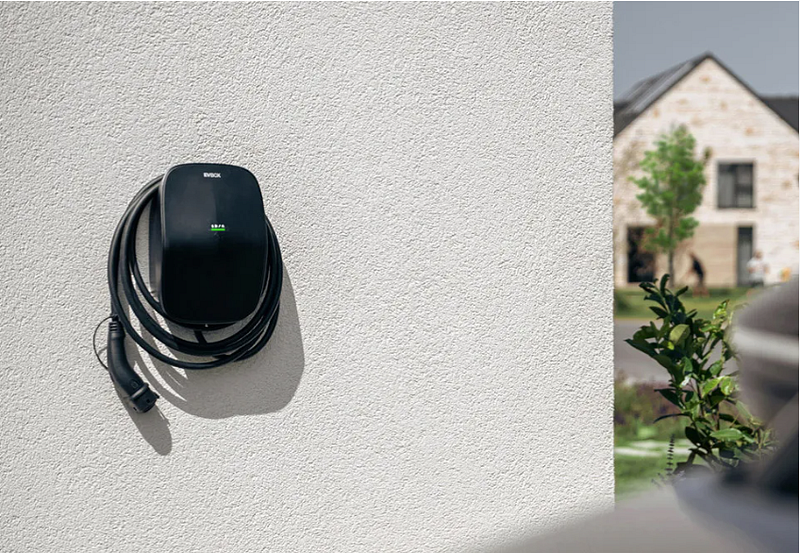
It’s time to move electric and it’s time to get some knowledge about it. Knowing how to choose the best Ev charger for your home will be a must in the near future. Beyond considering factors like design and cost, there are crucial parameters to take into account.
Before digging into those parameters let me remind you that there are two types of EV chargers, one using Alternative current AC, and another one more powerful that uses Direct current DC. This article focuses on the AC EV charger, which is suitable for home installations.
For more information about DC chargers, refer to my previous article:
Why DC charger charge the vehicle faster?
Now, let’s explore the key parameters:
- Hardware
The first thing to consider is the durability of the product. High-quality, durable materials such as weather-resistant plastics or metal alloys can contribute to the overall strength and longevity of the charger. Connector, where you insert and remove frequently your cables must be built with good material quality to avoid fast degradation. Weatherproofing features, seals, and gaskets can drastically increase the lifespan of your Evcharger.
Another critical factor is heat dissipation. Electronic components inside the charger can quickly heat up if not dissipated effectively, leading to temperature derating. This phenomenon can affect charging power, and it’s crucial to ensure the charger has adequate heat sinks or mechanisms to manage heat effectively.
The last thing we should consider regarding the hardware is the mounting and installation. Wall-mounted, Pole-mounted, indoors, outdoors, you name it, try to find if your EV charger can be installed the way you want. Bear in mind that a robust mounting system and durable installation hardware are important for long-term stability.
2. Features and Technical specification
I know, the first thing that comes to your mind when looking for an EV charger is the charging speed. How fast can this EV charger fuel up my electric vehicle? Till the moment I’m writing those words, AC EV chargers typically have a maximum output of 7.4 kW for single-phase chargers or 22 kW for three-phase chargers. The choice here is easier and depends on your home installation.
Dynamic load balancing has gained importance recently. If an EV charger has this feature, it can control the consumption of the whole home electrical installation. It will know when your home consumption is higher and adapt the power of the EV charger accordingly. When you have a solar PV rooftop, you should consider this feature as it will allow you to control the power source. You then can take the power from PV when the sun illuminates the solar panels or from the grid when it’s dark and you don’t have batteries.
If you want to be in tune with the latest trends, you should consider using an EV charger that supports the latest communication protocol OCPP 2.0.1 It is user-friendly and holds several new features compared to its predecessor the OCPP 1.6. To learn more about those two EV charger languages, you can check my articles below:
let us now move to another parameter that holds significant importance: Connectivity. Do you know how your EV charger will connect to the internet? Is it by a SIM card that supports a 4G network? Or the one that only supports 3G and 2G? Can your EV charger connect to a Wifi? Does it have an ethernet plug?
Try to choose the one that fits best with the type of signal you have at home. Having an EV charger connected to the internet is really important nowadays, not only for you to do the upgrades and keep an eye on what’s happening to your EV charger remotely but also for the technical support team of the brand and that’s what takes us to our final thing to consider.
3. Warranty and Technical Support
Having an EV charger is good, but having the best after-sales support is better. First, you should check the warranty offered by the charger manufacturer. A longer warranty period may indicate confidence in the product’s durability. Second, and most important, does the manufacturer have a good team of engineers that can support you whenever you face a technical issue? As a technical support engineer myself, I can guarantee you that once your EV charger is connected to the internet, a lot of technical issues can be solved remotely.