

Choose a Philosopher
How choosing a philosopher can help you write to find out what you think.
“The reason for writing is simple. Through writing you will learn what you think and you will come to know yourself. Write to find out what you think. Unless you know what you think, you will always be subject to the will of others.”
–Deborah J. Haynes, in Art Lessons: Meditations on the Creative Life
As the Soviet literary scholar Mikhail Bakhtin taught me, every word we say is never in isolation, but always relational: our words and actions, whether private or public, are always in dialogue with other people.
Of course, alone, we could develop our own philosophical ideas. Ideas about writing and what to write about. But I think it is rewarding for writers to ask what, how, and why they write, and what purpose their writing aims to serve. Engaging deeply with the ideas of a particular philosopher can help you do this.
The artist and philosopher Deborah J. Haynes, in her wonderful book Art Lessons: Meditations on the Creative Life, recommends choosing a philosopher to think with. It doesn’t really matter which philosopher, or what counts as a philosopher to you, just choose someone that can help you create a useful internal dialogue in your mind about your life and the role of writing in it. When you engage in dialogue with your chosen philosopher, the question becomes: How can you build a philosophical base in developing a coherent approach to how and why you write?
Haynes says,
“Philosophy can be esoteric, or it can speak directly to you, to your dreams and longings, your questions and vision of the world, and your comprehension of art. Browse the shelves of libraries and bookstores. Scour all of the media that are accessible to you. Seek, says the ancient proverb and you shall find.”
What are three key ideas from your chosen philosopher?
Like Haynes describes in her book Art Lessons, I’ve also been inspired by certain Russian language philosophers who have influenced the field of linguistics, like Roman Jakobson, Lev Vygotsky, and Mikhail Bakhtin. In particular, I’ve found a lot of inspiration in reading Bakhtin’s (1895–1975) philosophy of literature.
Bakhtin’s writings are complex and diverse, and reading his work feels like gathering together thousands of blurry pixels with the hope that someday a larger image will come into focus.
But in unexpected ways, Bakhtin’s philosophy of language has helped me think about my research on how communication, narratives, and media shape our relationships with wildlife and nature.
Most of what I think about and write about involves exploring theories that help explain how communication — and especially miscommunication — works. And, in particular, how public debate and media influence people’s beliefs, attitudes, and interactions with wildlife and nature in healthy and damaging ways (my focus is on green sea turtles and monk seals in Hawai‘i).
Mikhail Bakhtin developed three ideas, in particular, that help me think about what to write, how I should write about it, and what purpose my writing should serve in the larger world. In other words, Bakhtin’s ideas gave me a new language to think about my life, work, and writing in new ways.
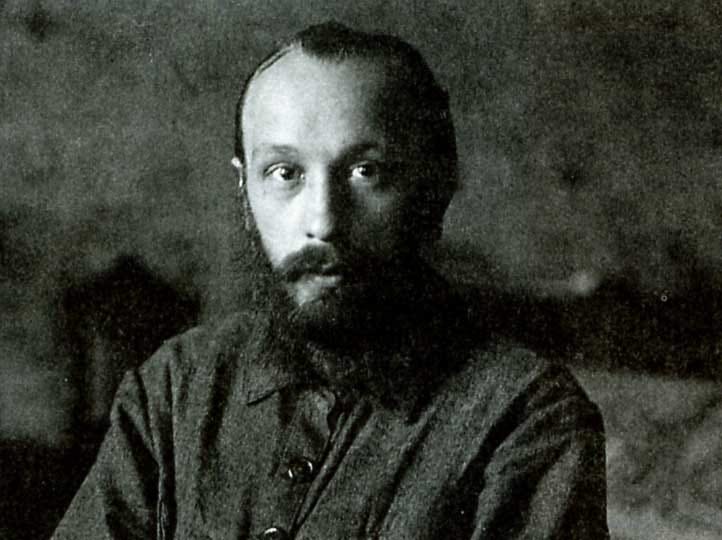
#1 Dialogue
The first idea Bakhtin gave me was a new understanding of ‘dialogue.’ Bakhtin writes,
“The word in language is half someone else’s. It becomes “one’s own” only when the speaker populates it with their own intention, their own accent, when they appropriate the word, adapting it to their own semantic and expressive intention.”
Usually, when people think of dialogue, they imagine a conversation between two people. But Bakhtin had something much more complex in mind.
Bakhtin’s notion of dialogue was that everything we say, and everything that we do with our words is in some way a response to something that was said or done by someone else before. It is impossible for any utterance to stand alone and make sense. Moreover, our utterances invite new responses from others. As he put it, “Each individual’s utterance is a link in the chain of speech communication” and “Our speech is full of other people’s words.” His basic point was to say that language is a shared social tool. And because human life is saturated with language, the words we use link us up to a web of other speakers’ words, ideas, and actions.
In my own work, Bakhtin’s idea of dialogue helped me to better understand how our brief interactions not just with people, but with wildlife, are not isolated interactions, but interactions in dialogue with others’ words, agendas, policies and philosophies about nature.
When we strive to protect wildlife like elephants or sea turtles by working to foster healthier human-animal relationships, or when we refuse to eat meat produced by an unethical industrial agricultural system, these actions aren’t cut off from society. Our environmental actions always respond to others’ past actions towards animals and nature by endorsing or rejecting them. At the same time, our brief interactions with animals and nature invite–or demand– new responses from others in the future.
#2 Unfinalizability
Another idea of Bakhtin’s that has inspired me is his notion of unfinalizibilty. This just means that who we are is never stable, but constantly in flux: always changing and never finished.
Our interactions with people, plants, animals and places in the world are like momentary nets that gather up our previous experiences, knowledge, skills, languages, and cultures, unfurling them in a moment to capture the meaning of who we are in relationship to the wider environment.
Bakhtin talks about the ‘unfinalizable self,’ that while people may label us, and treat us as if they know who we really are, we are never completely understood or known to them, nor ourselves: we are always a work in progress, an open system, not a closed one.
In my own research on green sea turtles, this has helped me to consider how despite the decades of scientific research that has radically expanded our understanding of these creatures, there is still much we don’t know. The lives of sea turtles — how they experience their world––remains deeply mysterious. At the same time, sea turtles are also adapting to changing habitats, especially due to ecological crises like pollution and climate change. Because sea turtles are always changing, both in their relationships to people, as well as their own biological and ecological relationship to the world, they don’t hold still for their scientific image to be taken. Just like people, sea turtles’ identity is a work in progress.
Because of this, sea turtle science is a dynamic science in constant motion. But this makes it an especially complex science because sea turtle scientists also have to be people scientists too: they need to understand what makes human communities tick, what drives human relationships with sea turtles over time, making these people-turtle relationships better or worse because of the actions we take (or don’t take). Because of this, our relationships with each other, and with wildlife are never final. There is always opportunity to promote positive change, no matter how bad things get: nothing is set once and for all.
#3 Answerability
Finally, Bakhtin also developed the idea of answerability. Answerability aims to capture the ethical aspects of our dialogue with one another, the wider world, and ourselves.
Bakhtin insisted that we are answerable in three ways. First, we are answerable to the people we talk to in immediate moments of interaction. When interacting with others, we become answerable (responsible) for what we say and do to them.
Second, even if we believe our conversations with friends are private, what we say and do in those moments still participates in the larger conversations happening in the world. Because other people are implicated in our conversations, what we say and do contributes to the larger stories that shape our communities and societies. In other words, our private conversations, although seemingly brief and insignificant, serve to ratify or challenge the larger conversations about gender, race, social class, and environmental well-being that steer our communities and societies in better or worse directions.
Third, we are answerable not just to others, and to the wider world, but also to ourselves. Every conversation we have is a chance to decide what kind of person we want to be, and what kind of person we want to become. Through our conversations, we do not just author the story of our relationship to other people, or the wider world, but also the story of ourselves.
Bakhtin’s philosophy seeks to understand how human life is a form of authorship.
In my own work researching wildlife conservation, or climate activism, the idea of answerability helps me to consider how people are answering particular histories of past conversations and responses to our social and environmental crises: previous responses, whether in words or deeds, that have exacerbated the climate crisis and social injustices in the world, and the responses that have worked to remedy these crises.
But answerability also shines a light on the tactics people in power use to become ‘unanswerable’ (not responsible) to others, and the wider world. Bakhtin’s notion of answerability forces me to constantly ask: How can we make ourselves, others, and the society we live in answerable to the crises we face today?
Conclusion: Choose a philosopher
- Choose a philosopher to engage deeply with their thought, or with a group of philosophers writing about particular topics that interest you.
- Choose a philosopher that most inspires your curiosity and read everything they write on the topics that fascinate you, whether zoology, zucchini, or zombies.
- Choose a philosopher whose ideas appeal to you, and which resonate with your artistic ambitions. What are three key ideas from your chosen philosopher that ‘spark joy’ for you, and how can you build your own coherent philosophy in dialogue with them?
- Choose a new philosopher each year whose work you will explore in more depth over the course of 12 months.
- In sum, choose a philosopher to think with, and to help you learn what you think. As another Russian linguist, Lev Vygotsky put it: “through others, we become ourselves.”
If you’re wondering which philosopher –lovers (philo) of wisdom (sophos)–you might choose, below are a few suggestions of philosophers that have inspired me over the years:
James Baldwin (1924–1987)–His book The Fire Next Time is worth coming back to often.
Val Plumwood (1939–2008)–She is probably the most influential philosopher for me on thinking about environmental issues today. Her book Feminism and the Mastery of Nature is challenging but endlessly rich.
Frantz Fanon (1925–1961)–I was introduced to Fanon’s work years ago in an undergraduate French seminar on the topic of colonialism in the Francophone world, and read his book Les Damnés de la Terre (Wretched of the Earth).
David Abram (1957- )–Abram’s book The Spell of the Sensuous was a major spark in my research trajectory exploring the relationships between language, culture, and nature.
Deborah Bird Rose (1946–2018)–Her book Wild Dogs Dreaming: Love and Extinction, on the topic of ethics in a time of mass extinction, will transform how you think about your place in the natural world, at least it did for me.
Eduardo Kohn — If you’ve ever wondered ‘how forests think,’ then check out Kohn’s book, How Forests Think.
Tupac Shakur (1971–1996)–Philosophy comes in many forms, including art, music, and poetry: a good entry point into Shakur’s philosophical work is his 1995 album Me Against the World.


