
Chinese Tradition: The Backbone of Culture or a Chokehold On Progress?
A double-edged sword in an east-meets-west showdown
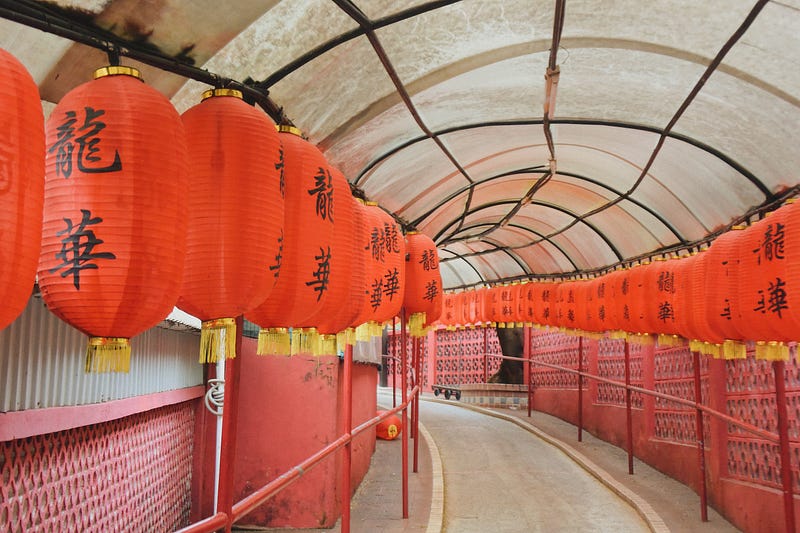
I wish biculturalism is just as visible as biracialism.
Maybe then, I’ll have an excuse for the way I am. This bizarre mixture of east-meets-west. Like poorly mixed cake batter, I’ve got lumps that can’t be blended away.
Growing up, I always thought my family was pretty Asian. I was raised in a predominantly White community so it made my family’s “Asian-ness” stand out. Even now, when there’s a lot of Asians around, it takes me a while to spot my own family.
But the more stories I read about other Asian families, the more I wonder about my own — my upbringing, the way I was raised, those iconic (and stereotypical) “Asian family” moments.
Ryan Fan’s I Hate My Chinese Tradition resonated on a deep level with me. There are multiple things he highlights:
- The expectation from his family to become a doctor, their disappointment in him for becoming a teacher, and the pressure on his bother to stay in pharmacy school
- His father telling him he didn’t want him to be friends with Black kids
- His family’s shock over how dark and tan he is, and their request that he stop running
He touches lightly and briefly on each of these. But when I read his words, I instantly flashback to moments in my own childhood.
I don’t want to be a doctor
I was 12-years-old when I told my father I didn’t want to be a doctor.
My reasoning was simple — I’m afraid of needles. In science class, we’d recently watched a video and I finally clued in that “medicine” and “needles” go hand-in-hand.
I have the vague recollection of him wanting to ask the school what on earth they were doing dissuading students from the medical field. In my fuzzy memory banks, I recall my mother talking him out of it.
I remember sharply his disappointment and anger, even though he doesn’t remember. Perhaps the fact that I’m now an engineer — one of the “accepted” professions for good Asian kids — has erased this moment of shame for him.
But I carry it with me still.
I still want you to be proud of me
I was 15-years-old when I told my father I wanted to be an engineer. I remember his pride and excitement.
I didn’t really want to be an engineer. But I wanted him to be proud of me. The words were already out and I couldn’t take them back.
I believed the mantra that science and math are the most important subjects in school, and I was doing just fine in them. Actually, I did just fine in every subject because Asians are supposed to be straight-A students.
He was worried I’d insist on pursuing something unpractical and foolhardy in his books. As a child, I’d wanted to be a librarian. I spent a minute or two considering being a teacher.
God forbid it if I wanted to pursue a degree in music.
Can she please come to my birthday party even though she’s Black?
I was in elementary school when I made my first Black friend.
I was the only Chinese girl and she was the only Black girl. Perhaps on some deep subconscious level, there was an unspoken understanding of commonality. Or maybe we were just kids who became friends and I’m thinking too hard about it now.
I remember feeling anxious when I told my mother about her. I rushed to reassure my mom that she was a good kid and really nice and that I was sorry I made a Black friend but I really liked her and could she please come to my birthday party.
There was a pause. My mother hesitated. And then she said okay so long as she was a good kid.
Do I tan really well … or do I tan too easily?
I tan really well. I say this obviously through the lens of Western culture. My more Asian counterparts might lament they tan too easily.
After a season of marching band and soccer through Texas’ sweltering summer, I was so dark that people regularly questioned if I was Asian. Many insisted I must be half Indian or half Mexican.
My parents’ reaction to how dark I was? A mere observation. Perhaps their endorsement of my outdoor activities made them accomplices.
My extended family’s reaction to my skin color? A joke or two about how I look deep fried and a bit crispy.
And my grandmother’s acute observation that in Western culture, people like to be tan — spoken not as a judgment but as an acceptance that her grandkids are going to be bicultural.
These specific examples illustrate three reoccurring themes that Ryan Fan highlights about Chinese tradition:
- The burden of adding prestige and honor to the family name, which can be achieved by becoming a doctor
- The importance of the family’s reputation, which governs every aspect of behavior including the friends you make
- The expectation that everything you do is a reflection of your family, which can extend into something as trivial as the color of your skin
The ways our families embody Chinese tradition manifests themselves in different ways. It’s a sliding scale rooted in relativity. As more of us share our stories, it allows us to recalibrate.
Like many, I’ve had a love/hate relationship with being Asian.
Stereotypically, Asians are smart, hardworking, and good at math. We set the bar high for achievements and expectations. Many families have stories of working their way up from nothing and every household is built around a self-made man.
There’s a lot to be proud of. But there’s also a clash of cultures — this dramatic collision of east-meets-west.
It’s a violent tug-a-war below the deceptively calm surface of the water. Perhaps the generations before me only have to merely brush up against it; and perhaps the generations after me will be seamlessly part of the melting pot (or mosaic — hello fellow Canadians).
But right now, it’s a bumpy ride.