avatarRussell Lim

Free AI web copilot to create summaries, insights and extended knowledge, download it at here

3117

Abstract

gcaption></figure><p id="e519">The vast majority of these students attend some sort of extra-curricular tuition. Some of them are private tuition classes that take place at their home or online. Some of them are tuition schools that run 3 hour classes on Saturday mornings.</p><p id="5cb1">In my experience, the students who benefit most from these tuition schools are the students who are already ahead academically. They get a head-start on new content, access to extra revision material, and can work fast enough to handle the tuition work on top of their regular homework.</p><p id="9189">But for the struggling students, it can be a hindrance rather than a help. They are already struggling with the concepts we covered in class, but their tuition school is trying to teach them next semester’s content. They can end up terribly confused and overworked. If these students (or their parents) ask for my advice about tuition, I always steer them towards a private tutor who can go at their pace and help them to improve step by step.</p><p id="4aee">So, with this experience in mind, I do see some sense in the arguments given by the Chinese government.</p><blockquote id="5f65"><p>Taking advantage of parents’ ambitions for their children, some training institutions take part in anxiety marketing, selling unnecessary programs that increase the burden on students and disrupt the laws of education.</p></blockquote><blockquote id="5374"><p>“This has led to a series of social problems such as students’ falling levels of physical fitness, increased psychological problems, heavy family financial burdens and decreased willingness to have children,” said Chu Zhaohui, a senior researcher with the National Institute of Education Sciences. — <a href="http://www.xinhuanet.com/english/2021-07/07/c_1310048101.htm"><i>Xinhua</i></a><i> (Chinese government-run media agency)</i></p></blockquote><h2 id="8a7d">Economic and political implications</h2><p id="5431">As you can imagine, extra-curricular tuition is a huge market in China.</p><blockquote id="40e1"><p>Parents invest heavily in their children’s education, particularly in China’s exam-oriented educational culture. The private tutoring market has swiftly expanded with the country’s economic boom and the sector is estimated to be valued around $120 billion. — <a href="https://thediplomat.com/2021/07/china-targets-the-private-tutoring-sector/"><i>The Diplomat</i></a></p></blockquote><p id="20b2">Of course, the roll-out of these new laws took an immediate toll on this booming market.</p><blockquote id="c6d0"><p>In Hong Kong trade, companies including New Oriental Education & Technology, Koolear Technology Holding Scholar Education and China Beststudy Education plummeted by as much as 47% on Monday.</p></blockquote><blockquote id="d4ac"><p>On Friday in New York, TAL Education Group shares fell by more than 70%, while Gaotu Techedu lost 63% of its market value. — <a href="https://www.bbc.com/news/business-57966027"><i>BBC</i></a><i> (26 July 2021)</i></p></blockquote><figure id="9fee"><img src="https://cdn-images-1.readmedium.com/v2/resize:

Options

fit:800/1*5hks5c7coEa_TvXSLKfu2A.jpeg"><figcaption>Photo by <a href="https://unsplash.com/@nampoh?utm_source=unsplash&amp;utm_medium=referral&amp;utm_content=creditCopyText">Maxim Hopman</a> on <a href="https://unsplash.com/s/photos/stock-market?utm_source=unsplash&amp;utm_medium=referral&amp;utm_content=creditCopyText">Unsplash</a></figcaption></figure><p id="adc8">Some commentators are explaining the reasons behind the new policy as less to do with protecting students and parents, and more to do with asserting the government’s control over growing corporate powerhouses. Similar to recent policies to restrict Alibaba (the Chinese equivalent of Amazon), Didi (the Chinese equivalent of Uber) and Tencent (a social media company worth more than Facebook).</p><blockquote id="1053"><p>“This is a show of force from the Chinese government, saying, ‘We’re going to reel in these tech giants and their unruly behavior,’” says Prof. Michael Sung, founding co-director of the Fudan Fanhai Fintech Research Center at Shanghai’s Fudan University. “Because now they’re big enough to have systemic risk.” — <a href="https://time.com/6079877/china-ipo/">Time Magazine</a></p></blockquote><p id="f3d9">It has also been viewed by some as a move to protect their citizens from the “corrupting influences” of the Western world. This may indeed be part of the story, judging from these excerpts from the “double reduction” (双减) policy document.</p><blockquote id="9381"><p><i>严禁提供境外教育课程 </i>It is strictly prohibited to provide overseas education courses.</p></blockquote><blockquote id="439d"><p><i>严禁聘请在境外的外籍人员开展培训活动</i> It is strictly forbidden to hire foreign personnel abroad to carry out training activities.</p></blockquote><blockquote id="d309"><p><i>外资不得通过兼并收购、受托经营、加盟连锁、利用可变利益实体等方式控股或参股学科类培训机构 </i>Foreign capital shall not be acquired… to hold or participate in academic training institutions. — <a href="http://www.moe.gov.cn/jyb_xxgk/moe_1777/moe_1778/202107/t20210724_546576.html"><i>Chinese Ministry of Education</i></a></p></blockquote><h2 id="e05a">What happens next?</h2><p id="937c">I would like to give the Chinese government the benefit of the doubt, and believe that the true reason behind the policy is indeed to improve the wellbeing of its citizens.</p><p id="2eb5">The competition for university places is intense, not just in China but in many countries around the world. As a consequence, high school examinations and the entire high school experience can be extremely stressful. It is certainly a problem worth discussing.</p><p id="3c70">It is easy to sit on the couch and criticise the government, but much harder to actually come up with a practical solution. I certainly don’t have the answer!</p><p id="8d50">Whether the policy does have the desired effect (and whether it is even continued after the current pilot program ends) remains to be seen. Many world leaders and experts in education will be watching to see the outcome.</p><p id="cf90">At the very least it will spark more discussion on the issue of student wellbeing and the goals of education in our society.</p></article></body>

China’s surprising ban on weekend tuition schools

What can we learn from this controversial new law?
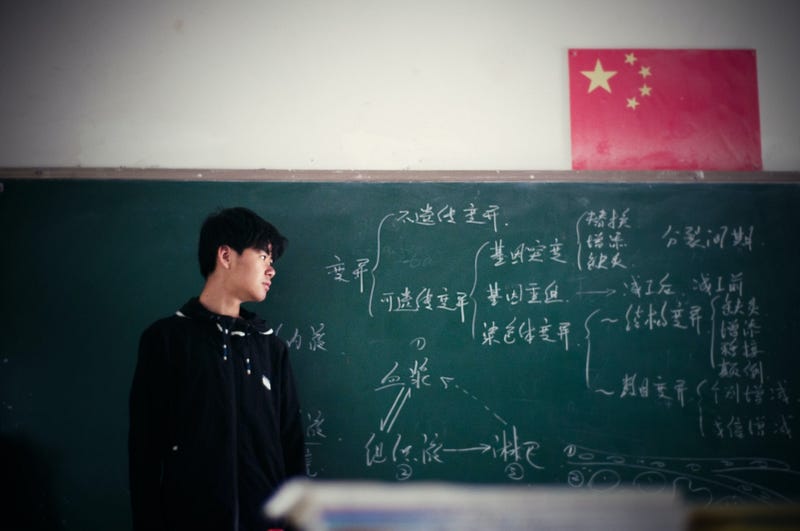
Photo by yu wei on Unsplash

I am an Australian teacher. My wife is a Chinese citizen. I was very surprised when she told me about a controversial new law in China to prevent high school students attending tuition schools on holidays and weekends.

Off-campus training institutions shall not teach curriculum subject-tutoring courses on national legal holidays, weekends and winter and summer vacations…. … the move is expected to ease the pressure on students undergoing compulsory education, reduce family expenditure on education and ease parents’ burden. — Xinhua (Chinese government-run media agency)

The policy

This new policy has become widely known as the “double reduction” (双减) policy, i.e. reduction of homework time and the reduction of extra-curricular tuition.

You can read the full policy here (Google translate is getting better and better!), but here is a little more information about it:

  • No new tuition schools will be established, and existing tuition schools will be registered as non-profit institutions.
  • The restrictions apply to core subjects such as mathematics, science and language. Tuition schools would still be allowed to run classes in art, music, dance etc.
  • The government will increase their supply of free online tuition material, as well as support for in-school supervision of students during holidays.
  • The new laws are currently being piloted in several of China’s big cities.

Why am I writing about this?

At my school in Melbourne, many of the students are Chinese. This is mostly because of the school location. In my advanced mathematics classes, most of the students are Chinese. At least, most of them have a Chinese background. Some were born here. Some of them grew up in China and came to Australia halfway through high school.
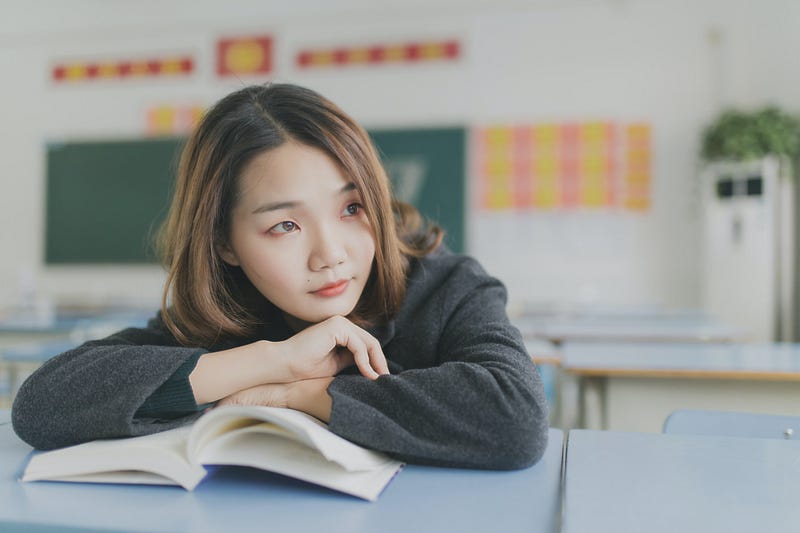
Photo by sean Kong on Unsplash

The vast majority of these students attend some sort of extra-curricular tuition. Some of them are private tuition classes that take place at their home or online. Some of them are tuition schools that run 3 hour classes on Saturday mornings.

In my experience, the students who benefit most from these tuition schools are the students who are already ahead academically. They get a head-start on new content, access to extra revision material, and can work fast enough to handle the tuition work on top of their regular homework.

But for the struggling students, it can be a hindrance rather than a help. They are already struggling with the concepts we covered in class, but their tuition school is trying to teach them next semester’s content. They can end up terribly confused and overworked. If these students (or their parents) ask for my advice about tuition, I always steer them towards a private tutor who can go at their pace and help them to improve step by step.

So, with this experience in mind, I do see some sense in the arguments given by the Chinese government.

Taking advantage of parents’ ambitions for their children, some training institutions take part in anxiety marketing, selling unnecessary programs that increase the burden on students and disrupt the laws of education.

“This has led to a series of social problems such as students’ falling levels of physical fitness, increased psychological problems, heavy family financial burdens and decreased willingness to have children,” said Chu Zhaohui, a senior researcher with the National Institute of Education Sciences. — Xinhua (Chinese government-run media agency)

Economic and political implications

As you can imagine, extra-curricular tuition is a huge market in China.

Parents invest heavily in their children’s education, particularly in China’s exam-oriented educational culture. The private tutoring market has swiftly expanded with the country’s economic boom and the sector is estimated to be valued around $120 billion. — The Diplomat

Of course, the roll-out of these new laws took an immediate toll on this booming market.

In Hong Kong trade, companies including New Oriental Education & Technology, Koolear Technology Holding Scholar Education and China Beststudy Education plummeted by as much as 47% on Monday.

On Friday in New York, TAL Education Group shares fell by more than 70%, while Gaotu Techedu lost 63% of its market value. — BBC (26 July 2021)

Photo by Maxim Hopman on Unsplash

Some commentators are explaining the reasons behind the new policy as less to do with protecting students and parents, and more to do with asserting the government’s control over growing corporate powerhouses. Similar to recent policies to restrict Alibaba (the Chinese equivalent of Amazon), Didi (the Chinese equivalent of Uber) and Tencent (a social media company worth more than Facebook).

“This is a show of force from the Chinese government, saying, ‘We’re going to reel in these tech giants and their unruly behavior,’” says Prof. Michael Sung, founding co-director of the Fudan Fanhai Fintech Research Center at Shanghai’s Fudan University. “Because now they’re big enough to have systemic risk.” — Time Magazine

It has also been viewed by some as a move to protect their citizens from the “corrupting influences” of the Western world. This may indeed be part of the story, judging from these excerpts from the “double reduction” (双减) policy document.

严禁提供境外教育课程 It is strictly prohibited to provide overseas education courses.

严禁聘请在境外的外籍人员开展培训活动 It is strictly forbidden to hire foreign personnel abroad to carry out training activities.

外资不得通过兼并收购、受托经营、加盟连锁、利用可变利益实体等方式控股或参股学科类培训机构 Foreign capital shall not be acquired… to hold or participate in academic training institutions. — Chinese Ministry of Education

What happens next?

I would like to give the Chinese government the benefit of the doubt, and believe that the true reason behind the policy is indeed to improve the wellbeing of its citizens.

The competition for university places is intense, not just in China but in many countries around the world. As a consequence, high school examinations and the entire high school experience can be extremely stressful. It is certainly a problem worth discussing.

It is easy to sit on the couch and criticise the government, but much harder to actually come up with a practical solution. I certainly don’t have the answer!

Whether the policy does have the desired effect (and whether it is even continued after the current pilot program ends) remains to be seen. Many world leaders and experts in education will be watching to see the outcome.

At the very least it will spark more discussion on the issue of student wellbeing and the goals of education in our society.

Education
China
Mathematics Education
Tuition
Sociology
Recommended from ReadMedium