
China’s Space Probe Is Orbiting Mars — Feb 10, 2021
It’s their first independent mission to space.
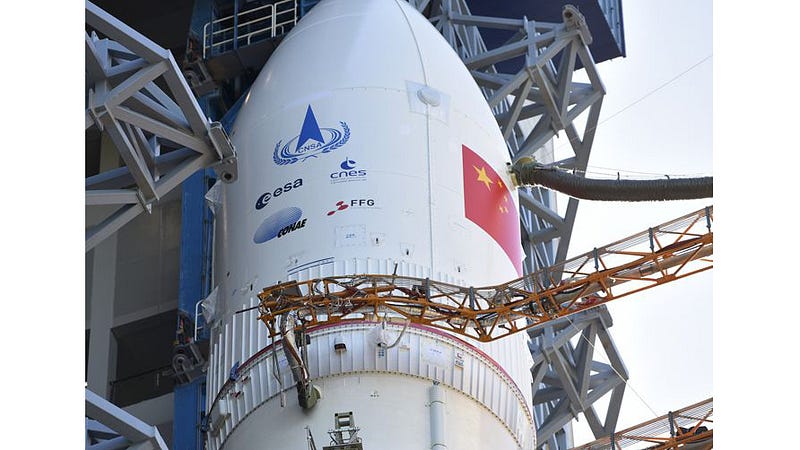

On Feb 10, 2021, China’s probe, Tianwen-1, reached Mars and achieved orbit.
Officially, the China National Space Administration (CNSA) is in charge of the mission.
They are the sixth to arrive, joining the United States, the Soviet Union, the European Space Agency, India, and the United Arab Emirates.
The probe is a combination orbiter, with a lander/rover duo that was launched in the middle of a Covid crisis, on July 23, last year.
The plan is to land the 530-lb. (240 kg) solar-powered rover on Mars sometime in May or June, depending on surface conditions.
Tianwen translates to Heavenly Questions, and it comes from a classical Chinese poem written by Qu Yuan (around 340–278 BCE).
It’s China’s first independent mission to space.
- They attempted to reach Mars in 2011, with Yinghuo-1, on a joint mission with Russia. But they never made it out of Earth orbit, and Yinghuo-1 crashed and burned with the Russian probe.
The planned orbit during the first stage of the mission will be oval-shaped and will circle Mars by crossing both poles. (265 km × 12,000 km).
Mars is the closest planet to Earth and it’s also the one most like us, so it’s the perfect target for space exploration.
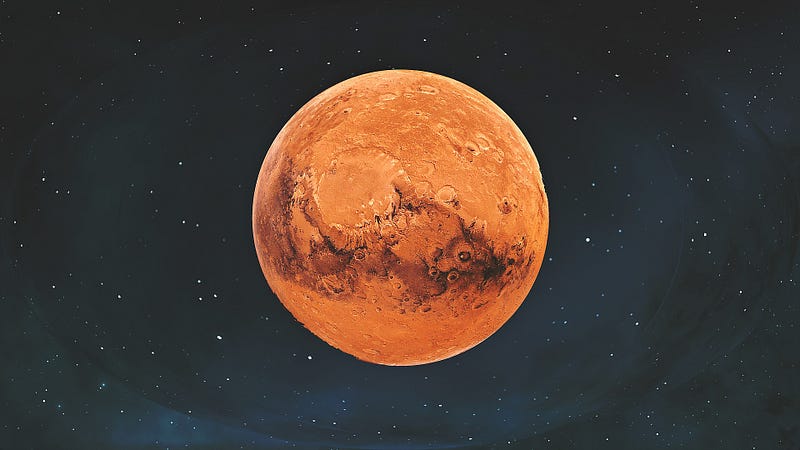
It’s 292 million miles (470 million kilometers) away from us, and it’s also further away from the sun than we are. The order of planets in our solar system starting from the sun is Mercury, (Pluto, we used to call it a planet), Venus, Earth, Mars, Jupiter, Saturn, Uranus, Neptune, and then the possible Planet Nine (more to come in another story).
Name the Tianwen Rover
The Lunar Exploration and Space Engineering Center, part of the China National Space Administration (CNSA) is inviting the public to help with the selection of a name for their rover.
They’ve recently announced a list of 10 names to choose from.
Each name is from Chinese mythological figures, Confucian concepts, and legendary animals.
- Hongyi, (Confucian): persistence or perseverance
- Zhurong: a god of fire
- Qilin: a Chinese unicorn
- Chitu: red rabbit
- Qiusuo: to explore, a reference from an ancient poem
- Zhuimeng: to pursue a dream
- Nezha: a mythological hero
- Fenghuolun: Nezha’s weapons
- Tianxing: refers to the motion of celestial bodies
- Xinghuo: spark
They will announce the name just before the landing date.
When it’s time, the lander/rover duo will detach from the orbiter and make its way to land on a site in Utopia Planitia.
Utopia Planitia is a large plain in the Northern Hemisphere of Mars.
- The official Chinese Space News reported landing coordinates of 110.318 degrees E longitude and 24.748 degrees N latitude. This information has since been removed from the site.
After landing, the rover plans to perform many standardized tests. Surface soil, water/ice distribution, and rock analysis are the usual tasks a rover performs after landing on a moon or a planet. The Tianwen-1 rover carries a Subsurface Exploration Radar instrument and multispectral cameras and instruments for analysis.
The rover is expected to operate for 90 Martian days. A Martian day is about 40 minutes longer than an Earth day.
The Tianwen-1 is one of a small fleet of probes launched last year. They have all successfully reached Mars this month.
The probe from the United Arab Emirates ‘Hope’ reached Mars on Feb 9, 2021, and will remain in orbit, while the United States ‘Perseverance’ lands on Feb. 18, 2021.
It’s getting crowded up there. I wonder if the three will plan a Rover Meetup.
Sources:
https://www.space.com/china-first-mars-mission-tianwen-1-enters-orbit
https://www.space.com/china-tianwen-1-mars-rover-name-contest