
China’s Only Female Emperor: Wu Zetian
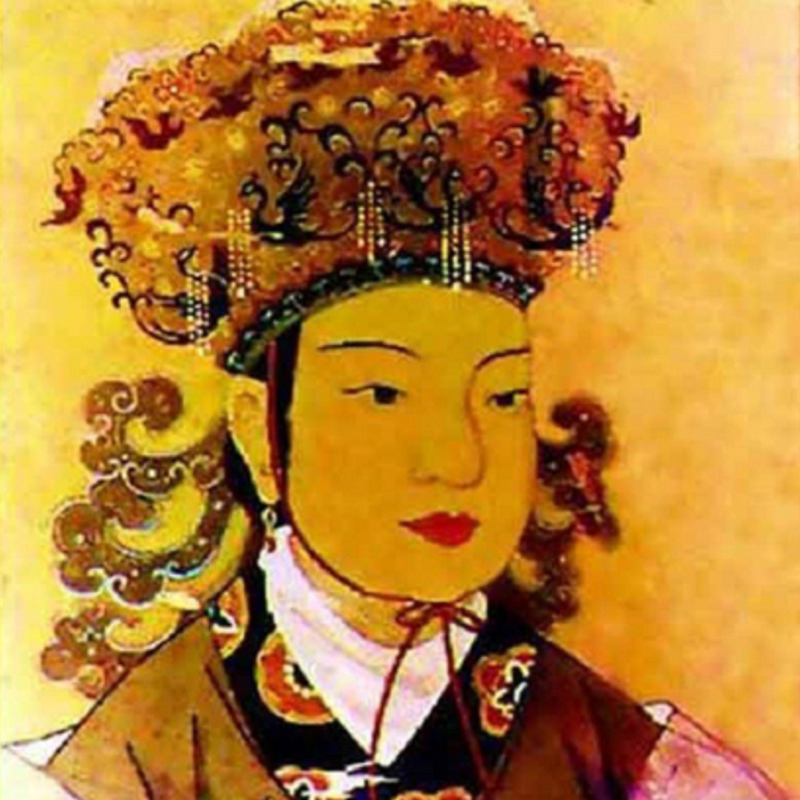
Wu Zetian (624–705 CE) was the only female Emperor of China. Historical accounts of her ascent to the throne and how she ruled remain controversial. Her journey from a concubine to the throne is difficult to imagine and is a testament to her intellect and resolve in a male-dominated society.
Although she was born into a noble family in 624 CE, her family was not particularly distinguished. Her education was atypical for women during this time due to its unusually comprehensive composition, including literature, politics, music, writing, and Confucian classics. This education reflected her family’s status and the progressive attitude of her father, a Tang Dynasty chancellor, toward his daughters’ education.
Her well-rounded educational foundation fostered a keen intellect and a broad perspective on governance and statecraft that would become instrumental in her development into a formidable politician and leader. Equipped with the knowledge and skills necessary to engage in sophisticated political debates and policy-making processes, she also leveraged her literary talents and eloquence in court discussions to enhance her influence and articulate her visions and reforms effectively as the Emperor. Wu Zetian’s education set her apart in the imperial court and contributed to her legacy as a reformer and patron of arts and education, reflecting her belief in the importance of knowledge and cultural development for the empire’s prosperity.
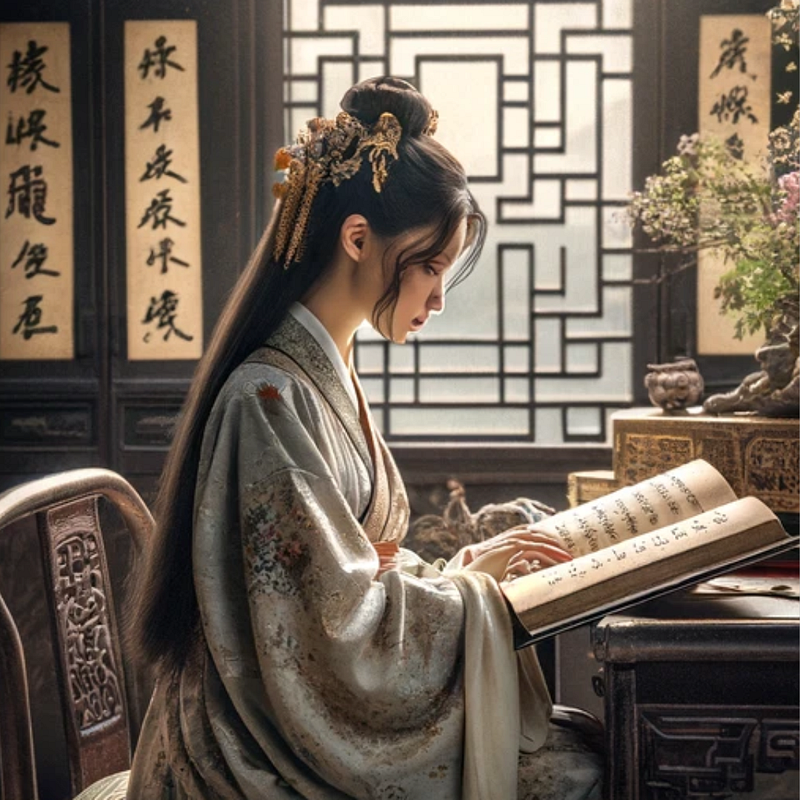
Wu Zeitan Becomes Part of the Royal Family
Wu Zetian’s entry into the royal family was marked by her remarkable intellect and charisma. At 14, she became a member of Emperor Taizong’s harem. Her imperial court journey would break through the highest glass ceiling of the era. Initially, she had minor responsibilities but caught his attention during private conversations about China’s history as a junior concubine.
Emperor Taizong was so impressed with her literacy and intellect and attracted to her beauty that she became his favorite concubine. He elevated her to the secretary status, exposing her to the inner workings of imperial politics and the intricacies of power dynamics. Wu Zetian’s ability to navigate these complexities from a young age highlights her exceptional strategic thinking and adaptability, underpinning her path to becoming China’s only female emperor.
While a concubine to Emperor Taizong, Wu began an affair with his son, Prince Li Zhi, who was already married. After Emperor Taizong died, she was sent along with the remaining harem to Ganye Temple, where they lived as nuns. However, Wu would strategically return to the court as a consort of Prince Li Zhi, who became Emperor Gaozong when he succeeded Emperor Taizong.
Questions remain about the lengths she went to secure her power. There is an accusation she was so ruthless she committed filicide of her third child, a daughter, in 654 CE. Emperor Gaozong did not have children with his wife, Lady Wang; however, he did have three children with his former first concubine, Lady Xiao, who was demoted when Wu returned. Emperor Gaozong’s heir was initially determined to be the son of Lady Wang’s uncle.
However, Lady Wang’s cousin would no longer be eligible to succeed to the throne. Neither would the Emperor’s son with Lady Xiao after Lady Wang was blamed for the strangulation death of Wu’s infant daughter, and Lady Xiao was accused of witchcraft. After both were found guilty, Emperor Gaozong divorced Lady Wang, the convicted women were exiled, and Wu became the first wife putting her two sons in line for the throne. Additionally, both women were later killed in exile, allegedly at the behest of Wu.

Wu Rises to Power
Although Wu did not have the title of Emperor, she exerted commanding control as the first wife. Beginning in 660 CE, she handled imperial business affairs. She made bold gestures, such as leading a group of women to Mount Tai to conduct rituals traditionally reserved for men only in 666 CE and organizing a successful campaign against Korea in 668 CE.
Emperor Gaozong eventually lost his sight, resulting in Wu being tasked with reading him essential documents. She acted independently, making decisions for the Empire. He and Wu ruled together until he died in 683 CE when he was succeeded by Wu’s first-born son, Emperor Zhongzong. This arrangement did not endure as Zhongzong was charged with treason, which was historically attributed to Wu in response to her inability to control her son. He and his wife were banished, and her second son, Ruizong, took the throne. Emperor Ruizong was forced to abdicate the throne in 690 CE, and Wu named herself Emperor.
Now in the driver’s seat, she navigated the challenging Tang Dynasty political landscape with an astute understanding of power dynamics, leveraging alliances and executing reforms that would strengthen her position. Wu Zetian embraced and promoted Buddhism, her personal faith, as a strategic plan to bolster her political agenda, depart from traditional conventions, and legitimize her position as ruler. She distinguished her reign by aligning herself with divine authority when she made Buddhism the state religion, a departure from traditional Confucian ideology that dominated Chinese imperial governance.
Wu Zetian’s support for Buddhism manifested in the construction of temples, the commissioning of Buddhist texts, and the patronage of Buddhist scholars, which led to the flourishing of Buddhist art and philosophy. These contributions had lasting impacts on Chinese culture, embedding Buddhist ideals into the fabric of society and encouraging a synthesis of Buddhist and Chinese traditions. Her policy of religious tolerance and support for Buddhism also helped to stabilize and unify the empire, facilitating the integration of diverse cultures and regions under her rule. Wu Zetian’s strategic use of Buddhism as a tool for governance and cultural development highlights her visionary leadership and the enduring influence of her reign on China’s spiritual and cultural landscape.
Adding to the complexity, her administration was marked by bold and sometimes brutal political maneuvers, including eliminating rivals and restructuring the court hierarchy to consolidate her power. These actions contributed to the empire’s stability and prosperity and fueled debates about the ethics of her reign. When we examine these controversial aspects, we are forced to consider the biases that color historical narratives and gain deeper insights into the complexities surrounding Wu Zetian’s legacy as a ruler who defied the conventions of her time and left an indelible mark on Chinese history.
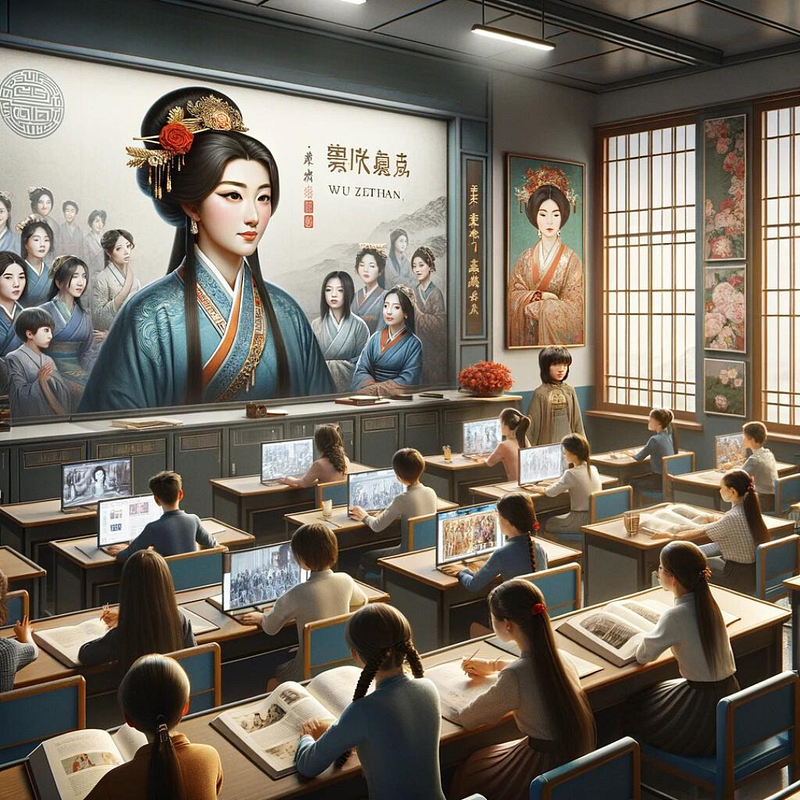
Contemporary Review of Wu Zetian’s Reign Through a Different Lens
Wu Zetian’s legacy has undergone significant reevaluation in both scholarly circles and popular culture, reflecting broader changes in societal attitudes toward powerful women. Historically, she was often vilified by Confucian historians as a usurper and tyrant, which emphasized traditional gender roles and viewed her ascent to power as a chaotic aberration resulting from a woman transgressing traditional gender roles and boundaries of power. These accounts, heavily influenced by prevailing patriarchal norms, attempt to delegitimize her reign by typically focusing on her alleged cold-bloodedness and overshadowing her administrative and political achievements.
However, there has been a shift towards a more balanced assessment of her reign. Scholars and feminists have begun to highlight her effective governance, the prosperity of the Tang Dynasty under her rule, and her role in expanding the empire and supporting the arts and Buddhism. This reevaluation challenges the one-dimensional portrayal of Wu Zetian as a power-hungry empress. It attempts to understand historical figures through the complexities of their contexts instead of a lens of morality.
Modern interpretations often reflect contemporary values, such as gender equality and leadership diversity, framing Wu Zetian’s story as an early example of female empowerment and agency in a patriarchal society. Wu Zetian is increasingly viewed as a skilled ruler who implemented policies that contributed to the Tang Dynasty’s golden age.
This reevaluation challenges the historical record and prompts contemporary reflections on how we perceive and valorize power and leadership in women today. Through Wu Zetian’s story, we see the long journey of female leaders from the margins of history to the center of scholarly and public discourse, highlighting the ongoing struggle for recognition and equality.
Examination of the past in broader discussion paves the way for future generations to appreciate the contributions of women to history, politics, and society by recognizing their agency, leadership, and impact. Therefore, her legacy enriches our appreciation of the past and informs current discussions about leadership, gender, and the potential for societal change.
Thank you for making it to the end of the article! I hope you have enjoyed it and are encouraged to reevaluate independently how female leaders of the past have been portrayed. Until the next one, cheers!
If you want to read about more extraordinary women, have a look at some of my other offerings below:


