
China’s Invasion of Taiwan Would Be A Success. Its Occupation, A Failure.
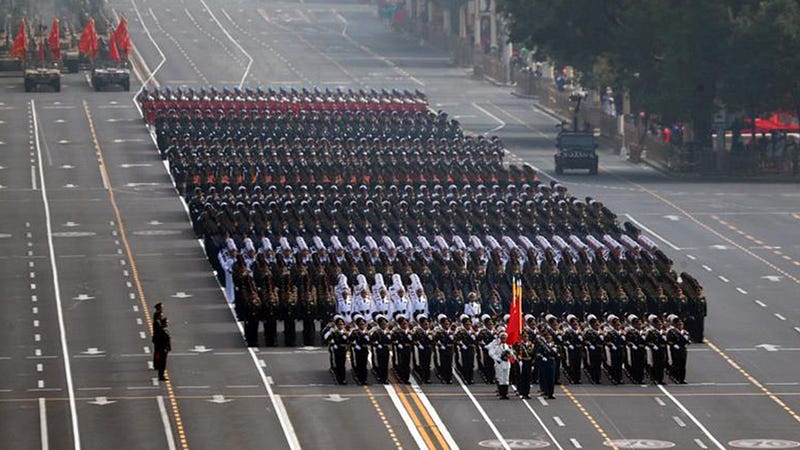
“‘140,000 Soldiers and 953 Ships’: Leaked Audio Clip Reveals China’s Plan To Invade Taiwan” reads the title of the story about a leaked recording of China’s military brass discussing a planned invasion of Taiwan on the International Business Times (IBTimes) website. Despite claims of authenticity by The Times of India and China-born human rights activist Jennifer Zeng, the IBTimes said it could not independently verify the recording. Seeing as how the story was picked up not by any of the major news networks in America or Europe, but was instead taken as gospel by such leading lights as The True Reporter, Corona Times News, and (gasp!) Glenn Beck, it appears the story will soon be relegated to a deep, dank, and unlit corner of the WayBack Machine.
Does that mean the story is untrue, that the recording is a fake? Of course not. It just means the story can’t be verified. Bearing in mind the possibility that the story is true, let’s consider the implications.
China is not Russia
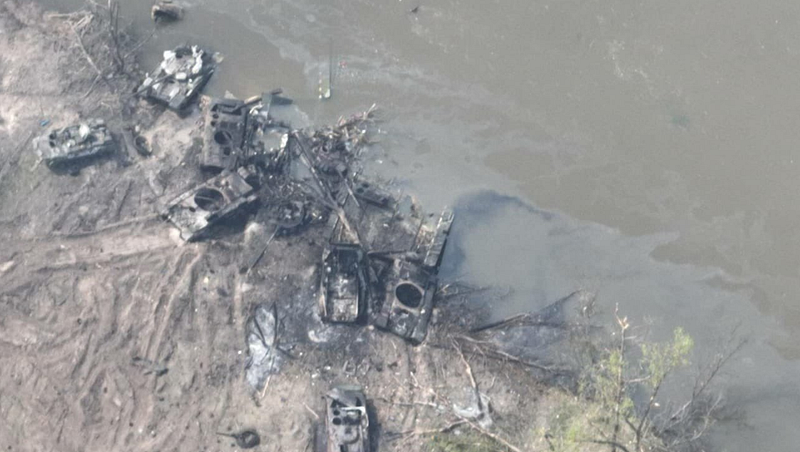
The world assumed Russia’s invasion of Ukraine would be over in a matter of days. Not only did Ukraine’s heroic defense shock the world, but the Russian military was exposed as not much better than a Potemkin army: a facade on the grandest of scales, and the inevitable result of trusting what had been a proud military tradition to oligarchs more interested in building their own yachts than in providing, say, tires for military transport trucks.
But China is not Russia, and it would be a grave mistake to assume the People’s Liberation Army (PLA) would allow itself to be shamed so before the international community. History shows that more than any other nation, China goes big, from the Great Wall to the Three Gorges Dam, from the Grand Canal to what is by far the world’s largest network of high-speed trains. The important thing to bear in mind is that despite a long (and well-earned) reputation for endemic corruption, China’s progress over the past forty years could not have been made if oligarchs were truly in charge. Humans being humans, there will always be a degree of corruption, but the Chinese Communist Party (CCP) is deadly serious about its efforts to root out corruption among its rich and powerful, up to and including implementation of the death penalty. One wonders what America’s business leaders would do if they saw one of their own executed for corruption?
In other words, China’s military is not subject to the whims of oligarchy. What’s more, China’s incredible improvements of their national infrastructure simply could not have been made without a world-class logistics system. For the purposes of this article, when the initial story referenced claims nearly a thousand ships available to aid in transporting troops for an invasion, I see no reason not to believe it.
How the invasion would (probably) play out
Despite what most armchair admirals would have you believe, one of the most difficult missions a military can conduct is a seaborne invasion of a hostile coast, and successful invasions are usually due to one of two factors: overwhelming force, or facepalm-worthy mistakes by the defender. Taiwan has been preparing for an invasion since the 1950’s, so it is unlikely they’ll make any real mistakes. That leaves overwhelming force as the only real option.
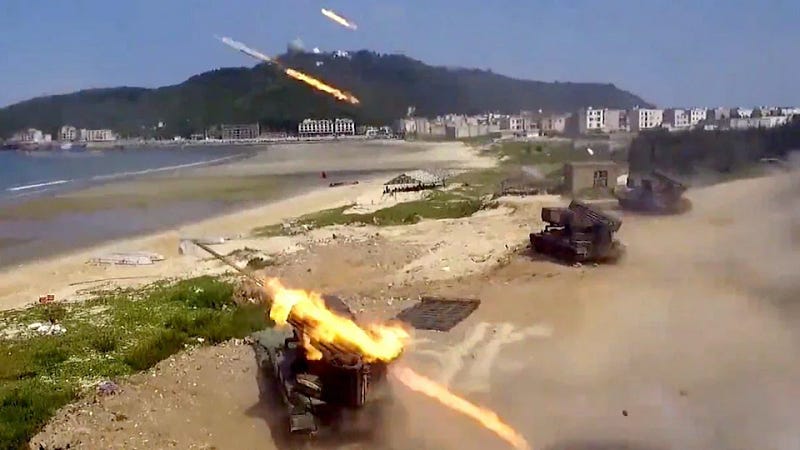
The PLA(N) — what brilliant bureaucrat came up with “People’s Liberation Army (Navy)? — will not begin shipping troops right away. Instead, China’s first move would be a last, big push to diplomatically and economically isolate Taiwan, including pressure on every nation and every corporation who does business with them. The Taiwanese are unlikely to be swayed by such, so once the Chinese initiated hostilities, their first moves would be to disable or destroy any Taiwanese satellites, and they would then launch swarms of missiles (land-based and shipboard) to destroy Taiwanese surveillance stations and power plants.
It would probably be safe to say that China would attempt to overwhelm Taiwan with thousands of missiles; after all, if Taiwan surrendered to stop the onslaught, that means China would save a great deal in terms of blood and treasure. Furthermore, even if America enters the fight, it really won’t matter how much of our Navy and Air Force assets are committed, for they are not designed to stop massed swarms of land-attack missiles not aimed at them. That, and it’s probably safe to say that with their vast industrial complex and production surge capability, China simply wouldn’t run out of missiles anytime soon.
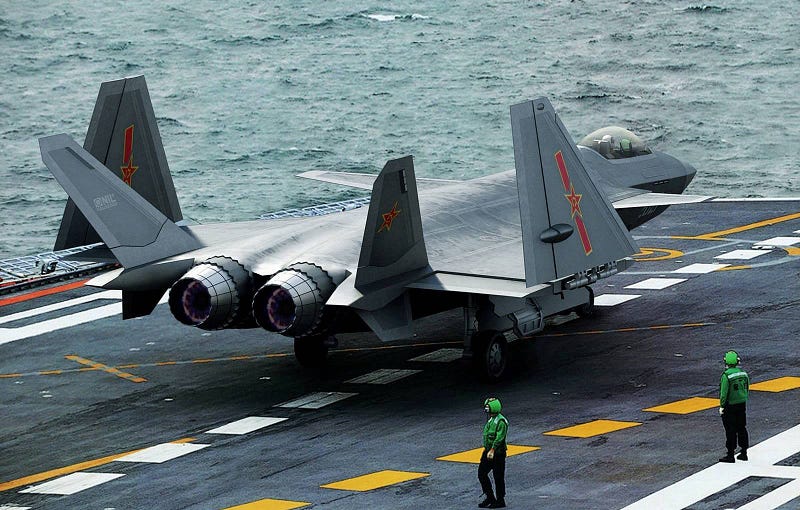
Moreover, it would not take long for China to establish regional air supremacy. Even if Japan and Australia joined America in the defense of Taiwan, China’s proximity to Taiwan (and our allies’ distance from the same) would act as a force multiplier much as England’s did in the Battle of Britain against Nazi Germany. America might add in as many as three aircraft carriers to the mix, but they, too, would be kept distant from the combat zone, out of range of China’s ‘carrier-killer’ DF-21 missiles. After all, ever since the Battle of Jutland, nations have been loath to risk capital ships in battle when the outcome is less than certain.
Once China has effectively established air supremacy, there would be nothing we could do to stop China from taking over every available airstrip to begin ferrying in all the PLA ground forces they would need to complete the takeover of Taiwan. From this point on, it would only be a matter of time before the completion of the conquest of Taiwan.
The end of combat, the beginning of the real war
Now, with all the devastation of Taiwan’s national infrastructure, from roads to power plants to food distribution to communications, comes the real challenge for China. Why? Because of what happened — and is continuing to happen — to Russia: the strengthening of NATO, and the enforcement of Russia’s growing isolation from the world economy. There are indications that Russia’s ill-advised invasion indeed stopped China from invading Taiwan this very year. President Xi Jinping and the leadership of the CCP cannot help but have taken note how the world responded to Russia’s aggression.
But there’s an even greater danger for China. Russia’s economy is diminishing, and is estimated to fall below even that of Brazil by the end of this year. But Russia’s economy was not robust to begin with — the additional economic pain won’t affect the rank-and-file too badly, especially given that they are not overly dependent upon the West for its factories’ loyal clientele.
China, on the other hand, has a long, long way to fall. For decades, China has been the go-to place for manufacturing whatever one wants, cheaply and in bulk. Most of their economy is built on manufacturing, and Western corporations can simply look elsewhere for other manufacturers. America’s economy, however, is increasingly built on services, and is thus more resilient against challenges of supply and demand.
But if China invades Taiwan, they not only lose the business of America and our allies, but also that of the European Union as well. Even worse is the fact that their growing Belt And Road system (an attempt to shift more of their own economy to services) would lose well over half its participants almost overnight, including not only Europe, but also India and at least half of Southeast Asia, where the nations are already leery of China’s growing belligerence in the region. It suffices to say that the diplomatic backlash of such an invasion would probably devastate China’s economy for decades to come.

Kua Fu, China’s Icarus
Unlike Russia, China prides itself on real-world achievements that betters the lives of its people. Those who would claim otherwise haven’t been paying attention to what China has done (in their own version of “for the greater good”) over the past four decades. We in the West (and especially in America) are all about individual rights, whereas China is all about what is best for the group as a whole. It is increasingly clear that if China decided to invade Taiwan, they would succeed in doing so despite the best efforts of America and our allies. Like the Kua Fu of Chinese mythology, President Xi would (in the eyes of patriotic Chinese) show himself to be a mighty leader, a giant among men.
But the war would not end with Taiwan’s subjugation; instead, the economic war would just be getting started in earnest, and China, for all its economic might and potential, would be at a great disadvantage. Just as Kua Fu found when he attacked the sun in anger, President Xi would be facing an enemy far greater in scope than merely Taiwan. Instead, he would be standing against most of the developed world. It would likely be a war China could not win.
One can only hope that President Xi will take the harsh lesson of Russia’s experience to heart, and refrain from risking the vast opportunities bequeathed him by his predecessor Deng Xiaoping, who was perhaps the most beneficial leader China has had for centuries.