
China’s Child Policy go Viral. What is the History of It?
Birth is the greatest miracle.

I’m going to tell you some information that everyone has heard recently. What is coming to your mind when I say “China”. For me, it is population. In other countries, the population is either soaring or dropping fast, no strict rule as I know. But I have only heard about strict population control rules in China. We always read about their population, but do we know its history. I also did not know before. Thus did a little research to get to know. Found it was a super interesting history. I would love to share it with you.
China’s Population
During the 11th Century, China’s population fluctuated between 37 million and 60 million. Yet, sources say then the population growth at the end of the 11th Century was 1.2%.
The growth was reversed after the Civil war, Mongol invasion, and bubonic plague. Still, it doubled in 1749–1851.
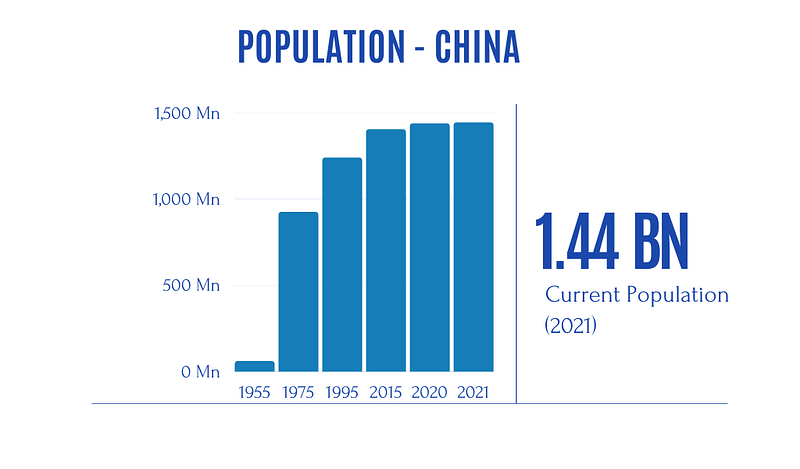
As the worldometer indicates, the current population of China is around 1.44 Billion. It is 18 % of the world’s population.
China’s one-child policy
In 1950, population growth increased than food production — this resulting in a massive famine in 1958. Unfortunately, Tens of thousands of Chinese died.
Thus, the Chinese Government began to carry out family planning campaigns. But it led to a Cultural Revolution, and the Government kept quiet from the 1960s to the 1970s.
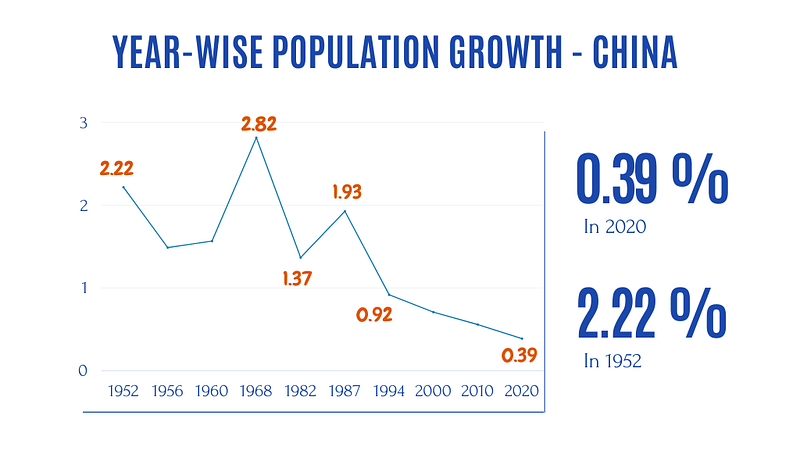
The population ranged from 7 to 8 crore in 1965–1975, and the year-wise growth rates were 1.5% and 2% in 1965 and 1975, respectively. In 1968 there was a massive spike with a year-wise growth rate of 2.82%.
Thus, in the 1970s, the Chinese Government launched a campaign to reduce the population, with s slogan “Later, Longer, and Fewer.” This approach encouraged late marriage, not having children for long, and the birth of few children.
China befell an imbalance in economic, environmental, and natural resources due to the huge population. So, in 1979, China introduced and implemented the One-Child policy. As a result, it stopped around 400 Million childbirth, the source said.
Yet, in the 1980s, the Government relaxed the policy among minorities and couples who loved a baby boy and had a daughter as their first child.
China followed strict rules such as abortion procedures and the imposition of certain types of birth control. This rule led mothers to take fertility drugs for multiple births, as they will not be fined if they had twins or more children at a time.
The couple was caught up in surveillance at work and around the house.
Also, the Government introduced reward systems to encourage a one-child policy. The Government also banned non-compliant people from getting government jobs.
On the other hand, those who had three children were fined heavily. For example, in 2013, filmmaker Zhang Yimo and his wife Chen Ding paid 7.48 million yuan to have three children.
China’s Two children-policy
In the early 2000s, the Government noticed an increase in the elderly population and reduced the number of young people or workers. So, fewer young people are there to take care of their elders. So it created 4–2–1 based families. That means two adults had two children, and they had one child.
Considering the vulnerabilities and demographical reasons, and to create social and economic balance, the Government amended the One-Child policy in 2016. It allowed couples to have two children.
Although 11 million people are eligible for their 2nd child, only around 50% of them have applied.
Still, the expected population growth between 2016 and 2020 has not been achieved.
Why?
Most couples in urban cities do not want to have their second child because of the cost of living and higher education.
So they plan to provide a good education and future for their only child. And they focus on urbanization, industrialization, and modernization.
A nationwide survey was conducted in 2019. Among couples, 75% fear the economic burden will increase, 51% point to a lack of childcare service, and 34% say more children will affect their career.
Expect the Unexpected.
So, China wanted to reduce its population while maintaining social, environmental, and economic balance. But what happened?
First Gender imbalance.
While controlling population growth, couples performed sexually selective abortions.
In 2019, an average of 120 males for every 100 females.
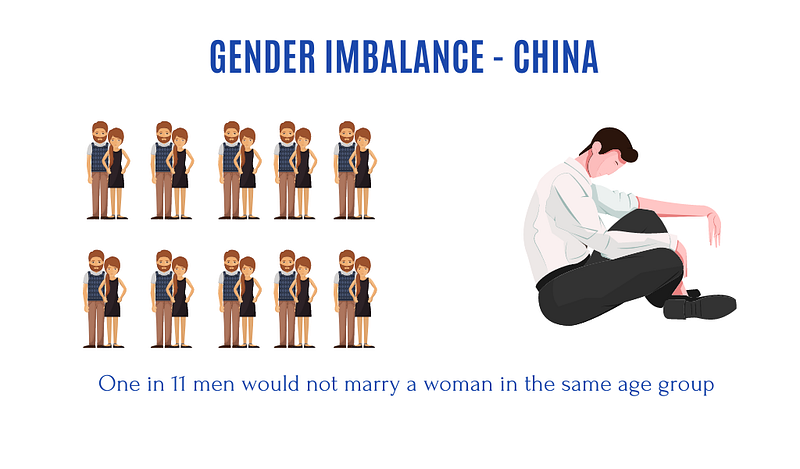
This gender imbalance will lead to a reduction in marriages in 20–30 years. Consequently, the birth rate will automatically reduce. One in 11 men would not marry a woman in the same age group as per the counts.
Gender inequality in China’s population has improved in recent years.
Second Aging population
Due to the One-Child policy during the period 1979–2016, the population of elders has increased. Thus, they depend on their one child.
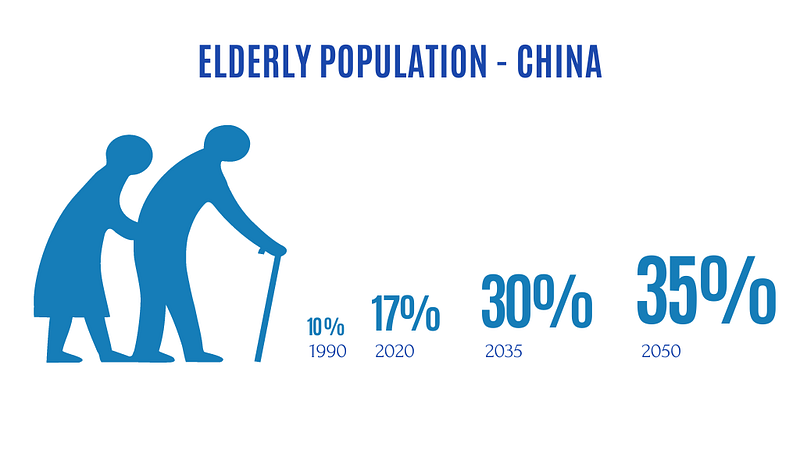
The statistics show that the population over age 60 is 10% in 1990 and 17 % in 2020. If the current scenario continues, the elderly population will increase to 30% in 2035 and 35% in 2050. The elderly population is growing due to the 4–2–1 system, as I explained earlier.
The fertility rate in 2020 was less than 1.7. But 2.1 needed for a stable population.
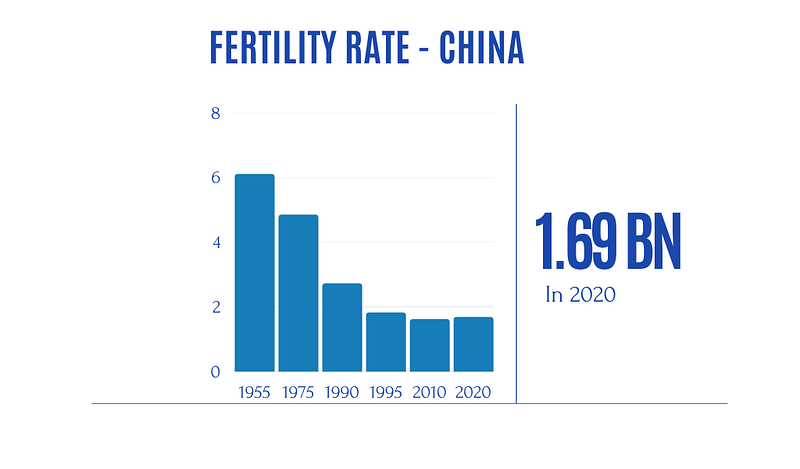
China allowed a maximum of three children for a couple.
On 31 May 2021, the Chinese Government allows a couple to have up to three children. They announced the major policy change at a meeting of the Political Bureau of the Central Committee of the Communist Party of China (CBC).
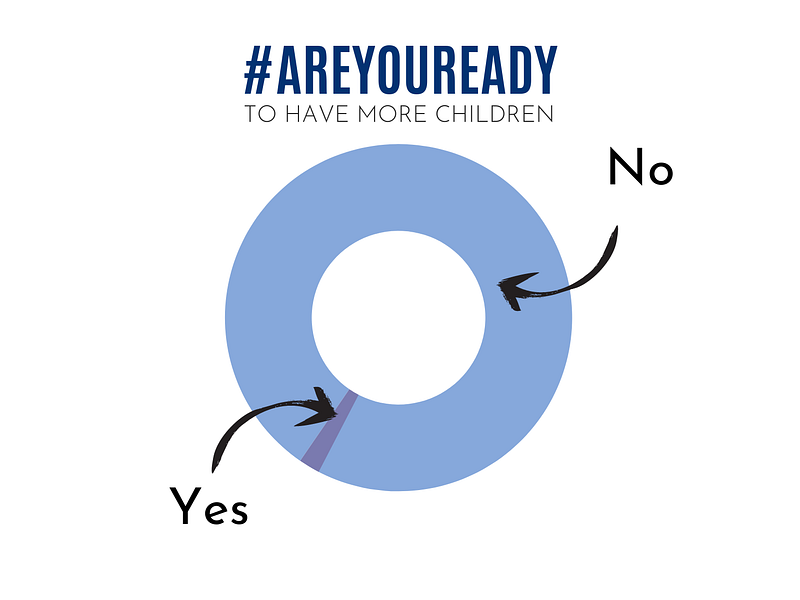
According to a Reuters report, a Chinese media called Xinhua news agency surveyed with the hashtag #AreYouReady. Out of 31000 participants, 29000 said that this plan would not be successful as they do not like to have more children.
The Government needs a good approach to overcome the minds of the people. The Government, therefore, announced, “The policy change will come with supportive measures, which will be conducive to improving our country’s population structure fulfilling the country’s strategy of actively coping with an aging population,” following the portfolio meeting chaired by President Xi Jinping, said Xinhua news agency.
In addition, the Government introduces lower education costs, tax assistance, housing support, guarantees the legal welfare of working women, mitigates “sky-high” dowries, and educates young people about marriage and romance.
In fact, with this announcement, the share prices of companies associated with birth and fertility increase.
Is it too late?
Many say this three children policy is a good action, though. But they feel it is too late.
Forced abortions by the Government in the past may have created stress among the population. But, as I said before, lifestyle change, lack of support for working couples, and urbanization threaten the Government’s expectations.
We will have to wait a few years to see the change and its impact.
Thank you for reading