
China-U.S. cooperation ‘no longer an option … but an imperative’
China and the United States are the two largest economies and major powers in the world. Their relationship has a significant impact on global peace, stability and development. However, in recent years, the bilateral ties have been strained by various issues, such as trade, human rights, Taiwan, Hong Kong, Xinjiang, South China Sea, COVID-19 and so on. The previous U.S. administration adopted a confrontational and coercive approach toward China, which led to a sharp deterioration of the relationship and increased the risk of conflict.
The current U.S. administration has expressed its willingness to cooperate with China on some global challenges, such as climate change, pandemic response and non-proliferation. However, it has also continued to view China as a strategic competitor and a long-term challenge, and has maintained or intensified some of the previous policies that undermine China’s core interests and development rights. The U.S. has also sought to rally its allies and partners to contain and confront China on various fronts.
In this context, Chinese President Xi Jinping and U.S. President Joe Biden have had three phone calls and one video conference since Biden took office in January 2022. They have agreed to make the bilateral relationship work and not mess it up, to steer clear of conflict and confrontation, and to enhance dialogue and cooperation. They have also instructed their respective teams to follow up on their consensus and implement concrete actions.
## Wang Yi’s speech
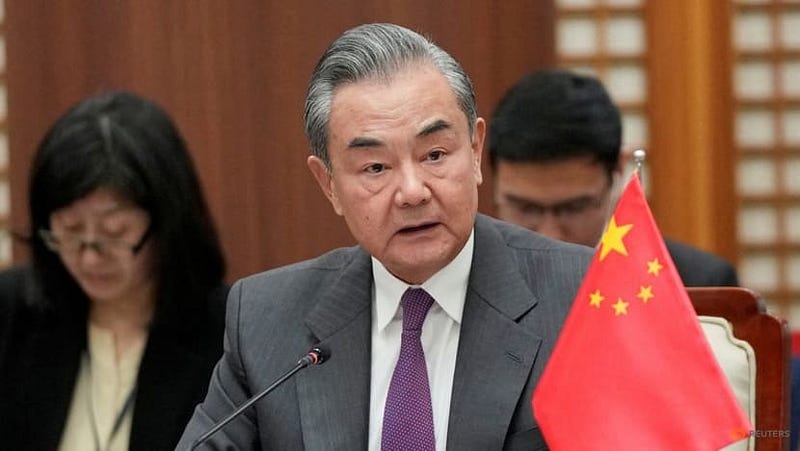
On September 22, 2022, Wang Yi delivered a keynote speech titled “The Right Way for China and the United States to Get Along in the New Era” at the Asia Society’s headquarters in New York. He was invited by the Asia Society, a prestigious non-governmental organization that promotes mutual understanding and cooperation between Asia and the U.S.
Wang Yi’s speech was comprehensive, profound, candid and constructive. He addressed the major issues concerning China-U.S. relations and the prospects for world peace and development. He also proposed four principles for guiding the bilateral relationship in the new era: mutual respect, win-win cooperation, peaceful coexistence and multilateralism.
### Mutual respect
Wang Yi stressed that mutual respect is the foundation of China-U.S. relations. He said that the most urgent task for the bilateral relationship is to establish a correct understanding of each other’s domestic and foreign policies, strategic intentions, development paths and core interests.
He pointed out that China’s domestic and foreign policies are open and transparent, with clearly stated strategic intentions and great continuity and stability. He said that China adheres to the path of socialism with Chinese characteristics, which is based on China’s national conditions, historical traditions and people’s aspirations. He said that China pursues an independent foreign policy of peace, which is aimed at safeguarding world peace, promoting common development and building a community with a shared future for mankind.
He urged the U.S. to respect China’s choice of development path, system and model, which are determined by the Chinese people themselves. He said that China does not seek to change or challenge the U.S., nor does it accept any attempt by the U.S. to change or contain China. He said that China respects the U.S.’s legitimate interests in the world, but also expects the U.S. to respect China’s legitimate rights to development, security and dignity.
He also called on the U.S. to abide by the one-China principle and the three joint communiqués, which are the political foundation of China-U.S. relations. He said that Taiwan is an inalienable part of China’s territory, and that there is only one China in the world and Taiwan is part of it. He said that any attempt to undermine this principle or support “Taiwan independence” is doomed to fail.
### Win-win cooperation
Wang Yi emphasized that win-win cooperation is the true narrative of China-U.S. relations in the past half century, and it should remain the goal they both pursue. He said that cooperation is the most correct choice for China and the United States, and that no cooperation can be based on a win-lose format.
He said that China and the United States have extensive common interests and great potential for cooperation in various fields, such as economy, trade, energy, climate change, public health, counter-terrorism, non-proliferation, cybersecurity and space exploration. He said that both sides should respect each other’s development interests, address each other’s legitimate concerns, and seek the largest possible convergence of interests.
He also said that China and the United States should work together to uphold the international order and the multilateral system based on the purposes and principles of the UN Charter. He said that both sides should respect the diversity of civilizations and the right of all countries to choose their own development paths. He said that both sides should promote dialogue and consultation on regional hotspot issues, such as the Korean Peninsula, Afghanistan, Iran and Myanmar, and contribute to regional peace, stability and development.
### Peaceful coexistence
Wang Yi highlighted that peaceful coexistence is the only viable way for China and the United States to get along in the new era. He said that both sides should respect each other’s sovereignty, security and development interests, and refrain from interfering in each other’s internal affairs.
He said that both sides should manage their differences in a constructive manner, and avoid escalating them into conflicts or confrontations. He said that both sides should enhance strategic communication and trust, and reduce strategic misjudgment and miscalculation. He said that both sides should establish crisis prevention and control mechanisms, and prevent accidents or incidents from happening or spiraling out of control.
He also said that both sides should respect each other’s right to development, and not view each other’s development as a threat or challenge. He said that both sides should pursue common development and mutual benefit, and not engage in zero-sum competition or seek absolute dominance. He said that both sides should support each other’s rejuvenation, and not seek to contain or suppress each other.
### Multilateralism
Wang Yi underscored that multilateralism is the shared responsibility of China and the United States for the world. He said that both sides should uphold the international system with the UN as the core, the international order based on international law, and the multilateral trading system with the WTO as the cornerstone.
He said that both sides should support the UN in playing a central role in international affairs, and participate in UN-led multilateral processes on climate change, biodiversity, human rights, counter-terrorism and other issues. He said that both sides should uphold the principle of common but differentiated responsibilities, and take concrete actions to implement their commitments on emission reduction and climate finance.
He also said that both sides should join hands to fight against COVID-19, and support the WHO in playing a leading role in global pandemic response. He said that both sides should oppose vaccine nationalism and politicization of the pandemic, and provide more vaccines and assistance to developing countries. He said that both sides should promote global economic recovery, and oppose unilateral sanctions and protectionism.
## Analysis
Wang Yi’s speech is a comprehensive and strategic exposition of China’s position and vision on China-U.S. relations and world affairs. It reflects China’s confidence, openness, sincerity and goodwill in seeking a stable and healthy bilateral relationship with the U.S. It also demonstrates China’s commitment, responsibility and leadership in promoting world peace, stability and development.
Wang Yi’s speech is also a timely and necessary response to some of the misunderstandings, misperceptions and misjudgments about China in the U.S. It clarifies China’s domestic and foreign policies, strategic intentions, development path and core interests. It refutes some of the false accusations and allegations against China on issues such as human rights, democracy, trade, COVID-19 and so on. It also proposes some constructive suggestions and solutions for resolving some of the outstanding problems and challenges in the bilateral relationship.
Wang Yi’s speech is consistent with the consensus reached by President Xi Jinping and President Joe Biden in their previous phone calls and video conference. It echoes President Biden’s important statements of “five noes” (i.e. not seek a “new Cold War”; not seek to change China’s system; the revitalization of its alliances is not against China; not support “Taiwan independence”; not look for conflict with China). It also lays out a clear roadmap for implementing their consensus and translating their political will into concrete actions.
Wang Yi’s speech is conducive to enhancing mutual understanding and trust between China and the U.S., which are essential for stabilizing and improving the bilateral relationship. It is also conducive to expanding dialogue and cooperation between China and the U.S., which are beneficial for both countries and the world. It is also conducive to managing differences and avoiding conflicts between China and the U.S., which are necessary for maintaining regional and global peace.
## Conclusion
In conclusion, Wang Yi’s speech is a positive contribution to China-U.S. relations and world peace and development. It shows China’s willingness to work with the U.S. to build a relationship featuring coordination, cooperation and stability. It also shows China’s readiness to cooperate with the U.S. on global challenges such as climate change, pandemic response and economic recovery. It is hoped that the U.S. will respond