China Turns up the Pressure on eSwatini to Abandon Taiwan
Free AI web copilot to create summaries, insights and extended knowledge, download it at here
1614
Abstract
etains diplomatic ties with 15 countries around the world. China, for its part, asserts that Taiwan is a renegade province that is inseparable from the Mainland. The Taiwan-China divide remains among the most contentious geopolitical issues in Asia and considered to be among Beijing’s highest foreign policy priorities.</p><p id="74ff">South Africa was the last major African country <a href="https://qz.com/africa/1343031/how-nelson-mandelas-south-africa-ditched-taiwan-for-china/">to switch its diplomatic allegiance</a> from Taipei to Beijing back in 1994. Since then, the Chinese managed to use the promise of lucrative investment contracts and massive infrastructure spending to lure the last remaining states over to its side, that is, except one.</p><p id="4ec0">Now it appears that the Chinese government is running out of patience with eSwatini and is turning up the pressure on the kingdom. Last month, Chinese Ambassador to South Africa, Lin Songtian, <a href="http://www.swazilandnews.co.za/fundza.php?nguyiphi=168">published a sharply worded statement that clearly spelled out the consequences of eSwatini’s intransigence.</a></p><p id="3196">“No diplomatic relations, no business benefits,” said Ambassador Lin’s statement that concluded with a veiled threat to the kingdom’s plans to host an African Union summit later this year: “It is very hard for the friendly African countries of China to attend any AU summit hosted by a country refusing to recognize One China Principle and maintaining so-called “diplomatic ties” with Taiwan.”</p><p id="35f3">The issue gained international notoriety soon a
Options
fter that statement was published when the South African newspaper Daily Maverick published a story by freelance journalist Carien du Plessis about the Chinese embassy’s efforts to pressure the eSwatini government. Similarly, the story is also being covered in eSwatini by Nation magazine editor Bheki Makhubu who interviewed Ambassador Lin recently about his statement.</p><p id="1c4b">Both journalists join Eric & Cobus to discuss eSwatini’s foreign policy and why the kingdom is seemingly adamant about its diplomatic ties with Taiwan.</p><p id="3502"><b>JOIN THE DISCUSSION:</b></p><p id="f654">Facebook: <a href="https://gate.sc/?url=http%3A%2F%2Fwww.facebook.com%2FChinaAfricaProject&token=d1124c-1-1579353986801">www.facebook.com/ChinaAfricaProject</a></p><p id="6037">Twitter: @<a href="https://soundcloud.com/eolander">eolander</a> | @<a href="https://soundcloud.com/stadenesque">stadenesque</a> | @<a href="https://twitter.com/BhekiMakhubu">BhekiMakhubu</a> | @<a href="https://twitter.com/carienduplessis">carienduplessis</a></p><p id="c3c2">SUPPORT THIS PODCAST. BECOME A SUBSCRIBER TO THE CHINA AFRICA PROJECT.</p><p id="70ac">Your subscription supports independent journalism. Subscribers get the following:</p><ol><li>A daily email newsletter of the top China-Africa news.</li><li>Access to the China-Africa Experts Network</li><li>Unlimited access to the CAP’s exclusive analysis content on chinaafricaproject.com</li></ol><p id="82a2">Subscribe today and get two-weeks free: <a href="http://www.chinaafricaproject.com/subscribe">www.chinaafricaproject.com/subscribe</a></p></article></body>

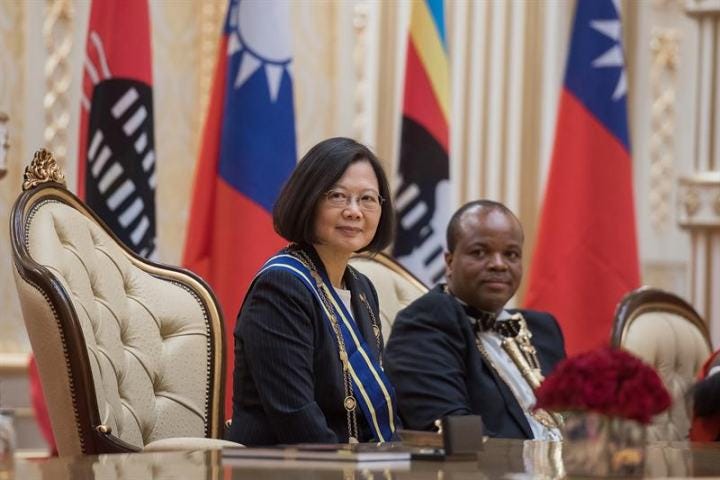
The tiny landlocked kingdom of eSwatini, formerly known as Swaziland, is now the last country in Africa to maintain diplomatic relations with Taiwan. This is a very big sticking point for the Chinese who are adamant about isolating Taiwan in Africa and elsewhere around the world.
The Taiwan issue remains highly contentious and among Beijing’s so-called “red line issues” that are among its most sensitive and important in its overall foreign policy agenda. Although not an independent country, Taiwan is nonetheless a thriving democracy that still retains diplomatic ties with 15 countries around the world. China, for its part, asserts that Taiwan is a renegade province that is inseparable from the Mainland. The Taiwan-China divide remains among the most contentious geopolitical issues in Asia and considered to be among Beijing’s highest foreign policy priorities.
South Africa was the last major African country to switch its diplomatic allegiance from Taipei to Beijing back in 1994. Since then, the Chinese managed to use the promise of lucrative investment contracts and massive infrastructure spending to lure the last remaining states over to its side, that is, except one.
Now it appears that the Chinese government is running out of patience with eSwatini and is turning up the pressure on the kingdom. Last month, Chinese Ambassador to South Africa, Lin Songtian, published a sharply worded statement that clearly spelled out the consequences of eSwatini’s intransigence.
“No diplomatic relations, no business benefits,” said Ambassador Lin’s statement that concluded with a veiled threat to the kingdom’s plans to host an African Union summit later this year: “It is very hard for the friendly African countries of China to attend any AU summit hosted by a country refusing to recognize One China Principle and maintaining so-called “diplomatic ties” with Taiwan.”
The issue gained international notoriety soon after that statement was published when the South African newspaper Daily Maverick published a story by freelance journalist Carien du Plessis about the Chinese embassy’s efforts to pressure the eSwatini government. Similarly, the story is also being covered in eSwatini by Nation magazine editor Bheki Makhubu who interviewed Ambassador Lin recently about his statement.
Both journalists join Eric & Cobus to discuss eSwatini’s foreign policy and why the kingdom is seemingly adamant about its diplomatic ties with Taiwan.
JOIN THE DISCUSSION:
Facebook: www.facebook.com/ChinaAfricaProject
Twitter: @eolander | @stadenesque | @BhekiMakhubu | @carienduplessis
SUPPORT THIS PODCAST. BECOME A SUBSCRIBER TO THE CHINA AFRICA PROJECT.
Your subscription supports independent journalism. Subscribers get the following:
Subscribe today and get two-weeks free: www.chinaafricaproject.com/subscribe