avatarWill Lockett

Free AI web copilot to create summaries, insights and extended knowledge, download it at here

3942

Abstract

s://datacommons.org/place/country/RUS?utm_medium=explore&mprop=amount&popt=EconomicActivity&cpv=activitySource%2CGrossDomesticProduction&hl=en">Russia</a>, making it by far the superior economy. China also has a much larger and better-equipped military. The only way Russia outguns China is in the number of nuclear weapons they have, as <a href="https://www.armscontrol.org/factsheets/Nuclearweaponswhohaswhat">China has only 700</a>, while <a href="https://www.aljazeera.com/news/2023/3/25/russias-nuclear-arsenal-how-big-is-it-and-who-controls-it#:~:text=Russia%2C%20which%20inherited%20the%20Soviet,the%20Federation%20of%20American%20Scientists.">Russia has a massive 5,977</a> — though most of these are relics of the Soviet Union and the Cold War.</p><p id="9577">But despite their massive power disparity, China and Russia have a common enemy and goals.</p><p id="3069">You see, both countries want to expand their borders. For Russia, its old Soviet territories, such as Georgia and Ukraine, are a lost part of itself that it wants back both for security and economic reasons. For example, before the invasion, Ukraine was known as the world’s breadbasket as it produced a significant amount of the world’s grains, giving the country a palpable economic boost. It is also a tactically important location for Russia, as many of the routes from Europe to Russia are channelled by geography through Ukraine. As such, it is in Russia’s interests to keep Ukraine neutral from the EU and NATO, which Russia sees as their primary adversaries, or to invade and take absolute control of the region, which they are currently trying to do.</p><p id="716e">Meanwhile, China wants to expand into the South China Sea and retake control of Taiwan. <a href="https://www.japantimes.co.jp/news/2022/12/21/asia-pacific/china-south-china-sea-grab/#:~:text=China%20is%20building%20up%20several,region%20critical%20to%20global%20trade.">It is actively building artificial islands in tactical locations in order to turn important international waters into Chinese-owned territory</a>. If anyone were to attack China, it would be from the sea, so again, controlling this area gives them greater protection. Taiwan has the same naval tactical advantage, as it has a dominant presence in both the South and North China Seas. But it also has a <a href="https://country.eiu.com/taiwan">vast and profitable economy, this time based on computer chips</a>. <a href="https://www.cfr.org/backgrounder/china-taiwan-relations-tension-us-policy-biden">China took control of Taiwan from the Japanese in 1945 after they surrendered and kept control until 1949, when China’s civil war forced them to exit the area</a>. Taiwan has been an independent state ever since, but <a href="https://www.cfr.org/backgrounder/china-taiwan-relations-tension-us-policy-biden">China still claims sovereignty over it</a>. This is a significant friction point between China and NATO, as <a href="https://uscode.house.gov/view.xhtml?req=%28title:22%20section:2321k%20edition:prelim%29#:~:text=2151%20et%20seq.%29%2C%20or,%29%29%5B%29%5D.%22">Taiwan is an ally of the US</a>, which recognises its independence, and is a major player in the NATO alliance. <a href="https://www.japantimes.co.jp/news/2022/12/21/asia-pacific/china-south-china-sea-grab/#:~:text=China%20is%20building%20up%20several,region%20critical%20to%20global%20trade.">Hence, China wants more control in the South China Sea</a>, as this can give them a tactical advantage over NATO and US naval forces if the struggle for Taiwan becomes heated.</p><p id="851d">So <a href="http://firenze.china-consulate.gov.cn/ita/zxhd/202106/t20210629_8998741.htm#:~:text=On%20the%20afternoon%20of%20June,Good%2DNeighborliness%20and%20Friendly%20Cooperation.">in 2021, Russia and China renewed their cooperative treaty</a>. This didn’t make them allies, but it meant they would softly support each other’s expansion and ant

Options

i-NATO movements.</p><p id="b2ab">This is why <a href="https://www.kcl.ac.uk/ukraine-invasion-why-china-is-more-likely-to-support-russia-than-in-the-past">many are worried that China will offer military aid to Russia</a>, such as by supplying them with modern weaponry, as this could easily sway the balance of the war and lead to the downfall of Ukraine’s.</p><p id="1dd8">But China has witnessed the EU (which is mostly part of NATO) call Putin’s bluff and retaliate against his invasion by issuing sanctions on Russia’s oil industry so hard that it nearly backfired and caused an energy crisis. <a href="https://readmedium.com/putin-is-feeling-the-squeeze-1d2195b99873">These measures have utterly crippled the Kremlin’s revenue stream</a>, leaving the Russian war machine running on the government equivalent of savings and causing the Russian economy to nearly crash. Now, <a href="https://www.csis.org/analysis/natos-pivot-china-challenging-path">China’s economy is heavily reliant on exports to NATO countries</a>, and <a href="http://fingfx.thomsonreuters.com/gfx/rngs/CHINA-DEBT-GRAPHIC/0100315H2LG/">their economy is tiptoeing around a debt bubble similar to that of 2008</a>. In short, they can’t risk similar sanctions; otherwise, their entire economy could grind to a sudden halt. Because of this, they have refrained from directly supporting Putin.</p><p id="33fc">But this UN vote could signal a change of heart for China.</p><p id="4fbe">As a result of Putin’s invasion, <a href="https://en.wikipedia.org/wiki/Enlargement_of_NATO#:~:text=Ukraine%20applied%20for%20NATO%20membership,also%20aspires%20to%20join%20NATO.">Ukraine, Georgia, Bosnia and Herzegovina, Kosovo, Sweden, and Finland are looking to join NATO to protect themselves from Russian aggression</a>. The West’s militaries are also working in far greater unison, preparing for the worst. Independently, <a href="https://edition.cnn.com/2023/04/04/asia/us-philippines-military-base-access-intl-hnk-ml/index.html">the US has also recently massively expanded its military presence in the Indo-Pacific</a>, specifically to ensure security against China’s aggressive expansion in the area.</p><p id="1c23">In other words, thanks to Putin, China is now facing a far more cohesive and potentially far larger adversary than before. So it makes very little sense to support Putin and back themselves into a corner. Instead, they’re focusing on cooling the waters and prioritising the avoidance of retaliation, such as sanctions, that could severely harm them. This might be why they voted on a resolution that condemned Putin’s actions in Ukraine, as it is a small step towards calming the international political scene and putting distance between them and Russia.</p><p id="c422">Has China turned its back on Putin? It’s hard to say just yet. This UN resolution is small in comparison to the overarching politics at play here. But it is a telltale sign that China is realising that Putin is a lost cause that could sink them. There is also a chance that we are reading too much into it. All we can do is see how it plays out from here and hope that Putin never sees a whiff of direct Chinese support.</p><p id="dcf8"><i>Enjoyed this article? <b>Get articles & ad-free video articles 24 hours before anyone</b> else on <a href="https://planetearthandbeyond.substack.com/publish?embeddedPostPublications=&amp;scheduledFor=Tue%20May%2002%202023%2020%3A30%3A00%20GMT%2B0100%20%28British%20Summer%20Time%29&amp;audience=only_paid">Substack</a>, or check out my <a href="https://www.youtube.com/channel/UClnY1J4ZzDfWTIb0PTPBEog">YouTube</a> channel for daily video articles.</i></p><p id="3970">Article originally published on <a href="https://planetearthandbeyond.substack.com/publish?embeddedPostPublications=&amp;scheduledFor=Tue%20May%2002%202023%2020%3A30%3A00%20GMT%2B0100%20%28British%20Summer%20Time%29&amp;audience=only_paid">Substack</a></p></article></body>

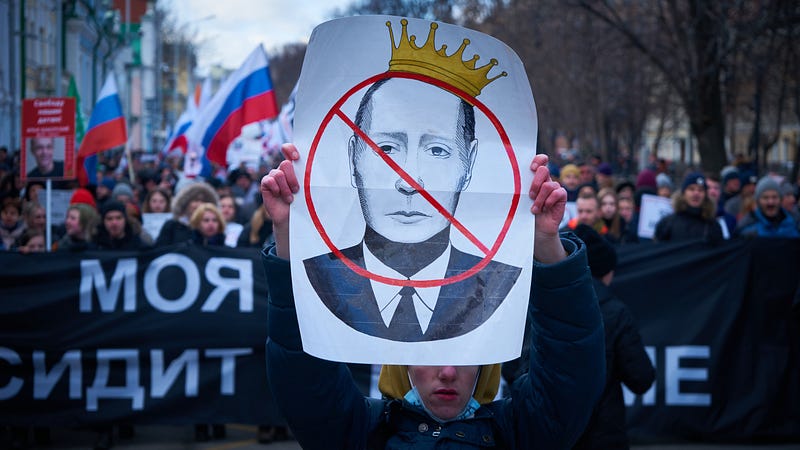
Photo by Valery Tenevoy on Unsplash

China Just Condemned Putin’s Ukraine Invasion

Is this a turning point?

Putin’s war machine is on its knees. Russia has depleted its weapons, lost countless lives, and barely made any headwind in overthrowing Ukraine. Now their forces are comprised of untrained conscripts using ancient Soviet tanks, missiles, and weapons. Meanwhile, Ukraine’s forces are being supplied with lethal modern weaponry from the West, and their troops are being trained and informed by some of the globe’s most effective militaries. What Russia needs to receive in order to carry through withits invasion is similar support from its close friends, like China. For months, it seemed such help was just over the horizon. But in a recent UN vote, China voted to condemn Putin’s invasion. So is Putin’s lifeline dead in the water? Or is something else afoot?

The UN recently took a vote on a resolution that calls for closer cooperation between the United Nations and the Council of Europe, which is a Strasbourg-based human rights organisation. Ultimately, this proposal was passed as it received 122 votes in favour, namely from the US, UK, Canada, most EU countries, Kazakhstan, Armenia, Brazil, China, and India. 18 countries abstained from voting, and only 5 countries, namely Russia, Belarus, Syria, Nicaragua, and North Korea (what a great crowd!), voted to oppose.

While the document itself was not about Putin’s brutal invasion of Ukraine, it did cite the invasion as a main reason for trying to bring the UN and Council of Europe closer. It states: “Recognizing also that the unprecedented challenges now facing Europe following the aggression by the Russian Federation against Ukraine, and against Georgia prior to that, and the cessation of the membership of the Russian Federation in the Council of Europe, (we) call for strengthened cooperation between the United Nations and the Council of Europe.

This means that, in effect, China, which until now has heavily avoided condemning Putin’s action in Ukraine, has denounced the Russian invasion of Ukraine as aggressive rather than retaliatory, as Putin claims it is. Bear in mind that while this is only a tiny paragraph in a gigantic document, the document does state that Putin’s aggression is the main reason for trying to get the UN and Council of Europe closer. China could have opposed the document’s wording or abstained from voting. But they didn’t.

So why is this such a shock?

Well, China and Russia have an odd relationship. In terms of international clout, China utterly dwarfs Russia, and China isn’t reliant on Russia at all. While China does import a lot of Russian oil and natural gas, only 17% of its oil imports are from Russia. Beyond that, China does very little trade with Russia. China’s GDP is also ten times larger than that of Russia, making it by far the superior economy. China also has a much larger and better-equipped military. The only way Russia outguns China is in the number of nuclear weapons they have, as China has only 700, while Russia has a massive 5,977 — though most of these are relics of the Soviet Union and the Cold War.

But despite their massive power disparity, China and Russia have a common enemy and goals.

You see, both countries want to expand their borders. For Russia, its old Soviet territories, such as Georgia and Ukraine, are a lost part of itself that it wants back both for security and economic reasons. For example, before the invasion, Ukraine was known as the world’s breadbasket as it produced a significant amount of the world’s grains, giving the country a palpable economic boost. It is also a tactically important location for Russia, as many of the routes from Europe to Russia are channelled by geography through Ukraine. As such, it is in Russia’s interests to keep Ukraine neutral from the EU and NATO, which Russia sees as their primary adversaries, or to invade and take absolute control of the region, which they are currently trying to do.

Meanwhile, China wants to expand into the South China Sea and retake control of Taiwan. It is actively building artificial islands in tactical locations in order to turn important international waters into Chinese-owned territory. If anyone were to attack China, it would be from the sea, so again, controlling this area gives them greater protection. Taiwan has the same naval tactical advantage, as it has a dominant presence in both the South and North China Seas. But it also has a vast and profitable economy, this time based on computer chips. China took control of Taiwan from the Japanese in 1945 after they surrendered and kept control until 1949, when China’s civil war forced them to exit the area. Taiwan has been an independent state ever since, but China still claims sovereignty over it. This is a significant friction point between China and NATO, as Taiwan is an ally of the US, which recognises its independence, and is a major player in the NATO alliance. Hence, China wants more control in the South China Sea, as this can give them a tactical advantage over NATO and US naval forces if the struggle for Taiwan becomes heated.

So in 2021, Russia and China renewed their cooperative treaty. This didn’t make them allies, but it meant they would softly support each other’s expansion and anti-NATO movements.

This is why many are worried that China will offer military aid to Russia, such as by supplying them with modern weaponry, as this could easily sway the balance of the war and lead to the downfall of Ukraine’s.

But China has witnessed the EU (which is mostly part of NATO) call Putin’s bluff and retaliate against his invasion by issuing sanctions on Russia’s oil industry so hard that it nearly backfired and caused an energy crisis. These measures have utterly crippled the Kremlin’s revenue stream, leaving the Russian war machine running on the government equivalent of savings and causing the Russian economy to nearly crash. Now, China’s economy is heavily reliant on exports to NATO countries, and their economy is tiptoeing around a debt bubble similar to that of 2008. In short, they can’t risk similar sanctions; otherwise, their entire economy could grind to a sudden halt. Because of this, they have refrained from directly supporting Putin.

But this UN vote could signal a change of heart for China.

As a result of Putin’s invasion, Ukraine, Georgia, Bosnia and Herzegovina, Kosovo, Sweden, and Finland are looking to join NATO to protect themselves from Russian aggression. The West’s militaries are also working in far greater unison, preparing for the worst. Independently, the US has also recently massively expanded its military presence in the Indo-Pacific, specifically to ensure security against China’s aggressive expansion in the area.

In other words, thanks to Putin, China is now facing a far more cohesive and potentially far larger adversary than before. So it makes very little sense to support Putin and back themselves into a corner. Instead, they’re focusing on cooling the waters and prioritising the avoidance of retaliation, such as sanctions, that could severely harm them. This might be why they voted on a resolution that condemned Putin’s actions in Ukraine, as it is a small step towards calming the international political scene and putting distance between them and Russia.

Has China turned its back on Putin? It’s hard to say just yet. This UN resolution is small in comparison to the overarching politics at play here. But it is a telltale sign that China is realising that Putin is a lost cause that could sink them. There is also a chance that we are reading too much into it. All we can do is see how it plays out from here and hope that Putin never sees a whiff of direct Chinese support.

Enjoyed this article? Get articles & ad-free video articles 24 hours before anyone else on Substack, or check out my YouTube channel for daily video articles.

**Article originally published on Substack**

Politics
Russia
Ukraine
China
Future
Recommended from ReadMedium