
China Claims to Have Developed AI Chip More Powerful Than US’s Nvidia
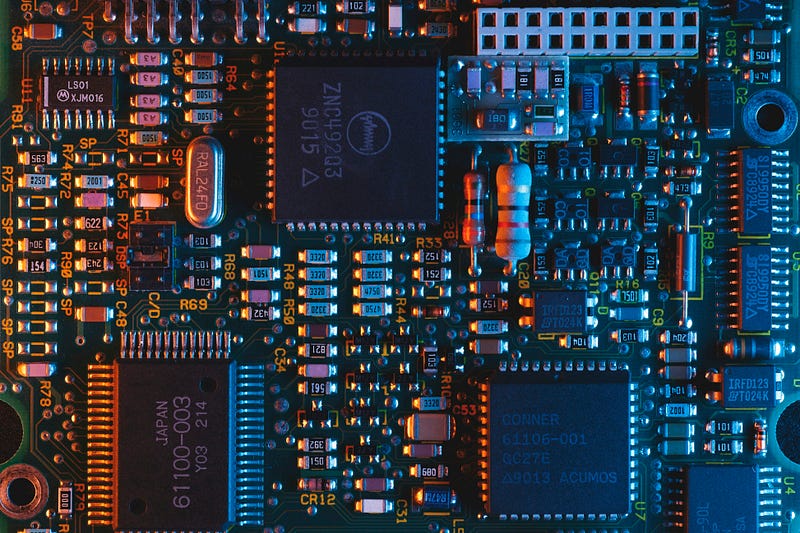
In a groundbreaking development, scientists at Beijing’s Tsinghua University have unveiled a new computer chip that outperforms NVIDIA’s A100 chip, one of the most widely used AI chips globally. Named an all-analog chip combining electronic and light computing (ACCEL), this innovative chip leverages photonic computing and electronic processing to deliver unparalleled performance. The researchers behind ACCEL have calculated that the chip can perform a staggering 74.8 quadrillion operations per second while consuming just one watt of power. This technology holds immense promise for various applications, including wearable devices, autonomous vehicles, and industrial inspections, where fast and energy-efficient visual processing is paramount.
Highlights
- A Big Leap Forward in Terms of Efficiency
- The US-China AI Arms Race
- The Geopolitical Implications of China’s Technological Advancement
- Impact on the Global AI Industry
- Navigating the Future of AI Technology
- The Road Ahead for AI Innovation
- Charting a Sustainable Path for Technological Progress
A Big Leap Forward in Terms of Efficiency
Photonic computing is a cutting-edge technology that promises faster and more energy-efficient visual information processing. Nevertheless, creating systems based on this technology presents numerous challenges, including complex optical properties, power-intensive data conversion, and sensitivity to errors. It is these challenges that motivated Chinese scientists to develop the ACCEL chip.
ACCEL represents a significant leap in terms of efficiency. It can perform 4.6 quadrillion operations per second, dwarfing NVIDIA’s A100, which offers a deep learning performance of 0.312 quadrillion operations per second. ACCEL stands out as a remarkable alternative that is both faster and more energy-efficient than traditional computer processors. Unlike conventional semiconductor chips, photonic chips like ACCEL utilize light to extract features from visual data and directly perform calculations on an integrated chip. This unique approach eliminates the need for power-hungry analog-to-digital converters and reduces the processing time for each frame of data to an astonishingly short 72 nanoseconds.
The research team conducted practical experiments to demonstrate ACCEL’s accuracy in tasks such as image and video recognition. In practice, ACCEL not only matches the accuracy of traditional GPUs but does so with significantly faster processing times and markedly lower energy consumption.
Specialized Analog Chip
Analog chips, including ACCEL, offer exceptional performance for specific problem-solving tasks but lack the versatility of general computing chips. While general-purpose computing chips found in smartphones and computers can handle a wide range of functions, ACCEL is specialized for solving particular types of problems.
Dai Qionghai, one of the co-leaders of the research team, emphasized the significance of their work by stating, “Developing a new computing architecture for the AI era is a pinnacle achievement. However, the more important challenge is to bring this new architecture to practical applications, solving major national and public needs, which is our responsibility.”
The US-China AI Arms Race
This achievement holds broader implications within the ongoing US-China AI arms race. The Biden administration has recently imposed stricter restrictions on China’s access to advanced AI chip technology from the United States. This development has far-reaching consequences, especially for chip manufacturers like NVIDIA, which may now need to cancel approximately $5 billion worth of chip orders for China to comply with these new restrictions. These restrictions could also impact chip sales by companies like AMD and Intel.
Notably, NVIDIA introduced the A800 and H800 chips last year, positioned as Chinese alternatives to the A100 and H800, with the aim of continuing their shipments to China, one of the chip maker’s most significant markets.
The development of China’s ACCEL chip represents a remarkable milestone in the field of AI chip technology. Its superior performance, efficiency, and unique approach to photonic computing make it a game-changer for various industries. Moreover, this achievement underscores the evolving dynamics of the US-China AI competition, with China taking significant steps to reduce its reliance on American technology in this critical sector. As ACCEL advances from the laboratory to practical applications, it holds the potential to reshape industries and meet the growing demands of the AI era.
The Geopolitical Implications of China’s Technological Advancement
China’s remarkable progress in AI chip development is not just a matter of technological advancement but also holds significant geopolitical implications. As the United States and China continue their rivalry for dominance in various technological spheres, the recent development of the ACCEL chip is a clear indication of China’s growing prowess in the global technology race.
With the Biden administration imposing stricter restrictions on the export of crucial AI technologies to China, the landscape for technological competition has become even more intense. The move not only affects individual companies but also has the potential to shape the global technological landscape, potentially altering the dynamics of technological collaboration and competition.
Impact on the Global AI Industry
The unveiling of the ACCEL chip has sent ripples through the global AI industry, particularly among major players heavily invested in AI chip development and sales. NVIDIA, a prominent player in the AI chip market, is now compelled to reconsider its strategies in light of the new restrictions imposed by the US government. The potential cancellation of significant chip orders represents a major setback for the company and underscores the broader challenges posed by increasing geopolitical tensions in the realm of technology and innovation.
The ripple effect of these restrictions is not limited to NVIDIA alone but also extends to other chip manufacturers like AMD and Intel, who may face similar challenges in their dealings with Chinese markets. The complexities of navigating the geopolitical landscape in the AI industry are now more apparent than ever, as companies must contend with the interplay of technological innovation, national security concerns, and global market dynamics.
Navigating the Future of AI Technology
The emergence of China’s ACCEL chip poses critical questions about the future trajectory of AI technology and its broader implications for global innovation. As countries vie for dominance in the AI sector, the balance of power within the global technological landscape is likely to shift. The competition between the United States and China is not just a matter of technological superiority but also hinges on the strategic control of critical technological resources and capabilities.
In this context, the development and deployment of advanced AI technologies such as the ACCEL chip represent more than just scientific breakthroughs. They are emblematic of the broader geopolitical struggle for technological supremacy and influence in shaping the contours of the future digital economy.
The Road Ahead for AI Innovation
While the unveiling of China’s ACCEL chip marks a significant milestone in the development of AI technology, it also serves as a reminder of the challenges and opportunities that lie ahead. The pursuit of innovation in the AI sector necessitates a delicate balance between technological advancement, ethical considerations, and geopolitical realities. As nations continue to invest in AI research and development, it is imperative to foster international collaboration and dialogue to ensure that technological progress remains conducive to global stability and prosperity.
The evolution of AI technology is not solely a competition between nations but also a collective endeavor to harness the transformative potential of AI for the betterment of humanity. As China and the United States navigate the complexities of the AI arms race, the need for responsible and inclusive AI development becomes increasingly crucial. Ultimately, the future of AI innovation hinges on the ability of global stakeholders to collaborate, adapt, and steer technological advancements towards a more sustainable and equitable future.
Addressing Concerns of Technological Hegemony
China’s significant strides in AI chip development have raised concerns about the potential consolidation of technological power and the implications of technological hegemony. As the country demonstrates its capacity for innovation and progress, questions arise about the implications of a technological landscape dominated by a single global power. The emergence of the ACCEL chip adds a new dimension to the ongoing debate about the balance of power in the global technology arena and the need for regulatory mechanisms to ensure equitable access and fair competition.
Promoting Ethical and Responsible AI Development
Amid the intensifying competition in the AI sector, there is an urgent need to prioritize ethical and responsible AI development. The unveiling of the ACCEL chip serves as a reminder of the importance of embedding ethical considerations into the fabric of technological innovation. As AI continues to permeate various aspects of society, it is crucial to uphold principles of transparency, accountability, and inclusivity in AI research and development. Sustaining a commitment to ethical AI practices can help mitigate potential risks and ensure that AI technology serves the broader interests of humanity.
Fostering International Collaboration in AI Research
In the wake of China’s technological breakthrough with the ACCEL chip, there is a growing recognition of the need for increased international collaboration in AI research. The complexities of the contemporary technological landscape underscore the importance of fostering open dialogue, knowledge sharing, and collaborative initiatives among nations. By promoting a culture of shared learning and cooperation, stakeholders can collectively address common challenges and harness the transformative potential of AI technology for global societal advancement.
Balancing National Security Concerns and Technological Innovation
The ongoing developments in the AI sector necessitate a delicate balance between national security concerns and the imperative for technological innovation. As countries seek to safeguard their technological capabilities and protect sensitive intellectual property, there is a growing need for comprehensive frameworks that facilitate responsible innovation while addressing legitimate security concerns. Striking an equilibrium between fostering innovation and safeguarding national interests remains a critical task for policymakers and industry leaders alike.
Charting a Sustainable Path for Technological Progress
As the global community grapples with the implications of China’s ACCEL chip and the evolving dynamics of the US-China AI competition, it is crucial to chart a sustainable path for technological progress. Embracing a holistic approach that integrates technological advancement with ethical considerations, international collaboration, and strategic foresight can pave the way for a more inclusive and sustainable future. By fostering a culture of responsible innovation and collaborative engagement, stakeholders can navigate the complexities of the AI landscape and steer technological advancements towards a more equitable and prosperous global future.
Best Next Reads
Today I Found a Simple Way to Make Money as a Content Creator
How the Generative A.I. Could Forever Change Online Advertising
Duolingo Max: A Powerful Language Learning Experience with GPT-4
The Past, Present, and Future of Data Science
Build a Winning AI Strategy for Your Business
Subscribe to DDIntel Here.
Have a unique story to share? Submit to DDIntel here.
Join our creator ecosystem here.
DDIntel captures the more notable pieces from our main site and our popular DDI Medium publication. Check us out for more insightful work from our community.
DDI Official Telegram Channel: https://t.me/+tafUp6ecEys4YjQ1