
China Builds New Infrastructure
A new silk road
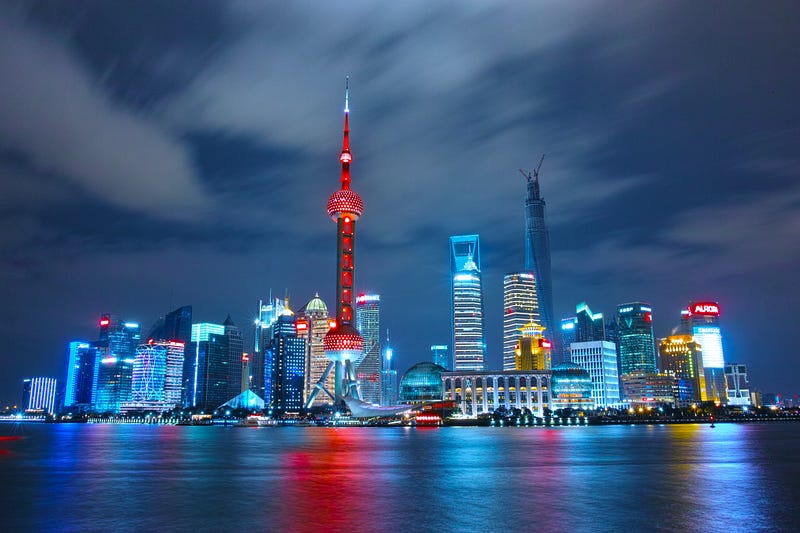
Geographically, China is a large country, with approximately 3.7 million square miles. It is bordered on three sides by land, with access to the oceans on the eastern border.
Access to maritime commerce allowed the provinces to the east to develop more quickly. The western part of China is landlocked.
China has attempted to encourage development in the western provinces with varying results.
“Go West Young Man, Go West”. John Babsone Lane Soule, 1851
America’s push to develop the western states had the advantage of a western ocean. China needs to cross borders in order to reach one.
In 200 BC, there was an overland trading route where Caravans would travel from China to the western countries, through what is now Europe to Venice. Historians called it the Silk Road because of the much-coveted silk that came from China.
China is reviving the Silk Road trade routes by investing in mega projects that link two new trade corridors to connect them with Central Asia, the Middle East, and Europe. One corridor is by land and one by sea.
They are calling it the One Belt, One Road project.
I‘ve seen the construction.
In the spring of 2018, my partner and I traveled to Asia. Near the middle of our trip, we met friends in Laos.
We were traveling in a small boat on the Mekong River in the northern part of Laos when we discovered the construction of a massive bridge.
When we asked our guide, he told us it was being built by China.
Later we found out it was a high-speed train that was being constructed by the China/Laos Railway company. The route goes from China through Laos and Thailand to Singapore. It will change millions of lives in its path.
As the world’s largest manufacturer, China needs access to two things: markets and resources. If they can help poor countries develop, they can sell products to them.
Africa has a wealth of resources and low-cost labor.
In the past, other countries couldn’t access these resources because they were too remote. There were no transportation or support systems in place.
To develop the infrastructure required, a country would need to finance many large-scale developments.
They would need a long-term vision and the financing to build it all because it’s too risky to build it in parts. The return on investment was too far in the future for most banks to finance.
China has a long-term vision and the money to do it. They’re going to build the whole thing.
This strategic project also allows China to invest in infrastructure in the ASEAN region, Central Asia, and European countries, gaining their political support.
At the time, it was seen as a play to reposition them in the global economy. Others saw it as providing much-needed support to people in underdeveloped countries.
The real answer remains to be seen.
Reference: “GO WEST, YOUNG MAN, GO WEST” was an expression first used by John Babsone Lane Soule in the Terre Haute Express in 1851. It appealed to Horace Greeley, who rephrased it slightly in an editorial in the New York Tribune on 13 July 1865: “Go West, young man, and grow up with the country.”
If you’re not already a Medium member, Join 4000+ satisfied readers and writers as we explore current topics and share our experiences.