
China and the United States: are they competing for the Indo-Pacific region?
The Global Security Initiative and the Indo-Pacific Economic Framework

After the outbreak of the war in Ukraine, it seems that the United States and China are increasingly trying to define new geopolitical arrangements, dividing the world again into two blocs.
On the one hand, Washington keeps its role as the leader of the political-military coalition supporting the Ukrainian resistance. On the other hand, Beijing continues not to consider any war involvement but remains one of the most important economic and political partners for Moscow.
To underline this substantial division, on 21 April, Chinese President Xi Jinping spoke at the “Boao Forum for Asia”, presenting his strategic solution to the Russian-Ukrainian war. This is called the “Global Security Initiative” and proposes a “balanced, sustainable and effective” international architecture.
At the same time, however, the White House response was not long in coming, namely a trip to the Far East by President Biden. On that occasion, the President of the United States announced the Indo-Pacific Economic Initiative (Ipef), which involves a dozen nations, from Japan to India.
So here are some insights.
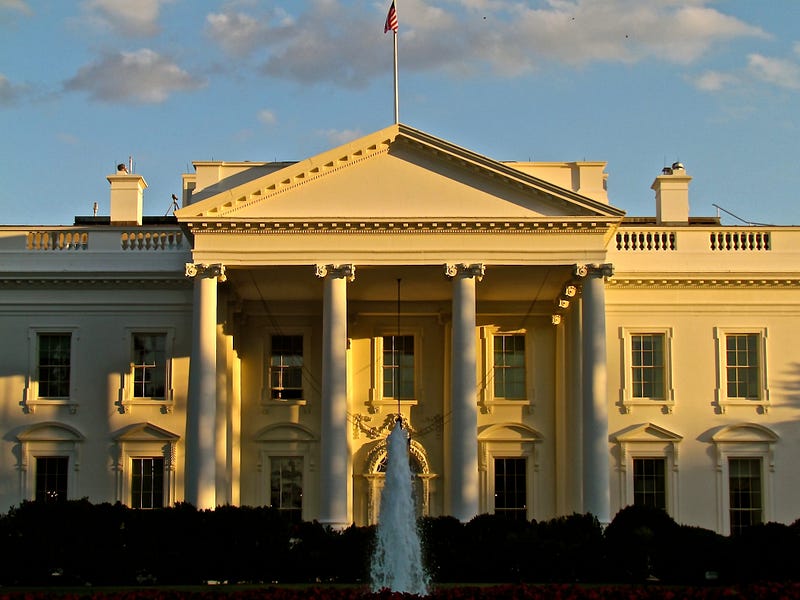
Global Security Initiative
This initiative, signed by the Chinese administration, has the objective of guaranteeing security throughout the world, based on the principle of “indivisible security”.
There are several key points made in this context by Beijing. The first is common and sustainable safety. Subsequently, what was made relevant is the respect for the sovereignty and integrity of all states, emphasizing the principle of non-interference, the respect for the UN Charter, and the “refusal of an opposition between blocs”. Finally, to guarantee security in every country, differences must be resolved through dialogue, not resorting to sanctions and coordinating together on hot topics such as terrorism, cybersecurity or climate change.
Of course, this proposal considered the sovereignty of Ukraine, but also Putin’s request for NATO not to threaten Russia. Furthermore, we can read of a global vision, but there are few references to human rights. After all, the Chinese regime is that of an autarchy.
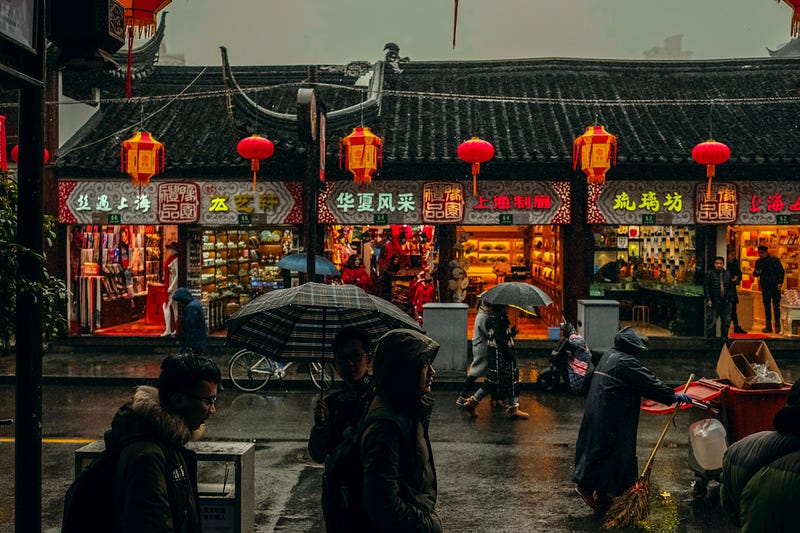
Chinese advantages
Beijing aspires to increase its sphere of influence in the Pacific. A new global approach, based on a new security initiative, would allow an acceleration of the interconnectedness of markets and would give greater trust or consensus to China.
It should in fact be remembered that to this day there are very few Asian nations that adhere to the sanctions of Western countries against Moscow.
IPEF
As previously written, Washington’s response to the Chinese strategy was not long in being developed. The Indo-Pacific Economic Framework is therefore the ambitious American investment plan in the area, the aim of which is to increase the US presence and counter the influence of Beijing. This is a significant return of the United States to the Indo-Pacific zone after the country left the Trans-Pacific partnership five years ago, under the Trump administration.
Nations such as Japan and India have joined this new economic collaboration, as also South Korea, Australia, Brunei, Indonesia, Malaysia, New Zealand, Filippone, Singapore, Thailand or Vietneam. Together, these countries account for 40% of world GDP.
However, the IPEF is not a free trade agreement. Experts say this partnership can pave the way for trade agreements, but for now no market access facilitation has been granted and no plan has been outlined to negotiate tariff reductions.
Likewise it is not a security pact and should not be confused with the Quad group, which includes Australia, India, Japan and the United States.

The key points of the IPEF
First, it should be emphasized that Washington’s choice was not accidental. The Indo-Pacific comprises about 60 percent of the world’s population, and according to the Biden administration, the area will increasingly contribute to global growth over the next three decades.
The terms and details of the partnership are still to be defined, but there are four fundamental principles of the initiative. First of all, the connected economy, that is higher standards and rules for digital commerce. Subsequently, it is necessary to focus on a resilient economy, with supply chains capable of resisting unexpected interruptions, and on a clean economy, that is, one that embodies green energy projects. Finally, a fair economy is needed, with anti-corruption policies and effective taxation.

During the negotiations, underway in the coming months, the countries that have joined the strategy will be able to choose in which of the four areas to conclude the agreements. Whatever happens, the US objective is clear. On the one hand, it is a question of raising labor and environmental standards, but also of wresting the key economic players in the region from the influence of China.
The IPEF would allow Biden to have greater control of the economic flows of the Indo-Pacific, considering that China is at the center of the region’s supply chains.
Sources I was inspired by to write this article:
- Ipef: cos’è il piano economico voluto dagli Usa per contrastare la Cina, published by Today Mondo
- Usa-Cina e l’ordine mondiale oltre la guerra, published by La Repubblica
- The Indo-Pacific Economic Framework: what it is and why it matters, published by CNBC
I am an Italian student who tries every day to improve her English. I really like writing and studying in this language, also to be able to reach more people. However, I still often run into mistakes. So, if while reading my article you have found some, do not hesitate to contact me, either through a comment or a private note!