
Children Will Play With Anyone Until Someone Tells Them Not To
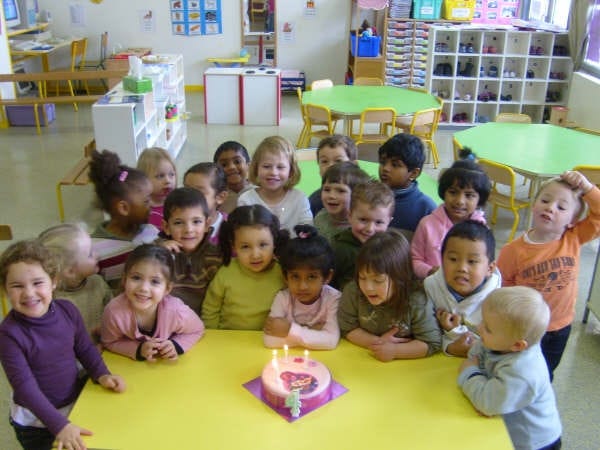
When I saw this quote on someone’s Facebook page yesterday, it caused me to stop and think for a minute or two. I was reminded of an experience I had in New Orleans after hurricane Andrew. I was just starting graduate school at the time and had a position working at the VA hospital for the summer. I had cousins who were physicians at the same hospital and though my parents had begged me to leave with them, the administration had asked anyone without a family to stay behind. So I stayed in the almost empty hospital which had been evacuated just hours before, awaiting what would prove to be one of the most destructive hurricanes to hit the Gulf coast.
The Aftermath of Hurricane Andrew
Luckily, New Orleans didn’t take the direct hit that was predicted and we got away with just strong winds and rain. The bayou country to the west of us wasn’t so lucky, however. The day after the hurricane, I heard at work that there was a request from the Red Cross asking if our staff would volunteer to evaluate and provide initial trauma counseling and support for the victims who were gathering in Morgan City. I approached my supervisor about participating and he agreed. We made plans to meet the next day and go together.
I wasn’t prepared for what we saw along the way. About 30 miles outside of New Orleans, the real damage began. After another 15 miles it looked like we had entered a war zone. Many trees and telephone poles were down. Homes were missing roofs. Traffic lights sat broken in the middle of shattered glass. Street signs were bent and twisted as if by giant hands. Another 15 miles and the houses and businesses weren’t just roofless, they were completely torn apart. Every tree and pole was down. Dead animals dogs, horses, and deer, could be seen, partially submerged in flood waters.
It wouldn’t be much longer before the road was completely impassible, which forced us to go off road. I now knew the reason only a few people had been allowed to drive. You needed a range rover or jeep to manage the water and debris. Even with one, we managed to get stuck in the mud twice, once needing nearby National Guardsmen to get us out, before we pulled up to the makeshift command center in Morgan City.
Working With the Children
Once we’d been oriented, I discovered that I was the odd-man-out as I was the only volunteer who worked with children. So while everyone else was helping the adults, I held a play therapy group with the kids. Within about an hour, I was up to 13 children, all of whom were Cajun. Things were going pretty well, the kids interacting appropriately with each other and being cooperative with me.
I noticed another child standing just outside the room. He looked around and seemed hesitant to enter. I went over and invited him to join us. The other kids exchanged looks. One boy, who had quickly become the leader among the kids, noticeably gave him the cold shoulder. One after the other, the rest of the kids followed his example.
I tried to encourage the other children to play with the new child but the ringleader said, in a haughty tone of voice, “We don’t play with his kind.” He gave me a look as if expecting me to understand and back him up. Looking at the other child, I saw the new arrival was the only Asian child in the room.
I made a comment about all children being welcome, trying to suggest that we’d all gone through the same traumatic situation and we were all trying to deal with it. When the child who’d made the comment, got up and made a show out of storming from the room, I ignored him and kept playing with the others. He stood by the door with his arms crossed and I was relieved to see that none of the others looked as if they were going to follow his example.
The other boy who’d just come in, calmly said, “It’s because I’m Vietnamese. Cajuns don’t think we’re as good as them.” He kept coloring throughout this remark. The other kids at least had the decency to look embarrassed.
I continued to work with all the kids except the one who still stood outside the room who was pretending not to notice but clearly watching the goings on. Over the next half hour or so, I managed to integrate the Vietnamese boy into the rest of the group and before long everyone was playing together animatedly.
After a few more minutes, the other boy returned to the group and at first sat down a bit away from the rest. Before long though, he, too, was in the thick of things, playing and laughing with the children. By the time we finished, no one would have known there had ever been a problem between any of them. I left that evening feeling good about what had transpired. It felt like I’d taken a stab at discrimination and I even fantasized about my efforts making enough of a lasting impression on the kids who’d been there that they might go on to influence some of their peers to think differently.
Heading Home
On the way home, I proudly recounted what had occurred to my supervisor. When I was done he was quite for a minute. Then he said, “What do you think is going to happen when those kids get home? Even if they are willing to stand up to their parents, do you think that will suddenly change their parents’ minds, that they’ll tell their kids how proud they are that they learned not to treat kids who are different from them badly?”
I was shocked. I hadn’t thought it all the way through. It’s not that my supervisor believed I should have done anything differently. He obviously wasn’t suggestion that I should have reinforced obvious prejudice or ideas of racism and discrimination. We talked about it the entire way home and over a glass of wine after we’d gotten back. While I’d like to say we arrived at a sure fire way of combating racism, the truth is the main thing I came away with was how complex this problem is given that it encompasses the individual, family, community and society.
I did reach one other conclusion. Children look to the adults in their lives for guidance as to how to think about and act towards others. They want our approval and seek our attention and will quickly learn to behave in ways that result in both. I couldn’t feel bad about what occurred in Morgan City with those children, even after learning how long-lived and widespread the bad feelings between Cajuns and Vietnamese were.
Perhaps I was naive back then. However, I still believe that even though the parents may not have been happy, that somewhere within the children they carried a small kernel of understanding that in the end all of them are created equal.
The bottom line is that it as adults, we are the ones who teach children about how to treat others. We may think that it’s natural to have biases about people and that everything’s okay as long as we don’t openly display any overt negativity, criticism or judgement of others in front of our kids. After all, it’s not like we would ever hold racist ideas like those parents in Morgan City, or openly refuse to allow our children to play with anyone who was Vietnamese or Cajun. Or African American or Jewish or Gay for that matter.
But children are savvy. They are quick to discern adults opinions from fleeting flashes of expression, quick cuts of the eyes or subtly avoided glances. They can read between the lines and understand the message communicated in what is not said and the undercurrents of what message is meant behind the words. They pick up on everything.
The way we raise moral children who treat others who are different than them with respect and acceptance is to first do so ourselves. Until we are able to do this, we can never expect our children to do so. It is true we all have certain biases. But if we fail to recognize and appreciate the richness of the human experience reflected in the diversity of all those around us, we will miss out on the opportunity to connect with some truly amazing people. We will also condemn our children to the same fate.
*Thanks to Gregory Aaron for the inspiration for this post.


