
Children Have Routines. Adults Build Systems
How To Create Lasting Change In Your Life
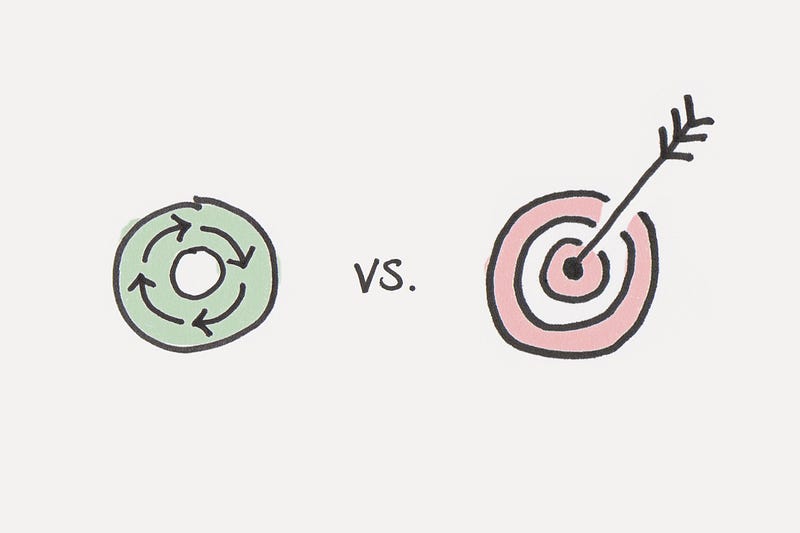
‘If I could just get a new routine, I’m sure I could do it’.
Whether it’s in conversations at the gym or queuing at the shop, I hear people venting about their struggles to achieve their goals.
The culprit?
A departure from their precious routines.
Routines by nature are habitual and are typically characterised by a set of repetitive tasks that we complete daily, that help to add structure to our lives.
Some routines are carefully crafted, while others form organically over time.
Consider the following scenario: You wake up each morning and the first thing you do is make a delicious black coffee (A Planned Routine). As you make your coffee, your dog wants to go out to the bathroom so, you comply.
Over the next few days, the dog comes in each morning while you make your coffee and all of a sudden, the evolution of your morning routine has begun.
As humans, we have been drawn to routine since we entered this world.
My brother recently welcomed a brand new baby girl into his family (I myself am due a new baby in 8 short days!), and he’s told me the importance of keeping the baby in a regular eating and sleeping routine, as any deviation from this cycle is likely to wreak havoc throughout the night.
The basis for having a routine with an infant makes total sense.
But as we get older, do we ever stop to ask ourselves:
- What is the purpose of a specific routine in my life?
- Are my current routines actually serving that purpose?
The problem with Routine Based Planning
I can fully understand the appeal of routines.
The control of a routine provides a significant level of comfort.
But here are the problems with Routines:
- Routines are not built with an end goal in mind
- Routines rely far too much on Discipline
A routine is not something you are committed to. It’s simply a series of repetitive actions that help you structure your day. If something throws you off that day — who cares?
Routines are a step removed from who we are as people — If we complete the routine or not, it doesn’t really matter.
It’s not an integral part of who we are, it’s just something we do.
So, What’s the Alternative?
The alternative to simply building routines is to Build Systems.
You do not rise to the level of your goals. You fall to the level of your systems — James Clear
I hate providing textbook definitions in my writing but this one illustrates my point so clearly that I can’t resist.
It refers to an organized set of interconnected elements or components that work together to achieve a specific purpose or function.
If you are going to craft a structure for your day, wouldn’t it make sense to do so consciously? With a particular aim in mind?
Be the designer of your world, not merely the consumer of it — James Clear
If you choose to build a system, it’s something that you have specifically crafted, to build towards a desired outcome.
It is not habitual. It’s designed to produce results.
The Benefits
There are two clear benefits of developing systems in your life.
Identity Shifting
By designing systems, you become the architect of your life. You identify with the system as if it is part of you.
Take an individual who wants to improve their overall health by attending the gym and eating highly nutritious foods. If they do this by developing a habitual pattern around training and nutrition, it can be easy to fall out of this pattern.
However, if you build a system to help you reach this goal, it’s easier for you to identify as a healthy individual and the system you have built is what allows you to be this version of yourself.
Self Discipline is Unreliable
Systems-based thinking reduces the reliance on self-discipline.
Routines afford choices and options. Systems, on the other hand, minimize the need for willpower by automating decisions and actions.
For example, it’s currently 7:30 a.m., and I am just back from the gym and started writing this article. I slept poorly last night and I was not in the mood to go to either the gym or subsequently sit down to write.
However, the system I have developed involves:
- Journal & Coffee
- Exercise
- Write for One Hour
It’s harder for me to break this pattern, as I believe this schedule will ultimately lead me to achieve the goals I have set for myself.
You may note that I keep the second item vague, as just ‘Exercise’. This is by design. If I had ‘Go to the Gym’, there is little room for manoeuvre.
On days when my schedule doesn’t allow time to go to the gym, I adapt. I include some other form of exercise as it is simply part of my system.
It’s important to acknowledge that discipline still plays a crucial role in achieving your goals. It provides the initial push and motivation needed to create systems. But once the system is in place, it becomes less of a priority.
Common Objections
A frequent objection I get from this hypothesis is that life is more than a quest to achieve goals.
That unstructured rest and relaxation with a regular routine can be a good thing. And yes, I agree. Somewhat.
If your Saturday morning routine involves sitting with your family and having breakfast, followed by a leisurely walk through the park with lunch, well, that sounds delightful.
However, I would argue that for something like this wonderful routine, shifting the mindset set to a system could benefit you here.
The goal of this routine is to spend quality time with your family. But, do you often find yourself distracted by work, checking your phone or fleeting in and out of mindless thought?
The Saturday morning activities can vary — you may go to the beach instead of the park for example.
But what you shouldn’t alter are the rules and guidelines that you have crafted for yourself.
- Saturday mornings are family time and are always blocked off in my calendar.
- I will be as present as possible during this period.
- I won’t use my phone, check my email or engage in any activity that takes away from this time.
Your system for spending quality time with your family is not reducing your freedom during that period. It has nothing to do with the activities. It can be a guide to ensure your actions align with your ideals.
Conclusion
As we journey through life, we need to release ourselves from the comfort routines gave us as children and instead, progress to full-blown adults, building systems into our lives to achieve our goals.
By choosing to build systems, we embrace the responsibility over our time, our decisions and ultimately, the outcomes we achieve.
Think about your daily habits and goals. How can adopting a systems-based approach impact your journey towards success?
I would love it if you could let me know in the comments!


