
Chief Strategist: My Public Diary (April 2022)
Food Strategies, Public Surveys, Single Parents and Creflo Dollar
Dear Friends,
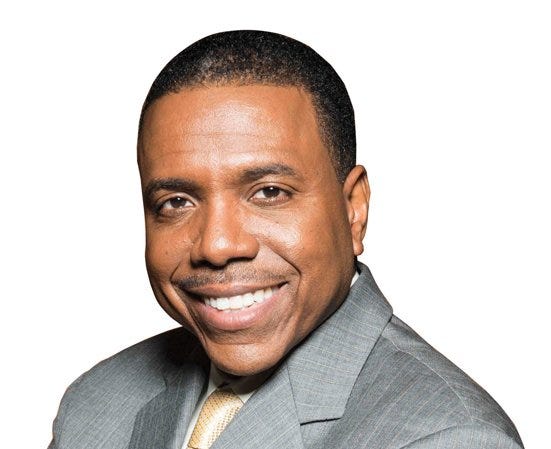
A woman approached me aggressively at the conclusion of The First 100 — the public presentation of Mayor Woodfin’s citizen-led transition team. She cornered me and I did not know what she was going to say.
She interrupted the conversation I was starting with the Mayor’s mother and said, “I know you probably get this all the time…”
I paused, slightly frustrated and slightly curious to see what she would say next.
“Do you know who you look like?”, she continued. “Creflo Dollar! You look just like Pastor Creflo Dollar!”
My soul hollered.
That is how March ended for me. But, let’s start at the beginning. Last month’s “day in the life” post explained what a Chief Strategist does and, more specifically, what I do on a regular basis.
Let’s jump right into the highlights and major themes of the month.
March was productive for me both personally and professionally. I finished listening to audiobook, Move: The Forces Uprooting Us by Parag Khanna. I highly recommend this for futurists, civic innovators, supply chain and tourism professionals, labor economists, city planners, demographers and cartographers. Also, I reveled in the release of Robert Glasper’s Black Radio III (this song with PJ Morton and India Irie is everything.)
I found myself in the midst of very different situations with very different people on both personal and professional levels.
Surveys. I found myself completing surveys for organizations seeking deep input for their strategic planning efforts. Those organizations include Bloomberg Harvard City Leadership Initiative, Innovate Birmingham, and the Rotary Club of Birmingham. All three of these organizations, and many more like them, are taking fresh looks at their business models and/or service offerings. All three have added unique value to the city of Birmingham and I was thankful for the quality of surveying, especially the Bloomberg-Harvard survey. It not only asked about my acuity in understanding how to use data to make strategic decisions, but it effectively assessed my data analytic proficiency with basic data skills. The survey asked me to solve word problems familiar to city professionals based on sample graphs. Really smart.
Food. Anyone who knows me well knows that I am not much of a foodie. It’s strange, I know, because who the heck doesn’t love food? And, Birmingham is a foodie town. Still, I found myself having lunch with award-winning author, advocate and journalist, Roger Thurow, at Montgomery’s vegan diner, Plant Bae. I listened intently while enjoying a Plant Beau Burger and my Side Bae veggies.
Thurow told me he is working on his third book about food sovereignty, policies and market forces that are crushing generations of indigenous farmers even as corporate farms see increasing federal bailouts. Serious stuff, but all I could think was, “Damn, this Bae burger is delicious!” What makes his third book endeavor unique is that he is writing about the American food system. Thurow’s twenty-year career in journalism at The Wall Street Journal was anchored in Africa, the subject of his first two books.
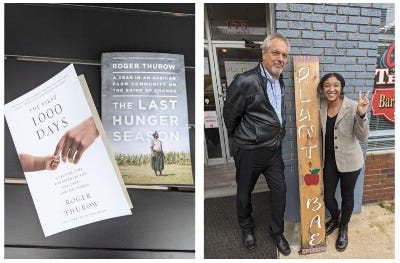
Speaking of food revolutionaries, I met Thurow through my friend and mentee, Jasmyn Story, Founder of Freedom Farm Azul, an Alabama farm similar to Soul Fire Farm, seeding food sovereignty and safe, restorative space for those needing a restorative place to commune and organize. Thurow will chronicle parts of Story’s journey, among other leaders doing great works in Alabama and beyond. Learn more about Jasmyn and their efforts at and Honeycomb Justice Consulting.
My final food story is about a new position created at the City of Birmingham through our Mayor’s Office partnership with FUSE, a national fellowship that connects senior industry leaders with opportunities for service in the public sector, especially local municipalities. I co-conducted an interview with a candidate for the role which supports the Mayor’s goal to improve food access in the City of Birmingham. One person we interviewed was fascinating and a bit odd. They understood that you can’t dump a pound of kale on the doorstep of someone who does not have time to prepare it (because maybe she is working two jobs and damn tired, not because she doesn’t like healthy food.) They spoke about other physiological, geographic and sociological conditions that should be taken into consideration as the city formulates food strategies. They had many insights. But, competition for the role was stiff and it became evident that we needed to hire someone that we believed would be a better fit. I learned an awful lot in that interview. Heck, I even got a couple of book recommendations.
Big deals. One of the most exciting things that happened in March was a series of major economic development announced by the city of Birmingham. While I had absolutely nothing to do with these efforts, I have been excited about them. These are the kinds of deals we had hoped the City would be doing. I have also been reflecting on the new bench of economic development talent that is well positioned to serve the city far into future. Those deals include:
- Green Meadow Apartments: A historic $100 million mixed-use development deal led by an all black development team.
- Belview Heights: $25 million affordable housing effort has come to a critical juncture. Keys were handed to the first owners of 25 new homes in an area in critical need of new housing solutions.
- Food Giant: A new grocery store is supporting one of the densest and underserved communities (Five Points West) in West Birmingham. The Mayor was turned down by no fewer than six grocers before he finally got to yes.
The most significant thing that happened to me in March did not have anything to do with work. I had an immersive single dad experience when my wife left town from a Sunday to a Saturday, leaving me to tend to everything. It was all good, I thought. I got this.
You know the scene of a movie where he thinks he can do what she can do if he just has a plan and some patience? This was that scene.
I started slow by forgetting to take the clean sleep mat to daycare on Monday morning. I usually wake up early mornings to write, work on personal family projects, or to just stay on top of my project flow. That time was non-existent due to cleaning, clothing, and chauffeuring my son. By midweek, I realized I actually had it easy because I had the authority and administrative support to shift some project flow and meetings around to accommodate this unique week.
Sure, I am aware that most people do not have the autonomy to shift their work as I did. But, admittedly, it was different living inside of this truth, especially when my carefully laid plans shifted even a little bit. On top of that, my son, August, has family, friends and fans who all like to spend time with him. So, picking him up from daycare and going back to the office where Robin, LaToya, or Sybil were able hang out with him or asking his beloved grandmother, Ms. Pat, (who adores her grandson) to watch him for a few hours while I continued my work made it all more than bearable. Indeed, I was tired, but it could have been much, much more challenging.
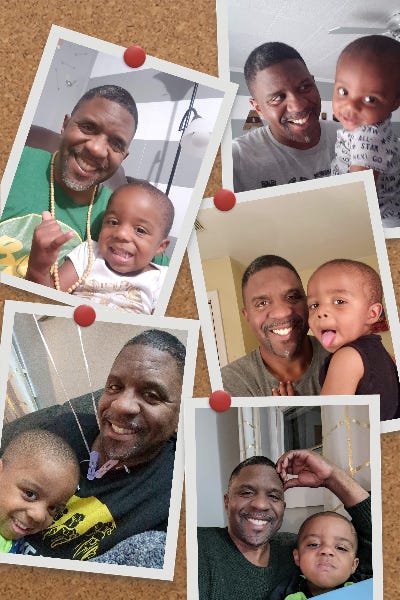
All in all, I learned a lot in March. I learned more about the importance and critical need for food sovereignty. And, I learned just more about the strength of a single parent. Their psychological resilience, their resourcefulness, and their ability to still get their job done no matter what.
I’d like to think I could do what these single parents heros do if I needed to, but I’m glad I do not have to. I am thankful for my wife — a proven and highly effective parenting partner — who probably got the biggest hug she ever received from me upon her return to Birmingham.
Honestly,
Ed.
P.S. Do you see any resemblance to Creflo Dollar?
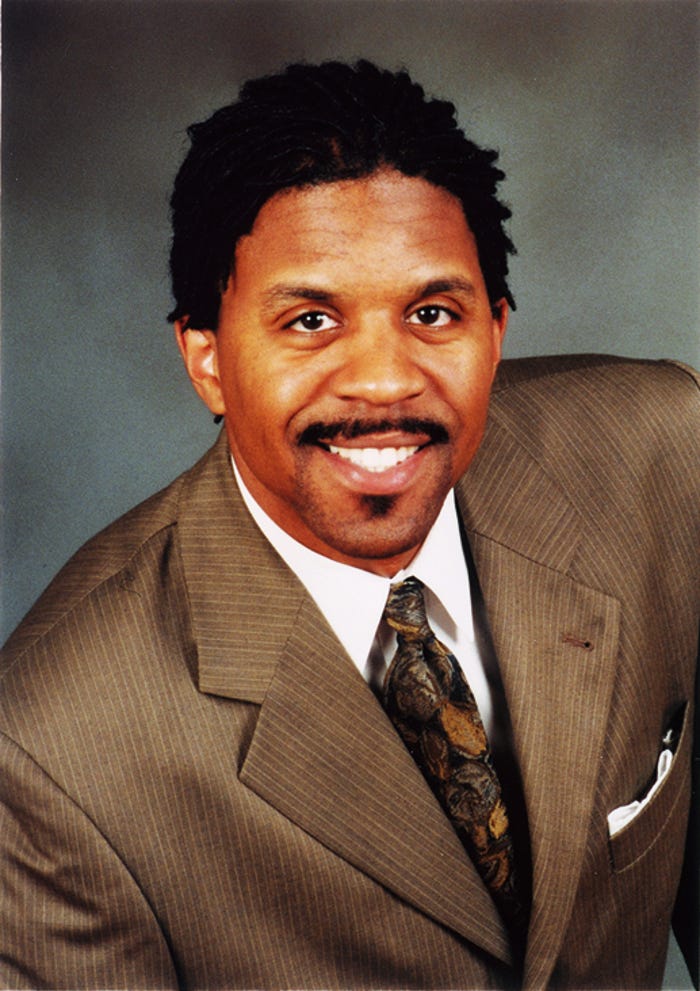
Ed Fields is an essayist, marketer and strategist. He currently serves as Senior Advisor and Chief Strategist for the City of Birmingham Mayor’s Office. Follow him on LinkedIn, Medium, or Instagram.