avatarJerileewei

Free AI web copilot to create summaries, insights and extended knowledge, download it at here

4346

Abstract

id="6925">Our feathered friends always know when a fox-like predator is in their hen house. We humans might have lost that ability, because we over-think or under-think our dangers. We allow ourselves to believe that someone else has solved a problem, acted in our best interests, and that we don’t have to worry (because somebody else has bailed us out).</p><figure id="0344"><img src="https://cdn-images-1.readmedium.com/v2/resize:fit:800/0*_YTcvYBnJVN5o0JS"><figcaption>I may not have a beak but my thoughts are worthy of following. — Photo by <a href="https://unsplash.com/@edwinhooper?utm_source=medium&amp;utm_medium=referral">Edwin Hooper</a> on <a href="https://unsplash.com?utm_source=medium&amp;utm_medium=referral">Unsplash</a></figcaption></figure><p id="f958" type="7">Chicken Speak</p><h2 id="ea22">If you were a chicken, here’s what you would know how to say:</h2><ul><li><b>From the day before your birth</b> the word<b> <i>“Peep”</i></b>You’d <i>peep </i>continuously to let your mother and siblings know your birthday has arrived. This lets mom know you are OK, so that she doesn’t freak out when you break your nest egg. Just like a great big hug, mom will stay there in the nest as long as you keep <b><i>peeping</i></b> until you get out of your shell.</li><li><b>Mutual Post Birth Peeps </b>and<b> Clucks — </b>Since your birthday is shared by siblings, you and your mom would <b><i>peep</i></b> and <b><i>cluck</i> </b>back and forth as you explore your new world. Just like a human mother hen, your mom would know from the poignant timbre of your <b><i>peep</i> </b>how scared you were, or if you were feeling lost. She would also listen closely by counting how many times you <b><i>peeped</i></b> for signs that you may be in trouble. Her <b><i>clucks</i></b> would both reassure you and help you keep track of how far away she was, or if she spotted danger.</li><li><b>Bedtime clucks</b> — As a young chick, your mother hen would have a special <b><i>bedtime cluck</i></b><i> </i>that would let you know when it was time to come in from the coop’s play yard and give life a rest. Unlike your human counterpart, you’d not be trying to get by with staying up after hours, as you instinctively would know to do that, could result in your untimely death.</li><li><b>Nesting clucks</b> — Women and hens have their own language when calling or inviting their mates to join them in finding a place to nest. The difference between us, is that the real life rooster <b><i>always</i></b> helps her find and create the perfect nest. Side-by-side, they dig an impression in the ground with their beaks and feet. Then, they pull and toss around twigs, feathers, hay, leaves, and earth. Not all human baby daddy roosters are quite so into the language of nesting instincts.</li></ul><figure id="cfa2"><img src="https://cdn-images-1.readmedium.com/v2/resize:fit:800/0*HLFMYtG-iTLLfqeO"><figcaption>When faced with a challenge, don’t chicken out! — Photo by <a href="https://unsplash.com/@brett_jordan?utm_source=medium&amp;utm_medium=referral">Brett Jordan</a> on <a href="https://unsplash.com?utm_source=medium&amp;utm_medium=referral">Unsplash</a></figcaption></figure><ul><li><b>Ancient</b> <b>touchy snarls </b>and <b>tender reassuring hen squawks </b>— Not to be left out in the nesting search, when the rooster thinks he’s found the perfect place to start a home, he guards it, by sitting on it. Then he rocks from side-to-side, as he turns in a slow circle, pleading with <i>t<b>ouchy snarls</b></i> to his hen, that we are “home at last.”</li><li><b>The hen always has the last say</b> in such monumental decisions. She’s wise enough to let her rooster know though, that she appreciates his efforts by making <b>short and <i>tender reassuring hen squawks</i></b> with her beak open — that are as subtle as the Chinese language in terms of meaning, when the tone drops to a lesser intensity.</li><li><b>“I’ve Laid An Egg Cackle”</b> — With this <b><i>cackle</i>-announcement</b>, the rooster comes to inspect, and give her a congratulatory escort back to the rest of his harem.</li><li><b>Lonely Squawk</b> — The best of hens will give the <b>lonely and loud <i>squawk</i></b><i>,</i> if her rooster is absent too long, that will send the most absent-minded of males rushing to her side to see what is wrong.</li><li><b>Rooste

Options

r’s Come and Get It Clucks</b> — This series of <b>small short selective <i>clucks</i> </b>tell the hen that papa has dinner ready.</li><li><b>Rooster’s</b> <b>Chicken Hawk Whistle</b> — With one eye always alert to shadows overhead, the rooster will <b><i>whistle</i></b>, or even make a sort of <b><i>growling</i></b> sound to indicate a hawk or owl is on the prowl.</li><li><b>Dessert’s Here Cheer!</b> — Feed chickens supplemental corn or other delights long enough, and you’ll soon discover they have a certain pattern and call to each other, when one of them spots you approaching.</li></ul><figure id="2b0c"><img src="https://cdn-images-1.readmedium.com/v2/resize:fit:800/0*DayAHDAdmqJYBFBx"><figcaption>Don’t count your eggs before they hatch, but do count your steps when crossing the road. — Photo by <a href="https://unsplash.com/@towfiqu999999?utm_source=medium&amp;utm_medium=referral">Towfiqu barbhuiya</a> on <a href="https://unsplash.com?utm_source=medium&amp;utm_medium=referral">Unsplash</a></figcaption></figure><p id="f909" type="7">Chickens Are Good At Problem Solving — Some Of Us Not So Much!</p><p id="4f8a">In our currently tumultuous times, we might not be practicing good problem solving. Chickens are good at problem solving. They make it their business to know the score and act accordingly.</p><h2 id="58e4">Chickens understand:</h2><ul><li>When to run for shelter</li><li>When to fly high</li><li>When to roost in the trees instead of the hen house</li><li>How slowly and persistently pecking gets results</li><li>When the fox (raccoon or opossum) is in the hen house, and take appropriate measures</li><li>That an object when taken away and concealed, still exists</li><li>When to gather as a flock for the common good</li><li>When to separate as a flock for the common good</li><li>They have rich social groups, that accept that there is pecking order, because everyone has their role, and is valued among the flock</li><li>That patience is the key — if you are going to hatch a good egg, you’ve got to both know how not to smash the egg when you sit on it; and how long you’ll need to sit</li><li>How to sacrifice for the “long term” — watch any mother hen sitting on a nest, giving up her freedoms for the future</li><li>That no matter how hard you try, life is certain in that predator attacks, will happen from time to time</li><li>Who are their friends — they can recognize hundreds of other chickens, and remember each of their faces</li><li>Who are their enemies — they not only recognize them, but their methods of kill and how to evade capture</li><li>The need for oversight — the flocks have roosters, older hens, and clucking hens and hopefully their human friends and each other to watch their feathered backs</li></ul><p id="3563" type="7">Who Is Minding Your Hen House And Our Eggs?</p><p id="183d">It seems to me that we should all be seriously alarmed and giving a lot of thought to who is minding our hen house — did we allow the Bird Brains or the genuine <b><i>Chickensteins</i></b> to make decisions for the common good? <i>If all they do is fight among themselves for control of the hen house and the hoarding and stealing of our nest eggs — what does that say?</i></p><p id="a5ee">There’s a long line to get in that hen house both from inside and the outside— <i>Are we going to be smarter than chickens or just a bunch of bird brains who invited the foxes inside? </i>— Jerilee Wei © 2023</p><blockquote id="e730"><p>“We may not all have PhD’s in poultry management, but we are collectively smart enough to outfox the foxes and leave them clucking in disbelief at the polls! ” — Jerilee Wei © 2023</p></blockquote><div id="6adf" class="link-block"> <a href="https://jerileeweiauthor.medium.com/subscribe"> <div> <div> <h2>Get an email whenever Jerileewei publishes.</h2> <div><h3>Get an email whenever Jerileewei publishes. By signing up, you will create a Medium account if you don't already have…</h3></div> <div><p>jerileeweiauthor.medium.com</p></div> </div> <div> <div style="background-image: url(https://miro.readmedium.com/v2/resize:fit:320/0*-5YasdGnMLSjTk3s)"></div> </div> </div> </a> </div></article></body>

Chickens vs. Humans: Who’s The Real Masterminds?

Are You Smarter Than A Chicken?
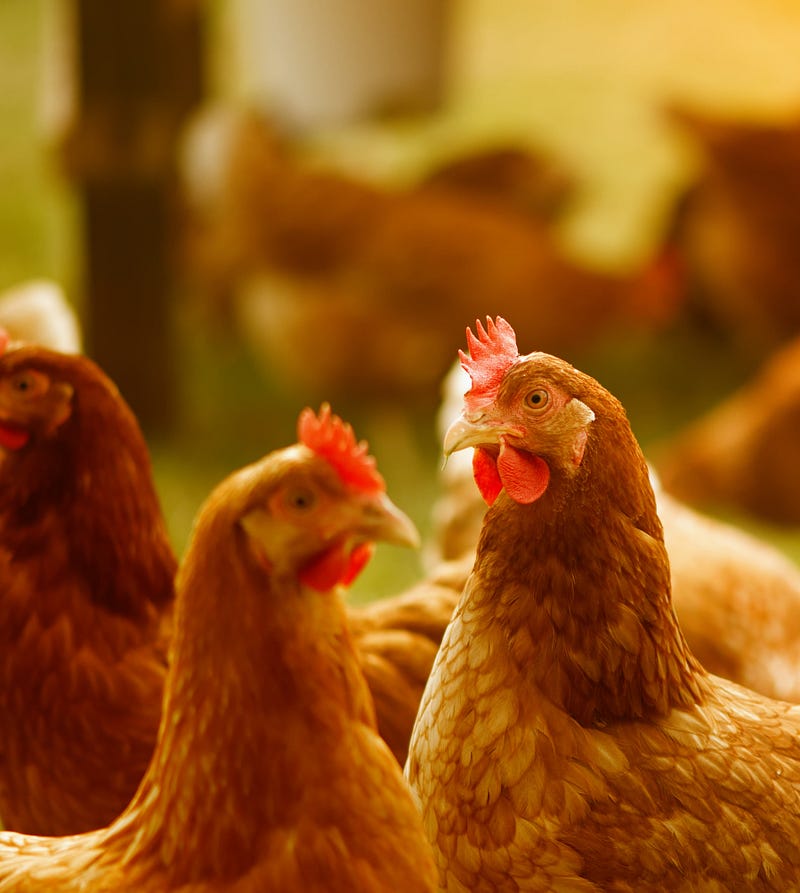
I may not be human but my brain is no nest for stupidity. — Photo by Alexas_Fotos on Unsplash

There’s always those among us who are “not quite right in the head.” Here in this rural community, the locals refer to them as “afflicted.” You only have to read the daily headlines to know that being afflicted or tweet-witted tweeters is now a nasty virus spreading its feather-headed falsehoods in continued profound ignorance.

We’ve been watching a little bird that we’ve dubbed “Bird Brain” as it is a stubborn little bird, hell bent on getting its head caught in the suet feeder. This diminutive creature will only feed from the top, sticking its head down into the feeder. Several times we have had to rescue Bird Brain when its head is stuck. All the other birds feed in a much safer manner from the sides and bottom. They are a lot smarter.

It occurs to me that we are surrounded by “Bird Brains.” Our feathered friends have a lot to worry about when it comes to predators robbing them, killing their chicks, or stealing eggs from their nests. It’s also crystal clear that we humans are in just as much danger, in a race to protect our own nest eggs and offspring.

The problem with humans though is, while we pride ourselves on being the highest mammal in terms of pecking order, the bird brains know some basic things we can’t seem to get right. You see, they know who their real predators are, while we allow the financial foxes of the world right in our nests.
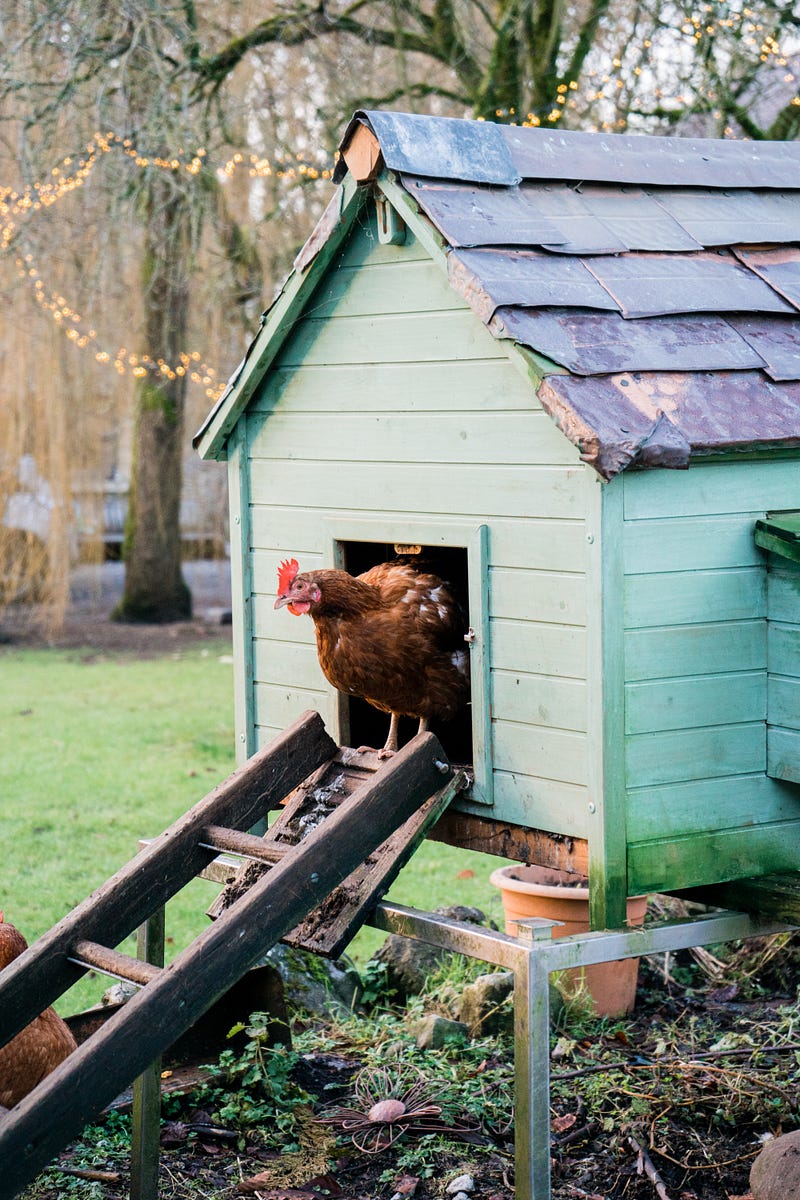
My chicken brain soars above the clouds of ignorance. — Photo by Tom Ungerer on Unsplash

Never Underestimate The Chickensteins

For those of you who didn’t spend a lifetime, communing up close and personal with feathered friends, you may be misinformed about the intelligence of birds. You may also have been led astray about how complex their lives are, from the moment of birth.

Before I point out in detail why the lowly chicken might be the smarter of us, let’s take a closer look at what you might not know about chickens — and why their world applies to our current ongoing crises.

Once you learn a new secret language you’ll be hatching ideas. — Photo by Kristina Flour on Unsplash

The Secret Language Of Chickens

The majority of the human population doesn’t know that chickens can talk and that they have a rich vocabulary, despite the fact that it is short on words. Their approximately thirty word known lexus is far more precise in definition, and completely common knowledge among those with feathers — than our general population literacy in our language.

Whereas, the average English speaking human’s twenty thousand word vocabulary is not always clear-cut, and is also not always commonly understood, nor communicated properly. There’s a lot of double-speak among us (you only have to look at elected officials for proof of this).

Furthermore, among a chicken’s many alarm vocalizations, they are able to convey not only the type of predator approaching, but also whether it is arriving on foot, by air, or by water. Unlike them, our enemies can be those of our very own, and very often we don’t see that until it’s too late.

Our feathered friends always know when a fox-like predator is in their hen house. We humans might have lost that ability, because we over-think or under-think our dangers. We allow ourselves to believe that someone else has solved a problem, acted in our best interests, and that we don’t have to worry (because somebody else has bailed us out).

I may not have a beak but my thoughts are worthy of following. — Photo by Edwin Hooper on Unsplash

Chicken Speak

If you were a chicken, here’s what you would know how to say:

  • From the day before your birth the word “Peep”You’d peep continuously to let your mother and siblings know your birthday has arrived. This lets mom know you are OK, so that she doesn’t freak out when you break your nest egg. Just like a great big hug, mom will stay there in the nest as long as you keep peeping until you get out of your shell.
  • Mutual Post Birth Peeps and Clucks — Since your birthday is shared by siblings, you and your mom would peep and cluck back and forth as you explore your new world. Just like a human mother hen, your mom would know from the poignant timbre of your peep how scared you were, or if you were feeling lost. She would also listen closely by counting how many times you peeped for signs that you may be in trouble. Her clucks would both reassure you and help you keep track of how far away she was, or if she spotted danger.
  • Bedtime clucks — As a young chick, your mother hen would have a special bedtime cluck that would let you know when it was time to come in from the coop’s play yard and give life a rest. Unlike your human counterpart, you’d not be trying to get by with staying up after hours, as you instinctively would know to do that, could result in your untimely death.
  • Nesting clucks — Women and hens have their own language when calling or inviting their mates to join them in finding a place to nest. The difference between us, is that the real life rooster always helps her find and create the perfect nest. Side-by-side, they dig an impression in the ground with their beaks and feet. Then, they pull and toss around twigs, feathers, hay, leaves, and earth. Not all human baby daddy roosters are quite so into the language of nesting instincts.

When faced with a challenge, don’t chicken out! — Photo by Brett Jordan on Unsplash
  • Ancient touchy snarls and tender reassuring hen squawks — Not to be left out in the nesting search, when the rooster thinks he’s found the perfect place to start a home, he guards it, by sitting on it. Then he rocks from side-to-side, as he turns in a slow circle, pleading with touchy snarls to his hen, that we are “home at last.”
  • The hen always has the last say in such monumental decisions. She’s wise enough to let her rooster know though, that she appreciates his efforts by making short and tender reassuring hen squawks with her beak open — that are as subtle as the Chinese language in terms of meaning, when the tone drops to a lesser intensity.
  • “I’ve Laid An Egg Cackle” — With this cackle-announcement, the rooster comes to inspect, and give her a congratulatory escort back to the rest of his harem.
  • Lonely Squawk — The best of hens will give the lonely and loud squawk, if her rooster is absent too long, that will send the most absent-minded of males rushing to her side to see what is wrong.
  • Rooster’s Come and Get It Clucks — This series of small short selective clucks tell the hen that papa has dinner ready.
  • Rooster’s Chicken Hawk Whistle — With one eye always alert to shadows overhead, the rooster will whistle, or even make a sort of growling sound to indicate a hawk or owl is on the prowl.
  • Dessert’s Here Cheer! — Feed chickens supplemental corn or other delights long enough, and you’ll soon discover they have a certain pattern and call to each other, when one of them spots you approaching.

Don’t count your eggs before they hatch, but do count your steps when crossing the road. — Photo by Towfiqu barbhuiya on Unsplash

Chickens Are Good At Problem Solving — Some Of Us Not So Much!

In our currently tumultuous times, we might not be practicing good problem solving. Chickens are good at problem solving. They make it their business to know the score and act accordingly.

Chickens understand:

  • When to run for shelter
  • When to fly high
  • When to roost in the trees instead of the hen house
  • How slowly and persistently pecking gets results
  • When the fox (raccoon or opossum) is in the hen house, and take appropriate measures
  • That an object when taken away and concealed, still exists
  • When to gather as a flock for the common good
  • When to separate as a flock for the common good
  • They have rich social groups, that accept that there is pecking order, because everyone has their role, and is valued among the flock
  • That patience is the key — if you are going to hatch a good egg, you’ve got to both know how not to smash the egg when you sit on it; and how long you’ll need to sit
  • How to sacrifice for the “long term” — watch any mother hen sitting on a nest, giving up her freedoms for the future
  • That no matter how hard you try, life is certain in that predator attacks, will happen from time to time
  • Who are their friends — they can recognize hundreds of other chickens, and remember each of their faces
  • Who are their enemies — they not only recognize them, but their methods of kill and how to evade capture
  • The need for oversight — the flocks have roosters, older hens, and clucking hens and hopefully their human friends and each other to watch their feathered backs

Who Is Minding Your Hen House And Our Eggs?

It seems to me that we should all be seriously alarmed and giving a lot of thought to who is minding our hen house — did we allow the Bird Brains or the genuine Chickensteins to make decisions for the common good? If all they do is fight among themselves for control of the hen house and the hoarding and stealing of our nest eggs — what does that say?

There’s a long line to get in that hen house both from inside and the outside— Are we going to be smarter than chickens or just a bunch of bird brains who invited the foxes inside? — Jerilee Wei © 2023

“We may not all have PhD’s in poultry management, but we are collectively smart enough to outfox the foxes and leave them clucking in disbelief at the polls! ” — Jerilee Wei © 2023

Intelligence
Politics
Nonfiction
Poultry
Chicken
Recommended from ReadMedium