
ChatGPT’s Favorite Productivity Habits
How to make your life more productive according to AI
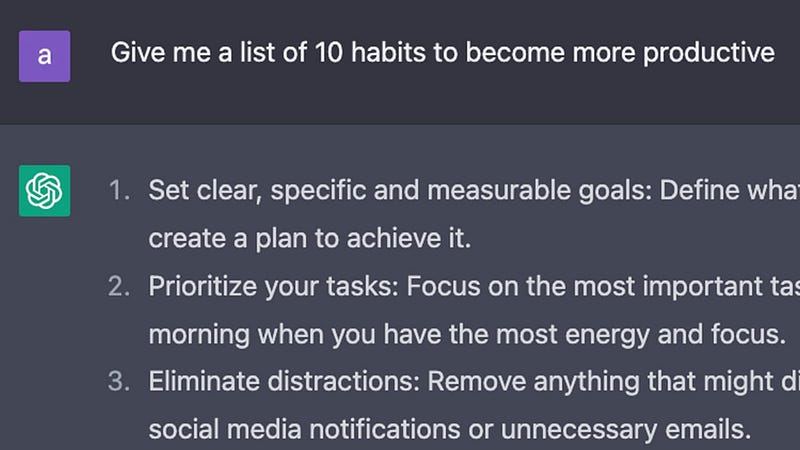
In the past month, ChatGPT has seen a huge increase in popularity. Students use it to write their papers, bloggers use it to write articles, bored people use it to have conversations… ChatGPT is one of the most advanced and mainstream AI there is at the moment, so why not ask it about how to live a better, more productive life?
I came up with the idea to ask ChatGPT about great habits to become more productive because I’ve read a bunch of content around productivity, and I’ve written quite a bit myself too. I wanted to see if it would suggest anything novel, anything I hadn’t seen before.
I have to be honest and say that none of the 14 habits I selected from the 25 ChatGPT generated for me was something I either hadn’t tried or hadn’t heard before. That being said, I thought it would still make sense to list them down here because they are relevant for anyone looking to add more structure to their life. For each habit, I added my own “human” insights and my experience with it.
1. Set clear, specific, and measurable goals — Define what you want to accomplish and create a plan to achieve it
I have tried 2 main approaches to productivity in my entrepreneurship journey. The first one involves “simply” showing up and putting in the work, without worrying too much about the results. It is based on the premise that what matters is the input and having a clear plan, and that hard targets and goals are a distraction. When you put in the work, results come naturally. I tried this for a year, and I went from $0 to thousands of dollars in profit from my business with this approach.
I switched to the second approach after 1 year of not having targets. I started setting specific goals for myself to reach within a year, with a check-in halfway through (at 6 months). I reached 75% of my goals with this approach. There’s not one right way to build a business and become successful, but I do tend to believe that goals can be a distraction or a source of stress in the beginning. When you’re starting off, what matters is to show up every day and do the work, nothing else.
2. Prioritize your tasks — Focus on the most important tasks first and tackle them in the morning when you have the most energy and focus
I woke up at 6 am for a year in order to write articles before leaving for my 9–5 job. Once the buzz of the day starts, people need your attention, emails get in the way, friends want to hang out… And nothing gets done. I have witnessed this countless times with my own routine. These days, I have a harder time waking up early, and I can see the impact on my workload/organization. Get your biggest task out of the way first, then you won’t have anything to worry about.
3. Eliminate distractions — Anything that might distract you from your work, like social media notifications or unnecessary emails
I barely ever use social media, always have my phone on silent, and my laptop on “do not disturb” mode. Notifications are the plague of productivity because they take your focus away and often suck you down the “notification blackhole”. How many times a day do you pull up your phone to check the time, or do something specific, and get distracted by a few notifications on your home screen? As soon as you check one, you’ll check the next, and in 99% of cases, you’ll end up spending more time on your phone than you had intended to. Also, you forgot what time it was 1 minute after checking your phone.
4. Use a timer
I have used the timer approach in the past and find it to be very efficient, but I don’t use it as much as I should. The most popular timer framework is the Pomodoro Technique, where you break your work into 25-minute intervals with 5-min breaks in between, and repeat as many times as necessary.
Variables are adjustable to your own taste. Some people prefer to have slightly longer breaks, others prefer to work in 1-hour sessions rather than 25. This technique was developed by Francesco Cirillo in the late 80s and saw a tremendous rise in popularity in the past decades.
5. Take regular breaks every hour to help you stay refreshed and focused
I always like to go for a short walk or have a cup of coffee in the backyard when I feel overwhelmed with work. Breaks are good because they help clear up your mind, get fresh ideas, and release pressure.
Having breaks goes hand in hand with the Pomodoro approach, and I highly recommend experimenting with both to see what suits your work routine best.
6. Practice good time management — Use tools like calendars and to-do lists to stay on track and manage your time effectively
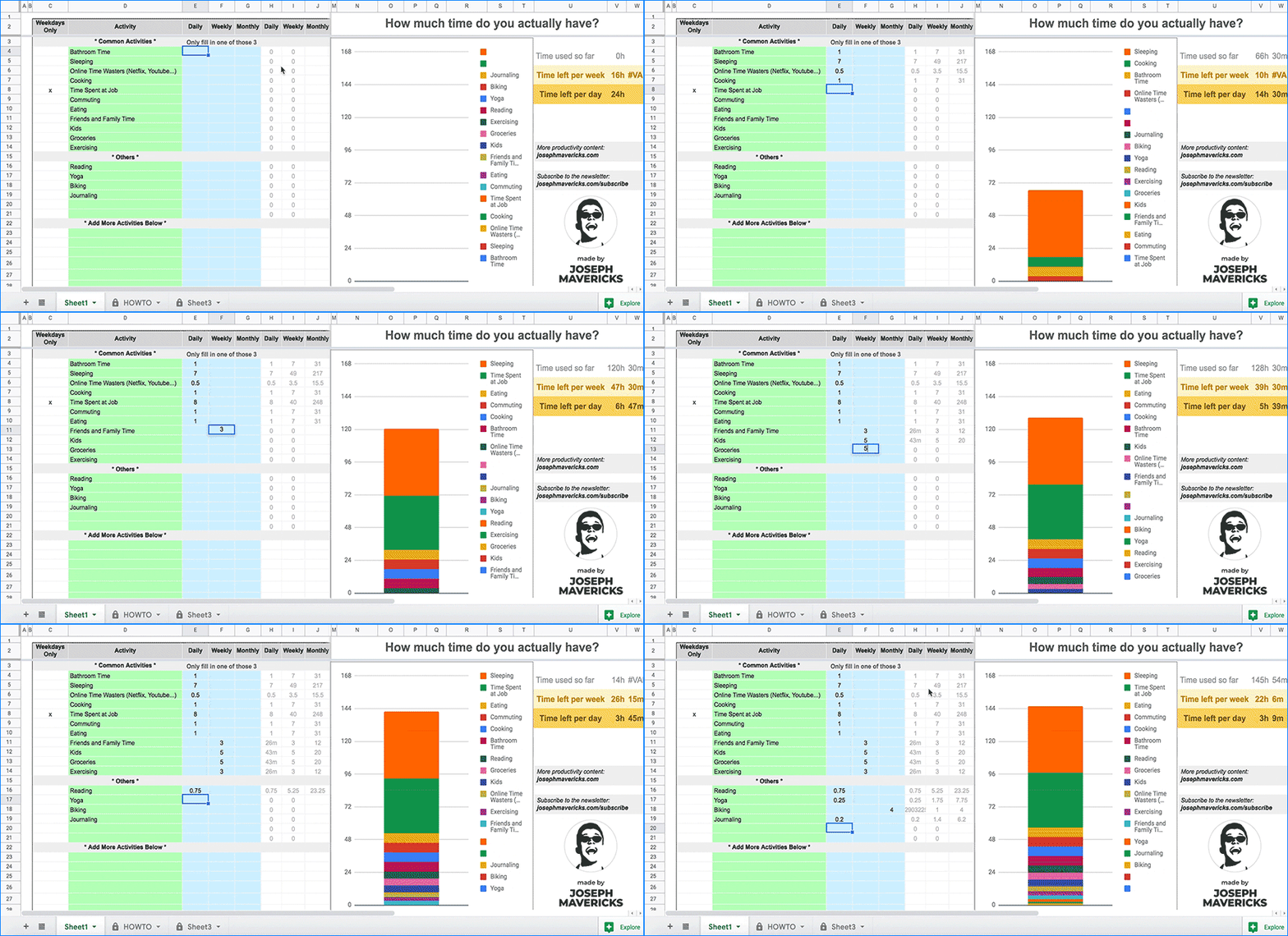
Looking at my time use over 168 hours (one week) rather than 24 hours (one day) has changed my life and the way I work.
- Even if you work 8 hours per day,
- commute for 2 hours,
- sleep for 8,
- and spend 5 hours on everything else: eating, family, exercising…
You still have 27 hours per week to pursue your dream.
It took me 2 weeks of tracking my time to realize this, after reading the book 168 Hours: You Have More Time Than You Think by Laura Vanderkam. I then created my own spreadsheet and started tracking. In 90% of cases, you don’t lack time, you lack a good overview of your time use.
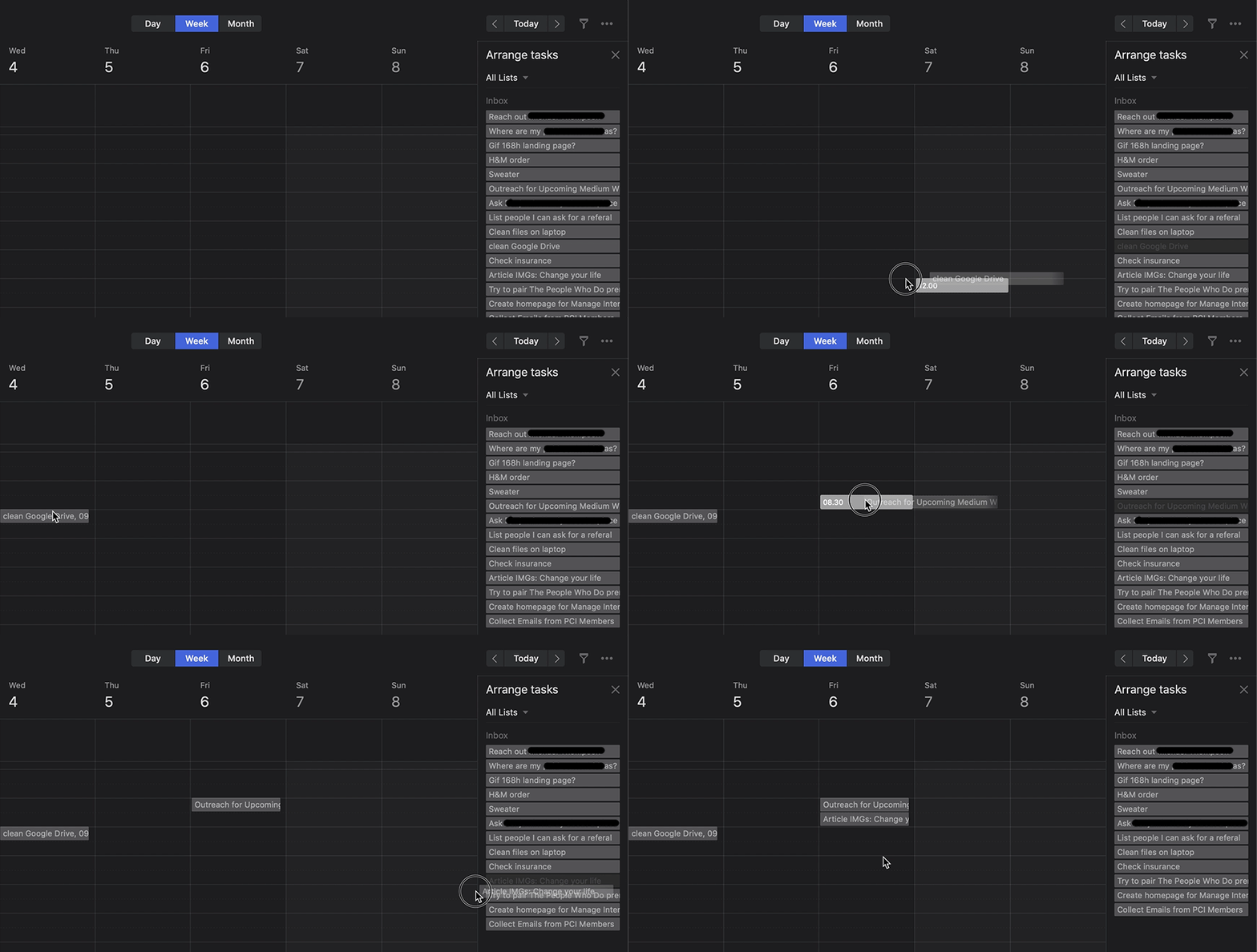
Once you’ve identified the “time pockets” available for you to get more done, you can start scheduling things in your favorite to-do app. I use Ticktick, because its “Arrange tasks” functionality is a game changer. It gives you the option to switch from a vertical todo list layout to a horizontal calendar view in a simple drag-and-drop interface:
7. Get enough sleep — Being well-rested is crucial for productivity
I’m an early bird, and I’m someone who can run on little sleep (although I will get grumpy). Every time I sleep badly or not enough, it reflects on my work during the day. I write less content, take longer to find ideas, and am a lot less productive… But I still work.
Most people need 6 to 8 hours of sleep per night, and unless you’re part of the lucky 1% who can run on 4 hours of sleep and be perfectly fine, you’ll have to get those Zs whether you like it or not (most people like it).
8. Stay organized — Keep your work area clean and tidy and use a filing system to keep important documents in order
I’m not the best at keeping my work area clean and tidy, in fact, I’m terrible at it. I used to beat myself up for being messy and disorganized, but I learned to embrace the “messy” part. Messy people are more creative and productive than people with clean desks. The disorganized part is a bit more annoying because I literally lose stuff when I clean my desk, and I sometimes spend 20 minutes finding something I need.
Overall, staying organized is important, but what matters is again to get the work done. There’s no one right way to be productive or organized, whether you prefer to do it with a clean desk or a messy one is up to you.
9. Learn to say no — Saying no to non-essential tasks can help you focus on what’s truly important and boost your productivity
“The difference between successful people and very successful people is that very successful people say no to almost everything.” — Warren Buffet
I’ve said no to a bunch of party invitations because I knew I had to stay home and work on my business. I’ve also said no to a colleague’s birthday party when I was preparing for a marathon (he was offended). Saying no also helps you prioritize the right relationships in your life. Do you really need to have Friday night beers with your colleagues if you don’t see each other outside of the workplace? Do you need to hang out with all 20 of your friends, or can you count the real ones with 2 hands only?
10. Keep a journal to track your progress, reflect on your day and set intentions for the next day
I have kept journals for as long as I can remember, and this practice became even more important once I started blogging and writing every day. Journaling is also a habit mentioned by 60% of the people I asked in my 75 People Who Do interview guide on entrepreneurship and productivity. Once a day, once a week, at a certain time, any time… Scheduling varies, but the practice of journaling is a huge component of the answers.
I use journaling to write down ideas for content, to keep track of my progress, to doodle ideas… I sometimes wake up in the middle of the night to write down something I dreamed about and/or something I don’t want to forget. I use it as a brain dump, and I always have it with me.
11. Practice mindfulness — Take a few minutes each day to focus on the present moment and clear your mind to improve focus and productivity
Years ago, I read the book The Art of Happiness by the Dalai Lama and Howard C. Cutler, and it changed my life. I discovered the powers of forgiveness, compassion, of understanding that only you decide how much power you give to your negative thoughts.
I started meditating for 5 to 10 minutes every single morning for a year. I would first do a short stretching session and then sit still for a bit. This has helped me tremendously both in my productivity and in my practice of mindfulness.
12. Automate repetitive tasks — Use tools and software that will save you time and allow you to focus on more important work
I use Zapier to automate most of my marketing-related activities. When people submit their info through one of the forms on my website, they’re automatically onboarded in an email flow, and their email journey will depend on how they interact with my content. This saves me a ton of time and helps automate sales too.
When it comes to the other things I have to do for my business but don’t particularly enjoy doing, I either create my own tools to work faster (Python scripts to automate) or batch tasks together.
13. Learn to focus — Practice focusing on one task at a time, this will help you work more efficiently and avoid multitasking
In a world where people spend an average of 2 hours and 30 minutes per day on social media, focus is becoming an increasingly rare and valuable skill. It’s not only about being able to zero in on one task without switching to others, or going back and forth between projects without making progress on any. It’s about the simple act of being able to sit down and get work done without any interruption.
14. Take time to reflect on your progress
I use the wheel of life approach to set goals and directions for myself. In each area of the wheel, I come up with a maximum of 5 items, and I make sure to implement actions that will lead to me getting closer to those goals over the next year.
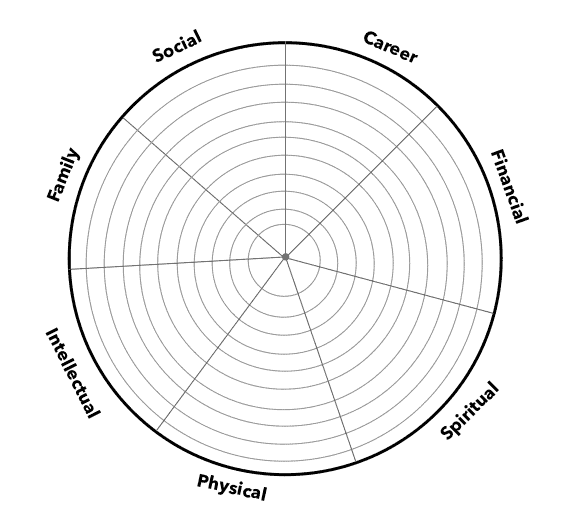
Then, I get to work and I check in with myself halfway through the year. At the end of the year, I go over everything and set new goals and directions for the next year.
I never hit 100% of my goals with this approach, but who ever does? I usually have a success rate between 60% and 80% overall, which is not only above average, it’s also enough to make progress.
Whether you ask an AI for help, decide to read books, or create your own blueprint for success, you’ll come across the habits and principles mentioned above, and you’ll learn how they can help you become more productive and reach your goals. You can let me know if you have any other productivity habits in the comments down below, and don’t forget to check out my 75 People Who Do interview guide for even more insights on productivity and entrepreneurship!
Thanks for reading, enjoy the journey you’re on!


