
ChatGPT Plugins: Code Interpreter, Visualizer, and More
Unlocking New Possibilities: Enhancing ChatGPT with Powerful and Versatile Add-Ons
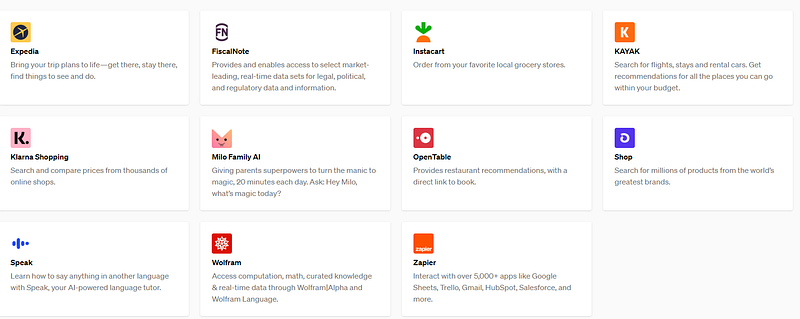
AI is no longer reserved for scientists but is available to everyone. We live in a world where we observe new innovations and surprises every day.
OpenAI has done it again with the ChatGPT plugins.
From the official website of OpenAI
“We’ve implemented initial support for plugins in ChatGPT. Plugins are tools designed specifically for language models with safety as a core principle, and help ChatGPT access up-to-date information, run computations, or use third-party services.” Source: OpenAI
OpenAI itself launches plugins:
- Web browser: Real-time information
- Visualizer: Transforming Data into Insightful Visuals
- Code interpreter: A Junior Programmer at Your Fingertips
- Retrieval: The company bot
- Third-Party Plugins: Expanding the Ecosystem
OpenAI Plugins
Web browser: Real-time information
Despite their utility in various tasks, language models still face limitations. They can only learn from the training data provided to them, which may be outdated and not tailored to specific applications. These models inherently produce text, which may offer valuable guidance but requires a separate process to execute the instructions.
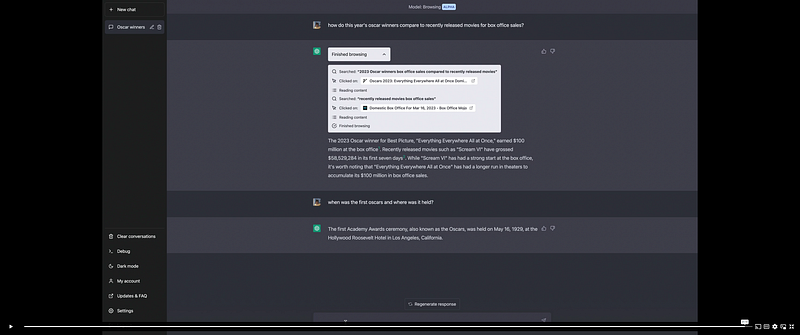
ChatGPT browsing allows the model to research information in real time beyond the training data, so it is much more useful when it comes to events that are happening today rather than at the end of 2019.
The Visualizer: Transforming Data into Insightful Visuals
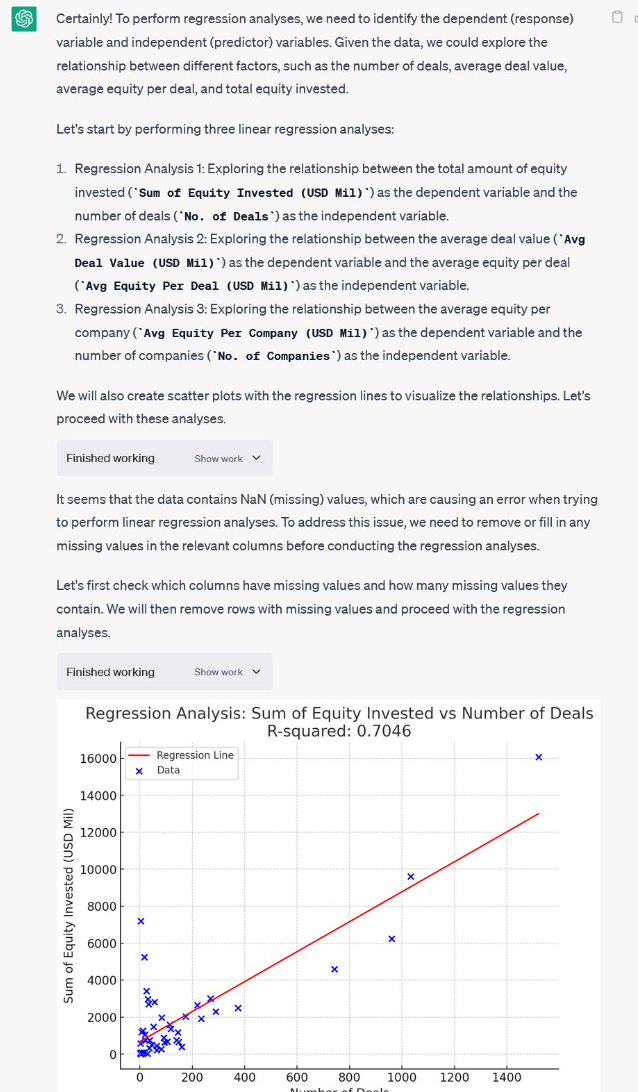
Another exciting plugin that can be integrated with GPT-powered language models is the visualizer. This plugin allows users to take raw data and generate meaningful visual representations, such as charts and graphs. By leveraging AI’s capabilities, users can quickly understand complex datasets and identify trends or patterns that may be difficult to discern from raw data alone.
Code interpreter: A Junior Programmer at Your Fingertips
We give our models a working Python interpreter that runs in a protected, firewalled, sandboxed environment with temporary storage space.
Under an upper-bound time restriction, the code run by our interpreter plugin is evaluated within a persistent session that is active during the chat discussion, enabling successive calls to build atop one another.
We enable file uploads to the workspace for ongoing conversations and give you the option to download the results of your tasks. The interpreter plugin also supports several Python modules, allowing users to easily do intricate computations, data analysis, and file conversions. We want to give customers a more natural and effective programming experience by incorporating this plugin, offering the benefits of coding to a wider audience.
This means that from now on, plotting data within ChatGPT is no longer impossible, but a reality.
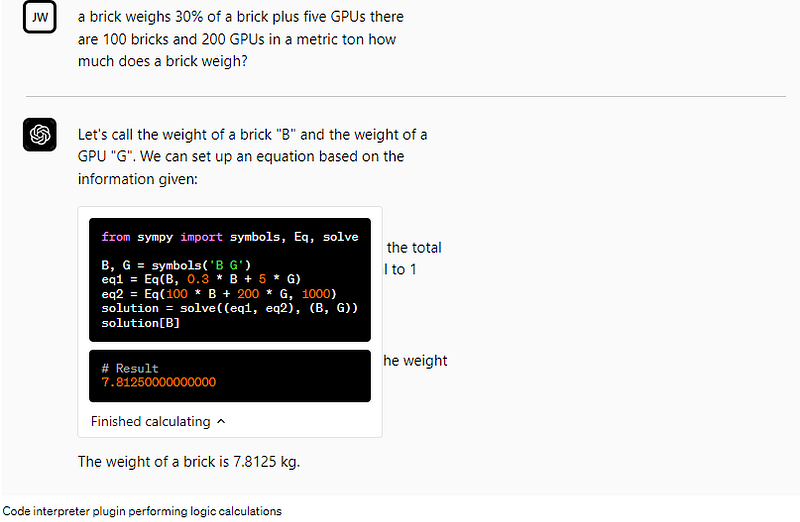
- Solving mathematical problems, both quantitative and qualitative
- Doing data analysis and visualization
- Converting files between formats
Retrieval: The company bot
ChatGPT may access personal or business information sources (with the necessary rights) thanks to the open-source retrieval plugin. Users may get the most important document extracts from their data sources, such as files, notes, emails, or publicly available documents, by asking questions or expressing their needs naturally in English.
Developers are able to deploy their own version of the plugin and register it with ChatGPT as it is an open-source, self-hosted solution. The plugin takes use of OpenAI embeddings and gives programmers the freedom to pick a vector database (such Milvus, Pinecone, Qdrant, Redis, Weaviate, or Zilliz) for document indexing and searching. Webhooks allow information sources to easily synchronize with the database, ensuring that only the most recent information is available.
The retrieval plugin also gives data protection and permission first priority, enabling developers to safely integrate content while keeping control over access and sharing. Users may use the retrieval plugin in their ChatGPT sessions with confidence thanks to the extra security.
Third-party plugins: Expanding the Ecosystem
Besides these great plugins. You can develop your own plugin when you are accepted as a developer by OpenAI.
Currently, we have plugins such as
- Wolfram
- Instacart
- OpenTable
- ….
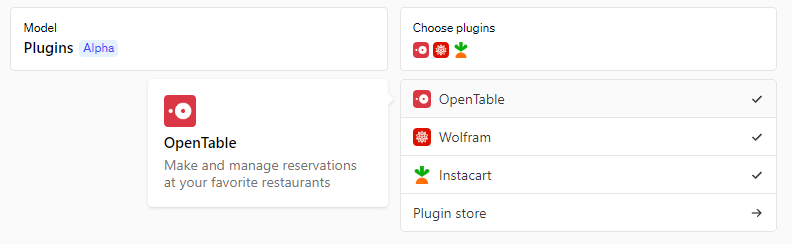
In order to create a plugin, follow these steps:
- You need to build an API with endpoints. These endpoints are called by the language model.
- Create an OpenAI specification documenting your API and a manifest file that links to the OpenAI specification. This file should contain plugin-specific metadata. An example can be found below (from the official OpenAI web page).
{
  "schema_version": "v1",
  "name_for_human": "TODO Manager",
  "name_for_model": "todo_manager",
  "description_for_human": "Manages your TODOs!",
  "description_for_model": "An app for managing a user's TODOs",
  "api": { "url": "/openapi.json" },
  "auth": { "type": "none" },
  "logo_url": "https://example.com/logo.png",
  "legal_info_url": "http://example.com",
  "contact_email": "[email protected]"
}Exciting days
The field of GPT plugins is quickly growing as users and developers alike learn about new opportunities for AI-human connection. Users should anticipate seeing even more potent and adaptable tools that improve the capabilities of language models like ChatGPT as OpenAI continues to develop its plugin ecosystem.
By embracing this technology and its promise, we may create a world in which AI smoothly melds into our daily lives, improving the effectiveness, productivity, and enjoyment of our work.
AI in Finance is a reader-supported publication. To receive new posts and support my work, consider becoming a free or paid subscriber. Unlimited access to exclusive AI articles in Finance written by me + Q&A’s sessions if you want deeper insights!
FREE chatGPT Plugins Alternatives at MLearning.ai


