
ChatGPT might have started replacing these 5 jobs in medical research!
That’s what my scientist friend said after our quick experiment with Code Interpreter.

My scientist friend and I checked capabilities of code-interpreter with huge medical data and were blown away!!
Code-interpreter, the latest plugin in ChatGPT has shown immense capabilities in analyzing data — intelligently — better than humans.
I received a huge medical research excel data file from a friend. The whole data was anonymized and randomized (to be ethical and, of course, comply with EU data rules!!) and fed to code-interpreter to see it’s analytical capabilities. My friend was besides me prompting as we went ahead since — you know — I am pretty lame when it comes to medicine and biology and all :P
What is Code Interpreter?
The Code Interpreter plugin in ChatGPT extends the already powerful language model capabilities of ChatGPT with an integrated Python environment. This environment enables the model to execute Python code, opening up a whole new world of possibilities.
Whether you want to perform complex data analyses, solve mathematical problems, or simply automate mundane tasks, Code Interpreter is here to make your life easier.
The Code Interpreter plugin in ChatGPT, with its ability to automate data analysis tasks, could potentially impact a range of job roles, particularly those that involve repetitive, manual data handling or basic analysis. However, it’s essential to note that while automation can perform certain tasks more efficiently, the human touch is still crucial in many aspects, including decision-making, complex problem-solving, and ethical considerations.
Here are two job roles that could see significant changes or even redundancy with the advancement of AI tools like ChatGPT:
- Data Entry Clerk: This role involves manually entering data into a computer system or spreadsheet, a process that can be tedious and prone to human error. With AI tools becoming more sophisticated in processing and analyzing data, the need for manual data entry is reducing. Programs can automatically ingest data from various sources, transform it into the required format, and load it into a database or spreadsheet with little to no human intervention.
- Basic Data Analyst: This role typically involves performing routine analyses on data sets and generating reports. Tasks might include calculating descriptive statistics, generating visualizations, and producing periodic reports. With AI tools like ChatGPT’s Code Interpreter plugin, many of these tasks can be automated. For example, the plugin can take raw data, clean it, perform analyses, and even generate plots, all within the same conversational interface. This could reduce the need for basic data analysts who primarily perform these routine tasks.
- Statistical Assistants: This role often involves running predefined statistical tests and preparing data for these tests. AI and machine learning models can automate these tasks by programmatically running these tests and even choosing the most appropriate tests based on the data.
- Report Generators: People in this role often spend a significant amount of time compiling data and creating standard reports. AI tools can automate this process by pulling together data from various sources, analyzing it, and generating reports, often in real-time.
- Quality Assurance Analysts: In some industries, this role involves routine checks of data for errors or inconsistencies. AI tools can automate these checks, instantly flagging errors and inconsistencies and, in some cases, even correcting them.
While these roles might become redundant, it’s important to remember that the advent of AI and automation often leads to the creation of new roles and opportunities. For example, there will be an increased demand for AI specialists who can develop, maintain, and improve these tools, and for data scientists who can perform more complex analyses and make strategic decisions based on the outputs of these tools. It also opens up opportunities for existing roles to evolve and focus more on complex tasks that require human intelligence and creativity.
An Example: Analyzing Drug Testing Data
To give you a taste of what Code Interpreter can do, let’s walk through an example of how it can be used to analyze and visualize a dataset of drug testing results.
First, we loaded the data from an Excel file. The Code Interpreter can handle various file types, including Excel files, which are commonly used in data analysis. Using Python’s pandas library, we were able to load an Excel file and retrieve the names of the sheets it contains.
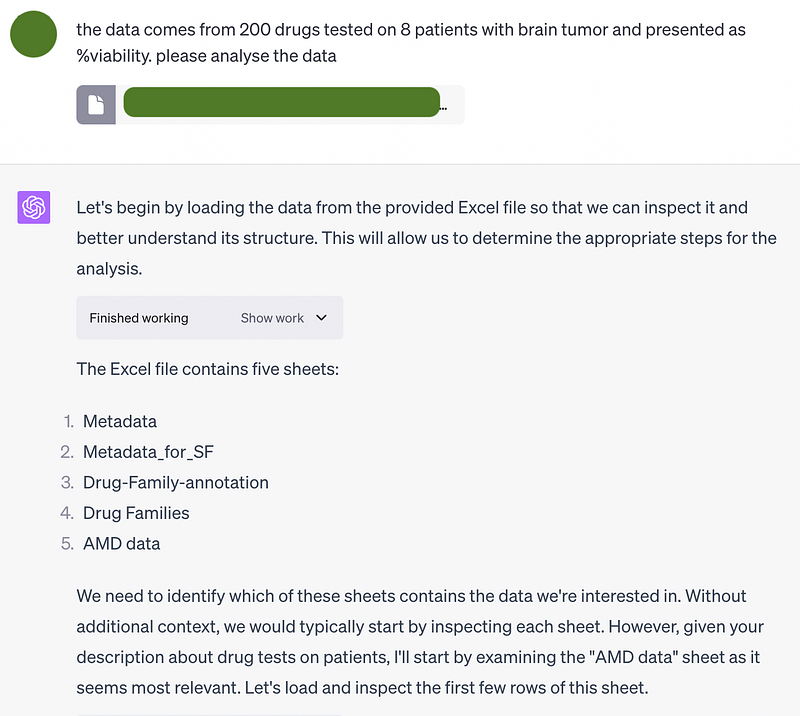
This is where Code Interpreter truly shines. We were able to perform these tasks directly within the ChatGPT interface, without needing to switch to a separate Python environment.
We noticed that the dataset contained some non-numeric data in the first few rows, and we wanted to focus on the numeric drug testing results. No problem — Code Interpreter allows us to perform data cleaning tasks with ease:
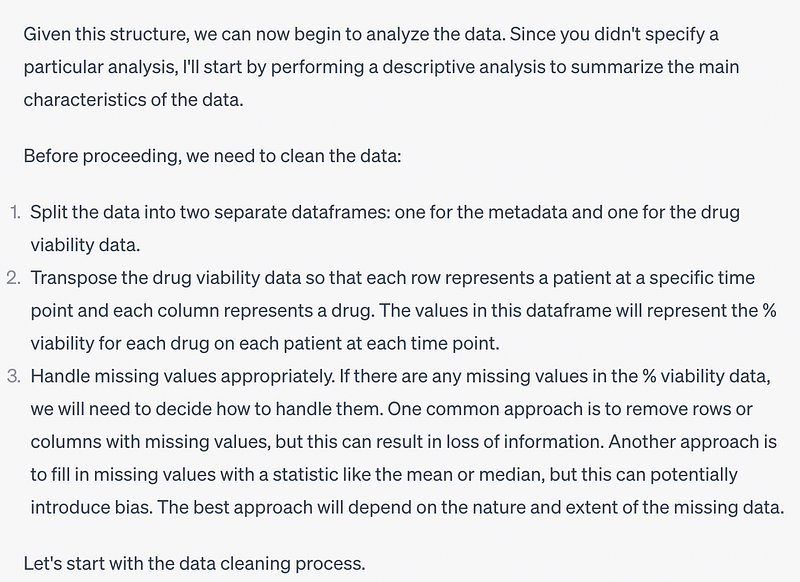
With the data cleaned and arranged in a suitable format, we moved on to the analysis. Code Interpreter supports a wide range of data analysis functions, so we could calculate basic statistics for each drug:
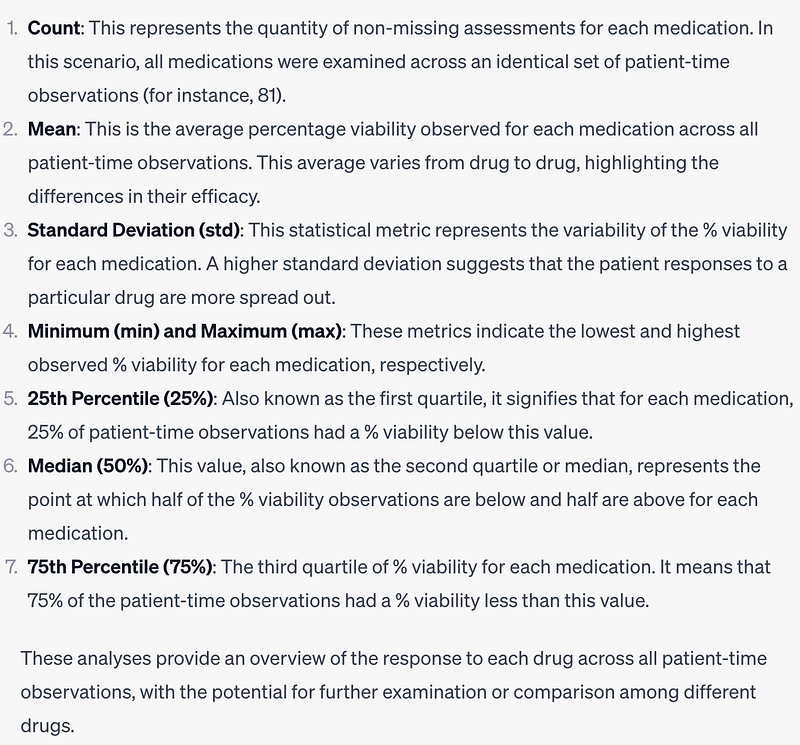
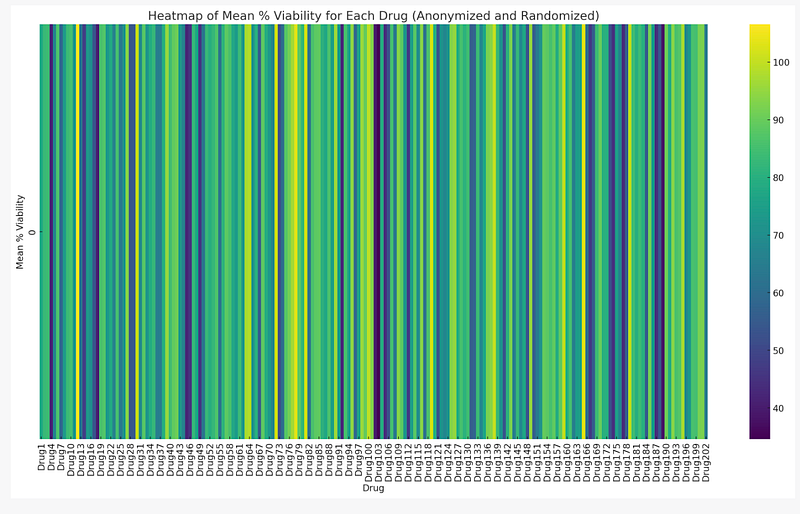
Finally, we visualized the results using a heatmap. Code Interpreter seamlessly integrates with plotting libraries like Matplotlib and Seaborn, so you can create beautiful visualizations right within the ChatGPT interface:
Conclusion
The Code Interpreter plugin in ChatGPT represents a massive upgrade in the capabilities of the model. By combining the power of Python with the natural language processing abilities of ChatGPT, it opens up new possibilities for data analysis, automation, and more. As we’ve seen in this example, it can handle everything from data loading and cleaning to complex analysis and visualization. And all this happens right within the ChatGPT interface, making your workflow smoother and more efficient.
So why wait? Give the Code Interpreter a try today and see how it can revolutionize your ChatGPT experience!
I’m glad you’ve taken the time to read my article. If you found value in this piece or would like to continue exploring topics like this with me, I invite you to follow me here on Medium at @yodatalks.
I appreciate the support and the conversations that stem from these articles, so don’t hesitate to drop a comment or question.
Your engagement helps build this community, and your voice matters. Thank you for reading, and I look forward to connecting with you more!