
Artificial Intelligence: Rewriting bad prose
ChatGPT is Better than Humans*
*Not all humans, but certainly this one
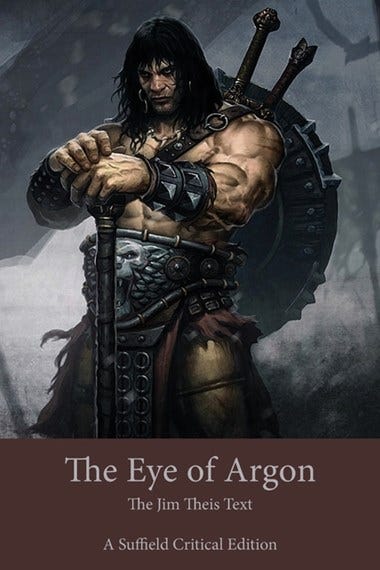
I’ve long argued that Artificial Intelligence has been with us for some time. It didn’t have to be a genius computer like HAL 9000 in 2001:a space odyssey or some all-knowing superintelligent robot; it merely had to be better than Homer Simpson.
Or a 16-year-old writer whose novella The Eye of Argon became a smash hit in the science fiction and fantasy world during the Seventies.
Originally published in 1970 in the pages of the Ozark Science Fiction Association’s mimeographed fanzine OSFAN 10, the novella languished for some time until copies surfaced as an example of bad writing in an epic style.
Let me quote the opening:
The weather beaten trail wound ahead into the dust racked climes of the baren land which dominates large portions of the Norgolian empire. Age worn hoof prints smothered by the sifting sands of time shone dully against the dust splattered crust of earth. The tireless sun cast its parching rays of incandescense from overhead, half way through its daily revolution. Small rodents scampered about, occupying themselves in the daily accomplishments of their dismal lives. Dust sprayed over three heaving mounts in blinding clouds, while they bore the burdonsome cargoes of their struggling overseers.
In fact, the original text is a level of awful below this; the typewritten stencil sheet contains many typos. Letters overstruck and not corrected, letters faintly struck and barely discernable, illustrations that matched the text in quality.
For many years it became a tradition at science fiction conventions to read the text aloud in group sessions as a kind of game, each reader trying to maintain a straight face and an even tone as long as possible before — inevitably — collapsing in choking laughter and handing the copy to the next reader.


The author, Jim Theis, wrote The Eye of Argon at the age of 16. While he had another story published two years later and went on to become a journalist, he felt hurt that his juvenile work was being mocked, according to the Wikipedia article on the novella and the cult of devotees it spawned.
Although I do not condone mocking writers, even when their work is so splendidly bad, I do not think that the work itself is immune from criticism.
Let me quote another section, as Grignr the barbarian enters a bar.
Eyeing a slender female crouched alone at a nearby bench, Grignr advanced wishing to wholesomely occupy his time. The flickering torches cast weird shafts of luminescence dancing over the half naked harlot of his choice, her stringy orchid twines of hair swaying gracefully over the lithe opaque nose, as she raised a half drained mug to her pale red lips.
Glancing upward, the alluring complexion noted the stalwart giant as he rapidly approached. A faint glimmer sparked from the pair of deep blue ovals of the amorous female as she motioned toward Grignr, enticing him to join her. The barbarian seated himself upon a stool at the wenches side, exposing his body, naked save for a loin cloth brandishing a long steel broad sword, an iron spiraled battle helmet, and a thick leather sandals, to her unobstructed view.
Let me just say that the sentence fragment “her stringy orchid twines of hair swaying gracefully over the lithe opaque nose” stands in a class of its own as a set of words sure to derail even the most ice-cold reader. I cannot get past it myself without snorting through my own thankfully opaque nose.
A robot could write better
Given a chance, ChatGPT — or any other AI program — can be asked to rewrite text. Apart from correcting obvious spelling and grammatical errors, ChatGPT can unmangle the wording and apply a tone or style.
Here’s what happened when I asked it to rewrite the opening paragraph in the style of J R R Tolkien:
The trail, weather-beaten and fraught with peril, wound its way ahead into the dust-racked climes of a barren land that dominated vast swaths of the Norgolian empire. Age-worn hoof prints, long smothered by the sifting sands of time, shone dully against the dust-splattered crust of the earth, marking a path through a land that had seen the rise and fall of countless empires and kingdoms.
The tireless sun, ever watchful in its ceaseless orbit, cast its parching rays of incandescence upon the desolate terrain, bearing witness to the struggles of all who dared to brave its harsh and unforgiving climes. Small rodents, ever resourceful and wily in their dismal lives, scampered about in the daily pursuit of survival, seeking sustenance amidst the harsh realities of their existence.
Dust, like a shroud of obscurity, sprayed over three heaving mounts, their powerful sinews straining under the weight of the burdensome cargoes they bore for their struggling overseers. In this land of adversity and struggle, where the elements and the terrain alike conspired to defeat the weary traveler, only the strongest and most resilient could hope to survive.
Now, isn’t that about a million percent better?
As an aside, I think Tolkien would blanch and mutter into his beer at the thought that this was anything like his style of writing. Nevertheless it is an improvement.
It is interesting to note that some words and phrases survived. “Sifting sands of time”, for example. I think that “shifting sands” is what Jim actually meant.
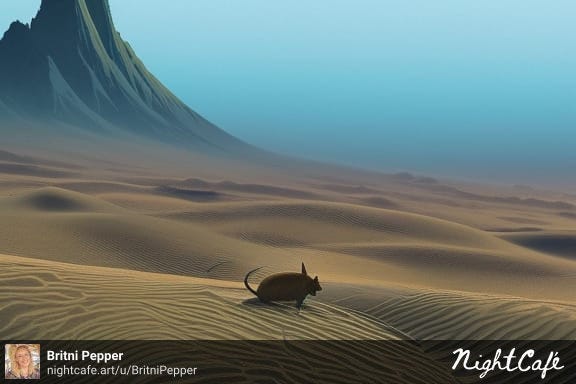
The rather bewildering mention of dismal rats, four sentences into what should be a gripping opening, survives the robot rewrite. This is actually a foreshadowing of a plot event later on but still, I don’t see how it helps the reader come to grips with the story.
Jim, I think, was referring to the weight of the riders when he mentioned the “burdensome cargoes”, not freight strapped to a pack saddle, or whatever. This subtlety is not picked up and corrected. As an aside, Jim also refers to horses as “steads” in an inconsistent but plentiful manner. One of a great many words he misuses.
Theis was “a malaprop genius, a McGonagall of prose with an eerie gift for choosing the wrong word and then misapplying it,” according to David Langford in Bottom of the Barrel
My point, and I do have one, is this
Many writers who should know better criticise ChatGPT and other programs for producing prose that is not of a scintillating timeless literary quality. The sort of stuff that they flip out before their morning coffee, one imagines after wading through their scorn.
AI technology is evolving at a startling rate. Every day it gets better. It writes better text — as we see above — than some human writers.
It can probably rewrite your own work, Dear Reader, in a more elegant fashion. Give it a try; see what phrasing it comes up with while still retaining your own style.
Or have ChatGPT switch your writing into a different tone. More formal, more casual, more friendly, more corporate. Whatever suits your need.
AI is already writing at a level better than most high school students straight out of the box. With a little thought about prompt engineering, you can move the style and tone as well as the content in directions that better suit your purposes.
If you take the view that ChatGPT is your writing assistant and you are guiding its work, then you can create better and better text.
You don’t have to accept what comes out as a first draft. Read through it, find ways to direct it toward more readable, entertaining, prose. Inevitably some of your own style will creep in.
Summary
Artificial Intelligence is already better than human beings at many writing tasks. Some humans may excel in many ways but are supremely bad in others. AI doesn’t have to reach a high bar to surpass mediocrity.
Use AI chatbots to rewrite bad prose, or to cast it in a different light, make it longer or shorter, write it in the style of an author.
Play around with the output. It can become something that readers will actually enjoy.
Britni
ChatGPT was used to rewrite the work of Jim Theis. One of the links given above is an affiliate, earning me a commission if you were so beset as to go to Amazon and purchase the book.
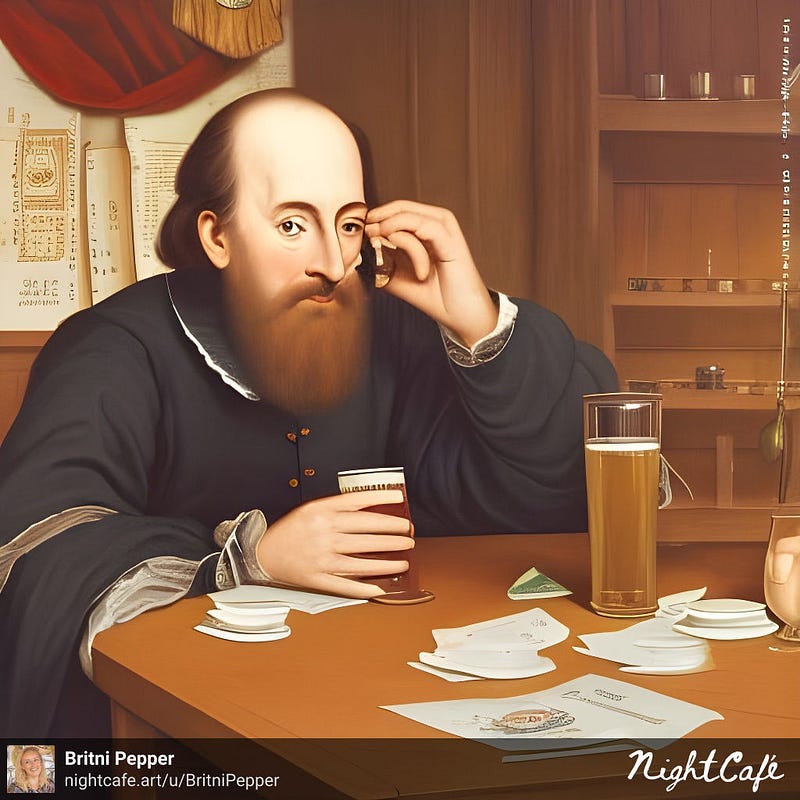
Bonus tipsy Shakespeare rewrite
Behold, as Grignr spied a maiden fair Perched upon a bench, without a care He sought to while away his time With this comely lass, so sublime
Torchlight danced upon her flesh so bare Her hair a tangled web, a violet snare With a mug of ale, to her lips she pressed Her eyes met Grignr’s, with an amorous zest
Enthralled by her allure, he drew nigh A spark ignited in her gaze, oh my! She beckoned him, a coy invitation And he, a barbarian, accepted with elation
Upon the stool, he sat by her side His muscled frame, with nothing to hide Save for a loin cloth, and sword of steel A helmet and sandals, his only shield
Together they drank, and laughed, and spoke As the flickering torches cast their smoky cloak And in that moment, with passion ablaze Grignr knew he’d spend with her, his remaining days.
I don’t care if that came from a machine or not. That is genius in my book.